
Want to bring this to your team? Schedule a free Vantage Fit demo to see how mood tracking, guided meditations, and mindfulness minutes work alongside team challenges.
The "Great Resignation" is a trend where workers leave their jobs voluntarily due to factors like remote work preferences, burnout, and a reassessment of career priorities. "Quiet quitting" refers to employees mentally disengaging from their jobs without formally resigning, often due to dissatisfaction or lack of growth opportunities.
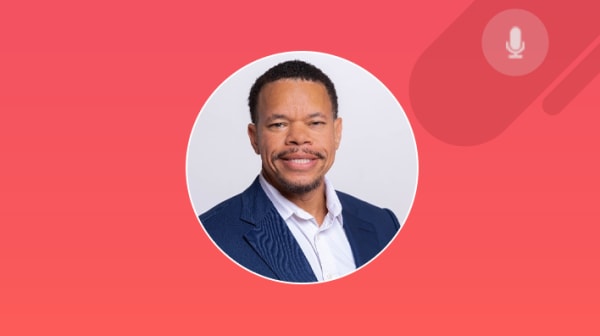
In this podcast, Taylor talks about these topics in detail and how they affect the corporate world.
Key Takeaways
- The Great Resignation was a coincidence of empowerment and free money. Taylor names both halves: the pandemic forced workers to audit what mattered, and ultra-low interest rates fuelled a hiring spree that made leaving low-risk. Remove either condition and the mass separation doesn't happen.
- Quiet quitting isn't new — it's just well-branded. The disengagement-instead-of-resignation pattern has existed in organisations for decades. Younger generations gave it a TikTok name, which drew headlines, but the underlying phenomenon is ordinary HR work: spotting disengagement before it compounds.
- "Me, us, them" — the firefighter rule that translates to management. Take care of yourself before your team; your team before anyone else. Taylor applies it as an HR leader: his job is to model the flexibility he wants his reports to feel comfortable using.
- Employers should not be the primary source of employees' mental health. Provide supplemental tools, provide time off, provide an environment to thrive — but recognise mental health comes from the individual, their social base, hobbies, and life outside work. Overreach by employers here backfires.
- Flexibility beats remote-vs-office as the real retention lever. He's agnostic on remote or in-office; organisations that won't flex on start times or let a parent take a kid to a doctor will not hold high-quality talent regardless of which format they pick.
- Internal mobility is the retention play tech companies are now catching up to. Defined career paths inside the org — not external recruiting — are what keeps people from jumping. Turing built programs around this; many tech companies are doing it belatedly.
- The modern EAP beats the old EAP. The 1-800 number nobody trusted has given way to corporate subscriptions to mental-health apps and high-quality mental-health benefits inside the healthcare package. That's a usable improvement, not a brochure update.
- Quiet-quitting warning signs are "just what a friend would notice." Disengagement in meetings, quality of work slipping, a high performer suddenly slowing down, short tempers. Managers should ask — without prying into medical specifics — "are you doing all right, can I better support you?" These rarely self-correct.
- Invest in yourself — it's the only recession-proof move. Separations slow with macro cycles. The individual's edge is formal education, apprenticeships, or new experience. Across US, India, China, the common answer for the worker is the same.
In Taylor's Words
On why the Great Resignation happened
One silver lining of the pandemic was people really got in tune to what mattered most to them. Paired with low interest rates and free money everywhere — businesses on hiring sprees — the barriers to mobility were quite low. That translated into the separations we called the Great Resignation. You had a more empowered workforce, much more in tune with what they wanted from a job.
On quiet quitting
Younger generations did a fantastic job branding it. But this has been in organisations for decades — people become disengaged and, instead of resigning, they let it ride to see how long they can get away with less effort. That provides job security for HR practitioners. It's not an original problem.
Don't reframe it punitively — reframe it as "how do I keep my workforce engaged so they don't want to do this?"
On the manager's role in spotting it
The signs: disengagement, not being excited in meetings that used to excite them, a high performer slowing down, unusual time off or time off without requesting it, quality of work suffering, short temper. These typically don't get better on their own.
Remember we're dealing with people. If a friend started acting unusual, you'd notice. At work it's no different. Be a human and ask if they're doing okay — without getting into medical details, which are protected.
On employers and mental health boundaries
Organisations should not be the primary source of mental health for their employees. Mental health being a priority comes from the individual. You can provide supplemental tools and an effective workplace, but also give folks time off and let them find fulfilment and utility elsewhere in their personal lives.
On flexibility as the non-negotiable
I'm agnostic to remote or in-office. Whichever you go with, you need to provide flexibility — flexibility in start times, flexibility to take a day to take your child to a doctor. Any organisation not providing that will not retain high-quality talent. That's one of the largest shifts in our workforce.
On EAP redesign
Early in my career, the EAP was a vague phone number — you didn't know who you were going to talk to, it wasn't effective, it wasn't overly utilised. Now at Squarespace we implemented corporate subscriptions to mental-health apps for free employee use. Providing a variety of opportunities — apps, strong mental-health benefits in the healthcare package — that's the shift.
On the individual responsibility
Invest in yourself — formal education, apprenticeships, additional experience. That's how you make yourself recession-proof and generate opportunities for yourself in challenging economic times. Continue to invest in yourself.
About the Speaker
Taylor Bradley is a former firefighter-paramedic turned HR leader. With over a decade of HR experience, Taylor specializes in leading lean, results-driven HR teams in late-stage tech companies and is currently the Head of HR Business Partners & Compensation at Turing.
Holding a Master's degree in Management from Seattle Pacific University and currently completing an MBA at the University of Cincinnati, Taylor is committed to expanding his knowledge and expertise. He is particularly passionate about the field of Human Capital Economics and People Analytics, leveraging this passion to empower team members and drive business success.
Beyond the professional realm, Taylor finds fulfillment in spending quality time with his family and exploring the world through travel. Feel free to connect with Taylor on LinkedIn or visit Taylorfromhr.com.
Show Notes
(01:17) Tell us about your journey.
(02:20) What is the "Great Resignation," and "Quiet Quitting"? What factors are contributing to this trend?
(06:25) How has the concept of "Quiet Quitting" emerged, and how does it differ from traditional resignations?
(10:46) What is your take on wellness programs?
(12:53) What are the expectations of the current workforce regarding work-life balance, remote work, and job flexibility during the Great Resignation?
(14:43) How are employers responding to the Great Resignation, and what strategies are they employing to retain their workforce?
(18:06) Are there any mental health reasons behind quiet quitting?
(21:59) What are some signs that employees might be quietly quitting, and how can employers address these issues proactively?
(24:28) Are there any specific regions or countries experiencing a more significant impact of the Great Resignation and why?
(26:48) Would you like to share valuable tips with our listeners?