
Want to bring this to your team? Schedule a free Vantage Fit demo to see how mood tracking, guided meditations, and mindfulness minutes work alongside team challenges.
"Ikigai" is a Japanese concept that represents a person's reason for being or the source of their passion and purpose in life.
In this podcast, Jayashmita talks about ways of finding ikigai at work. She further says how it can be a deeply fulfilling endeavor, as it involves aligning your passions, talents, and values with your professional life.
Key Takeaways
- Ikigai is a four-way intersection, not a vibe. Jayashmita is precise: what you're good at, what you've built a career in, what gives you daily purpose, and what pays you — all four have to overlap. Drop one and you have a hobby, a job, or a cause, not ikigai.
- Wellness needs differ sharply by industry. She contrasts IT (24/7, screen-based, remote-capable) with biopharma (physical presence, lab-bound, non-remote-able). Copying one sector's wellness playbook into another fails — and most corporate wellness content quietly assumes IT.
- Training is how employers unlock purpose for workers who didn't choose the path. Many biopharma employees didn't pick this industry as a first choice. The mechanism for helping them find ikigai is deep training that helps them see how their bench work connects to a patient with a chronic disease — purpose is taught, not discovered.
- Interdisciplinary careers are the escape hatch from the wrong job. Every company has HR, IT, QA, finance, project management — so workers in the wrong seat can cross-skill without leaving the industry. Staying stagnant is riskier than pivoting.
- Time at desk ≠ productivity. Jayashmita closes with a warning that the corporate-world equation of hours at the office with output is wrong; she's been through burnout twice and frames boundaries as career longevity, not indulgence.
- Yoga and daily movement are negotiation tools, not vanity. She argues physical-activity habits feed back into workplace composure — control of your body becomes control of your response to difficult meetings and negotiations.
- Side hustles are how passion and bills coexist. Borrowing from Neil Gaiman, she tells listeners it's fine to have a regular job that pays while building the thing you love on the side — and warns that monetizing a hobby can kill the very joy that made it meaningful.
In Jayashmita's Words
On what ikigai actually requires
Ikigai is roughly when your purpose meets what you're good at, meets what you've done in your career — and it also has to give you livelihood. All four have to come together for someone to say they've arrived at their ikigai.
On wellness by industry
What works for a person in IT will not work for an employee in biopharma. IT is 24/7, screen-based, from anywhere. Biopharma is physical — laboratories, the workbench. You have to be present. These are very different demands and very different lifestyles.
The mental and physical health of biopharma professionals directly affects the medicine that's being made. The wellness of these employees is needed to ensure the quality of the medicine.
On how employers unlock purpose
It's one thing to get the job done. It's another thing entirely to get the job done properly. For that you need employees who are interested — and that means the employer has to invest in training with patience and care, teaching them that the work is actually valuable.
When a person knows the medicines they make go to patients with chronic kidney disease or cancer, that gives them purpose to do their work with even more care.
On burnout and boundaries
A lot of the time it seems like the more time you spend at the office, the more productive you are. It is really not so. If you keep working around the clock, at some point you're going to burn out. I've personally been through it a couple of times. Drawing boundaries at the workplace is extremely important.
On bills and passion coexisting
Neil Gaiman told my friend — writing does not pay for most of us. Pay the bills with a regular job, and keep building on the future goal until the side hustle can become the main one. He was a journalist while he wrote fiction, and eventually he could stop being a journalist.
When somebody pays you to review a book a certain way, there's no fun left in the writing. That kills the creativity.
About the Speaker
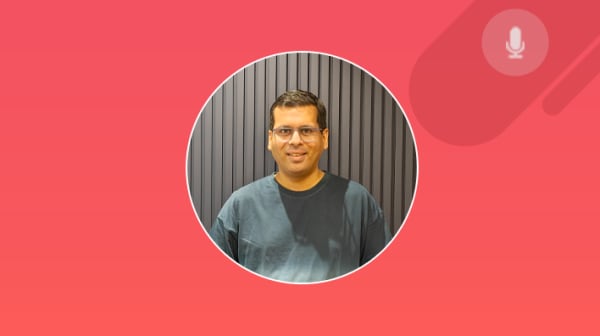
Jayashmita Barman is a biotechnologist working in the Biopharmaceutical sector since mid 2018. Her work deals with making medicines which are used for the treatment and management of chronic illnesses. She often blogs about biotechnology and associated fields to raise awareness. One of her special interests is the Indian biosimilar market which strives to provide access to biologics medication in the domestic market at affordable prices.
Connect with her on Linkedin
Show Notes
(00:55) Would you like to introduce yourself to our listeners and tell us about your journey?
(02:22) What is the definition of ikigai?
(04:07) Can you tell us about its origins?
(06:15) What do you know about corporate wellness and employee health?
(10:18) How to identify aspects of your work that align with ikigai?
(12:09) How can employers help their employees find their ikigai?
(16:35) Do you think any kind of physical exercise help one find their ikigai?
(19:05) What do you think the process should be about finding your ikigai at work?
(25:15) Would you like to share any valuable suggestions with our listeners?