
For distributed teams: Schedule a free Vantage Fit demo to see how multi-timezone challenges, journey challenges, and a native mobile app drive engagement across countries.
The impact of a particular work arrangement on health can vary among individuals. For example, remote work might offer more flexibility, potentially reducing commuting stress and providing a better work-life balance for some. On the other hand, it could lead to challenges like social isolation and difficulty in separating work from personal life.
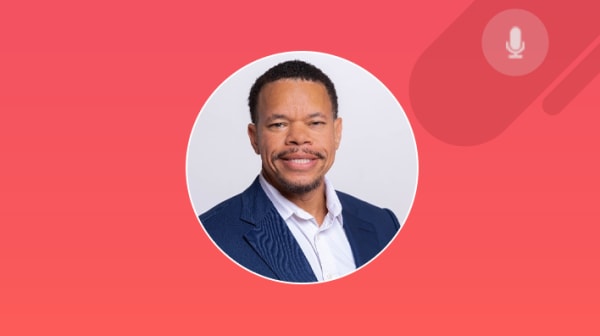
In this podcast, David talks about the various factors that come into play and influence employee well-being.
Key Takeaways
- Remote and hybrid workers report more anxiety and depression — but not for the reason most papers claim. Citing SHRM, David notes ~40% of remote and 38% of hybrid workers show elevated anxiety/depression vs. ~35% of in-office — and he rejects the "bad wifi, more interruptions" explanation. The real driver, he argues, is loss of feedback: you don't know where you stand with your boss, your peers, or your promotion path.
- Unstructured time erodes health habits. David's own experiment: at the office he blocks 6–6:45 to work out; at home with "fungible" time, the workout never happens. Theoretically remote workers can move anytime — in practice, they don't.
- The trust gap is the real career penalty of remote work. David is unusually candid — if he doesn't see an employee, he is unlikely to promote them, regardless of report quality. That's the underlying anxiety for distributed workers, and it will bite harder when labor markets soften.
- Walmart, Disney, and Amazon are the tell. When major employers pull workers back, David reads it as evidence the productivity hypothesis behind full remote didn't hold at scale — otherwise they'd leave the cost savings on the table.
- Balanced flexibility beats draconian mandates. His policy prescription for HR: require the office as the default, but write in one day every two weeks or five days a month of hybrid / work-from-home. Flexibility retains talent; hard lines lose it.
- Work-life balance is better with structure, not freedom. Counterintuitive but deliberate: when in-office workers leave the building, the time is theirs; remote workers erode personal time because work and home share a room.
- Office distractions are work-shaped; home distractions aren't. David's self-deprecating example — Real Housewives on mute in the corner — is the point. Home distractions pull you out of work; office distractions tend to be work-related.
In David's Words
On why remote workers are more anxious
About 40% of remote and 38% of hybrid workers had increased anxiety and depression compared with roughly 35% of in-office workers. I think the papers miss the point. The real reason is you lose the network — the interaction with your coworker and your boss. You don't know where you sit, whether you're getting a promotion or a bonus. That's what creates the anxiety.
On trust and promotion
If I don't see the employee, if I don't know who you are as a person, even if your reports are good, I'm most likely not going to promote you. That's the heart of the problem. Remote and hybrid workers know deep down their boss probably doesn't fully trust them — and that reduces their ability to move up the ladder.
Right now employees have the upper hand because labor is short. That's going to change. When there's an oversupply of employees, the ones the supervisors know are the ones keeping their jobs and moving up.
On fitness and structure
When I'm at the office, from 6 to 6:45 every day I work out. I build it into the schedule. If my time is more fungible, I don't schedule the necessary things — like exercise. In theory it works to move whenever you want. In practice, I don't think that happens.
On policy design for managers
Don't be draconian. You have to come back to the office — we need to see your face — but balance it. Give an employee two days a week, or two days a month, where they can work hybrid or remote. All the manager really cares about is that quality work gets done, and that doesn't always have to happen at the office.
On work-life balance and home distractions
When you have structure and you leave the office, that time is yours. Without structure, you erode the personal time even more.
At home my TV is on across the room with Real Housewives. Volume's muted, but it catches your attention. Instead of working I'm watching Lisa Vanderpump. At the office that distraction doesn't exist — the distractions are work-related, not personal.
About the Speaker
Dr. David Lenihan is the CEO of Ponce Health Sciences University (a medical school with campuses in Ponce, Puerto Rico, and St. Louis, MO) and the co-founder of Tiber Health. His POVs on a variety of leadership, business strategy, and medical education topics have been featured in The HR Director, STAT, CPO Magazine, OZY, Fierce Healthcare, Forbes, Fast Company, the Washington Post, Entrepreneur, and many more.
Show Notes
01:16 Tell us about your wellness journey.
01:45 Are RTO workers generally healthier than hybrid or remote workers?
04:00 Are there differences in terms of physical fitness and activity levels between these groups?
06:17 Is there a disparity in mental health challenges, such as stress, anxiety, or burnout, between RTO, Hybrid, and Remote workers?
08:02 How do their levels of job satisfaction and work-related stress compare?
09:20 Do trust issues develop between employees and managers during work from home?
11:17 Do RTO workers struggle more or less with maintaining a healthy work-life balance compared to hybrid or remote workers?
12:55 How does the health and wellness of RTO workers affect their productivity and job performance compared to Hybrid or Remote workers?
15:20 What role do company policies and wellness programs play in influencing the health and wellness of these worker categories?