
Managing work-life balance and mental health is crucial for overall well-being. Striking a balance between professional responsibilities and personal life while safeguarding mental health requires intentional efforts.
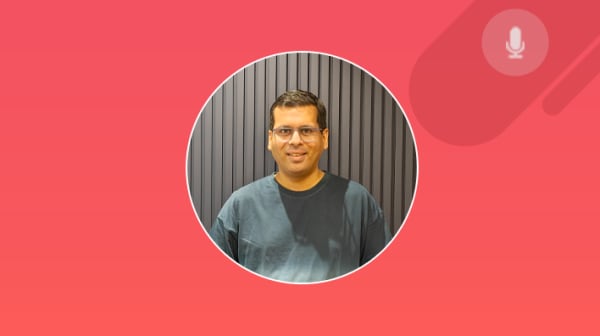
In this podcast, the MD of ANSR, Vikram Ahuja, shares his insights on the topic and discusses how organizations can support their employees by promoting work-life balance.
Key Takeaways
- Work-life balance only became a problem because modern work broke a default. Ahuja points out earlier generations didn't talk about balance because work and life were naturally intertwined. Today's intensity of expectation — professional, social, personal — makes deliberate balancing a mandatory skill, not a lifestyle choice.
- The burnout cycle is self-reinforcing. When mental health slips, output drops; employees respond by putting in more hours, which drops output further and strains personal relationships. Exiting the loop requires naming it, not working harder.
- Lifestyle diseases are the long tail of neglected balance. He flags the rise in cardiac events and early-onset diabetes among younger Indian professionals as the visible long-term invoice for chronic workplace stress — a preventive-health story employers keep paying for.
- Core working hours beat fixed 9-to-6. At ANSR/Talent500, six hours of required overlap anchor the day while the remaining two-to-three float — so employees can do school drop-offs, gym sessions, or whatever actually makes their schedule sustainable. It's a policy-level lever, not a perk.
- Indian corporate culture under-uses earned leave on purpose. Ahuja's test case: the annual HR email begging staff to burn vacation days before they expire. Fear of missing out and boss optics keep people chained to their desks; real organisational culture is whether breaks are genuinely encouraged, not permitted.
- Anonymous mental-health counselling is the benefit that actually gets used. Talent500 offers an external, fully anonymous therapy partnership, plus "not-in-the-right-headspace" mid-week days off. Anonymity is what converts intent to uptake.
- Workplace wellness challenges convert aspiration into behaviour. His "Get Fit Challenge" — step-tracked across the company — logged enough steps in the first month to cover the Earth's circumference. The lesson: people will make time for health when the workplace makes it visible and social.
In Vikram's Words
On why balance is newly hard
Work-life balance as a phrase is self-explanatory — it's the equilibrium between what you do at work and what you do outside it. It's funny that we have to separate the two and talk about the need for balance; a lot of the challenges are a fairly recent phenomenon. Previous generations had that balance naturally built.
The recognition of mental health as being just like any other condition that needs to be addressed — if you have a fever, you take a pill or rest — gives people the courage to at least come out and address issues they weren't willing to.
On the signs and costs of imbalance
Continuous fatigue, anxiety, reduced productivity, feeling overwhelmed, personal relationships strained or neglected — those are the larger signs. It also manifests physically: headaches, insomnia, palpitations, falling sick more often, backaches, knee pains. A healthy mind and a healthy body go together.
More hours doesn't necessarily lead to more productivity — it creates a vicious cycle you can't get out of. Long term, we're reading more about younger people having heart issues and early-onset diabetes. Lifestyle diseases are the long-term manifestation of burnout.
On workplace policy and culture
At our office, we follow core working hours — six hours where most people overlap. The other two to three hours employees can plan around their lives. I drop my kids to school, or I go to the gym mid-day because that's when I'm most productive. You need to give yourself — and your colleagues — that space.
Every year end, HR sends a note saying, "you've got extra vacation days, please take them before they expire." Why do we not take breaks through the year? In India, taking off isn't always looked at favourably. But it's our right — 21 to 30 days a year — and we need to really switch off.
At Talent500, we have a robust partnership with a company offering completely anonymous mental-health counselling to all our employees. Plus we allow time off during the week if someone isn't in the right mental space. That's what builds acceptability — recognising it and giving people room to deal with it.
On technology and self-governance
Previously, work lived on a desktop plugged into the office — you left it behind when you went home. Today, work travels with us on our phones. And when you're in the office, your Instagram and LinkedIn are pulling at you constantly. Technology is only as powerful or as evil as we make it. The responsibility comes back on us to draw the line.
On making health visible at work
I integrate workouts with work — long non-video calls, I walk through them. We launched a Get Fit Challenge across all our teams reporting steps, and in the first month we had enough steps to cover the circumference of the Earth. People talk about not finding time. The truth is you have to make time, and it has to be a priority.
About the Speaker
Vikram Ahuja is the Managing Director of ANSR, the tech leader enabling companies to set up, manage, and scale global teams via GCC. Vikram is also the co-founder and CEO of ANSR’s proprietary talent platform, Talent-500. This is an end-to-end AI-enabled offering that helps fast-growth businesses acquire, build, and manage global teams.
A serial entrepreneur with over 16 years' experience, Vikram has experience in building and scaling technology ventures across travel and e-commerce. He also co-founded one of India’s earliest startup accelerators, Kyron (acquired by Techstars), and is included in the IESE Business School’s prestigious 40Under40 Entrepreneur list for 2022, from where he completed his MBA.
Defined best as an ‘enthusiastic entrepreneur’, he believes that his interests in pursuing ventures at the intersection of art, technology, and business always help him hunt for new ideas to fuel his passion. With core expertise in Artificial Intelligence, Vikram has been designing solutions for future-proofing businesses across the globe.
Connect with Vikram on LinkedIn.
Show Notes
01:38 Would you introduce yourself to our listeners and tell us about your wellness journey?
03:22 How do you define work-life balance, and why is it important for mental health?
05:53 What are the common signs or indicators that someone may be experiencing an imbalance between their work and personal life?
07:53 What are the potential consequences of neglecting one's mental health in pursuit of career success?
09:51 How can individuals prioritize self-care and mental health while maintaining a demanding job or career?
11:29 What strategies can people use to set boundaries between work and personal life?
14:00 How can organizations support their employees in achieving a healthy work-life balance?
16:05 How does technology impact work-life balance, and what steps can individuals take to use technology more mindfully?
18:19 Would you like to share any more valuable suggestions with our listeners?
Recommended Resource: Yoga for Work-Life Balance