
Want to bring this to your team? Schedule a free Vantage Fit demo to see how mood tracking, guided meditations, and mindfulness minutes work alongside team challenges.
Imagine your emotions as colorful, swirling brushstrokes on an ever-changing canvas of life. Processing our emotions in healthy and productive ways is like becoming the skilled artist of our own emotional masterpiece.
Just as a painter understands the importance of every brushstroke, we too must acknowledge and embrace our feelings, knowing that each one contributes to the beauty of our existence.
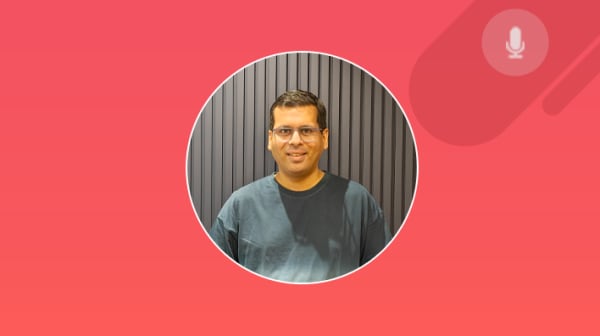
In this podcast, we discuss the topic of processing our emotions with an HR Professional, Ashutosh Thatte who shares his valuable insights on it.
Key Takeaways
- Put on your own oxygen mask first. Ashutosh borrows the airline analogy his mentor used in HR training: employees who cannot check in on their own emotional state cannot sustainably care for teammates, clients, or families. Self-awareness is the non-negotiable first step.
- Label emotions before you manage them. He pushes back against the corporate default of "it's fine, move on." Naming what you feel — frustrated, anxious, sad — is the move that separates genuine processing from suppression.
- An EAP is the bare minimum for any employer in 2023. Ashutosh is explicit: corporate India sits on the cusp of a mental health epidemic that long predates COVID, and therapy is expensive. An employee assistance program or empanelled therapist is the floor, not a perk.
- Unset boundaries are the corporate silent killer. In client-service cultures, "yes men and yes women" overcommit out of habit. He treats boundary-setting — the ability to say no, to name a trigger — as a mental-health skill, not a personality trait.
- "Pause, stop, respond, move forward." His framework for appraisal and feedback conversations: respond instead of react. Deliberate response replaces the knee-jerk cycle that poisons most hard workplace conversations.
- The pressure cooker always whistles. Suppressed emotion surfaces as anger, panic attacks, cardiovascular strain, or burned relationships. Short-term avoidance has long-term medical and interpersonal bills.
- Channel emotions, don't bottle them. Ashutosh names three outlets that work: movement (punching bag, kickboxing, the gym for anger), talk (a licensed practitioner, not just a friend), and writing (journaling, blogs). Build the outlet before the outburst.
In Ashutosh's Words
On self-awareness as the first skill
In an airline, in case of turbulence, you're always instructed to wear your own oxygen mask before you help the passenger next to you. You have to take care of yourself before you can be ready to take care of others.
Try to label your emotions — give a name to what you're feeling. Often we shrug it under the carpet saying, "it's okay, this happens, it's nothing." Identifying your emotions can really help you gain clarity.
On therapy and corporate mental health
The general misnomer is that if you're undergoing therapy, something is really wrong with you. That stigma needs to break. Therapists help you look at situations through different lenses and adapt to challenges that are otherwise very difficult.
Having an employee assistance program is the bare minimum — for any sized organization, any industry. Employees need to know a service is available when they need to seek assistance. Therapy is expensive; it's not something everyone can afford.
India has been on the cusp of a mental health epidemic long before COVID-19 was a reality. There is a dearth of mental health professionals to patients in this country.
On boundaries at work
Especially from a corporate perspective, we all become yes men and yes women to our clients without thinking how it's going to affect our bandwidth, our mental bandwidth. In light of being client-first, we often over-commit and say yes to things that in hindsight we should have said no to.
Learning to say no, being a little more assertive, and creating boundaries contributes to a much healthier emotional state of mind — not just in terms of work, but also with people who trigger certain emotions in you.
On responding, not reacting
Apply the methodology of pause, stop, respond, and move forward. I use the word respond and not react — reactions are knee-jerk, whereas responding is thought through.
The more you suppress something, the stronger it comes out. There is a body-and-mind connection when it comes to mental health, and the pressure always blows the whistle — as anger, frustration, anxiety, or panic attacks.
About the Speaker
Ashutosh is a seasoned HR professional with 14 + years of corporate & generalist HR experience spanning across functions like talent acquisition, compensation and benefits, learning & development, performance management, employee engagement and HR operations.
Apart from being an HR professional, he is also a professional voice-over artist and musician/composer. Also, he is an avid food enthusiast and abstract sketch artist.
Connect with me on Linkedin
Show Notes
(01:10) Can you introduce yourself to our listeners and tell us about your wellness journey?
(04:48) How can we recognize and acknowledge our emotions in a healthy and productive manner?
(09:51) What are some effective strategies for managing and processing negative emotions?
(16:38) Do you think having a counseling cell in workplaces helps employees struggling with their mental health?
(19:31) What are some signs that indicate we may need professional help in processing our emotions?
(25:16) What are the potential consequences of suppressing or ignoring our emotions, and how can we avoid these pitfalls?
(28:25) What are some steps we can take to forgive ourselves and others as part of our emotional processing journey?
(31:52) How can we use our emotions as valuable sources of information and guidance in decision-making processes?
(37:10) What are some constructive ways to cope with and process grief and loss?
(40:45) What are some healthy outlets or activities that can help us process and release pent-up emotions?
(43:45) Would you like to share valuable suggestions with our listeners?