
Bring movement to your workday: Schedule a free Vantage Fit demo to see how step challenges, 30+ activity types, and the 7-minute workout fit into a full wellness program.
A sport is something that often excites us, whether we are watching it or playing. Be it any form of sport; it is known to keep one fit and active.
Did you know sports can also be a great contributor to your leadership game?
So, in this episode, we speak with leadership expert Craig Johns, who shares his knowledge on the critical role of sports in honing leadership skills and overall wellness.
Key Takeaways
- High performance has the same fundamentals in sport and at work. Craig distils it to three: exercise daily, fuel the body with the right food, and free the mind with purposeful recovery. These apply identically whether you're an Olympian, a CEO, a consultant, or a checkout clerk.
- More stress = lighter exercise, not harder. For high performers already carrying workload, a 30-minute walk can be the right "workout" — pushing into a heavy gym session on top of high cognitive stress tips the scale from performing into sick or injured.
- Corporate mental fatigue is dangerous because it has no clear trigger. In sport, fatigue announces itself: slower reactions, mistakes, injury. In a desk job, it accumulates silently until you take a week off and promptly get sick. You have to be proactive about cognitive recovery; by the time you feel it, it's late.
- Apply a 3:1 work-to-recovery ratio at every timescale. 45–60 minutes of intense work followed by 15–20 minutes of recovery. Three heavy weeks followed by one lighter week. Three quarters of push followed by deliberate down-cycling. Periodize the career, not just the day.
- Wellness programs only stick when executives role-model them. Craig is blunt: any wellness initiative layered on top of leaders who don't practice it will underperform. Role-modelling from the top is the prerequisite, not the nice-to-have.
- Design programs for belonging, not just competition. Competition motivates a minority; most employees participate for connection — walking meetings, buddy workouts on Zoom, social leagues. Build for competition only and you exclude the majority; build for participation only and you lose the competitive cohort. Blend both.
- Leadership is removing the handbrake, not adding fuel. At the highest levels, Craig's job isn't to motivate — it's to identify what's holding each person back (limiting beliefs, imposter syndrome, self-sabotage) and release it. The same principle applies to managing employees.
In Craig's Words
On high performance as a universal recipe
High performance — whether you're an athlete, a parent, a CEO, a violinist, a musician, a consultant, or someone at the checkout counter — is exactly the same. The basic fundamentals don't change: exercise daily, fuel your body with the right food, free your mind and recover with purpose.
For a lot of CEOs and high performers I deal with, 30 minutes of exercise might just be a walk. You've already got stresses stacking up. Add a hard workout on top and you can tip from performing mode into sick or injured.
On recovery, periodization and the corporate blind spot
In sport, if you get recovery wrong, there's a strong trigger — you can't run as fast, your reactions are slower, you make mistakes. In corporate life, unless there's a catastrophic event, there's no real trigger. Mental fatigue is gradual, the body keeps adapting, and you don't realise until it's too late.
People work through the year, take a couple of days off for Christmas, and get sick. The body protects you, then punishes you. You have to be proactive with mental performance — you can't be reactive.
It's a three-to-one work-to-rest ratio, and you apply it at every level — during the day, over a week, over a month, over a year, over a whole career.
On designing wellness programs leaders will actually use
For any wellbeing program to be effective — or any change inside an organisation — if the behaviour is not role-modelled by executives and filtered down, it will not be as effective as it could be.
If you focus a corporate wellness program purely on competition, you'll exclude a lot of people. If you focus purely on participation, you'll also exclude people. You need a blend — and the space for people to do what inspires them.
Create places where people can buddy up, do exercises together on Zoom or in person, hold walking meetings. The sense of belonging is huge. When you're accountable to someone, you don't get the easy out of "I won't do it today."
On leadership as releasing the handbrake
The higher you go up in sport, it's not about motivating or inspiring anymore. It's about releasing the handbrake so they can actually utilise their strengths and talents. It's the same in the workplace.
No matter who I'm interacting with, I look through the lens of: what's holding them back? Not what can I give them or get out of this. If I can unlock that, I've got someone who really leans in.
Turn up as authentically you, not who you think everyone else thinks you should be. You'll be more effective and have a happier life.
About the Speaker
Where the ordinary, don't belong! - Craig Johns
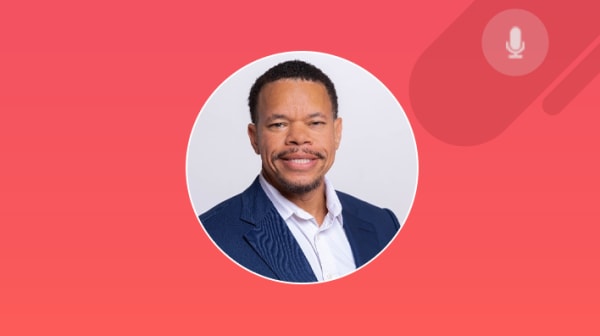
Craig Johns is a former elite athlete, international coach and CEO turned High Performance Leadership Expert. He is relentlessly curious, has an obsession for human behaviour and performance, and is passionate about transforming influencers into being high performance leaders.
As a global keynote speaker, active CEO performance coach, leadership performance expert, active CEO Podcast curator, and author of the soon to be launched Breaking The CEO Code book, he focuses on teaching you the four fundamentals of being a high performance CEO, Coach or Leader and the 3P’s of the leadership performance formula. He teaches you the 3 P’s of Breaking the CEO Code - CEO Performance, CEO Presence and CEO Periodization – so that you are on you're ‘A-Game’, ‘raise the energy in the room’, and have the ‘energy to perform’, every single day.
With more than 25 years global experience, working in five countries across three continents, in the sport, health, mind, education and hospitality industries, Craig has the knowledge and expertise to make a difference for you, as an important person of influence in this world.
Connect with him on LinkedIn
Show Notes
(00:53) What does a typical day in your life look like?
(02:54) How long have you been in the area of sports?
(05:05) How do you think sports mould an indivdual's personality?
(10:58) Can sports be the answer to those employees going through lack of motivation and discipline?
(13:57) How does a leader incorporate sports in their wellness programs?
(15:13) Can't leaders also learn a lot from sports?
(20:58) How can employers constantly motivate their workforce to be involved in wellness initiatives, especially during crisis like COVID?
(25:08) Would you like to share a personal experience or maybe something you have encountered over the years where you saw sports playing a crucial role in leadership?
(29:28) Would you like to share any more suggestions to help our listeners?