
Bring movement to your workday: Schedule a free Vantage Fit demo to see how step challenges, 30+ activity types, and the 7-minute workout fit into a full wellness program.
Habit building plays a crucial role in fitness journeys. It is often said that consistency is the key to success in achieving and maintaining fitness goals, and habits are the building blocks of consistency.
Key Takeaways
- Habit formation beats discipline. Ashish estimates only a single-digit percentage of people are naturally disciplined enough to sustain fitness through willpower alone — the rest need the "autopilot" that habits provide.
- Five aborted attempts is normal. It took him four failed starts before his 10-minute mindfulness practice stuck. Framing attempts one through four as data, not failure, is what gets people to attempt five.
- Knowledge doesn't change behaviour. He read the books and watched the videos before he ever became mindful — proof that awareness without a habit loop (cue → routine → reward) goes nowhere.
- Find the keystone habit, not a list. Borrowing from Duhigg, he argues one replacement habit (a daily walk, a 10-min meditation) quietly pushes bad habits out — much more effective than trying to overhaul ten behaviours at once.
- "Cost of not doing" is the missing motivator. People calculate effort, time, and money required to start, but rarely define what inaction costs them. Writing that down sharpens the urgency to begin.
- Small early wins drive corporate program adoption. At Vani, week-2 adoption sits at 30–35%; by week 15–16 it's 90–93% — because users hit breakthrough moments that make them stick. Any workplace wellness program should engineer for early wins.
- Setbacks are the process, not the exit. Not giving up is the only strategy; streaks will break, and starting from zero again is part of the journey, not evidence it won't work.
In Ashish's Words
On why habits beat willpower
To bring down the conscious effort in doing something, habit building comes in. The first four times I tried, I would see mindfulness as a task, as an intrusion in my time and space. But once the habit is built, it goes on autopilot.
Once you build the habit, all these excuses vanish very quickly — "I don't have time," "I have distractions," "I don't have the resources." Zero cognitive load. You don't need a reminder.
On finding the keystone habit
Instead of thinking about what all habits I need to cultivate, first think about my bad habits that are coming in the way. Then find one thing I can do that helps replace some of those. For me, subscribing to Headspace and sticking to it was the keystone.
I failed four times before I finally stuck to the practice. I'd build a streak of seven, eight, nine days and drop off. By the fifth attempt, I finally started building longer streaks and it became a habit.
On the corporate wellness design lesson
At Vani, our week-2, week-3 adoption isn't even 30–35%. But by week 15–16, adoption is 90–93%. Once people have had their breakthroughs and have confidence in the process, nobody needs to tell them to practice.
Define your small wins, celebrate them, find where your early breakthroughs are happening. For me, one breakthrough was realising I was less agitated in a high-pressure meeting. That's when I knew it was working.
On starting and restarting
All of us think about the cost of doing it — effort, time, energy, money. We don't actually define the cost of not doing it. That cost of inaction needs to be defined before you even think about habit building.
If you're not failing, you're not doing it right. You've set the goals so easy that the actual transformation will not happen. Not giving up is the only way to manage setbacks.
Tolstoy said: if you want to be happy, be. If you want to start, start. If we wait for the ideal moment, we'd never do it.
About the Speaker
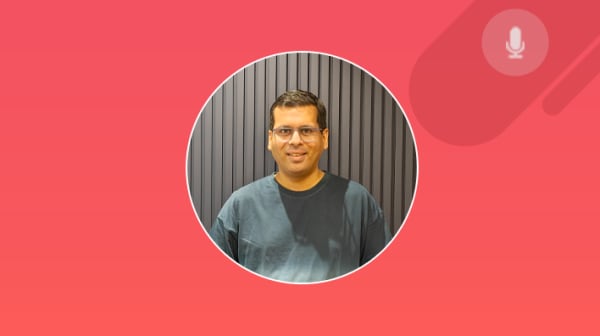
An entrepreneur for life, Ashish brought his journalistic learning to his calling as a wide-spectrum communication coach, ranging from CxOs to shopflooors to enabling unemployed youth to find jobs. He believes that coaching is one of the most effective and sustainable ways of skilling, and no one should be left 'uncoached'.
Over the last decade, he and his team at Vyakta have successfully upskilled and transformed thousands of working professionals across myriad industries. Now Ashish is using the power of affordable tech to enable Vanu, a unique digital coach to deploy skilling@scale without compromising the personal connection of a coach.
Connect with him on Linkedin.
Show Notes
01:04 How does the concept of habit building intersect with achieving long-term fitness goals?
03:17 Why is habit building considered a cornerstone of sustainable fitness progress?
06:05 What are some key habits that individuals should focus on when embarking on a fitness journey?
09:21 Can you explain the psychology behind habit formation and how it applies to fitness routines?
14:12 How do small, consistent habits contribute to significant changes in overall fitness and well-being?
17:11 What are the challenges that individuals often face when trying to establish fitness-related habits, and how can they overcome them?
20:00 How do external factors, such as environment and social support, influence the development of fitness habits?
22:05 Are there specific techniques or strategies you recommend for making fitness habits enjoyable and rewarding?