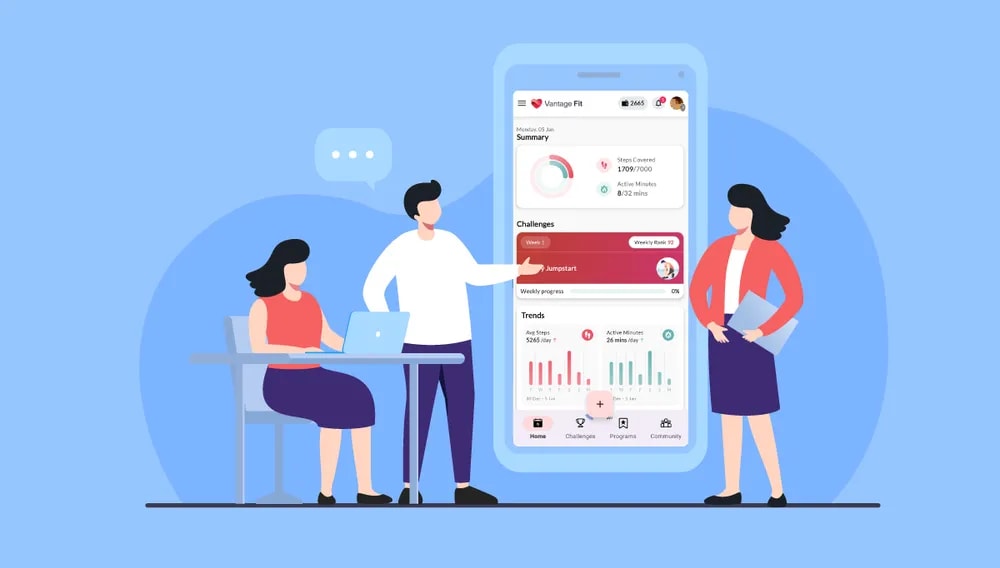

Key Takeaways
- Wellness programmes process special category health data under GDPR, so they typically need explicit consent and, in many cases, a Data Protection Impact Assessment (DPIA).
- For consent to be valid, opting out must carry no penalty and must be communicated as clearly as the benefits of joining.
- Data minimisation, aggregated reporting and clear retention limits are non-negotiable for compliant, trusted wellness initiatives.
- Vendor selection is now a GDPR decision as much as a wellness decision; wellness apps must support data subject rights, regional hosting options and HR-friendly aggregated reporting.
Workplace wellness programs started with a simple goal: help employees move more and stress less. Step challenges encouraged activity. Mindfulness tips offered a pause in busy workdays.
But somewhere along the way, things shifted.
Today, wellness platforms capture a wide range of personal metrics. Steps, heart rate, sleep patterns, mood, and indicators of future health risks all form part of the picture. Under GDPR, much of this falls within special category data, which carries the highest level of protection.
With this shift, the experience of wellness has changed.
HR teams look for participation and meaningful results. Employees experience the program as part of their everyday routines, where tracking becomes a constant presence. With time, that presence makes the line between support and observation feel increasingly blurred.
GDPR steps in at this exact point. Not to stop wellness initiatives, but to draw a line around how far they can go. To make sure care does not turn into control.
The blog below will walk you through building a wellness program that follows GDPR from start to finish. You'll see how to map data, set legal bases, design real consent and choose platforms that protect wellness data privacy while still driving participation.
Note: GDPR applies to any organization handling the personal data of individuals in the EU, regardless of location. It covers US employers with EU employees, remote workers in Europe, or global wellness programs. Even fully US-based companies should take note, as GDPR sets the global benchmark for data privacy and is increasingly reflected in laws like CCPA.
Why GDPR Changes the Rules for Wellness Programs
The General Data Protection Regulation (GDPR) changed the ground rules for wellness programs by pulling them into the same privacy framework that already applied to clinical health data. Instead of treating wellness as a low-risk "option/added bonus," regulators now look at it as structured processing of worker health information.
Data categories
GDPR splits information into two buckets:
- Personal data identifies people (name, work email, department).
- Special category data is more sensitive (physical/mental health, biometrics, genetic details).
Once data falls into this second bucket, GDPR expects stronger legal grounds, stricter safeguards and tighter access controls.
Modern wellness programs land in that sensitive zone very quickly. Examples include:
- Health risk assessments probe diagnoses, medications and lifestyle risks.
- Wearables stream steps, heart rate and sleep patterns.
- Apps log stress scores, mood and burnout indicators.
- Personalised programs use biomarker or genetic testing for tailored advice.
From a GDPR perspective, this mix of medical, biometric and mental health signals sits firmly under the special category umbrella.
Legal bases then become central. [Article 6] (https://gdpr-info.eu/art-6-gdpr/) says any use of personal data needs a lawful ground, such as consent, contract performance or legal obligation. [Article 9] (https://gdpr-info.eu/art-9-gdpr/#:~:text=Processing%20of%20personal%20data%20revealing,interests%20of%20the%20data%20subject;) adds an extra hurdle for health and biometric data; it demands a specific condition such as explicit consent or a requirement under employment and social protection law.
Optional wellness schemes rarely qualify as "necessary" for an employment contract, and regulators have warned against stretching "legitimate interest" to justify intensive health tracking. As a result, most credible designs rely on explicit, informed consent for wellness processing.
The workplace relationship makes that consent fragile. Employees know their employer controls pay, progression and reputation; so many feel pressure to join even when participation is officially "voluntary".
Incentives like premium discounts or large rewards can add to that pressure. Research on personalised wellness programs and US case law has already highlighted that strong financial incentives risk turning consent into a formality rather than a free choice.
A GDPR-aligned wellness model therefore builds in a real right to say no: opting out carries no penalty, and this is communicated as clearly as the benefits of joining.
The contrast between pre-GDPR and post-GDPR practice is stark.
| Aspect | Pre-GDPR wellness programs | Post-GDPR wellness programs |
|---|---|---|
| Enrolment | Employees often auto-enrolled and expected to opt out if uneasy | Employees invited to opt in; refusal explicitly allowed and consequence-free |
| Consent | Hidden inside long, general HR privacy notices | Short, separate wellness consent with clear language and scope |
| Data collection | Broad data grabs "just in case" more insights were needed later | Collection limited to metrics needed for defined wellness goals |
| Employer visibility | Individual-level health reports or identifiable scores shared with HR | Aggregated or anonymised health trends provided to HR; no direct view of raw records |
| Data reuse | Wellness data sometimes reused for HR or benefits decisions without clarity | Wellness data tied to specific purposes; reuse requires a new basis and fresh transparency |
| Transparency | Vague wording on vendor sites about what data reached employers | Program-specific notices that map data sources, flows and sharing partners |
Earlier wellness programs often ran on auto-enrolment, generous data collection and thin explanations, which understandably eroded employee trust. The GDPR model pushes organisations toward granular opt-in, leaner data sets and clear boundaries around use.
When employers accept that wellness is regulated data work and design accordingly, they lower legal risk and make it easier for employees to take part without feeling exposed.
What Data Wellness Programs Actually Collect
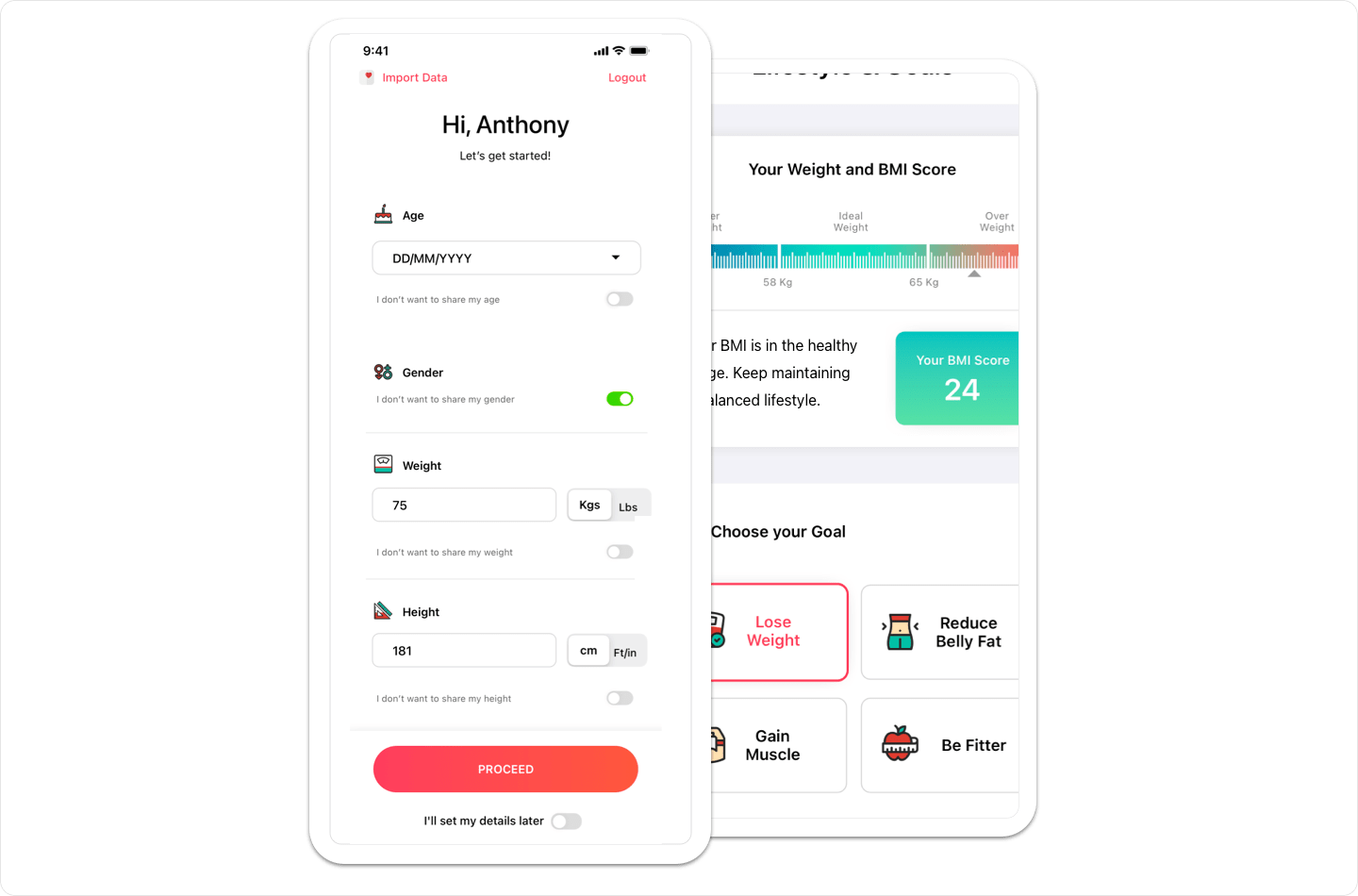
Most wellness programs collect more than people expect. They build a detailed picture of who an employee is, how they live and how they feel. At a minimum, they touch four main kinds of data:
- Profile data — Name, work email, employee ID, department, location and broad demographics such as age band. These fields link every data point back to a real person.
- Health and biometric metrics — Step counts, distance, heart rate, calories, sleep duration and quality. Many programs also store weight, BMI, blood pressure, lab results and answers from health risk assessments about lifestyle or existing conditions. Under GDPR, most of this sits in the "special category" health data bucket. (Source)
- Behaviour and engagement data — Wellness tools record which challenges people join, how many points or badges they earn, how often they log in and what content they view. Many now include mood or stress check-ins, coaching attendance and goal completion. Research on personalised wellness programs shows that this mix of health and behaviour data can easily shape how employees feel they are being judged at work if it is not handled carefully.
- Device and app information — Platforms also see which wearable is connected, which phone or browser is used, the app version and time-zone, and sometimes coarse location. On their own, these look technical. Combined with profile data, they still point back to an identifiable person and can support very fine-grained tracking.
Once these streams are stitched together, a wellness program stops being a simple challenge platform. It becomes a continuous health and behaviour monitoring system that sits inside the workplace.
Mapping exactly how each type of data flows between the wellness vendor, HR systems, insurers and any other partners is therefore essential. That map lets you choose the right legal bases, cut out data you do not truly need and set firm limits on who sees what.
Just as importantly, it is the foundation for honest communication with employees, who will only trust a program if they understand what is collected, where it goes and how it can and cannot be used. This is a foundational step in any data-driven employee wellbeing strategy.
Core GDPR Principles Applied to Wellness Programs
GDPR is built on a handful of principles. In wellness programs, those principles turn into very practical rules for what you may collect, how you may use it and who may see it.
| GDPR principle | What it means for workplace wellness programs |
|---|---|
| Lawfulness, fairness and transparency | Use a clear lawful basis, usually explicit opt-in consent for optional wellness initiatives, and explain in plain language what you collect, why, who sees it and for how long. |
| Purpose limitation | Tie wellness data to a tightly defined purpose, such as running challenges and rewards, and do not reuse it for performance reviews or HR decisions without a fresh basis and clear notice. |
| Data minimisation | Collect only the metrics that genuinely earn their place — for example basic activity data instead of GPS trails or continuous heart-rate streams — to lower risk and feel less intrusive. |
| Accuracy and storage limitation | Keep data accurate enough for fair decisions, offer simple ways to fix device or logging errors, and apply short retention periods before deleting or fully anonymising records. |
| Integrity, confidentiality and security | Protect wellness data with strong technical and organisational controls, restrict detailed access to a small trained group and rely on aggregated or anonymised reports for most HR use cases. |
| Accountability | Back every wellness data privacy promise with evidence — including a DPIA, processing records, readable notices and robust vendor contracts — so the programme looks like a governed health benefit rather than an uncontrolled data project. |
Lawfulness, Fairness and Transparency
Every piece of wellness data needs a clear legal reason to exist. In practice, that usually means asking employees for explicit, informed consent when you collect sensitive health and biometric data for an optional program.
Fairness adds another layer: people should not feel tricked, pressured or punished for saying no. Transparency then ties it together. Employees deserve a simple explanation, in plain language, of what will be collected, why you need it, who will see it and how long it will be kept.
Purpose Limitation
Each wellness program should have a tightly defined purpose. If you gather step counts and sleep hours to run challenges and give rewards, that is the purpose. That same data cannot later be reused for performance reviews, disciplinary decisions or risk scoring without a fresh legal basis and a very honest conversation with employees.
Keeping wellness data in its own "box" helps prevent it drifting into other HR uses.
Data Minimization
Every metric you track should earn its place. A walking challenge needs basic activity data, not precise GPS routes or continuous heart-rate streams. A stress-reduction program might need simple mood check-ins, not a full psychiatric history.
Collecting less data makes it easier to protect people's privacy, lowers your risk and often makes the program feel more respectful and human. For a deeper look at what lean, effective wellness programs actually measure, see employee wellbeing metrics that matter.
Accuracy and Storage Limitation
Wellness data should be accurate enough for the decisions built on it. If device sync issues or logging errors affect rewards, there needs to be an easy way to fix them. The same data also should not live forever.
Clear retention rules help: keep identifiable records only for as long as they are genuinely needed for the program, then delete them or turn them into fully anonymised statistics.
Integrity, Confidentiality and Security

Health information demands strong protection. Wellness systems should use encryption, access controls and careful separation from core HR and payroll tools. Only a small number of trained people should be able to see any identifiable health data, and HR should usually work with aggregated or anonymized reports.
These safeguards are what make employees feel safe enough to participate. This is especially important for corporate mental health programs where the data is particularly sensitive.
Accountability
Finally, every promise around privacy needs evidence behind it. A well-run wellness program therefore has its paperwork and practice aligned:
- a completed risk assessment,
- a clear processing record,
- readable privacy notices,
- solid contracts with vendors and working processes for access,
- correction and deletion requests.
When these pieces are in place, a wellness initiative no longer feels like an uncontrolled data project. It looks like a responsible health program that treats wellbeing and privacy as two sides of the same coin.
Programs that build privacy into their design see higher voluntary participation. When employees trust that their health data stays private, they are more likely to opt in and stay engaged — reinforcing the core elements of a successful wellness program.
Want to see how a GDPR-aware wellness platform handles consent, aggregated reporting and data access in practice?
Step-by-Step Blueprint for Designing a GDPR-Compliant Wellness Program
A GDPR-aligned wellness program is built, not bolted on. Each step below closes a specific risk and makes the program easier to defend to regulators, works councils and employees.
1. Start with a DPIA and Data Mapping
Begin by treating the wellness program as a high-risk health data project. Map what data you plan to collect, where it comes from (apps, wearables, HRIS), who sees it, which systems store it and where those systems are hosted.
A Data Protection Impact Assessment (DPIA) then uses that map to identify risks such as intrusive monitoring, discrimination, security weaknesses or unclear data sharing. Regulators like the ICO explicitly recommend DPIAs for any ongoing monitoring of worker health, especially when wearables or tracking technologies are involved.
2. Choose and Document the Lawful Basis
Next, decide on the legal foundation for the processing. For wellness programs, processing almost always involves health and biometric data, so it needs both a standard lawful basis under Article 6 and a special category condition under Article 9.
Because most wellness initiatives are optional, explicit consent from employees is usually the safest path, rather than stretching "legitimate interest" or "performance of a contract." Document these choices in your Record of Processing Activities and in your DPIA so you can show, if asked, why you believe the program is justified.
3. Design Consent That Is Real
Consent for wellness programs should be a clear, active opt-in. Use a short, separate consent screen or form that explains in simple language what data will be collected, why, for how long and who will see what.
Make sure employees can say no without losing core benefits, facing penalties or feeling like they are risking their reputation at work. Provide an equally simple way to withdraw consent later, and build your systems so that withdrawal actually stops further processing and triggers appropriate deletion where possible.
4. Apply Data Minimisation at Feature Level
After consent design, review each feature and ask if the data it collects is genuinely necessary. Trim step-tracking challenges to basic activity metrics rather than GPS trails. Configure mental health check-ins to collect high-level indicators instead of detailed clinical narratives.
The ICO's guidance on worker health data stresses that only relevant information should be collected and that employers must be able to justify why each item is needed. Data minimization at feature level not only reduces risk — it also makes the program feel less intrusive to employees.
5. Set Retention Rules and Tighten Access

Once the program's scope is clear, define how long identifiable wellness data will be kept and who can access it. Create a short retention schedule for raw personal data (for example, the current plan year plus a limited buffer) and rely on anonymised or aggregated reports for long-term trend analysis.
Restrict access so wellness data is not visible to line managers or general HR staff by default. Reserve detailed views — where truly needed — to a small group of trained administrators bound by strict confidentiality, while most stakeholders work only with aggregated dashboards.
6. Handle Cross-Border Transfers Deliberately
Many wellness platforms are SaaS products with servers and support teams spread across regions. Check where your vendor stores, backs up and accesses data, including support tools and monitoring services.
If any personal data moves outside the EU or EEA to a country without an adequacy decision, put Standard Contractual Clauses (SCCs) or other appropriate safeguards in place and complete a Transfer Impact Assessment.
Good practice also includes reducing unnecessary transfers by choosing EU-hosted regions where possible and limiting access from non-EU support teams.
7. Build Clear Processes for Data Subject Rights
Employees keep their GDPR rights inside a wellness program. They can ask what data is held about them, request corrections, object to certain uses, ask for deletion in many cases and withdraw consent.
Set up simple channels (for example, a dedicated email or in-app request flow) to handle these requests and train HR and privacy teams to respond within the legal timelines.
Make sure your vendor contract requires support for access, export, correction and deletion so you are not stuck manually piecing together data from multiple systems.
When these steps come together, a wellness program stops looking like a risky experiment in health tracking and starts to resemble a well-governed, privacy-aware benefit. That is the real differentiator: not just having a platform that counts steps and runs challenges, but having an architecture and process that a DPO can sign off on and employees can trust.
Conclusion
Wellness programs now sit firmly in the realm of regulated health-data processing. And with GDPR in the picture, each step count, risk score and mood check-in is treated as sensitive information that demands a clear purpose, limited collection and robust safeguards.
Viewed through that lens, design becomes the real differentiator. Thoughtful consent, tight data minimization and aggregated reporting allow HR to act on patterns without peering into anyone's private record.

In the Vantage Fit admin view, leaders see workforce health insights — such as the percentage of employees at diabetes, heart or kidney risk, and how overall health trends over time — rather than a dossier of individual medical details. That kind of population-level lens is exactly what keeps a program useful and still respectful.
Choosing the right platform then turns this approach into a repeatable practice. The right platform surfaces meaningful group analytics while keeping personal data shielded behind strong privacy and security controls, so wellbeing teams can focus on outcomes instead of wrestling with compliance.
For organisations building out their corporate wellness programs, understanding GDPR is not a legal checkbox — it is a trust-building exercise that directly affects how many employees choose to participate.
Ready to build a wellness program your employees will actually trust — and your DPO can sign off on?
Frequently Asked Questions
Does GDPR apply to wellness programs outside the EU?
Yes. GDPR applies to any organisation processing the personal data of individuals in the EU, regardless of where it is based. If you have EU employees, remote workers in Europe, or include EU nationals in global programs, you must comply. US-based employers are not exempt.
Can employers require participation in a wellness program under GDPR?
Not when the program collects sensitive health or biometric data. Under GDPR, consent must be freely given, meaning employees can decline without penalty, loss of benefits, or workplace consequences. Making participation mandatory or tying it to incentives or performance can invalidate consent and trigger regulatory scrutiny.
What happens if a wellness vendor is non-compliant with GDPR?
As the data controller, your organisation remains liable even if a vendor causes the breach. GDPR penalties can reach €20 million or 4% of global annual turnover, whichever is higher. Beyond fines, breaches can damage reputation, erode employee trust, and trigger regulatory action. Vendor contracts must include a Data Processing Agreement (DPA), and GDPR compliance should be assessed during procurement, not after signing.
Do step challenges count as health data under GDPR?
Yes. Step counts, heart rate, sleep patterns, and similar metrics qualify as biometric and health data under GDPR. As “special category” data, they require explicit consent and stronger safeguards. Even basic fitness data can reveal sensitive health insights over time.
What is a DPIA and when is it required for wellness programs?
A Data Protection Impact Assessment (DPIA) is a structured risk analysis required before processing data that may pose high risk to individuals. Wellness programs involving wearables, health assessments, or biometric tracking typically require one. Conducting a DPIA early helps identify and address risks before launch, rather than after regulatory scrutiny.