
A corporate wellness program is a structured set of employer-run initiatives that support employees' physical, mental, and financial health. To build one, assess employee needs, secure leadership support, set SMART goals, budget, choose a vendor, and launch with rewards. A Harvard meta-analysis found medical costs fall about $3.27 for every dollar spent on wellness programs.
There are far-reaching benefits to corporate wellness programs, and they have shifted how employers think about employee well-being. Platforms like Vantage Fit make running one easier, handling challenges, health tracking, and analytics in a single place. When employers care for their people, morale and productivity rise, and company profit follows.
However, even an excellent wellness program fails if it is not implemented properly. This guide walks through the steps, the core elements to include, the strategies that keep employees engaged, and the results you can expect.
KEY TAKEAWAYS
- A corporate wellness program succeeds only with proper implementation: assessment, leadership buy-in, clear goals, a realistic budget, and the right vendor.
- Build the program around core elements like physical health, mental health, financial wellness, work-life balance, and recognition.
- SMART goals (Specific, Measurable, Achievable, Relevant, and Time-bound) give the program direction and make its impact measurable.
- Team-based challenges and visible leadership sustain participation far better than one-off initiatives.
- On Vantage Fit, programs like Tata Motors (59% engagement) and MindPoint Group (97% engagement) show what measurable results look like.
How to Create and Implement a Corporate Wellness Program?

The groundwork of all happiness is health. ~ Leigh Hunt
So, how do you devise a data-driven and evidence-based wellness program for your employees that actually works? Before you create a wellness program, ask yourself some questions-
Is my employee absenteeism hampering my business?
Are my employees taking sick leave every other day?
Is my office culture toxic? If it is, how can I promote a healthy work culture and thrive on it?
Go through our guide on wellness program implementation. Follow the steps given below to create and implement a program in your organization as well.
Step 1: Conduct an Assessment

Conducting an assessment is the first step to creating a wellness program for your employees. This assessment will determine the features of the program you need to provide for your workforce.
With these assessments, you can peek into your employees' health. Knowing the specifics of your workforce's healthcare will benefit you in creating a wellness program for them. Gather data such as absenteeism rates, healthcare claims, and employee turnover to identify organizational trends.
Go beyond the numbers in two ways. First, run an employee wellness survey before you launch anything. Every organization is unique, and copying another company's program is a common mistake. A short survey tells you what your people actually want, so you can curate initiatives that appeal to them.
Second, consider biometric screenings and a health risk assessment. These general health checks, collected through surveys or on-site screenings, surface risk factors early and give you exclusive data points to build a program around. They also let program managers customize the plan as needs change.
Once you are through with assessment, the next step is to get your upper management involved.
Step 2: Secure Upper Management’s Support
Once you decide, pitch the idea to your upper management. Help them understand the potential benefits of the program for the company and its employees.
Use prior case studies and reports from different companies to leverage your proposal. Mention how these programs enhance the ROI and boost employee retention rate. All of these can further be leveraged by a dedicated wellness community.
Step 3: Establish a Dedicated Wellness Community

An effective employee wellness program takes some time to be planned and created. It is wise to build a wellness community at work that will encourage and promote your program.
This community can include representatives from different departments to foster inclusivity in a diverse workforce. These representatives can work flawlessly to promote initiatives, encourage participation, and share valuable feedback.
Suggested Read: Teacher Wellness Programs: Why They Matter and How to Start
Step 4: Develop Goals and Objectives
Developing goals and objectives for the implementation of wellness programs is crucial. You cannot implement the program properly if its objectives and employee needs do not align.
For example, if the survey revealed a protein deficit in 70% of your employees, you could set a goal to increase the average protein intake by 10 grams per day within the next three months. Introduce high-protein snacks in office pantries or partner with local meal service providers.
Make every goal a SMART goal, meaning Specific, Measurable, Achievable, Relevant, and Time-bound. A vague target like "improve employee health" is hard to act on. A better one is "reduce healthcare costs by 15% through annual health screenings" or "increase fitness challenge participation by 30% within six months." The precision is what lets you measure success and course-correct.
It also helps to separate long-term goals from short-term ones:
- Long-term goals are the broad aims: fostering a culture of health, improving mental well-being, or reducing healthcare costs through preventive care.
- Short-term objectives are the immediate actions that feed those aims: launching a monthly fitness challenge with a 50% participation target, training team leaders in mental health first aid, or introducing guided meditation sessions twice a week and tracking a 20% rise in attendance within three months.
Breaking big goals into smaller, measurable objectives keeps employees motivated and gives your program a steady stream of wins.
Therefore, clear objectives must be established to track progress and adjust strategies as needed. Goals should align with both organizational priorities and individual employee needs.
With the goals and objectives in place, it is time to create a realistic budget for the program.
Step 5: Create a Budget

Determining and managing financial resources is at the heart of starting any program. These resources can include program materials, vendor fees, employee incentives, technology tools, and marketing expenses.
Create a realistic budget for the program, considering all the possible short-term and long-term costs. Present a cost-effective report or a payoff approach to the higher management or stakeholders.
Step 6: Research and Choose the Right Vendor
Research your way in and choose the best employee engagement and wellness platform for your company. Pick a vendor that provides well to align with your wellness goals. Browse through their services like trainer, nutritionist, wellness classes, real-time health metrics collection, and a mobile application.
Before you choose, analyze every vendor's technological approach and past record. Be doubly sure of the vendor's features and services.
Step 7: Include Prizes and Rewards

No wellness program will function correctly unless you add prizes and rewards. Incorporate employee incentives to encourage participation and sustain employee interest. For example, gift cards, wellness-related items like fitness trackers or yoga mats, or additional paid time off.
Set monthly awards such as "Walker of the Month," or "Wellness Champion of the Month," for enhanced participation. This is the point where you market your program to your employees.
Suggested Reading: 8 Employee Wellness Awards that Every Company Should Aspire to Win
Step 8: Promote or Communicate the Plan

Once you have the wellness program implementation plan drafted, go ahead and create hype about it. Communicate the commencement of the wellness program through different channels to increase participation.
Reach employees using multiple channels, such as email campaigns, intranet updates, team meetings, posters, and social media. Explain the program's benefits, goals, and how employees can participate.
Step 9: Building Wellness Policies
A wellness program can only work effectively in the long run. Therefore, wellness policies should be added to the company and aligned with the company policies. Connect loose ends with the program and your business to benefit most.
These policies may include flexible schedules for wellness activities, subsidies for gym memberships, or guidelines for healthy food options in the workplace. Document these policies to ensure consistency and transparency.
Step 10: Regularly Update the Wellness Program
To ensure the program's proper functioning, update the program guidelines and features as and when needed. Analyze metrics such as participation rates, employee satisfaction surveys, and more, and update the program as needed.
Adjust initiatives to keep them relevant and impactful. Encourage employees to provide input to ensure the program continues to meet their needs. This is a crucial step to wellness program implementation.
What to Include: The Core Elements of a Wellness Program
A complete corporate wellness program covers several core elements, not just physical fitness. These span health screenings, wellness technology, nutrition, mental health, financial wellness, work-life balance, social connection, professional development, safety, and recognition. Wellness has moved well beyond flu shots and gym memberships.
According to a survey by the Global Wellness Institute, 87% of employees now expect their employer to support their overall well-being, including mental, emotional, and financial health. Programs that meet that expectation tend to lower healthcare spending and strengthen retention. Here are the core elements a strong program should cover.
Health screenings and preventive care
Regular health assessments help catch risk factors early and promote preventive care. This includes annual check-ups, biometric screenings, on-site or subsidized gyms, healthy food access, and group fitness activities like yoga, walking, and fitness challenges.
Telehealth belongs here too. Virtual medical consultations give employees prompt advice without taking time off for minor issues, and they are ideal for remote teams. According to the American Psychological Association, 89% of employees with access to wellness activities are more likely to recommend their company as a great place to work.
Wellness technology and wearables
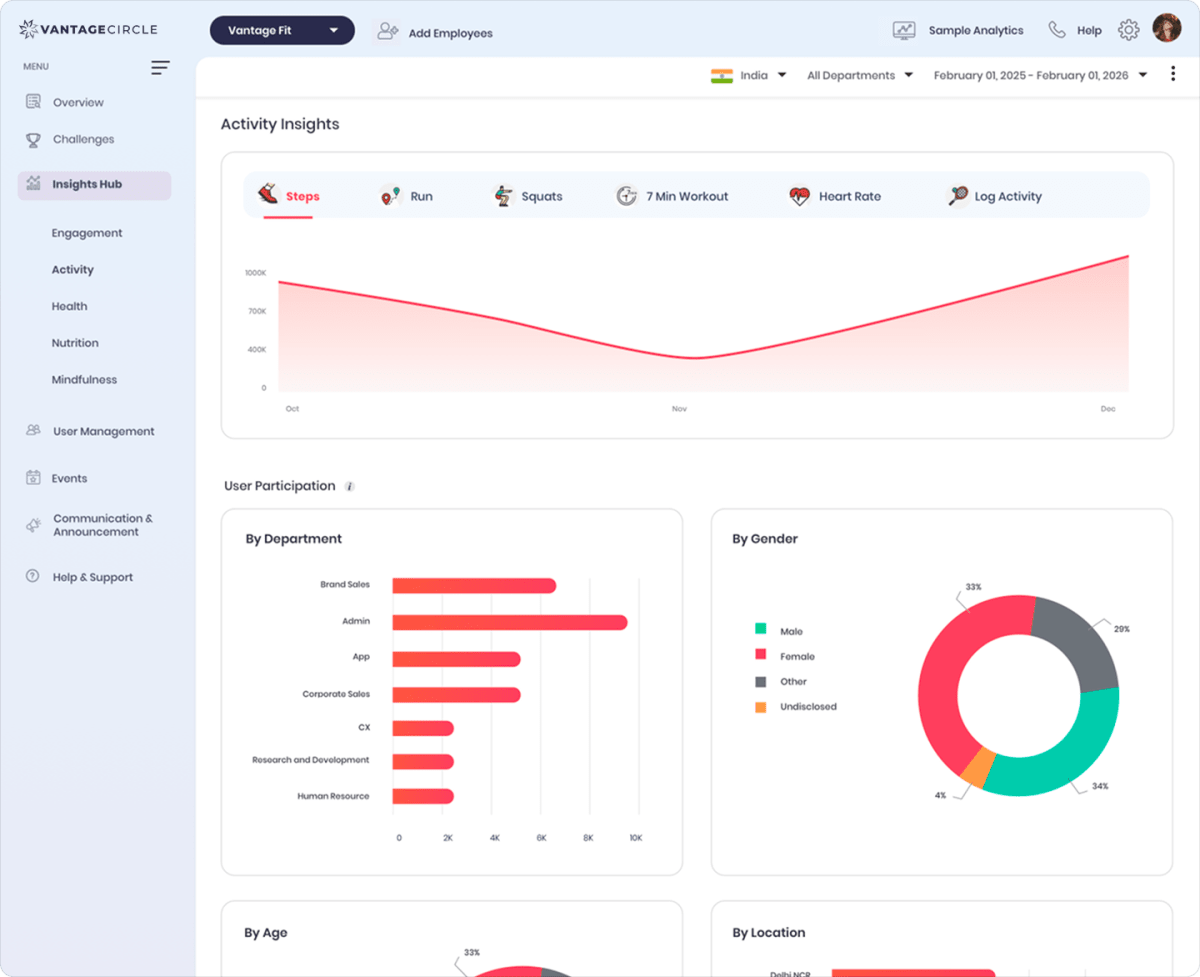
Devices like step trackers, heart-rate monitors, and sleep aids offer valuable insight into individual health, as long as you handle the data transparently and respect privacy.
Pair the tech with gamification and incentives: reward employees for hitting fitness goals or finishing weekly challenges with prizes, extra time off, or public recognition. A wellness app that integrates with wearables gives employees a complete view of their health and gives HR the data to prove program ROI.
Nutritional support
What people eat shapes how they think, feel, and perform. Offer healthy choices in cafeterias and vending machines, provide nutrition education, and encourage mindful eating. Cooking classes, nutrition workshops, and consultations with a dietitian go further than a fruit bowl in the pantry.
Mental health support
Mental health is no longer optional. According to research from Mind Share Partners, half of Millennials and 75% of Gen Zers have left a job for mental health reasons. Typical offerings include access to therapy and counseling, mental health days, meditation sessions, and stress-management resources.
A well-run Employee Assistance Program (EAP) is a cornerstone here, giving employees confidential, professional support for stress, grief, addiction, financial trouble, and other personal challenges.
Financial wellness
Money worries follow people to work. An employer survey found 88% of employers extending well-being programs to cover financial health. Financial planning workshops, retirement and debt-management support, and access to financial advisors help employees gain control of their money and, in turn, focus better at work.
Work-life balance and flexibility
Flexible hours can seem like a small thing, but they are in high demand, especially among younger employees who value getting the work done over being seen at a desk all day.
Prioritize flexible schedules, remote-work options, and genuine paid time off, and make sure leadership actually uses these benefits so employees feel free to as well. The stakes are real: a Gallup study found burned-out employees are 63% more likely to take a sick day and 2.6 times as likely to be job-hunting.
"By not commuting, I have more time to spend with my family and more time for daily things, like cooking a meal and eating together." ~ An American Working Professional
Social connection
A thriving workplace is built on relationships. Team-building events, company-wide celebrations, a virtual book club, or a simple lunch and learn all break down silos and boost morale. Strong company culture rests on genuine connection, so treat social engagement as part of the wellness program, not an afterthought.
Professional development
Growth is a wellness issue. Research from Udemy found nearly half of employees view professional development as one of the most impactful things a company can do to reduce stress. Training programs, mentorship, online courses, and clear advancement paths help employees feel valued and lower turnover.
Safety and ergonomics
The physical environment matters more than most companies think. A Harvard study linked better air quality to higher cognitive function and work performance. Ergonomic furniture, adjustable workstations, good lighting, and regular safety training all reduce injury risk and support day-to-day well-being.
Recognition and rewards
Recognition is a powerful engagement tool, not just a nice gesture. Research from Atlassian shows publicly recognizing employee wins can improve team well-being by as much as 16%. Build in recognition programs, incentives, and meaningful rewards, and celebrate achievements openly to keep participation high.
Strategies to Make Your Wellness Program Stick
Building the program is one thing. Keeping people engaged month after month is another. These strategies are what separate programs that last from programs that quietly fizzle out.
Lead by example
Leadership buy-in is more than a signature on a budget. When leaders visibly join challenges, take their own vacation time, and talk about their well-being, they signal that the program is real and safe to participate in. Their example does more for participation than any all-staff email.
Make the committee cross-functional
A wellness committee drawn from different departments and backgrounds gives you a fuller picture of what employees actually need. Cross-functional representatives surface the specific challenges their teams face and help tailor initiatives so the program feels relevant to everyone, not just head office.
Divide employees into teams
Turn wellness into a team-building activity. Grouping employees into teams for a challenge sparks friendly competition, builds camaraderie, and keeps people motivated toward a shared goal.
Team-based challenges sustain participation in a way individual programs rarely do. Ask each team to pick a leader to communicate goals and rally the group.
Ramp up challenge difficulty gradually
A common mistake is throwing a 15,000-steps-a-day or 10K-run challenge at people on day one. For someone who has never trained, that is discouraging at best and unsafe at worst, and it gives the whole program a bad first impression.
Follow an ascending rule: start with achievable targets, build confidence, then raise the bar. Easy early wins keep people in the game.
Brand your program
Give your wellness program a name and an identity that fits your company culture. Branding makes employees feel part of something exclusive rather than enrolled in another HR initiative, and it keeps engagement up over the long run. You can use our free Wellness Program Name Generator to get started.
Celebrate wins publicly
Public recognition is a powerful motivator. Highlighting employees' progress on internal channels, or celebrating milestones company-wide, gives people a sense of accomplishment and inspires others to join in. Recognition turns individual effort into shared momentum.
What are the Benefits of Implementing a Wellness Program?
Wellness programs bring many benefits to any organization. They promote employee well-being through walking meetings, weight-loss challenges, and more. According to a report by Gallup, businesses saw 81% reduced absenteeism due to an engaged workforce.
Here are some significant benefits of implementing a wellness program in a company.
Increased Productivity
A study in Management Science found a well-designed wellness program produced about a 4% gain in the average worker's productivity, with even larger gains among employees whose health improved. When people feel good and healthy, they bring more energy to work.
These programs also keep employees engaged and make them feel good about work. This boosts their productivity and happiness at work.
Suggested Read: How to Master the Role of Wellness Program Manager
Reduced Absenteeism

The wellness initiatives taken under an employee wellness program significantly reduce absenteeism. In a UnitedHealthcare survey, 56% of employees claimed they could take fewer sick days due to these programs.
When employers care for their employees' well-being, their morale and attitude toward the company also improve.
Decreased Healthcare Coverage or Costs
Companies have to cover their employees' healthcare under health insurance. However, this cost can be reduced if the employees are healthy and fall ill less. Implementing wellness programs can help achieve this.
These programs help maintain a culture of good health in the office. They also help employees build healthier habits for home and work. Therefore, they fall sick less.
Reduced Stress
A work culture that focuses on employee well-being and engagement produces less stress for the employees. Reduced stress because of wellness initiatives can improve employees' engagement and productivity.
Improves Employee Behaviors and Habits
We are what our habits make us. Therefore, every employer tries to form a better and healthier workforce that stands out. This can be achieved with wellness programs.
Wellness programs and their challenges can help employees live a healthy life. For example, they can help employees quit drinking and smoking, exercise, eat right, and get checked up occasionally. This enables them to build healthier habits and behaviors.
Attracts New and Talented Employees
The benefits of employee wellness programs are limitless. Apart from benefiting the current employees, they also attract new talents to the company.
When choosing a job, employees look for more than just a salary. They also look for health benefits and wellness programs that can support a healthy work culture. Therefore, having an active wellness program can help the company retain current employees and attract new ones.
How Can Vantage Fit Help in Creating and Implementing Wellness Programs?
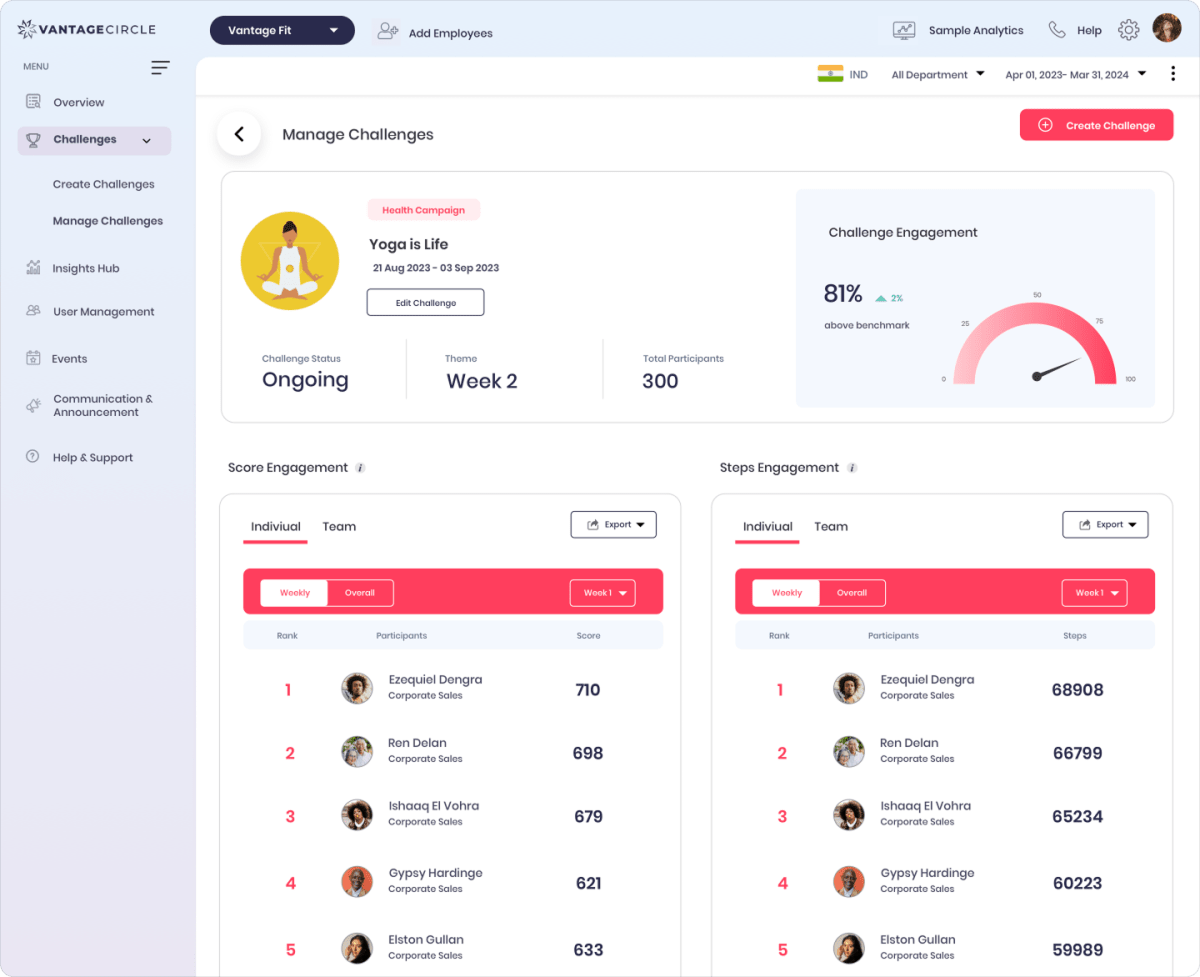
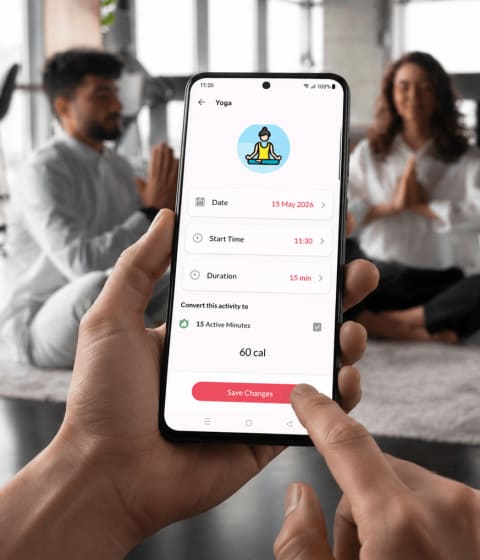
Vantage Fit is an employee wellness platform that provides seamless employee health data for the organization and helps create and monitor various wellness challenges for the employees.
It can help organizations create and implement wellness programs with the help of its features.
Holistic Wellness Tracking
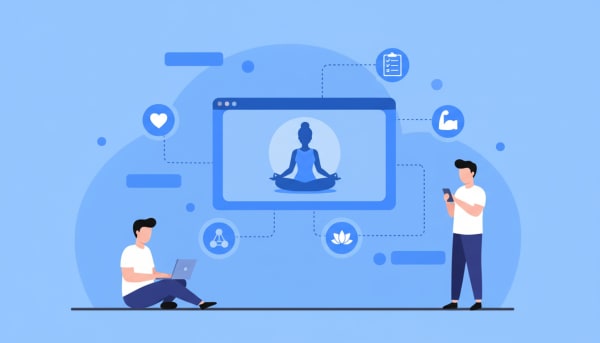
Vantage Fit helps track employees' health data through a series of challenges. These metrics include -
- Activity tracking
- Nutrition and hydration
- Fitness and exercise
- Mental well-being
Suggested Read: A Guide on Hospital Wellness Programs for Employers
Multiple Device Compatibility
The Vantage Fit application is easily accessible on mobile devices. You can even import data from other health applications like Google Fit and Apple Health. This gives the employees and management convenience to track real-time data.
Admin Dashboard
The organization can monitor and control the program and its guidelines from the super admin panel. They can also make informed decisions with the help of the extensive data portrayal on the dashboard.
Incentives and Rewards
To ensure the smooth functioning of a wellness program, Vantage Fit comes with engagement tools, incentives, and rewards for employees.
Fully Secure and Compliant
Every piece of employee data is secure with Vantage Fit. We make sure employees feel confident in sharing their health and other data pieces.
Proven results across real teams
The framework in this guide is not just theory. Here is what it looks like in practice on Vantage Fit:
- Tata Motors ran a 6-month Step and Stride Challenge and sustained 59% engagement across 1,248 active participants, with measurable outcomes spanning steps, nutrition, sleep, and mindfulness. Read the case study.
- Wipro ran three connected global challenges in 2025 and grew participation 3X, from 163 to 550 active users across 30-plus countries, with step activity rising 84% between May and July. See how it worked.
- MindPoint Group ran a two-week Virtual Walkathon that hit 97% employee engagement and 776,000 steps collectively, strengthening team spirit along the way. Read the case study.
So, if you are an employer or an HR looking for a wellness platform for your employees, Vantage Fit is your go-to solution. Get customizable features for your organization's policies and ensure your employees’ welfare with us. Book a call with us today!
Suggested Read: Wellness Programs for Construction Companies That Pay Off
Frequently Asked Questions
Can wellness programs help you improve employee health?
Yes, wellness programs can help improve the health of the employees through various wellness challenges such as jogging, mindfulness, nutrition and hydration, and more.
Will they receive any wellness stipend for participating?
No, they do not receive any stipend for participating. However, there are incentives and rewards on completion of the assigned tasks and challenges.
How can HR measure the success of a wellness program initiative?
HRs can easily track the success of their wellness program initiatives through employee wellness dashboards. These dashboards help track real-time data such as steps, jogging distance, squats, and more, which can later be exported into comprehensive reports.
What are some affordable wellness program ideas for small business?
Some budget-friendly wellness program ideas for small businesses can be -
- Flexible work hours
- Tobacco free initiatives
- Yoga and fitness classes once a week
How can HRs promote employee engagement in wellness initiatives?
- HRs can take various measures like giving wellness stipends and allowances to improve employee engagement in the wellness programs.
What is a SMART goal for a wellness program?
A SMART goal is Specific, Measurable, Achievable, Relevant, and Time-bound. Instead of a vague target like "improve employee health," a SMART version would be "increase fitness challenge participation by 30% within six months" or "reduce healthcare costs by 15% through annual health screenings."
How do you get leadership buy-in for a wellness program?
Present a data-driven business case that ties the program to organizational goals, include realistic ROI projections, and get executives to participate visibly. When leaders join challenges and model healthy habits themselves, it signals to the whole company that the program matters.
How do you sustain a culture of health over the long term?
Keep communicating, keep leadership visibly involved, and build in feedback loops so employees can shape the program. Celebrate milestones, appoint wellness champions, and stay flexible, adjusting initiatives as employee needs and health trends change.