An office weight loss challenge is a structured, 4- to 8-week workplace wellness competition designed to motivate employees to adopt healthier lifestyle habits, including increased physical activity, balanced nutrition, and active recovery.
Rather than measuring total pounds lost, a fair office challenge evaluates progress through percentage of body weight lost or activity consistency (such as daily steps and active minutes) to ensure equal footing across diverse fitness baselines.
While standard wellness programs frequently experience participation drop-offs after the first month, a gamified workplace weight loss competition keeps teams engaged through friendly milestones, peer accountability, and tangible rewards.
A corporate wellness platform like Vantage Fit lets HR leaders automate challenge setup, track nutrition and activity in real time, and protect employee privacy without manual spreadsheets.
Key Takeaways
- 4–8 weeks is the ideal duration for an office-based weight loss challenge, short enough to hold attention, long enough to build lasting healthy habits.
- Score competitions by percentage of body weight lost or activity streaks rather than absolute pounds to ensure fair, inclusive participation.
- Vantage Fit's client Brazosport ISD improved average employee BMI from 30 to approximately 27 through a structured workplace fitness initiative.
- Programs offering tangible incentives (such as digital gift cards and wellness points) sustain participation far longer than recognition-only formats.
- Gamification mechanics like leaderboards, streaks, and milestone badges drive up to 59% sustained engagement, compared to the 40% median RAND recorded for programs offering rewards.
Why do office weight loss challenges work? (The business case for HR)
An office weight loss challenge delivers both financial and cultural returns for an organization. HR leaders can justify the investment through two core outcomes: measurable clinical health improvements and sustained cultural engagement.
Business and Employee Benefits
Weight-loss challenges deliver measurable results across the categories that matter most to leadership.
Financial savings: Workplace physical activity and lifestyle wellness programs are linked to roughly $250 in lower annual paid healthcare costs per active employee according to Johns Hopkins research. This return stems directly from reduced absenteeism, higher on-the-job focus, and lower long-term chronic disease claims across organizations.
Measurable health improvements: Brazosport ISD ran a workplace fitness challenge with Vantage Fit and improved their average employee BMI from 30 to approximately 27. That is a tangible metric an HR Director can present to the board alongside a corporate wellness program proposal.
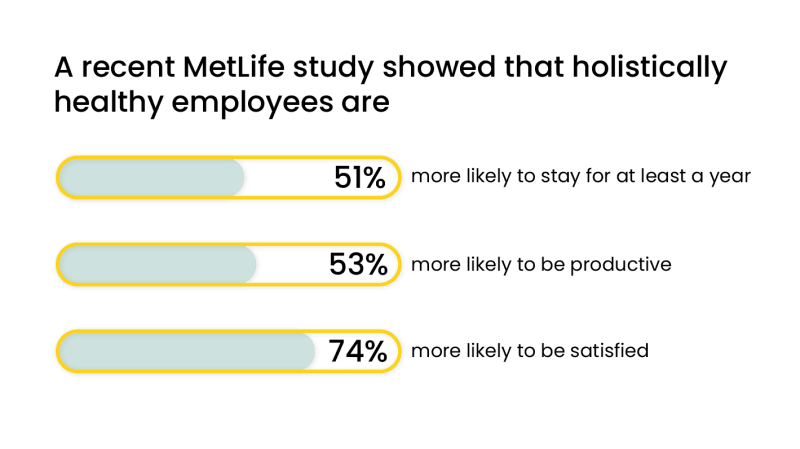
Cultural engagement: RAND found median participation of 40% among employers offering rewards, and 20% among those offering none. When Tata Motors ran a multi-activity wellness challenge with Vantage Fit, it achieved 59% employee participation throughout the program.
Why such a vast difference? The answer lies in program design. The structured challenge format, real-time gamification, and meaningful incentives transform wellness participation from an optional chore into an engaging company-wide initiative.
How do you create a fair office weight loss challenge?
One of the biggest questions HR leaders raise before launching a weight-based challenge is: “How do we make this fair?”
Here is a five-step framework that covers everything from planning to scoring. For a broader guide, see how to create a wellness challenge.
Step 1: Planning and Preparation
A well-configured challenge is one where nothing surprises HR on launch day. Work through this checklist at least two weeks before the start date:
- Get leadership buy-in and assign a program sponsor.
- Define your challenge goals (weight loss, activity improvement, or both).
- Set eligibility rules (all employees, specific locations, or opt-in by department).
- Draft participant communications and FAQ documents.
- Set up your tracking system before invitations go out.
- Establish a rewards budget and decide on prize tiers.
- Schedule the full program timeline, including weigh-in dates and weekly check-ins.
- Brief team managers to actively encourage participation.
Vantage Fit lets HR configure challenge rules, team structure, rewards, and tracking from a single admin panel, no spreadsheets or IT involvement required.
January and early March are peak participation months. Plan your launch date and work backwards.
Step 2: Setting Fair Rules and Parameters
When the goal is fairness, the scoring method is everything. Below are the key parameters to define in your policy:
- Percentage-based scoring: Score by percentage of body weight lost, not total pounds. An employee starting at 160 lbs and one at 240 lbs compete on equal footing.
- Activity logging minimum: Require employees to log activity at least three times per week to qualify for leaderboard ranking and prize consideration.
- Medical exemptions: Allow employees with doctor-advised restrictions to compete in an activity-only category instead of a weight-based scoring track.
- Disqualification rules: Explicitly prohibit extreme fasting, crash diets, and supplement use. Flag anything that creates an unfair advantage before the program begins.
- Optimal duration: 4–8 weeks.
Step 3: Tracking Progress and Making It Visible
Real-time leaderboard visibility is what keeps participants engaged across a multi-week program.
Manual tracking spreadsheets are outdated and raise privacy concerns. Employees today do not consent to having their weight recorded in an Excel file that multiple people can access.
Automated platforms solve this. HR sets up the challenge once, and the platform handles all updates. For a list of apps that automate step tracking and leaderboard updates, see step challenge apps.
Nowadays, many HR leaders are opting for platforms like Vantage Fit to automate tracking and simplify the logistics of a workplace competition.
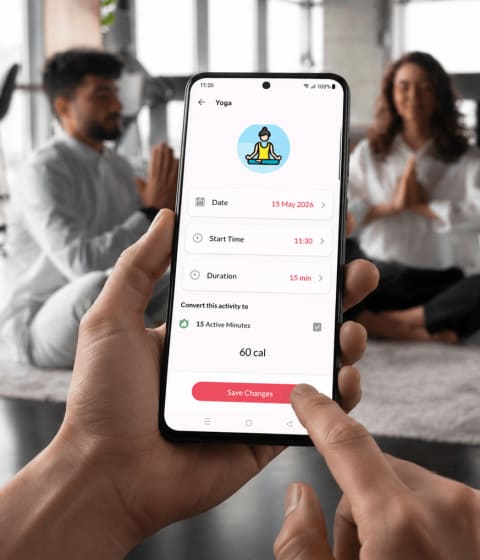
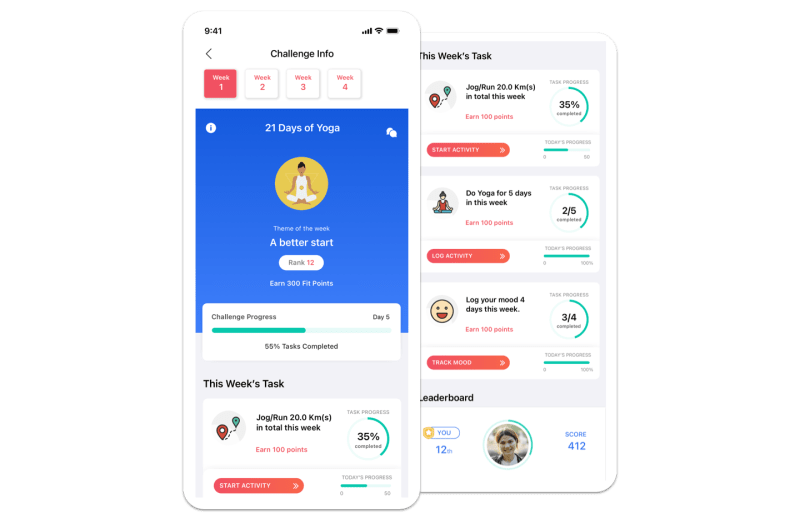
For a weight-focused competition, the Vantage Fit team can configure a Weight Burn challenge, a calorie-burn race whose leaderboard shows calories burned as an equivalent in kilograms. It reflects how active employees have been, not actual weight loss. Participating employees can utilize integrated calorie tracking to monitor their daily nutrition and energy expenditure.
Step 4: Providing Resources and Support
A weight-loss challenge without support is like running a marathon without a training plan. Four resource types work best alongside an office weight loss challenge:
Nutrition guidance: Instead of handing out generic calorie numbers, give employees personalized targets. For instance, tools built on the Mifflin-St Jeor BMR formula calculate resting metabolic energy requirements based on body composition, lifestyle, and goals, making the weight-loss journey realistic, not restrictive. For a deeper dive, see corporate nutrition programs.
Workout content: Not everyone walks into a challenge knowing where to begin. Share guided workouts, desk-friendly stretches, and simple walking routines. Remove the intimidation factor and replace it with momentum.
Mental health support: Weight loss is deeply tied to how employees feel. Integrate stress check-ins, mindfulness tools, or short breathing exercises. When employees feel mentally supported, they stay physically consistent.
Manager enablement: Culture comes from people, not policies. When managers actively encourage participation, they shift from passive observers to active motivators. A simple “How’s your progress going?” can keep someone in the challenge who was about to drop off.
Step 5: Making It Fun with Gamification and Rewards
Most wellness programs lose the majority of their participants by month two. Programs that hold engagement share a common design: they make participation feel like a game, not a chore.
Tata Motors achieved 59% engagement in a multi-activity challenge. Four mechanics drove that outcome:
- Team-based leaderboards: When departments compete against each other, group accountability kicks in. Employees do not want to let their team down.
- Badges and achievements: Milestone recognition like “First 10,000-step day” or “5-day streak” reinforces habit formation at the individual level.
- Real rewards: Points redeemable for gift cards from Amazon, Starbucks, or Nike drive repeat participation in a way that recognition alone cannot. Browse step challenge prize ideas and rewards for fitness for inspiration.
- Weekly announcements: HR shoutouts for top performers in company newsletters make employees feel socially recognized, creating FOMO among non-participants.
Vantage Fit’s points and rewards system, leaderboards, and badges bring all four mechanics into a single platform.
10 office weight loss challenge ideas for 2026
Here are 10 ideas for launching challenges that work across in-office, hybrid, and remote teams, from beginner-friendly step targets to full multi-activity programs. For additional formats, check out office fitness challenge ideas.

1. Step Challenge
A step challenge is the natural entry point into a workplace fitness program. Every employee with a smartphone or wearable can participate without gym access.
Set a daily target of 8,000–10,000 steps and make it team-based, with departments or office floors competing on cumulative weekly steps. This creates group accountability rather than individual pressure.
Use step-tracking apps like Vantage Fit that automatically update leaderboards so participants see real-time progress without manual logging.
2. Calorie and Nutrition Tracking Challenge
Employees log daily meals and track nutritional intake against calories burned. Generic “eat less” advice does not work. Personalized calorie targets based on height, weight, age, activity level, and goal do.
Platforms like Vantage Fit use the Mifflin-St Jeor Basal Metabolic Rate formula to calculate personalized calorie needs. Macro tracking (protein, carbs, fat ratios) is also available for employees who want deeper nutritional guidance.
3. Body Weight Loss Percentage Challenge
Employees compete on percentage of body weight lost, not total pounds. Someone starting at 180 lbs and someone at 240 lbs are scored on the same scale. Set this rule explicitly in your program documentation before day one.
4. Workout Streak Challenge
Streak challenges reward consistency, not volume. An employee who exercises every day for 30 days beats someone who crams sessions into 10 days. This format supports long-term habit development.
HR sets a minimum daily activity threshold (20 minutes of moderate activity or 7,000 steps), and Vantage Fit tracks consecutive active days automatically. No manual logging required.
5. Lunchtime Walking Club
Designate a 30-minute lunchtime walk three to five days per week. Assign a team or department lead to drive participation. Employees track steps with their phone or wearable. A minimalist, social activity that builds workplace connection while supporting weight-loss goals.
6. Healthy Recipe Swap Challenge
Employees share one healthy recipe per week via Slack, Teams, or a shared document. Run a weekly vote for the best submission. Participants log meals in a digital food diary, building nutritional awareness and encouraging healthier daily choices.
Related Guide: Healthy Snacks for Work: Better Nutrition for the Office
7. Water Drinking Challenge
Set a daily hydration goal (typically 8 glasses or 2 liters), paired with a tracking log. This works best as a sub-task within a larger multi-activity challenge. A standalone hydration challenge has limited staying power, but embedded within a broader program, it reinforces healthy habits effectively.
8. No-Soda / No-Junk Challenge
Employees commit to eliminating sugary drinks or a specific junk food category for the challenge duration. They check off a box three to four days per week when they skip soda or junk food. Pairs naturally with the calorie-tracking challenge to keep the focus on nutrition without adding tracking complexity.
9. Mindfulness and Stress Reduction Challenge
Chronic workplace stress and elevated cortisol levels directly disrupt metabolic regulation and accelerate visceral fat retention, as documented in stress and obesity research. Daily mindfulness tasks (10 minutes of meditation, journaling, or a breathing exercise) pair well with a concurrent step challenge. This provides employees a mental health boost as they build physical momentum.
10. Team-Based Fitness Challenge
Departments or office floors compete using any combination of the activities above. Team accountability drives sustained participation that individual-only formats rarely match.
Wipro saw a 3X increase in employee participation after switching to a team-based challenge format.
How does Vantage Fit power office weight loss challenges?
Running a fair, engaging, and measurable weight loss challenge manually is time-consuming. Vantage Fit automates the entire process. Once HR configures the program, the platform handles execution from day one.
What to Look for in a Weight Loss Challenge Platform
Evaluate any platform against these five criteria before selecting it:
| What HR Needs | Why It Matters |
|---|---|
| Multi-activity challenge engine | Combines steps, calories, meals, and mindfulness tasks in one program; no separate tools required. |
| Personalized calorie targets (BMR-based) | Employees get a goal based on their body, not a generic 1,500-calorie default. |
| Leaderboards with opt-out | Friendly competition without forcing employees to share weight data publicly. |
| Health vitals tracking over time | Proves to leadership that the program moved real health metrics: BMI, weight, blood pressure. |
| Admin dashboard for HR reporting | Participation rates and engagement trends in real time. No manual spreadsheets. |
Running a Weight Loss Challenge with Vantage Fit
Here is how Vantage Fit executes an office weight loss challenge end-to-end:
Challenge setup: Vantage Fit’s Custom Multi-Activity Challenge combines steps, calorie logs, meal entries, and mindfulness tasks in a single multi-week program. HR can configure weekly themes: Step Week, Nutrition Week, Mindfulness Week. No IT expertise required.
Calorie tracking: Vantage Fit calculates personalized calorie targets using the Mifflin-St Jeor BMR formula. Employees see intake versus burn in real time on their mobile dashboard.
Health vitals: Employees log new BMI and weight readings during the challenge. HR receives aggregate trend data; individual records remain private.
Leaderboards and rewards: Real-time individual and team leaderboards update automatically. Employees earn Vantage Points redeemable for Amazon, Starbucks, and Nike gift cards.
Admin reporting: The HR admin dashboard shows participation rates, engagement trends, and department breakdowns in real time, exportable for leadership reports.
Data shows that team-based competition drives measurable results. For instance, in the Tata Motors Step Up & Elevate Challenge, 53% of participating teams reduced their average weight, with the top-performing team achieving a weight reduction of 12.36%.
Ready to see Vantage Fit run a multi-activity weight loss challenge for your team? Book a demo and our team will walk you through the complete setup.
Wrap up and celebrate your winners
How you close a challenge determines whether employees join the next one. Five actions keep momentum going after the program ends:
- Announce the winners across all channels: the all-hands meeting, company newsletter, and internal Slack or Teams. Celebrate both individual and team champions.
- Give completion certificates or digital badges. Vantage Fit automatically generates completion certificates for every participant who finishes the program.
- Share aggregate results with leadership: Total steps logged, average BMI improvement, and overall participation rate give the program measurable business impact.
- Survey participants: Run a short poll on what worked, what employees want next, and what would bring them back. This data shapes your next program design directly.
- Schedule the next challenge: Announce the next initiative within two weeks of closing. Momentum compounds when there is always something coming.
Frequently Asked Questions
What is an office weight loss challenge?
An office weight loss challenge is a structured workplace wellness program in which employees compete (individually or in teams) to lose weight or improve fitness over a set period, typically 4 to 8 weeks. Programs combine physical activity, nutrition tracking, and incentives to sustain engagement.
How do you organize a fair office weight loss challenge?
Score participants by percentage of body weight lost, not total pounds. Set a minimum activity logging requirement to qualify for prizes. Allow medical exemptions for employees with health restrictions. Define disqualification rules (extreme diets, crash fasting) before the program launches.
How long should a workplace weight loss challenge last?
The optimal window is 4 to 8 weeks. Shorter programs cannot build lasting healthy habits. Longer programs lose participants without a mid-challenge reset built in.
How can an office worker lose weight?
Three evidence-based starting points:
- Replace the elevator with stairs and take a 20-to-30-minute walk at lunch.
- Track daily calories using a food diary app. Awareness of calorie intake is the most consistent predictor of weight-loss success.
- Prioritize sleep and stress management. Both directly affect cortisol levels and fat retention.
What tools do you need to run a weight loss challenge at work?
The basic manual toolkit: a shared tracking spreadsheet, a weigh-in schedule, a prize budget, and a communication channel like Slack or Teams.
The scalable approach: a dedicated wellness platform that automates tracking, leaderboards, rewards, and HR reporting in one system. Vantage Fit handles all of the above. HR configures the challenge once, and the platform runs it.