
By 2026, the fitness world has moved well beyond the exhausting "no pain, no gain" mindset. Today, the emphasis is on whole-person health, longevity, and sustainable habits, with hybrid training and recovery taking center stage.
Over the years, I have seen this shift play out in my own life. As an avid CrossFit and MMA practitioner, I've come to appreciate that movement does far more than improve physical fitness. Better focus, higher energy levels, and improved performance at work have all been part of the experience.
That perspective has only deepened while working in an organization that genuinely values holistic wellness. In many ways, this blog is an extension of that belief.
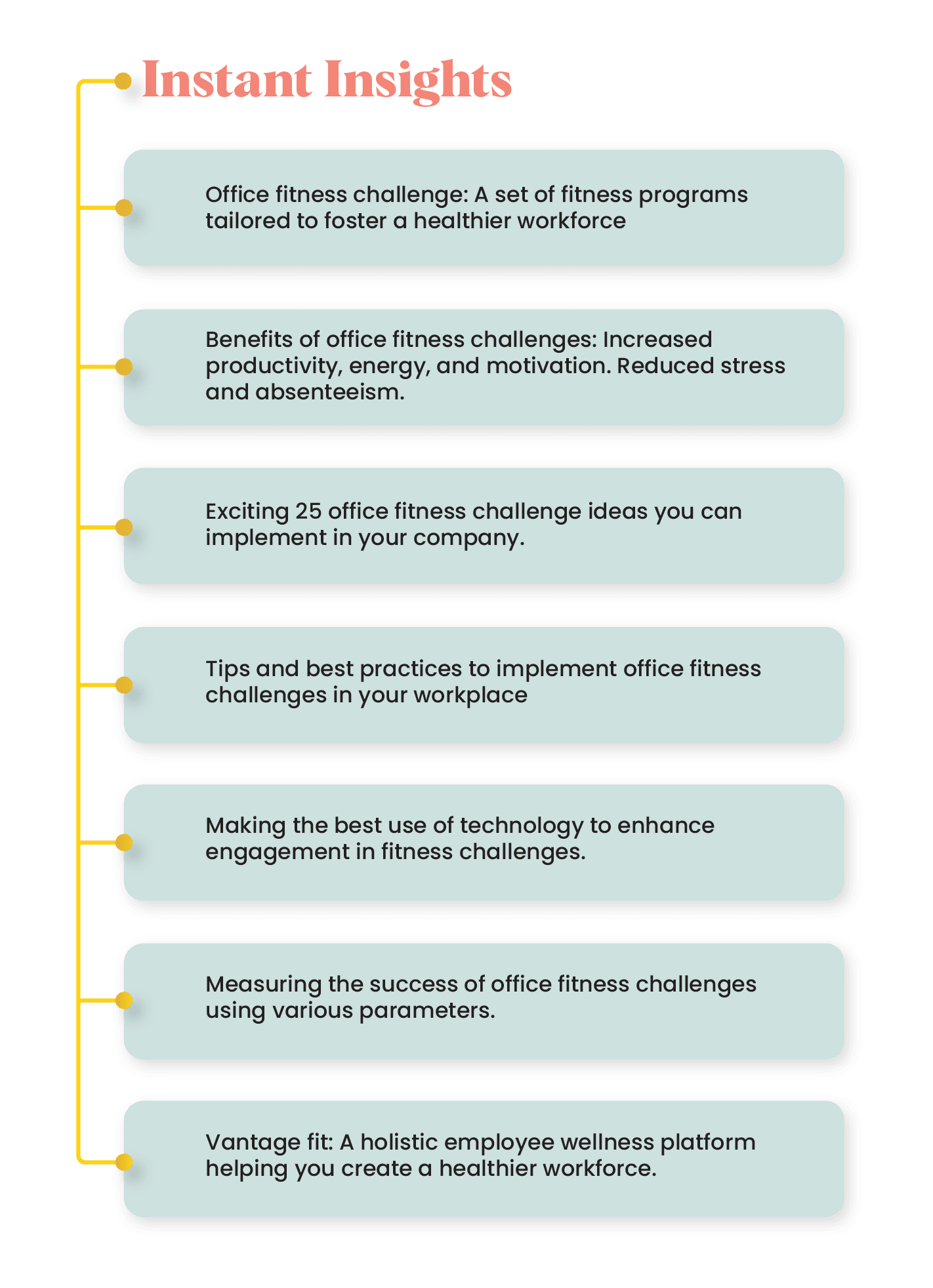
Here, we explore 25 epic office fitness challenge ideas to help employees stay active, energized, and connected. Along with diverse challenge ideas, you'll also find practical tips on implementing them and building a culture where wellness becomes a shared journey rather than a one-time initiative.
What is an Office Fitness Challenge?
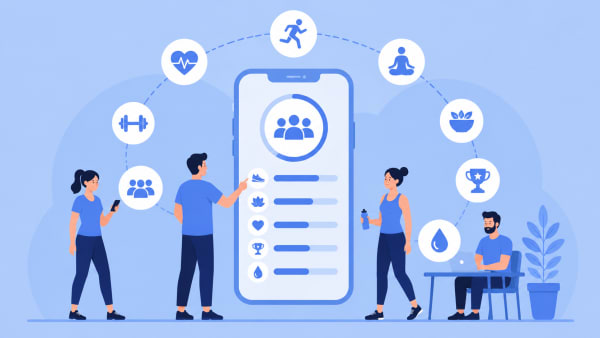
Office fitness challenges are short, structured programs where employees compete individually or in teams to hit shared health goals like steps, workouts, or hydration.
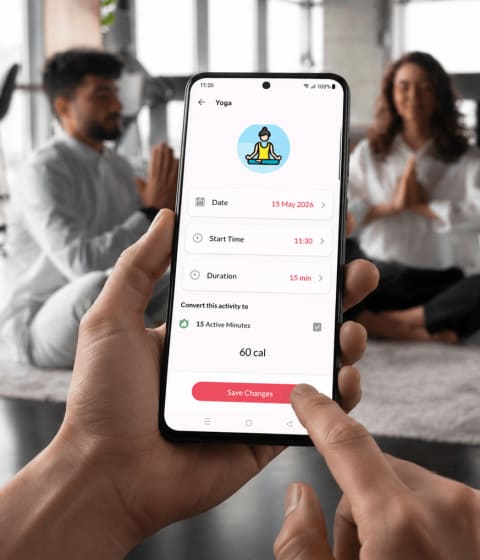
HR teams can run them over two to six weeks on a platform such as Vantage Fit to track activity and reward progress. The strongest programs are holistic, spanning workouts, yoga, nutrition, sleep, and mindfulness, so every employee finds a way to take part.
"When we first explored Vantage Fit, we were evaluating multiple platforms to build a meaningful health and wellness initiative. What stood out was the holistic nature of the platform. There's something for everyone, whether it's gym workouts, yoga, swimming, or running. Features like the squat tracker, 7-minute workouts, and mental wellness videos make the experience engaging and relevant for employees with different interests."
Akshaya S, Assistant Manager, Employee Engagement, Beroe

Office Fitness Challenge: The Bridge To Employee Health and Wellness
A workplace fitness challenge is one of the simplest ways to turn good intentions into daily habits. By giving employees a shared goal, visible progress, and small rewards, it lifts energy, morale, and engagement while cutting absenteeism, and it gives HR hard participation data to prove the program is working.
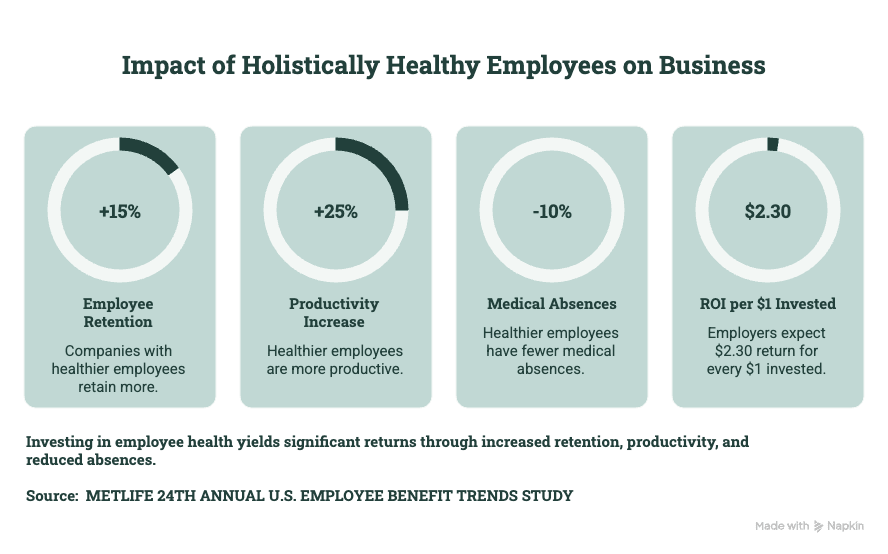
Here are the benefits HR teams see most often from an office fitness challenge:
- Increased Energy
- Increased Motivation
- Decreased Absenteeism
- Improved Morale
- Increased Employee Engagement
- Improved Employee Health
Moreover, when Beroe rolled a Vantage Fit challenge out company-wide, that impact showed up across various wellness dimensions at once:
| Wellness dimension | Beroe result (850 employees, 9 months) |
|---|---|
| Overall engagement | 96% |
| Daily movement | 2,569 average steps/day (peak 4,106) |
| Hydration | 3 L/day, 50% above the 2 L baseline |
| Nutrition | 2,400+ meals logged |
| Sleep | 8h 11m average |
| Goal-setting | 88% set healthy goals |
In fact, the Harvard Business Review found that employers who invested in comprehensive health and wellness initiatives saw a nearly 3-to-1 return in money saved.
Individual, Team, or Department: Which Format Works Best?
Before picking your challenge ideas, decide on the format that fits your team size, culture, and goals. Each approach drives different outcomes.
| Format | Best for | Advantages | Watch out for |
|---|---|---|---|
| Individual | Small teams, recognition-driven cultures, remote employees | Personal accountability, easy to track, works across locations | High performers can dominate; others may disengage mid-challenge |
| Team | Mid-size companies, relationship-building goals, low participation rates | Keeps struggling participants engaged, builds camaraderie across departments | Uneven effort within a team can cause friction |
| Department vs. Department | Large organizations, company-wide walkathons and step challenges | Creates healthy inter-team rivalry, drives broad participation, scales easily | Departments of different sizes need handicapped scoring to stay fair |
How to decide:
- Go individual if your primary goal is personal health improvement and you want employees to own their own progress.
- Go team-based if you want to lift overall participation rates or build cross-functional relationships. Team challenges consistently drive higher completion rates than solo formats.
- Go department vs. department for organization-wide campaigns where size-adjusted scoring keeps competition fair across large and small teams.
You can also combine formats: run a team step challenge where individual contributions roll up into a department leaderboard. This gives employees personal accountability and the motivating pull of team competition at the same time.
How do you run a fitness challenge for hybrid and remote teams?
Run it on activities that need no office and no equipment, then make the leaderboard the meeting point. Steps, hydration, sleep, workouts, and mindfulness all log from a phone or wearable, so someone working from home competes on equal footing with someone in the office.
Vantage Fit syncs Apple Watch, Fitbit, and Garmin data, rolls individual activity into team standings, and shares one leaderboard everyone can see.
A few rules keep distributed challenges fair and inclusive:
- Pick location-neutral activities so no one is blocked by a missing gym or commute.
- Use team or department formats so remote staff feel included, not isolated.
- Post updates where remote staff already are, on Slack, Teams, or email, not just an office noticeboard.
- Offer flexible logging windows so people in different time zones can take part when it suits them.
Across three 2025 challenges, Wipro grew participation 3X (163 to 550 active users), with employees taking part from more than 30 countries.
Top 25 Office Fitness Challenge Ideas
Here is a list of 25 corporate fitness challenge ideas to incorporate into your corporate fitness program:
Physical Activity Challenges
1. Cycle-to-work Challenge
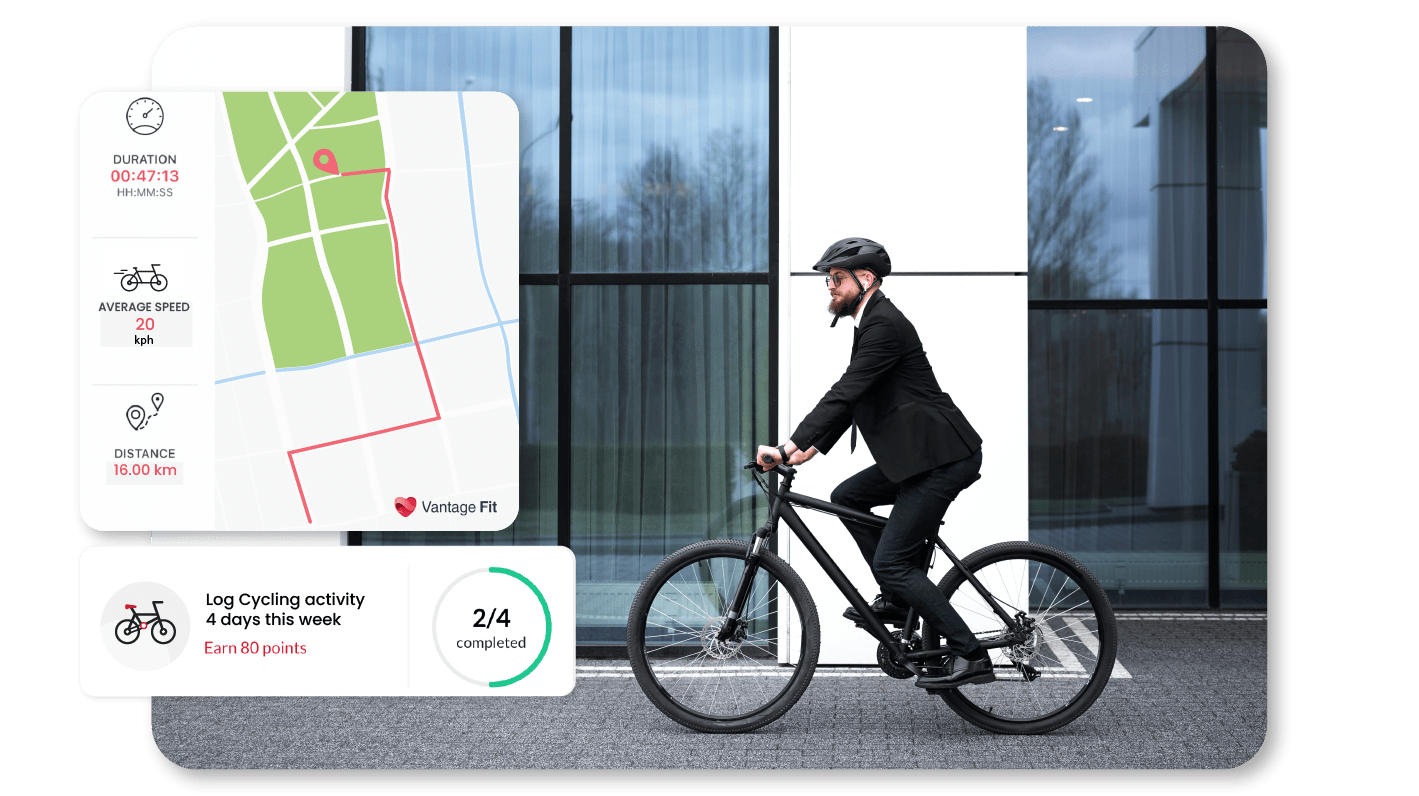
A cycle-to-work challenge is a great way to promote fitness and reduce pollution simultaneously. The challenge will aim to cycle to work for several days. The employees who ride their cycles to work can be rewarded with healthy lunches or healthy breakfasts.
You can also extend the challenge to a span of 30 days or 60 days, where the employees who cycle the most can be rewarded with lucrative prizes.
2. Step Challenge
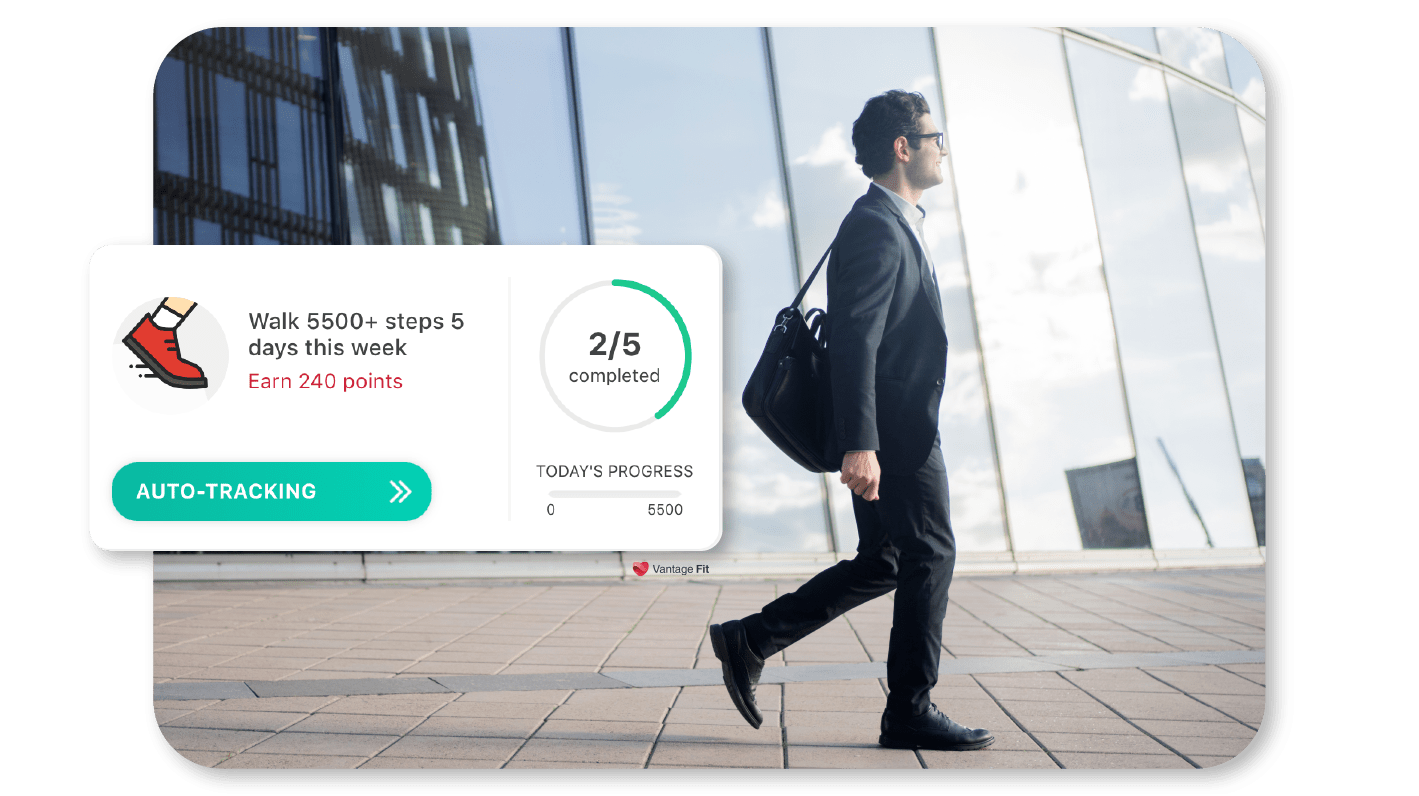
A step challenge or a walkathon is a specific challenge where participants must walk a certain amount of steps daily. Participation in a walking challenge is effortless and convenient. You can also modify the challenge as per your requirements.
Set the number of steps you want as the standard of the challenge. For example, your employees can walk either 5000 steps or 10000 steps a day. Incentivize the challenge by providing small gifts for completing the daily step count.
Also, you can set the challenge for a set period, where employees who walk the most steps win a grand prize and a title such as "Walker of the month."
Suggested Read: 7 Ways How Hosting A Walkathon Benefits Your Entire Workforce
3. The 7-Minute Workout Challenge
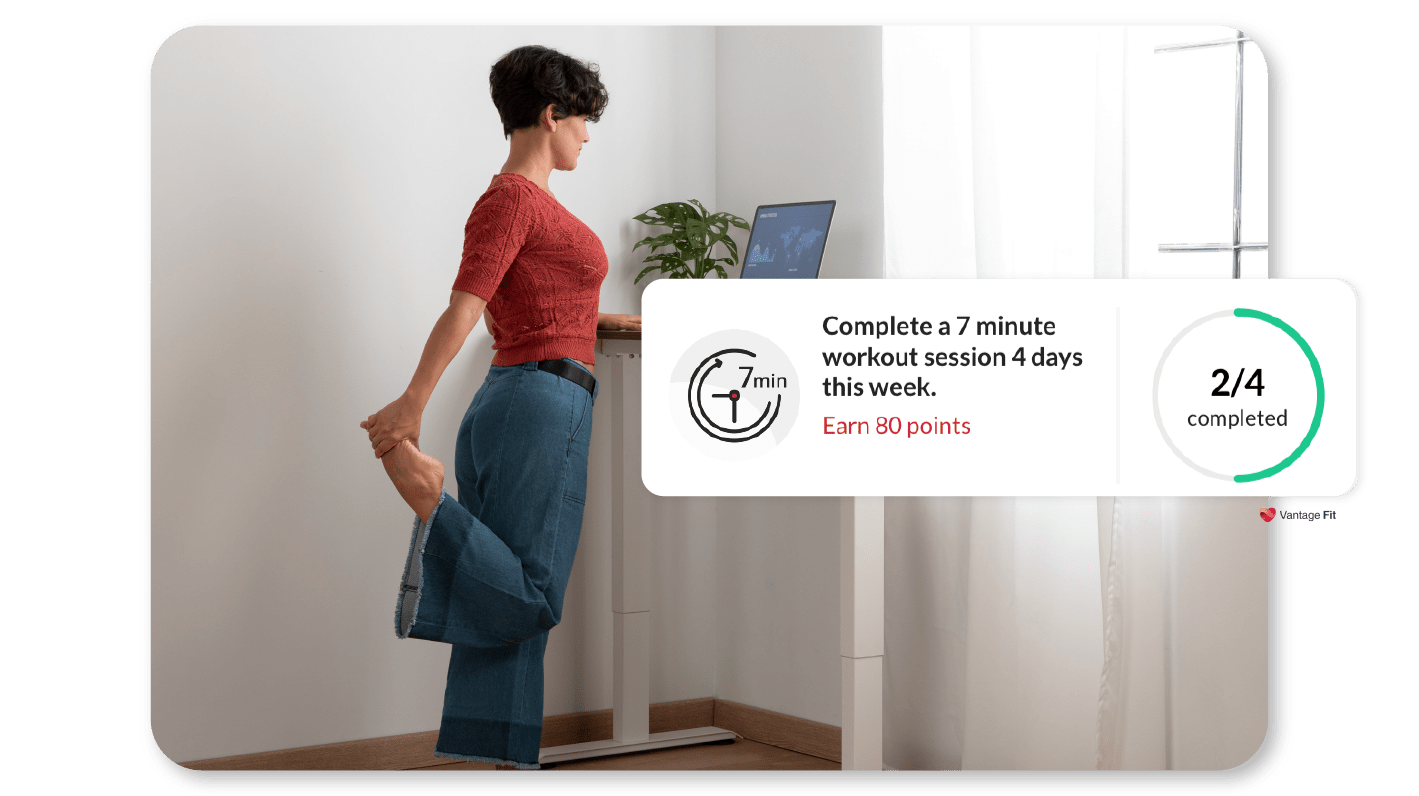
A 7-minute workout challenge is a great way to keep your employees motivated and fit. The workout consists of a set of exercises with brief rest periods in between, running for a total duration of 7 minutes, as the name suggests. Participating in a 7-minute workout is a great way to lose fat and maintain your employees’ fitness motivation.
You can easily design and implement a 7-minute workout for your workforce. A wellness app makes it quick to roll one out and reward employees with points they can redeem for real prizes.
4. Take the Stairs Challenge

If your office is in a multi-storied building, you can create a stair-climbing challenge among your employees. If everything goes well, your employees might completely avoid using the elevator!
Set a daily target of stairs to climb for your employees to achieve. Reward employees who climb the highest number of stairs or who complete the target in the fastest time.
Suggested Read: How to Organize a 30-Day Stair Climbing Challenge at Work: Benefits, Plan + Tracker
5. The Plank Challenge
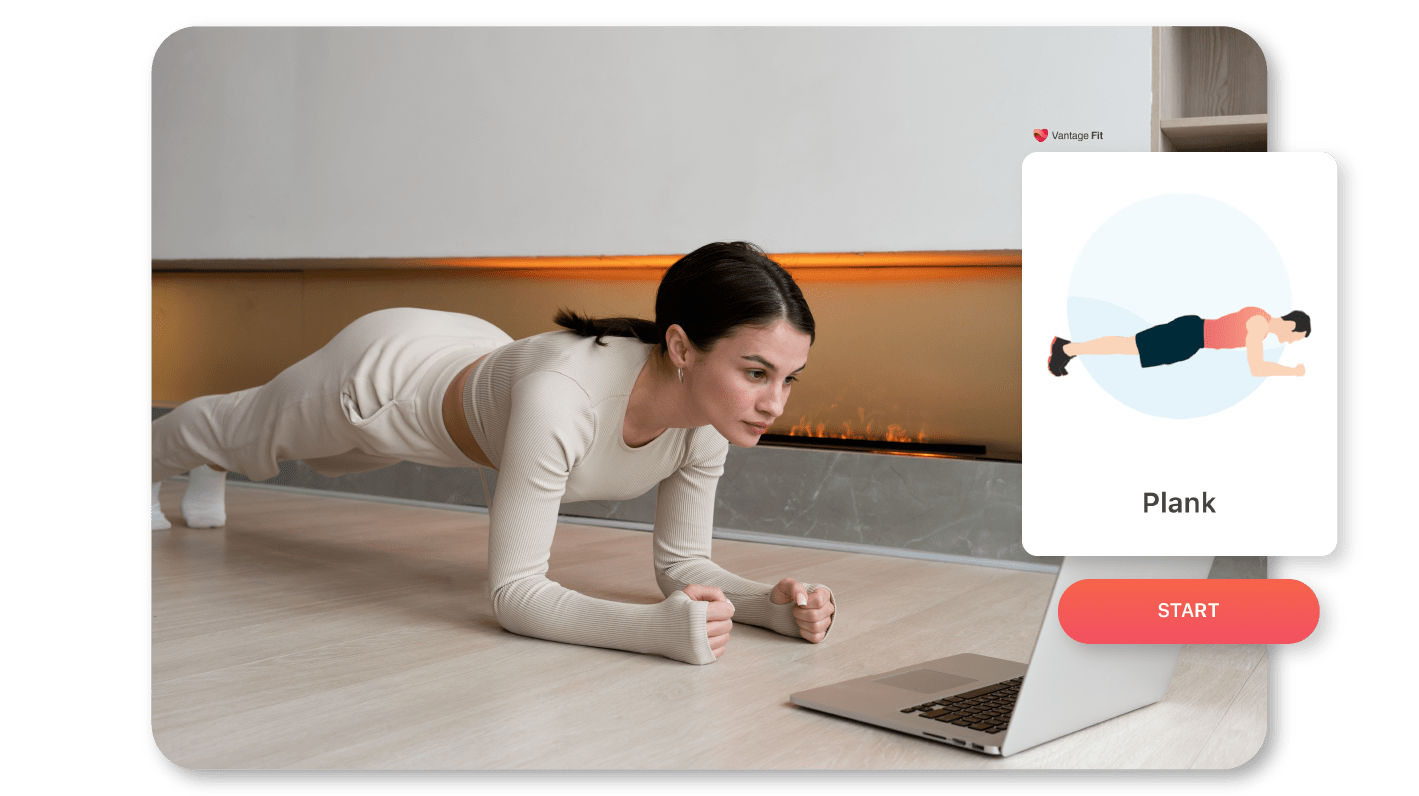
The Plank is one of the most effective core-strength training exercises; almost anyone can do it. Doing a plank has many benefits, such as strengthening the abdominal muscles, relieving stress, and improving posture. It is also great because it requires no equipment or weight to be completed.
Create a plank challenge among your employees to create a healthy and fun competition among them. Set a minimum duration for every participant to complete and gradually increase the duration. At the end of the challenge, reward your employees with a healthy snack each to keep them motivated.
6. The "New Day, New Workout" Challenge

- Spice your fitness challenge up by creating an office workout challenge wherein employees have to do a new workout every day. Such a challenge can ensure that employees are working out all their muscle groups and are optimally fit.
You know what else you can do? You can add a little twist by hosting seasonal challenges as well. For instance, a spring wellness challenge, maybe? Or a summer challenge?
At the end of each day of the challenge, you can choose to reward your employees with healthy lunches to ensure the optimal replenishment of nutrients in their bodies.
To ensure you have no difficulty choosing different exercises for each workout, I have enlisted several effective and proven office exercises in my article - 20 Desk Exercises That Help To Boost Employee Health.
7. Corporate Pilates Challenge
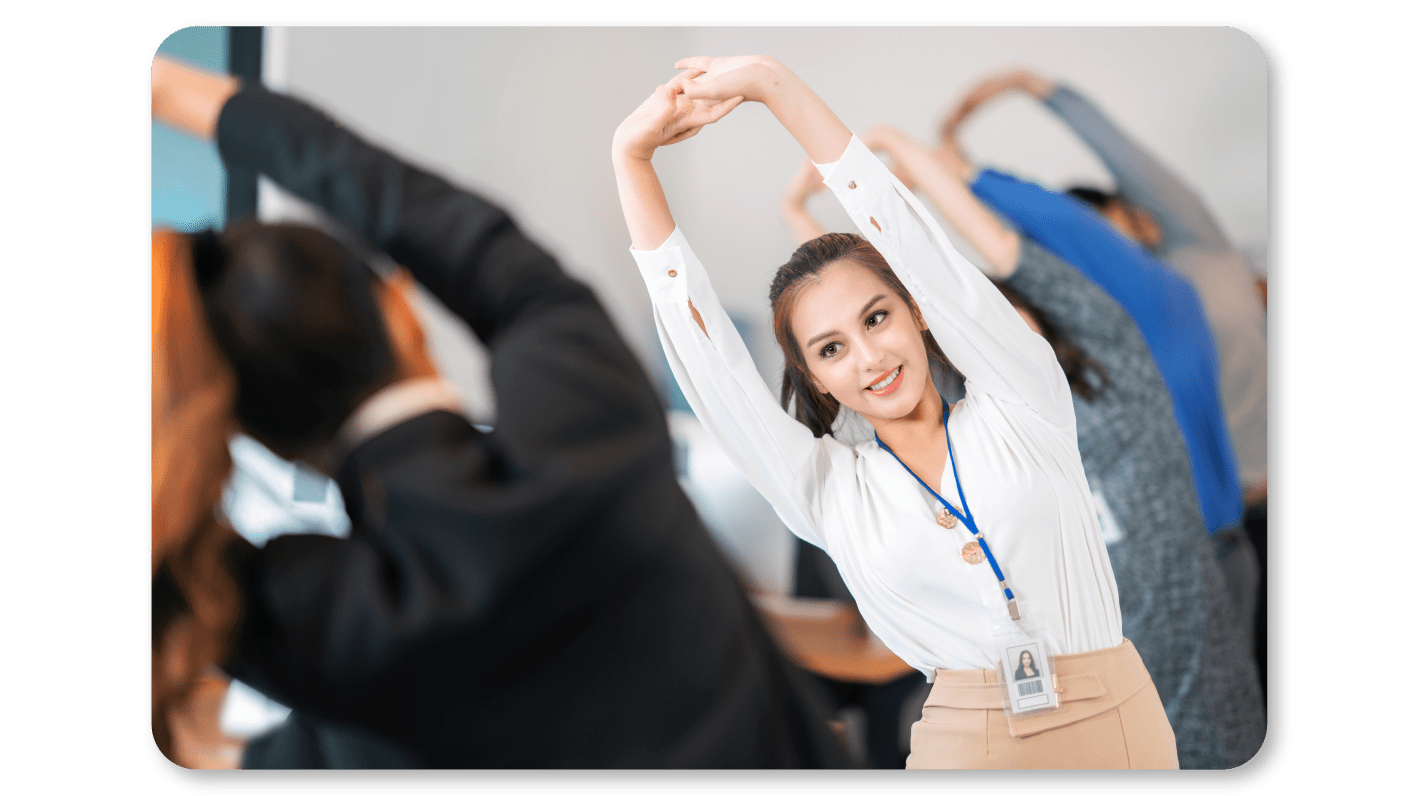
Pilates is a unique form of exercise focusing on building core strength. It also helps in improving body posture and flexibility. Pilates sessions at the office can play an important role in corporate wellbeing.
Your company can conduct weekly pilates classes in line with yoga or other fitness classes. The participating individuals can be rewarded with points and gift cards. This will ensure a more productive and healthy workforce.
8. Sleep Challenge

Encourage employees to prioritize adequate sleep for better focus, productivity, and overall health.
Plan a sleep-tracking challenge to monitor employee sleeping patterns consistently.
Reward employees for following a healthy sleep cycle.
Suggested Read: Try the Sleep Challenge and Feel More Productive at Work
9. Run to Work Challenge
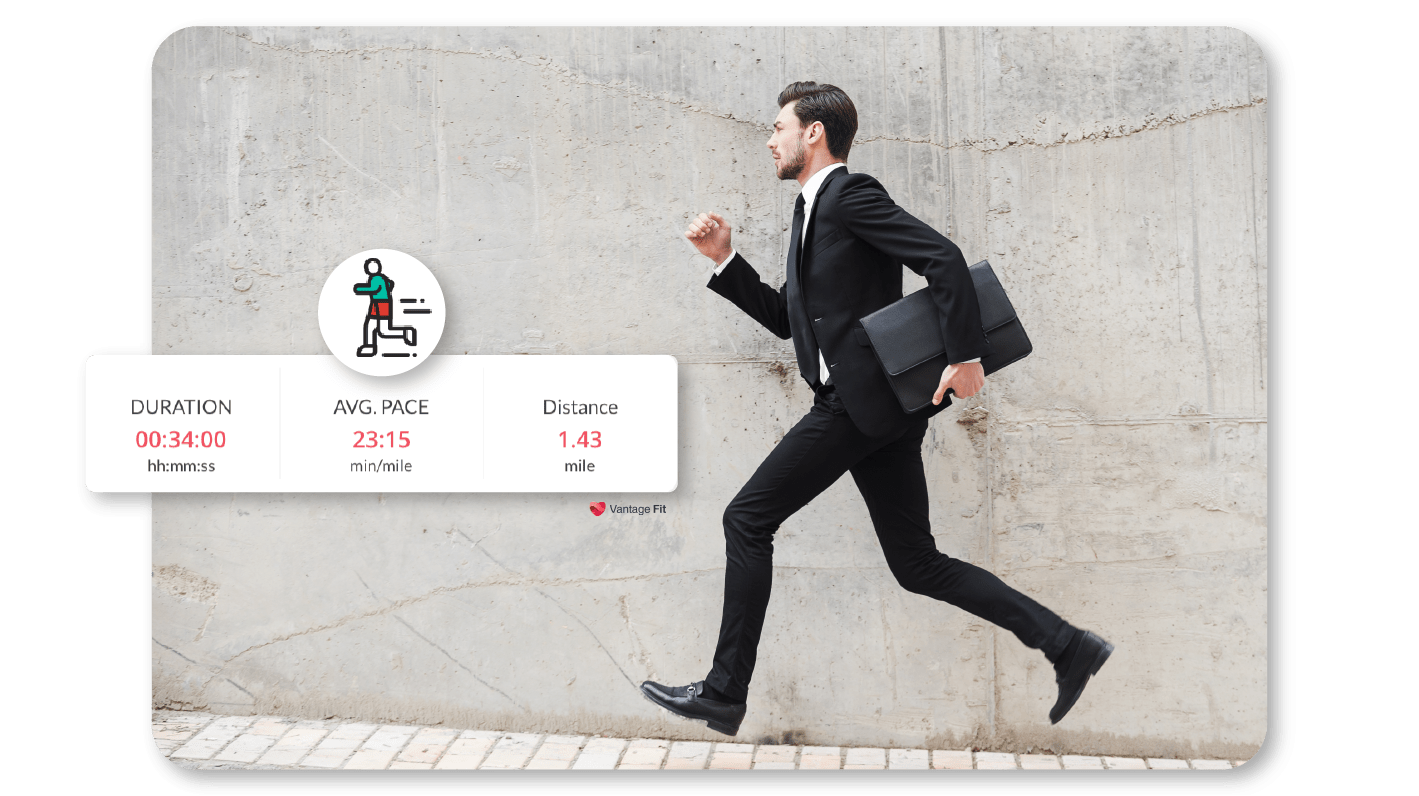
Encourage employees residing near the office to commute via running or jogging. It promotes physical fitness, reduces carbon emissions, and provides an energizing start to the workday.
Employees can park their vehicles at a certain distance from the office and jog from there.
Track run pace and distance using a fitness tracker or app.
10. Squat Challenge
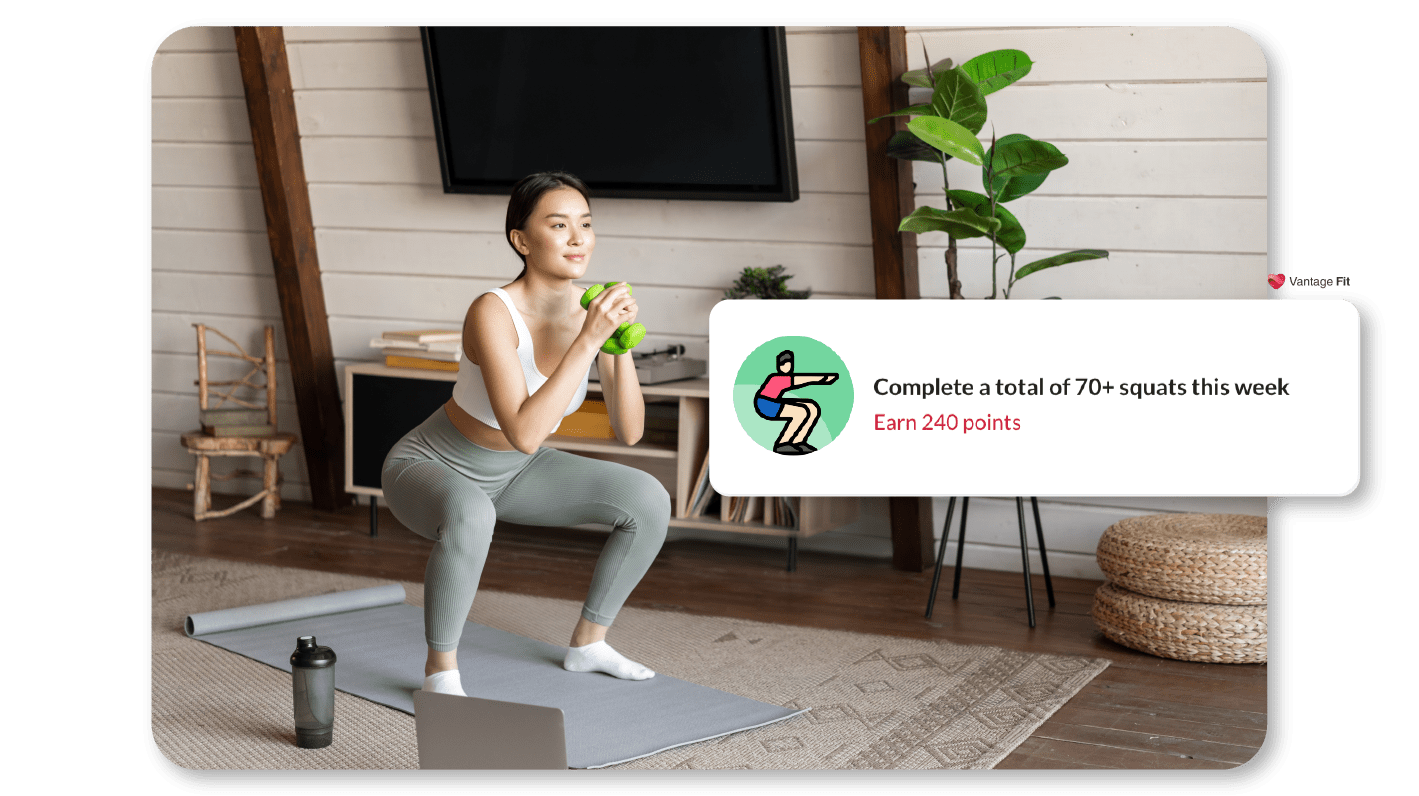
Squat exercises improve lower body strength and posture.
Plan weekly squat challenges such as 100 or more. A squats tracker makes it easy to record each employee's count.
Reward those who are able to complete the weekly targets.
Suggested Read: 30 Day Squat Challenge- Track Your Growth
11. Track Heart Rate Challenge
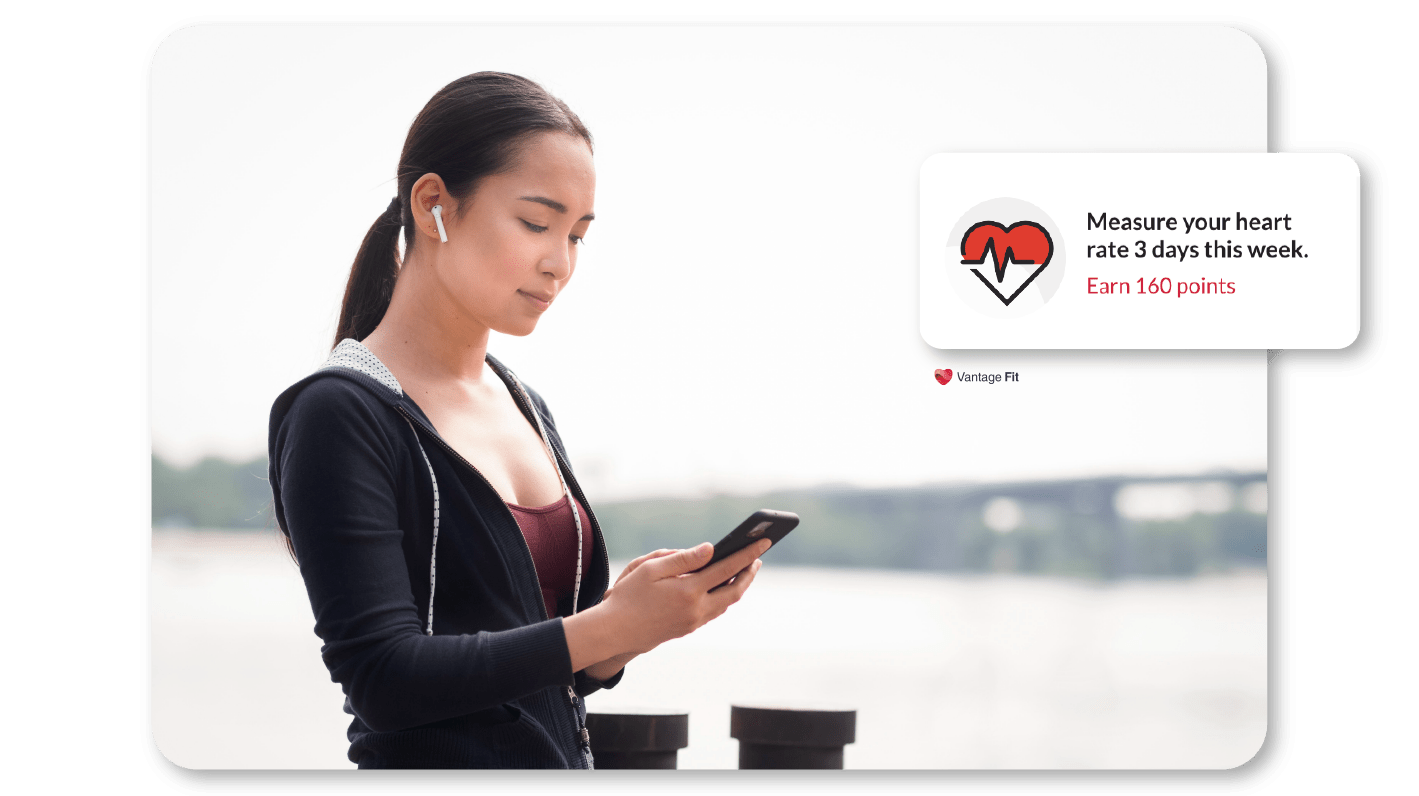
Encourage employees to monitor their heart rate using fitness trackers or smartwatches.
You can set weekly targets, such as monitoring 4 or 5 times weekly.
Use a fitness tracker or smartwatch to monitor heart rate. Include it in weekly challenges where employees earn points on completion.
12. Sit-up Challenge:
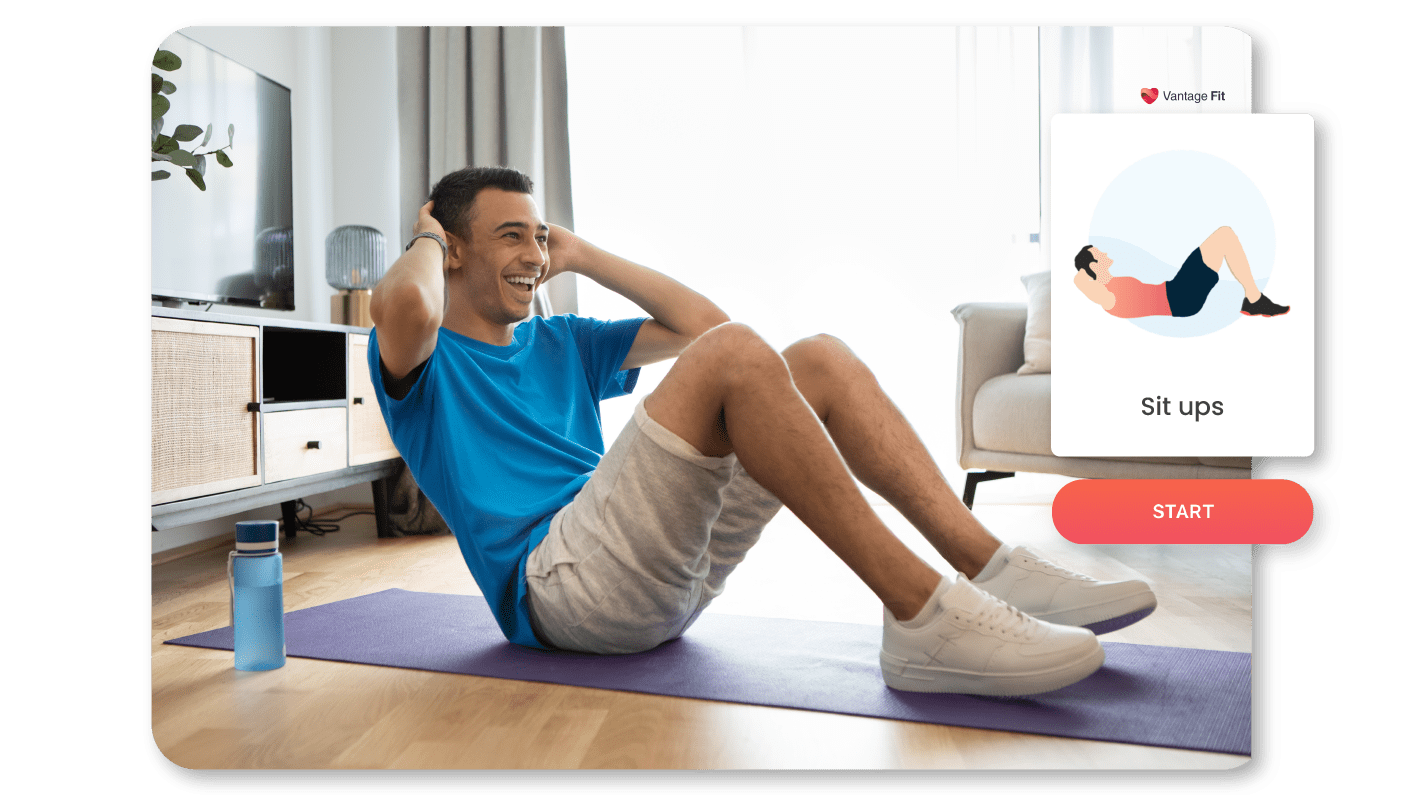
It promotes core strength and abdominal muscle development.
Participants perform a set number of sit-ups, say 50 daily, during breaks or at designated times to improve their fitness.
Reward employees who show consistency.
Running multiple fitness activities simultaneously is a logistical challenge without the right platform. Vantage Fit simplifies this by combining step tracking, wearable sync (Apple Watch, Fitbit, Garmin), multi-activity logging, and real-time leaderboards in a single app. HR teams can build challenges from pre-built templates, set individual or team goals, and award Vantage Points automatically on completion.
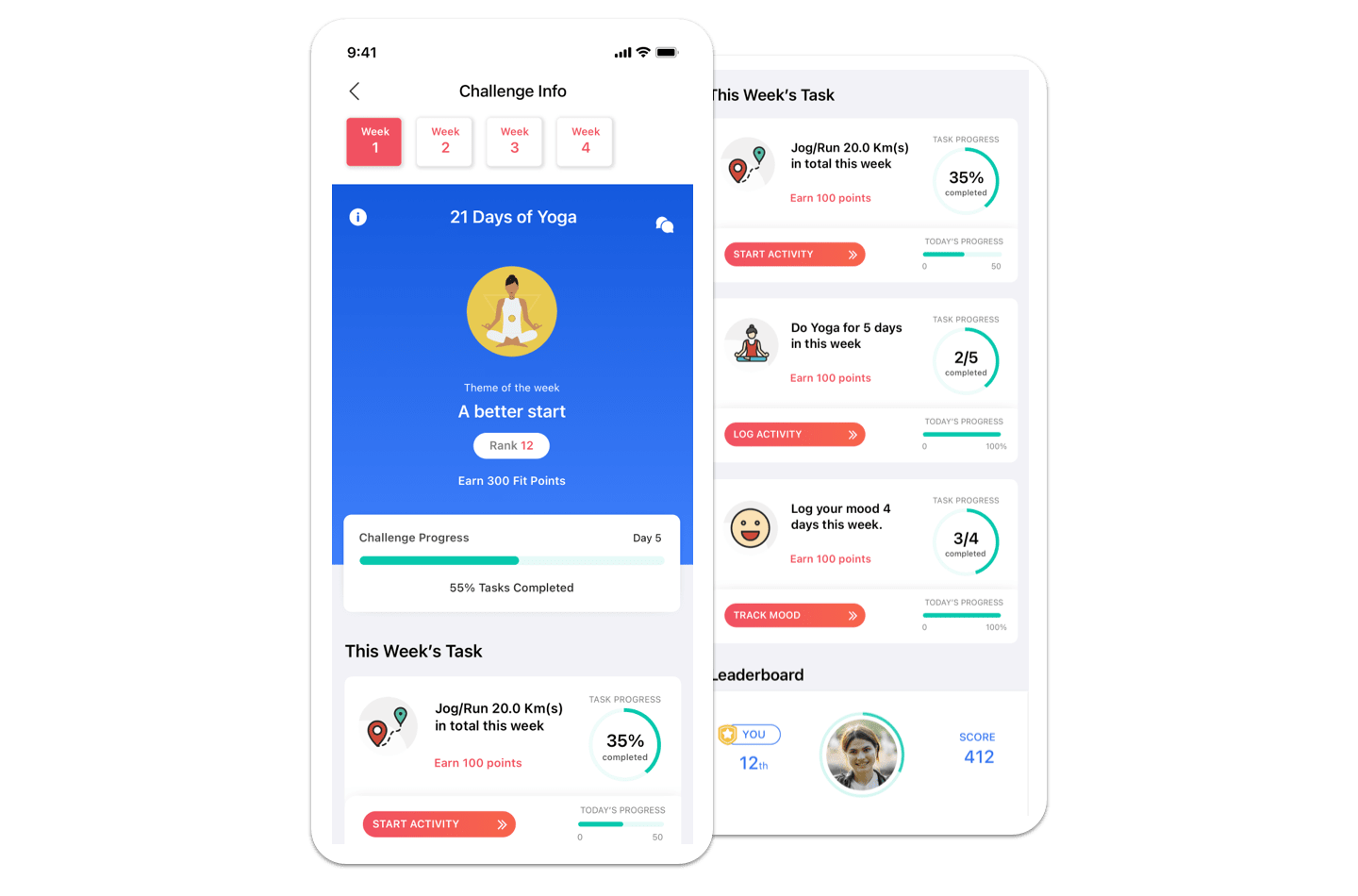
In Tata Motors' Step Up & Elevate Challenge, 43 teams participated over 6 months with 70% engagement, and 53% of teams recorded measurable weight reduction, driven by consistent day-by-day activity tracking across steps, meals, water intake, and mindfulness.
Read more on: Wellness Challenges: Types, Benefits, and How to Run One at Work
13. Office Stretching Challenge:

Encourage regular stretching exercises at the desk to reduce muscle tension and improve flexibility.
You can dedicate a 5-minute stretching break at the office. Stretching out with colleagues can also be a part of office fun activities.
Reward those who participate in this challenge.
14. Yoga Challenge:
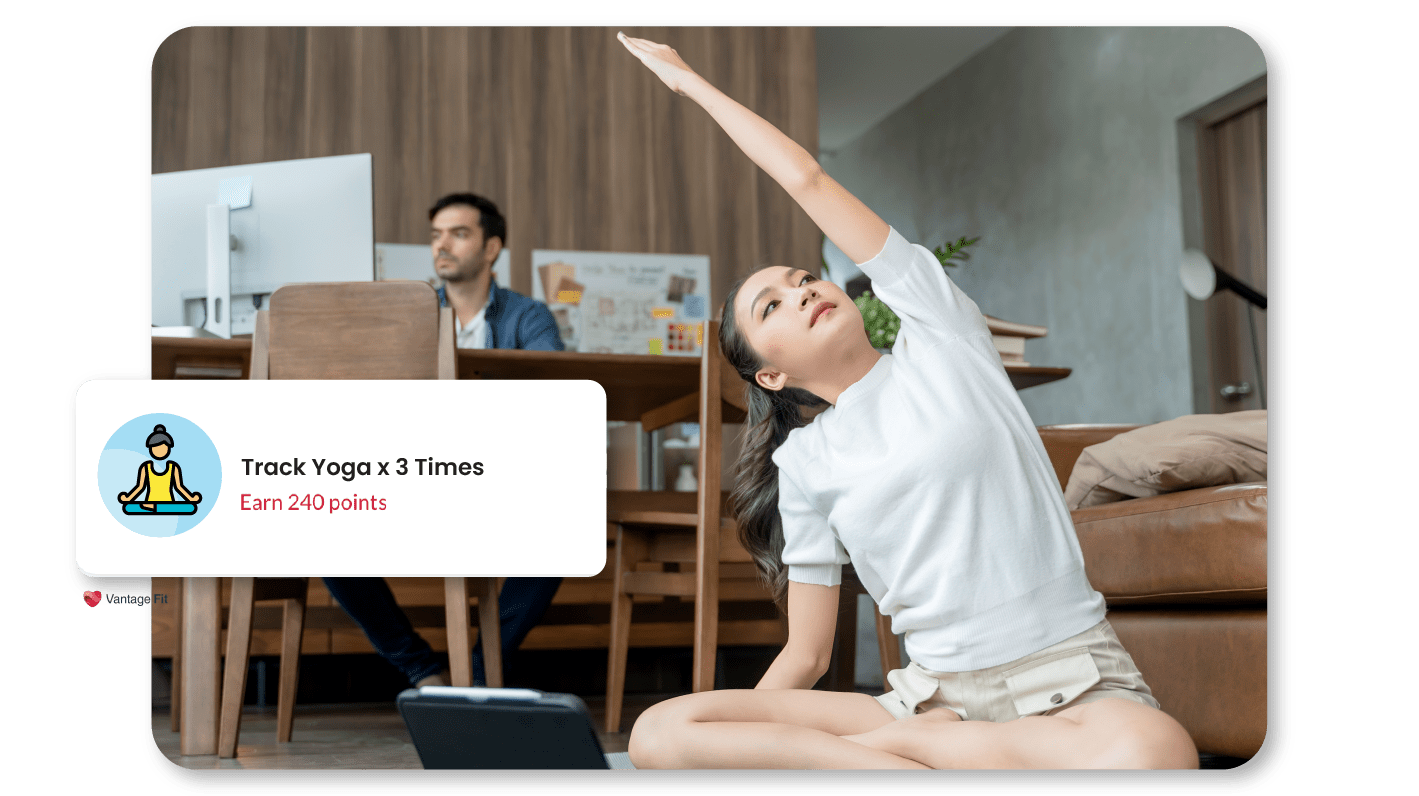
Yoga reduces stress, improves flexibility, and enhances mental well-being.
Organize hourly yoga classes in your office, say 3 days weekly.
Monitor employee attendance. Reward those who are regular in the classes.
15. Park and Walk Challenge:

Encourage employees to park farther away from the office and walk the remaining distance, say half a mile.
Everyone can take part in this challenge regardless of their age.
You can appreciate those participating as office environmental champions and other exciting rewards.
16. Deskercise Challenge:
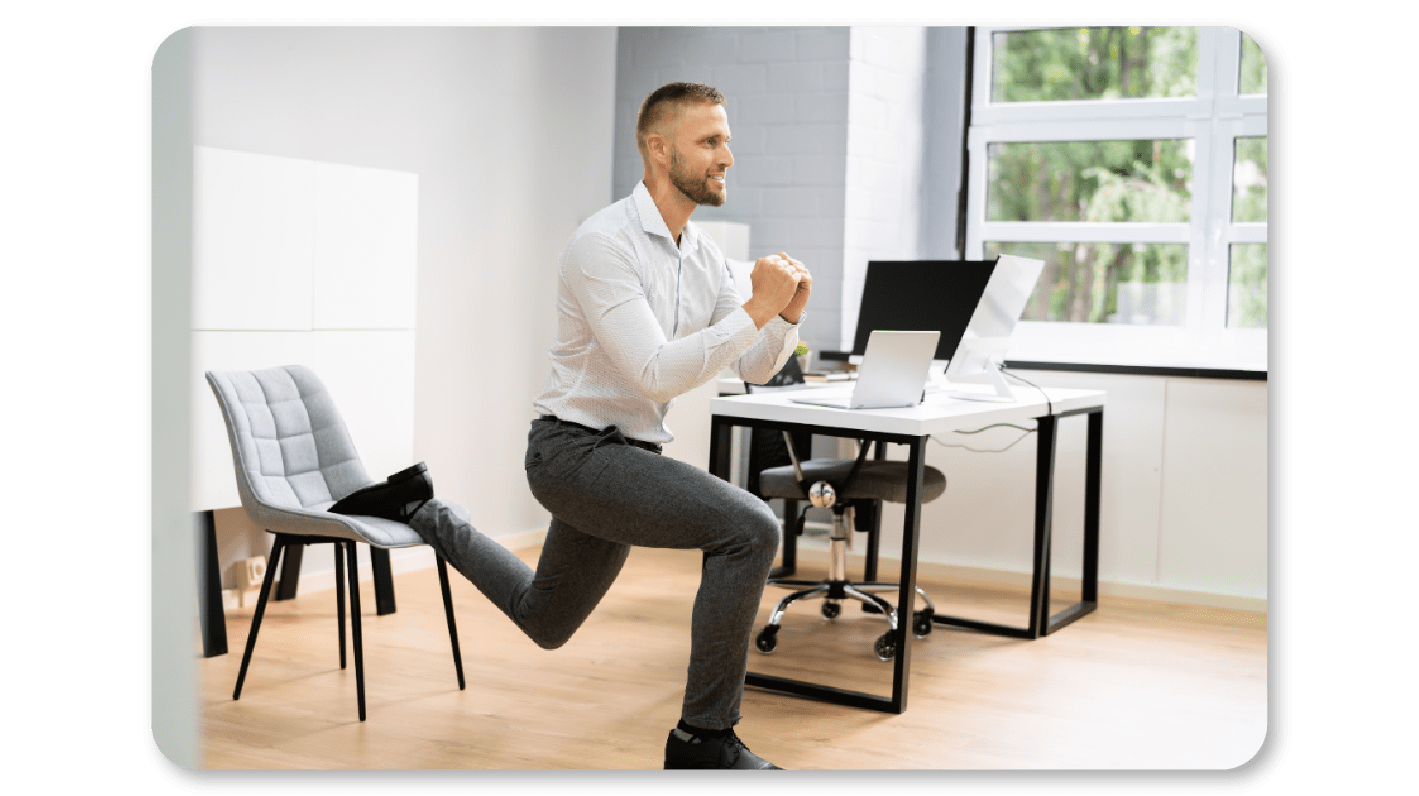
Encourage short bursts of exercise at the desk, such as chair squats or stretches.
Employees can perform these simple exercises at their desks at any moment.
Ask neighbor colleagues to keep track of each other’s exercises. Reward those who indulge in frequent desk workouts.
Suggested Read: 13 Best Exercise Equipment For Desk to Stay Healthy
Team-building Challenges
17. Team Workout Challenge:

Invite your colleagues to participate in any fitness activity. It can be a team sport such as football or basketball, or one of many wellness games like push-up and sit-up challenges.
Every once a month, your company can organize sporting tournaments. Your colleagues can participate under their team banner, such as HR, or marketing. The winning team can be recognized and rewarded. This will further boost team harmony and foster competitive spirit.
18. Challenge for Charity

A great way to make every employee participate in corporate fitness challenges is to create a challenge for a charity purpose.
Sign up your team for a charity event in your locality. Many such events, such as marathons, are held, which raise money and awareness for causes like breast cancer, aids, etc.
Thank your employees for participating in a just cause and reward them by taking them out to a meal.
Healthy Eating Challenges
19. No Sugar Challenge

Refined sugar is the root cause of modern-day diabetes and obesity problems. A sedentary lifestyle and consistent sugar intake will lead to various health problems.
The “No Sugar” challenge aims to cut sugar intake. You can try avoiding sugar atleast twice a week or in every alternate cup of coffee you have in a day. If you have difficulty avoiding sugar completely at the beginning, add half a teaspoon of sugar instead of a full one.
20. Healthy Snack Challenge:

Encourage employees to replace unhealthy snacks with nutritious options.
You can include healthier snacking alternatives in the office pantry, such as green tea, dry fruits, etc.
Keep the healthier snacking section separated. Reward those who choose their snacks from it.
21. Drinking Water Challenge
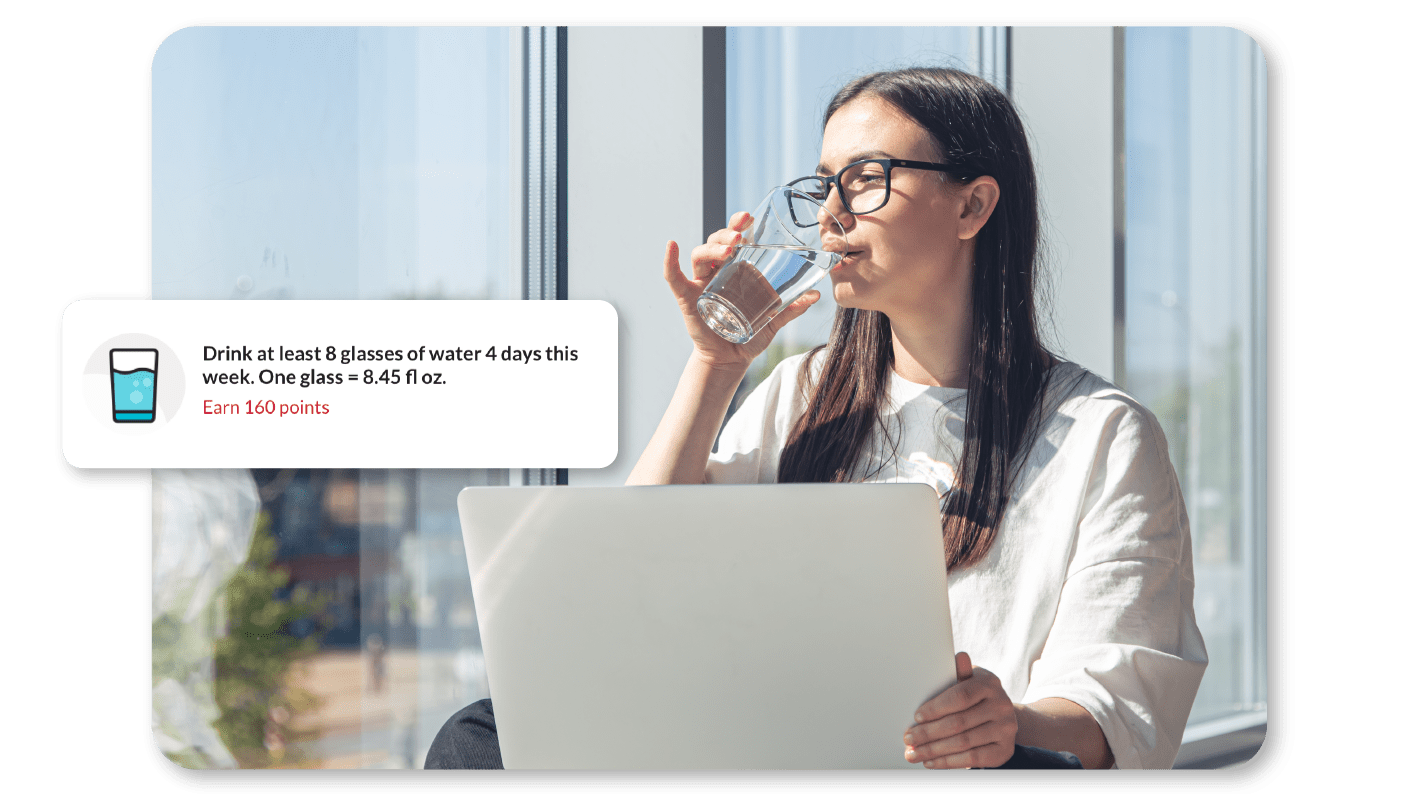
Hydration is key to improving overall well-being, especially in the summer.
A daily water intake tracker can be part of your weekly fitness challenges to keep employees hydrated and motivated.
22. Nutrition Tracking Challenge
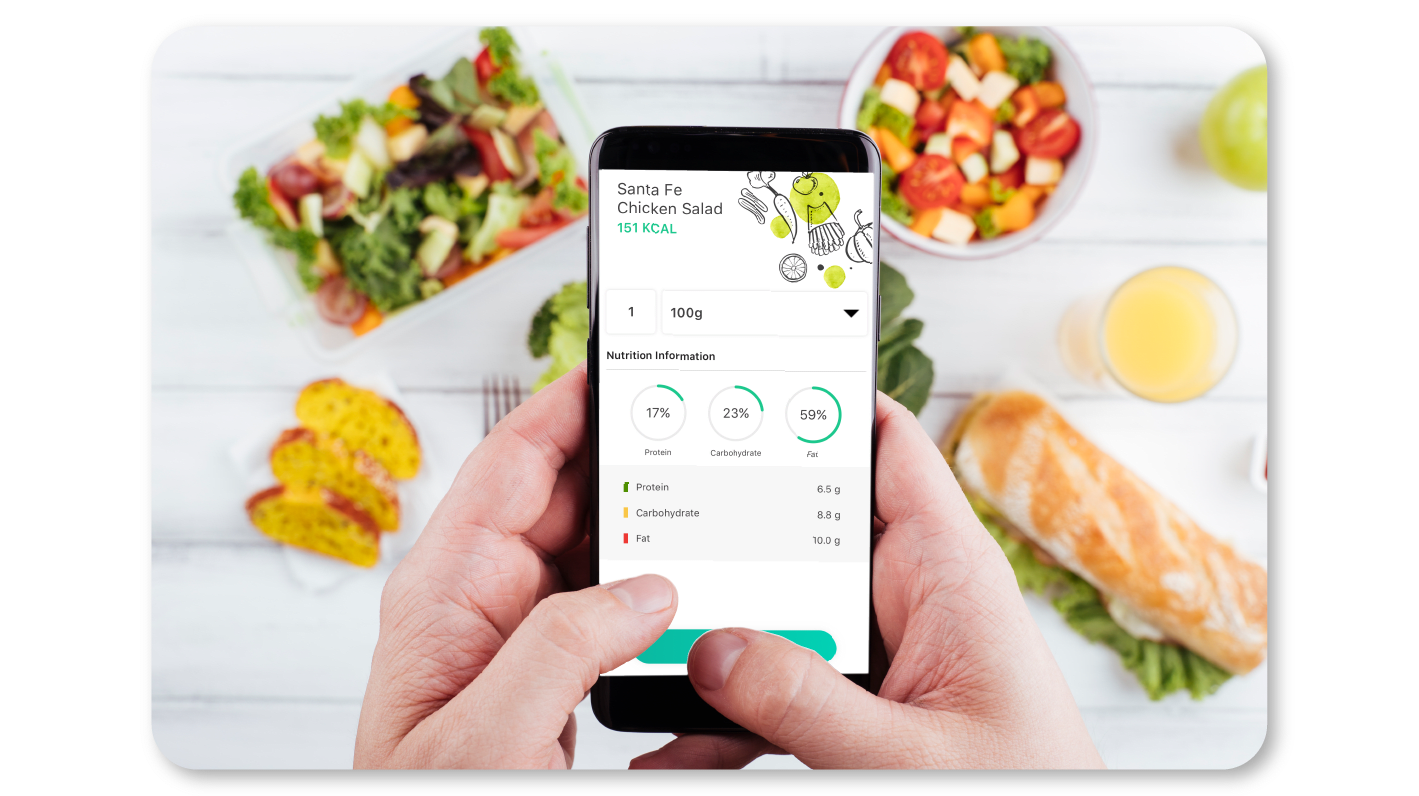
Your employees need to be made more aware of their daily nutrition intake.
A nutrition tracker can help employees log their daily intake and stay aware of their eating habits.
Ask your employees to log their daily nutrition intake. You can reward consistent employees by taking them out on a meal.
23. Vegetable Challenge

Vegetables are essential for a healthy diet. But in our busy and fast-paced life, we often ignore them on our plates. Such a lifestyle can negatively impact us in the long term.
Challenge your employees to include green vegetables atleast once in their meals every alternate day.
Mental Well-being Challenges
24. Mindfulness Meditation Challenge
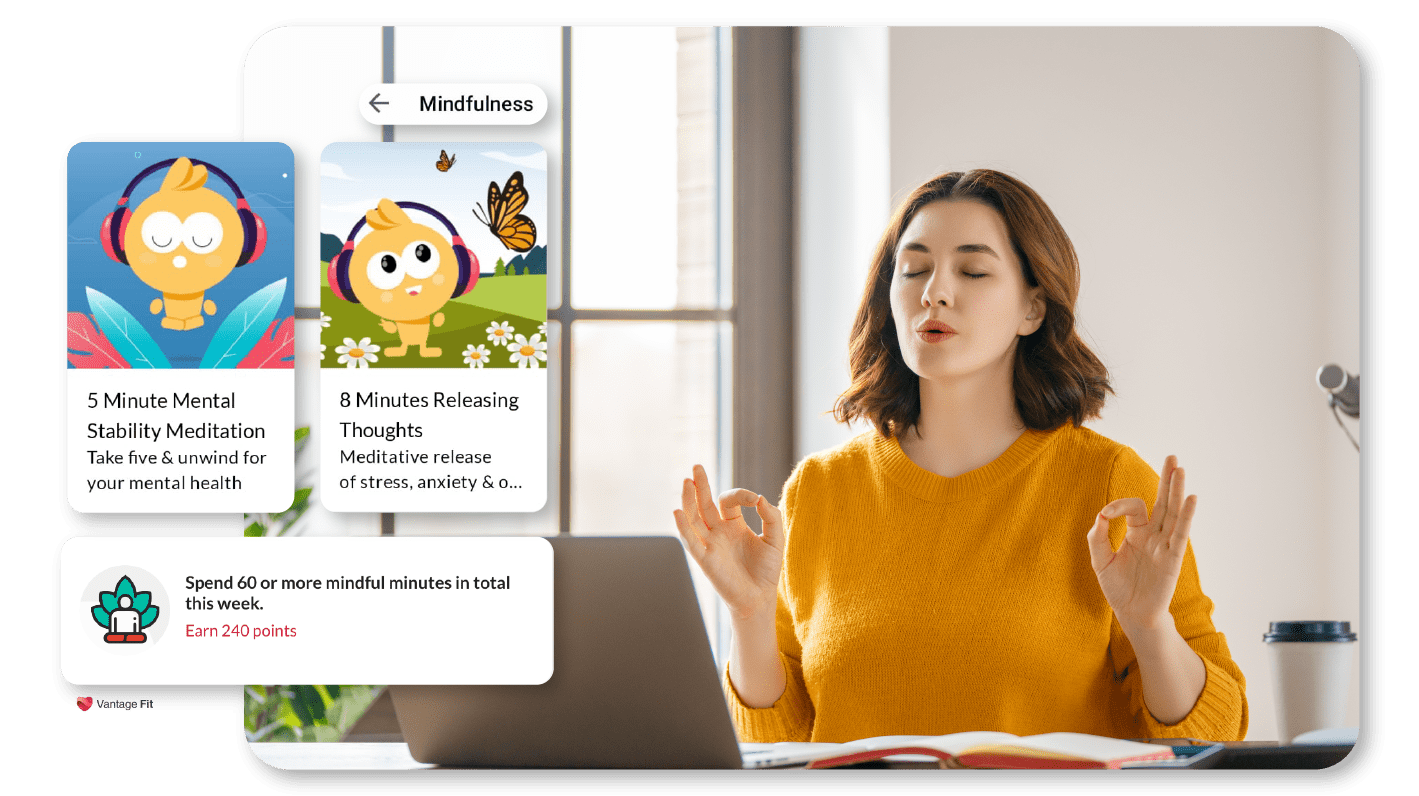
A hectic workday might affect mental well-being. Mindful meditation helps in calming our minds. It also brings clarity of thought. Refresh your mind by performing some simple and relaxing breathing challenges.
You can try mindful meditation by giving yourself 10 to 15 minutes daily. Sit down in a room with a quiet atmosphere. Relax your muscles and concentrate on your breathing. You can also use calming music in the background to make yourself more comfortable.
A meditation library gives employees plenty of resources to relax and refocus.
25. No Phone Challenge
Reconnect with the real world by disconnecting your smartphone. Go out and meet your friends in real life. Hang out with your loved ones. Avoid the constant dopamine hits by plugging out of all social media platforms.
You can start by assigning a no-phone hour every day. During this hour, you will avoid any sort of interaction with your smartphone or any other smart devices. Try performing some social activities to keep yourself busy.
Bonus Challenges
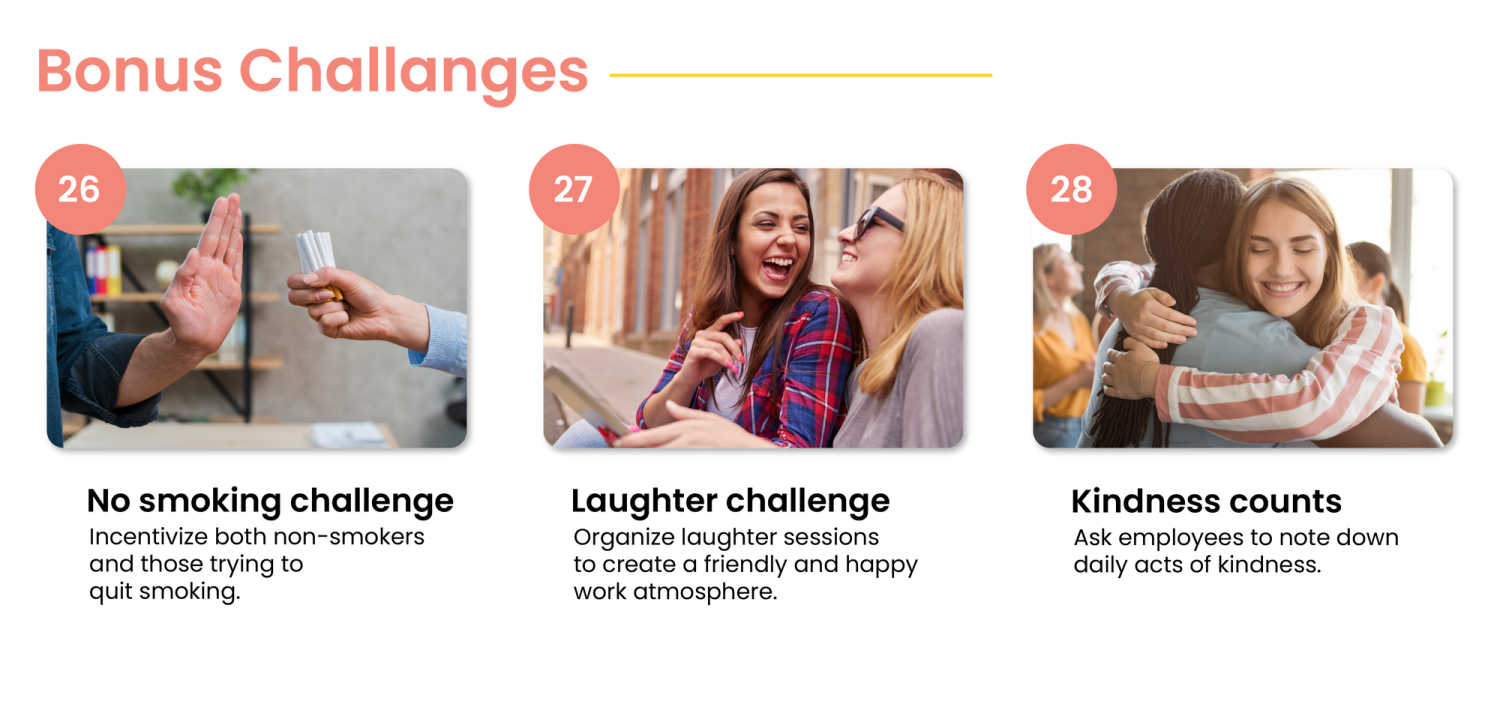
Let us learn how to implement these challenges in your office successfully.
Sample 4-Week Office Fitness Challenge Schedule
A structured timeline gives your challenge momentum and helps employees know what to expect each week. Here is a ready-to-use template you can adapt for your team.
| Week | Theme | Daily challenge | Goal |
|---|---|---|---|
| Week 1: Get Moving | Physical activity | 7,500 steps per day or a 15-minute walk at lunch | Build the habit of daily movement with a low barrier to entry |
| Week 2: Mind and Body | Flexibility and mindfulness | 5-minute desk stretch + 10-minute mindfulness session | Reduce work stress and improve posture |
| Week 3: Nutrition Focus | Healthy eating | Replace one snack with fruit or vegetables; log meals in the Vantage Fit app | Build awareness around daily nutrition habits |
| Week 4: Full Sprint | Combined challenge | 10,000 steps + one team workout + daily hydration tracking | Finish strong with maximum participation and energy |
Tips for running the 4-week schedule:
- Start Week 1 with the most accessible activity so no one feels excluded on day one.
- Announce each week's theme on Monday morning to build anticipation.
- Share weekly progress updates via email or a team channel to sustain momentum.
- Use a live leaderboard to recognize top participants mid-challenge, not just at the end.
- Close Week 4 with a celebration event and reward distribution to reinforce the habit.
Implementing a Successful Office Fitness Challenge Program
The success of an office fitness program depends on the right implementation. Tailor the challenge to your employees' needs, and follow these steps to set the right course:
1. Understand Employee Needs and Preferences:
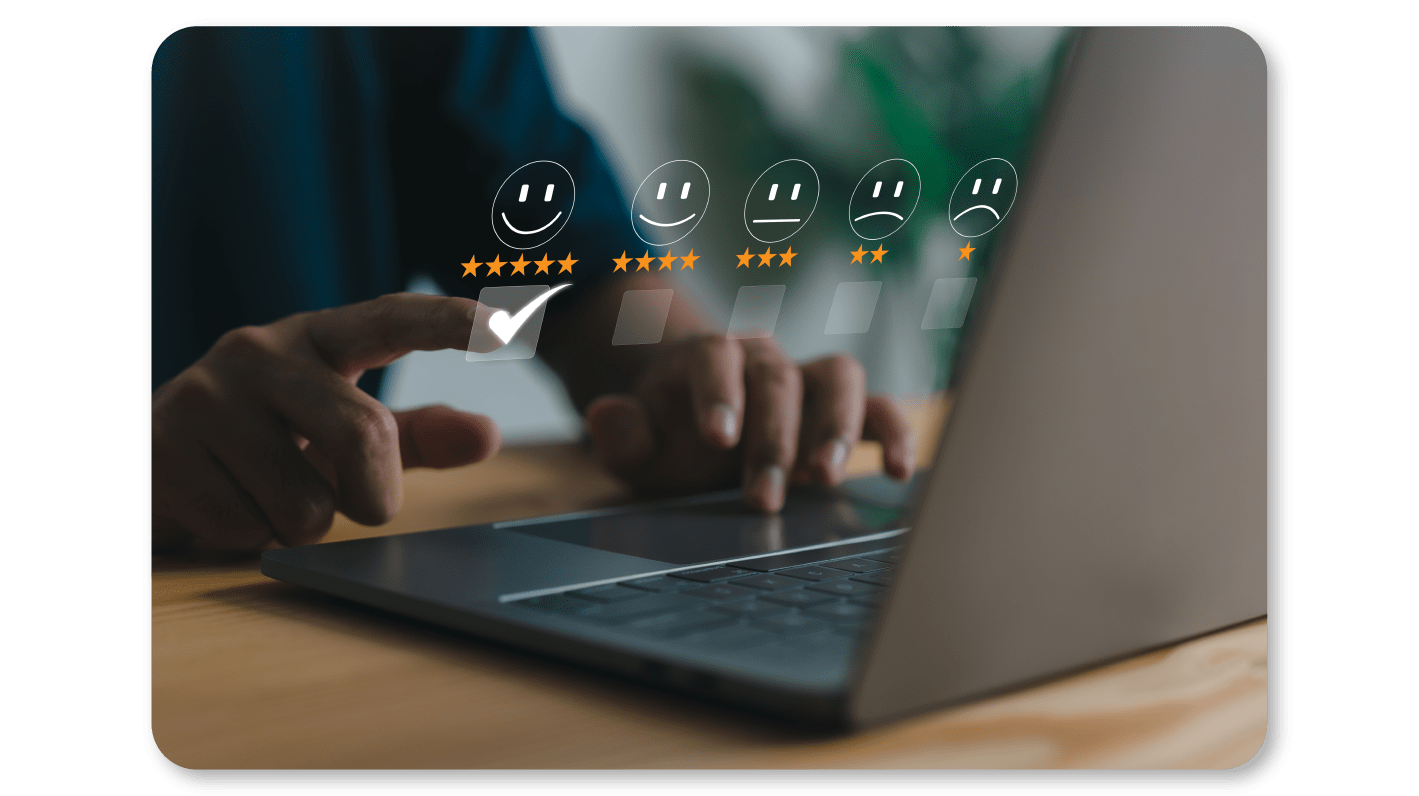
Run a short wellness survey to gauge overall wellbeing and fitness interests.
Let employees suggest activities, so the challenge resonates with what they actually want.
2. Form a Wellness Committee:
- Create a committee with employees from different departments to plan and run the challenge.
3. Define Clear Goals and Objectives:
- Set one main objective up front, and let it guide which activities you choose.
4. Set a Clear Timeline and Rules:
- Fix the duration around workloads and holidays, and draft simple rules covering tracking, participation, and prizes before launch.
5. Encourage Participation Without Pressure:
- Make joining easy and optional, and ensure non-participants are never disadvantaged.
6. Promote and Communicate:
- Educate employees on the benefits, then promote the challenge across the channels they use, like email, chat, posters, and team meetings, to keep everyone informed and motivated.
7. Monitor Progress and Adapt:
- Track progress, motivate participants, and adjust as needed to sustain engagement.
8. Celebrate Success:

- Reward participation and winners alike with prizes, gift cards, and reward points.
9. Empower Employee Choice:
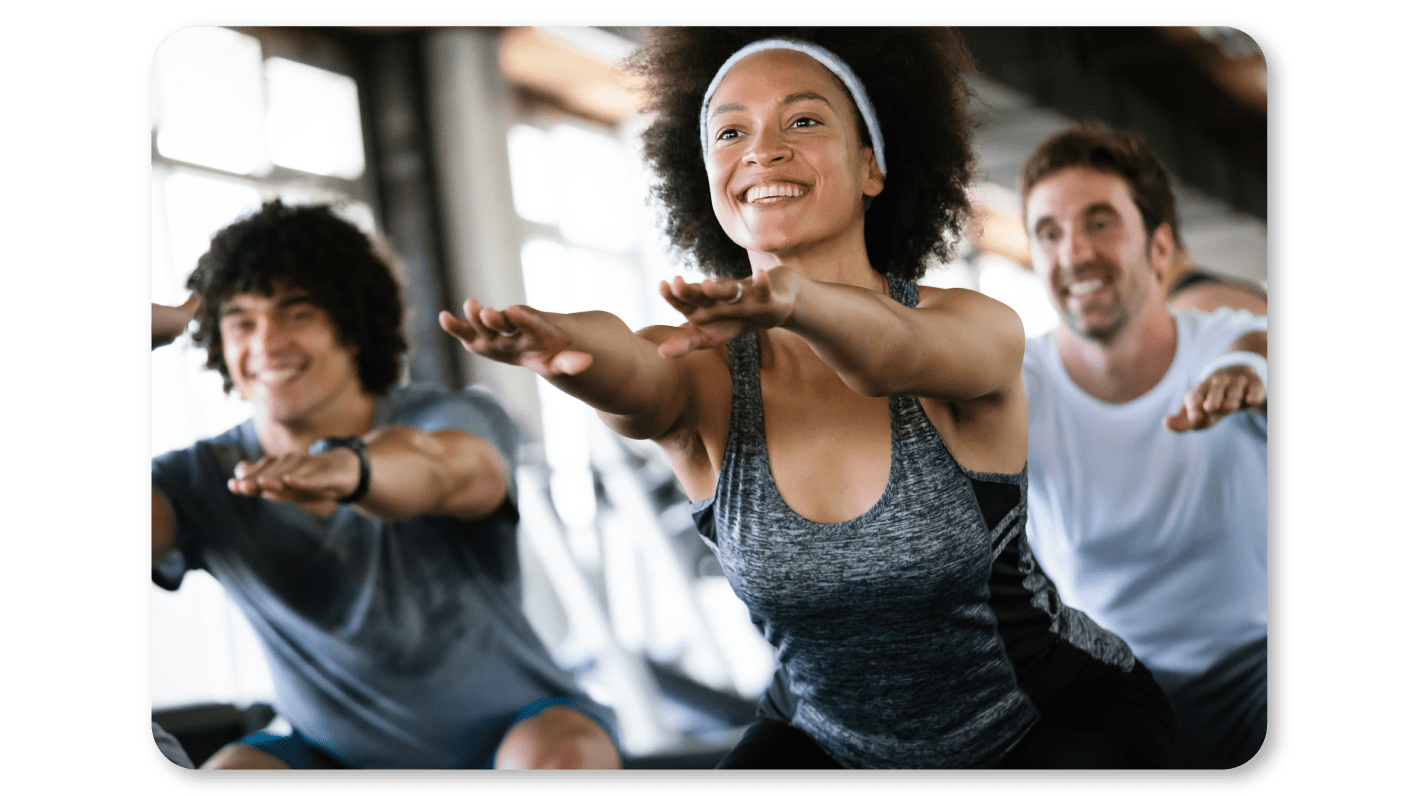
- Let employees pick the challenges they join, which lifts engagement and enthusiasm.
10. Streamline Participation:
- Use a wellness platform such as Vantage Fit to simplify sign-up, sync data from fitness apps and wearables, and offer translated content for non-English speakers.
11. Prioritize Fun:

- The primary goal is to have fun. A playful format like wellness bingo run alongside the challenge keeps energy high.
Leveraging Technology for Enhanced Engagement
In recent years, technology has revolutionized the office fitness challenge experience, transforming how individuals engage with these challenges. Here’s how technology has made fitness challenges more accessible, engaging, and effective:
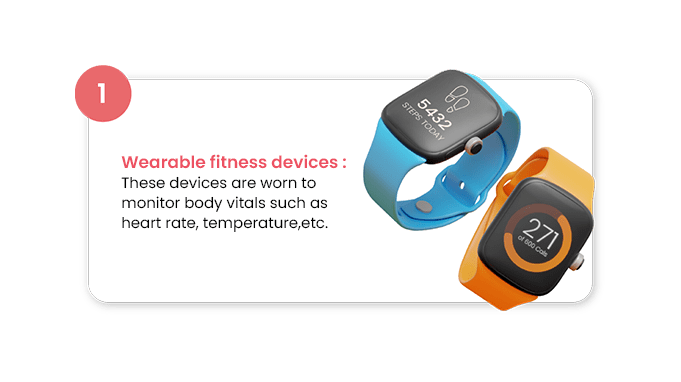
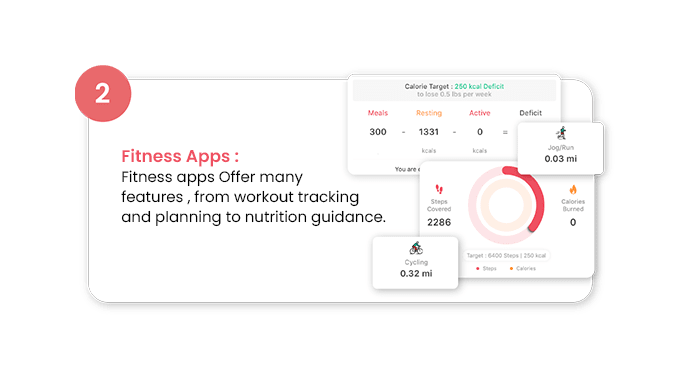
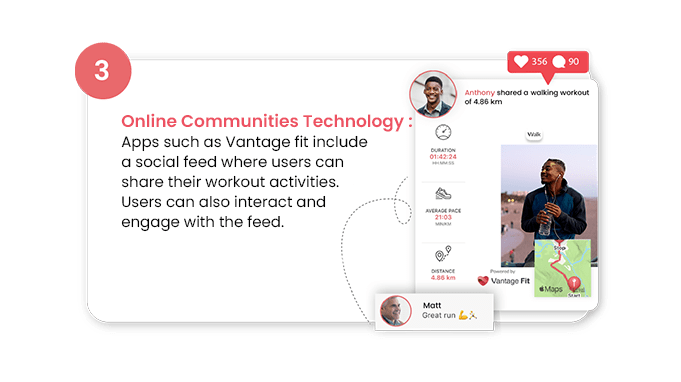
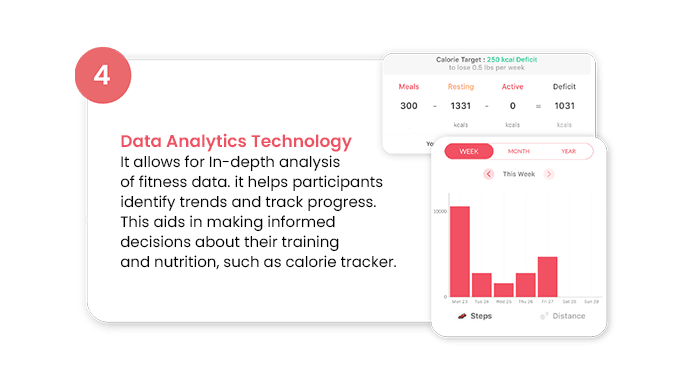
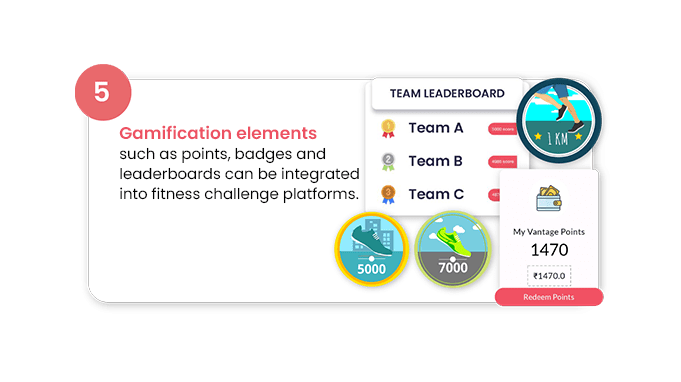
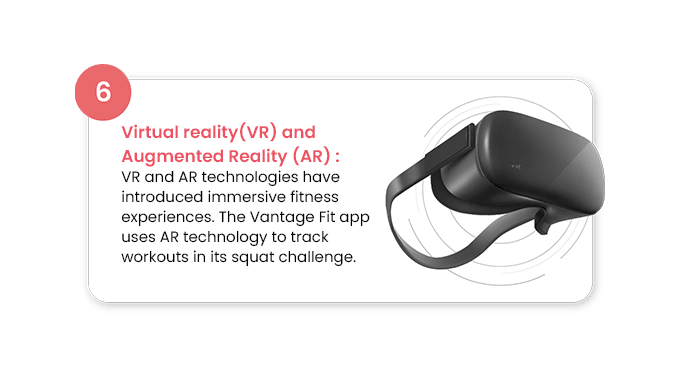
Make the best use of technology while incorporating it into your office fitness challenge. Automate wherever possible and simplify participation using technology. Further, as technology progresses, office fitness challenges are set to become more personalized and interactive.
Measuring Office Fitness Challenge Success
Measurement is important to track the progress of office fitness programs. You can use the following metrics to measure the success of an office fitness challenge:
Participation Rates: Measure employee attendance and engagement.
Completion Rates: Track successful challenge finishers.
Goal Achievement: Assess and track fitness goals.
Before-and-After Assessments: Evaluate fitness changes in each and every participant.
Surveys and Feedback: Gather participant input on their experiences with fitness challenges.
Long-Term Behavior Change: Evaluate lasting habits such as reduced absenteeism, etc.
Peer Recognition: Reward and appreciate standout participants.
Benchmarking: Compare with industry or past challenges.
What to do when challenge engagement is low?
Low engagement is usually a design problem, not a motivation problem. If sign-ups stall or activity drops mid-challenge, the fix is almost always a smaller goal, a more visible leaderboard, or a fresh reason to come back. Here is how HR teams troubleshoot the most common drop-off points:
- Sign-ups are low. Make joining one tap, not a form. Get a senior leader to join publicly on day one, and frame the challenge around a team goal so no one feels judged.
- People fade by week two. This is the most common pattern. Reset the goal to something achievable (5,000 steps, not 10,000), award points for daily participation rather than only for winning, and post a mid-challenge leaderboard update.
- The same few people always win. Switch to team or department formats with size-adjusted scoring, and reward streaks and personal bests, not just totals.
- Remote employees disengage. Pick activities that work anywhere and share the leaderboard in the channel people already use.
Brazosport ISD held engagement at 86% over a two-week challenge by doing exactly this: short duration, daily points, and a live leaderboard that made progress visible to everyone.
Bottom Line
A well-run office fitness challenge turns scattered good intentions into shared daily habits, the kind that show up as more energy, better morale, and stronger engagement across the team.
Take the next step in promoting healthy habits among your team by implementing these impactful fitness challenge ideas at work.
Frequently Asked Questions
How do I create an office fitness challenge?
Start by surveying employees to understand their fitness interests, then pick a challenge type that works across fitness levels. Define a clear goal and duration, set up tracking, and communicate the launch through email, Slack, or posters. Offer rewards for participation and completion, not just for top performers, to maximize engagement.
What are the best office fitness challenge ideas for remote teams?
Step challenges and virtual walkathons are the easiest to run across remote teams since employees can participate from anywhere using a phone or wearable. Nutrition logging, hydration challenges, and daily mindfulness check-ins also work well remotely. Use a platform like Vantage Fit to track participation and share a live leaderboard so remote teams stay connected and competitive.
How long should an office fitness challenge last?
Most office fitness challenges run between 2 and 6 weeks. A 2-week challenge builds urgency and is easier to sustain for first-timers. A 4–6 week challenge is better for habit-building goals like daily steps or hydration, where consistency over time drives real behavior change. Avoid running challenges longer than 8 weeks without re-engaging employees with new milestones or rewards.
How do I incentivize a corporate fitness challenge?
The most effective incentives are timely and visible. Award points for daily participation rather than only for final results, so employees who fall behind mid-challenge stay engaged. Gift cards, extra time off, wellness stipends, and public recognition on a team leaderboard all work well. The best platforms automate reward distribution through redeemable points tied to challenge milestones.
What are some fun office fitness challenge ideas for small teams?
Small teams benefit from challenges where everyone's contribution is visible. Team step competitions, plank-off contests, a shared hydration goal, or a desk-stretching streak all work well because they are easy to track and create natural conversation. Pair any challenge with a group chat or Slack channel where participants can post updates to keep the social energy high.
What are some tips for running a successful office fitness challenge?
Keep these in mind: set goals that feel achievable but not too easy; get a manager or senior leader to participate visibly from day one; send weekly progress updates to sustain momentum; celebrate participation milestones, not just top finishers; and gather feedback after the challenge to improve the next one.