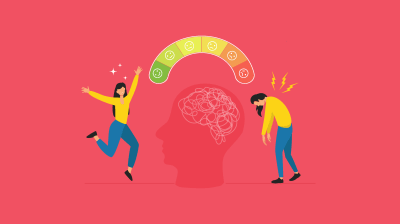
For many people, the hardest part of the job starts before they reach their desk. Anxiety about going to work every day is a persistent dread that builds before each workday, often with a racing heart, broken sleep or a knotted stomach.
The dread usually has more than one source. Heavy workloads, conflict with a manager or coworkers, fear of failure and constant after-hours messages feed it, and job insecurity is especially common: in a 2025 American Psychological Association survey, 54% of US workers said it significantly affected their stress at work.
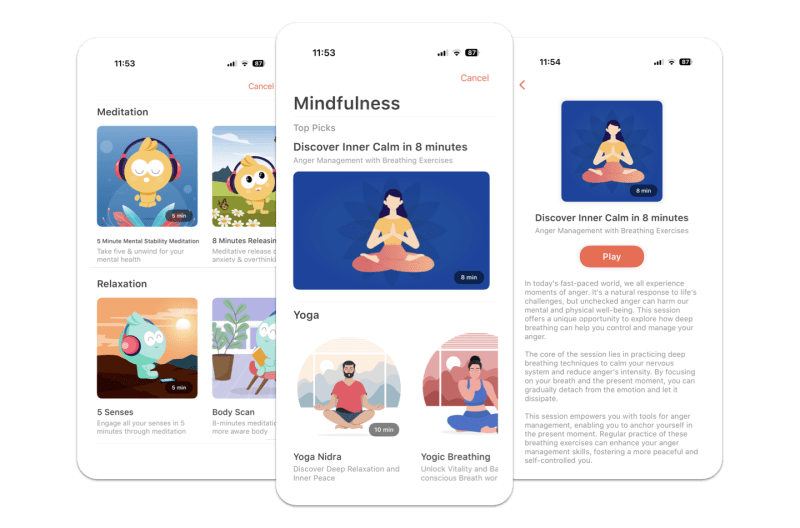
Since some causes sit with the person and some with the workplace, both sides can ease the dread. Employers can help on anxious mornings: Vantage Fit, for example, offers guided mindfulness tracks for the minutes before work and a private mood check-in where employees note how they feel and why.
Support like this works better once you know what you are dealing with, whether you feel the dread yourself or see it in your team. Let’s dig into how it feels and why it happens, and then into the fixes for employees and HR leaders.
Key Takeaways
- Anxiety about going to work every day shows up in the body and in behavior, from tight shoulders and nausea to procrastination and Sunday-night dread.
- Workload, job insecurity, conflict and change each feed the dread differently, which is why a one-week trigger log is a practical place to start.
- Nerves that fade after a deadline are normal, while dread that settles in most days and spills into sleep, appetite or sick days is a signal to act.
- Relief on weekends and worry tied to one person or task point to the job, while worry that follows you on holiday points to something broader.
- Raising workload with a manager, framed around the quality of your work, takes the most courage of any tip and does the most good.
- In the middle of a spike, a five-minute walk works as a reset, while pushing through suits mild discomfort on a task that is nearly finished.
- HR can lower the dread at its source by training managers, setting after-hours norms and making EAP and ADA accommodation routes clear.
What Does Work Anxiety Actually Feel Like?
Work anxiety shows up as a mix of symptoms that differ from person to person. Knowing what it looks like is the first step toward managing it.
1. Physical Warning Signs
Your body often registers anxiety before your conscious mind does. Common physical symptoms include a racing heartbeat, tightness in the chest, shallow breathing, headaches, digestive issues (nausea, stomach cramps), muscle tension (especially in the neck and shoulders), sweating, and fatigue that sleep doesn’t fix.
Many people describe a specific “Sunday night dread” as a physical heaviness that sets in as the weekend ends.
2. Emotional and Behavioral Patterns
Emotionally, work anxiety can manifest as persistent irritability, a sense of dread or doom, feeling overwhelmed before the day even begins, and emotional numbness or detachment from tasks you once enjoyed.
Behaviorally, you might notice yourself procrastinating more, calling in sick to avoid work, withdrawing from colleagues, overeating or undereating, or relying on alcohol or other substances to “take the edge off.”
Why Do You Feel So Anxious About Going to Work?

You feel anxious about going to work because your mind starts preparing for the day’s pressures before the day begins. Each pressure feeds the dread in its own way, so knowing which one drives yours tells you which fix to try first:
- Heavy workload and tight deadlines: a to-do list that keeps growing holds your mind on work long after hours.
- Job insecurity: worry about layoffs, restructuring or a weak review makes every mistake feel bigger.
- Conflict with a manager or coworkers: a tense relationship turns ordinary meetings into a source of strain.
- Fear of failure and high expectations: pressure to perform, from others or from yourself, makes each task feel like a test.
- A blurred line between work and home: late messages and remote work shrink the time you have to recover.
- Change at work: a new role, a new manager or a return-to-office mandate brings uncertainty that is hard to plan around.
Whatever the source, anxious thoughts can spiral quickly, especially when it feels like you can’t handle everything today. That feeling can hide the fact that most challenges are temporary and manageable. The signs below help you tell ordinary nerves from something that needs more attention.
Signs It’s More Than Just Pre-Work Nervousness

Ordinary work stress fades once the big meeting or deadline has passed. Anxiety about going to work is different when it lingers: it lasts for weeks, colors the whole day and starts to get in the way of sleep, work or relationships. Here are the signs to watch for:
- Headaches, muscle tension or a racing heart before and during work on most days.
- Feeling drained, unmotivated or on edge for much of the day, well beyond a few anxious moments.
- Trouble falling asleep, waking often in the night or waking up unrested, which wears down your overall well-being.
- Putting off tasks, hitting snooze again and again, or using sick days to escape the office.
- Eating far more or far less than usual, week after week.
Ergophobia is an irrational fear of going to work, which causes intense discomfort, before or during the workday, and that can trigger an anxiety crisis.
Remote employees should watch these signs closely, because when work and home share one space, the anxiety can slide into work-from-home burnout. If several of these signs show up most days for a few weeks, it is time to look at where the dread comes from.
Is It My Job or Is It Me?
When your job gives you anxiety, the pattern of the dread usually shows its source. Work is the likely cause when the dread lifts on days off and returns as the workweek nears. It points to something broader when it follows you into weekends, holidays and other parts of life.
The job is the likely source when:
- The anxiety eases on days off and builds again on Sunday evening.
- It spikes around one person, one meeting or one type of task.
- Colleagues in the same team describe the same strain.
- Your workload or expectations changed and stayed that way.
Look beyond the job when:
- The worry continues on holidays and spills into other parts of life.
- It started before this role or has followed you through several jobs.
Either way, a good first step is a conversation with your manager about what can change. If the anxiety is affecting your sleep, health or daily life, a doctor or therapist can help you work out what is driving it.
10 Evidence-Based Tips to Ease Anxiety Before Work
These strategies draw on cognitive behavioral therapy principles, workplace psychology research and real-world experience. Practiced consistently, they ease anxiety over time and build resilience.
1. Identify Your Specific Triggers with a Trigger Log
Managing anxiety starts with knowing exactly what sets it off. Generic advice like “manage your stress” is hard to act on. You need specificity. For one week, keep a simple log: each time you feel anxious, note the time, what was happening, and what thought preceded the feeling.
After a week, patterns might emerge. Maybe it’s the morning rush that spikes your anxiety. Or maybe it’s the unread email count. Once you know the trigger, you can build a targeted response.
A mood-tracking app makes this easier, since each entry records how you felt and what was behind it.
2. Prepare the Night Before
Anxious mornings often start the night before. Lay out your clothes, pack your bag, prep your lunch, and review tomorrow’s calendar for 5 minutes. Write down the top 3 things you want to accomplish. The point is to remove the chaos that gives anxiety room to spiral.
Poor sleep fuels next-day anxiety. Tracking sleep patterns helps employees see the connection and act. Consider logging your sleep start and end times for a week to identify disruptions.
3. Start with Mindfulness

Even five minutes of deep breathing, meditation or stretching can calm the mind and body. When you feel anxious about starting a task or heading to a meeting, a few rounds of guided breathing can help center you for the rest of the day.
Guided relaxation can have a quiet but real effect in genuinely stressful work environments. Celegence shared this about its Physical Fitness month on Vantage Fit:
"One of the features I loved the most is the Yoga Nidra session, which helped us relax in the stress-induced environment."
— Celegence
4. Create an Anchoring Morning Ritual
An anchoring ritual is a consistent, enjoyable activity that tells your brain: “This is my time before work demands begin.” It could be quiet tea, a 15-minute walk, journaling or a favorite podcast. The key is consistency: the same routine each morning builds a buffer between sleep and work mode.
Monday mornings are a natural place to lock this in, because they set the tone for the week. A structured Mindful Monday routine gives you a repeatable weekly reset built around these practices.
5. Set Boundaries on Work-Related Thoughts Outside Hours
If you’re checking Slack at 10 PM or mentally rehearsing tomorrow’s meeting at dinner, your brain stays on the clock. Instead, try this approach: set a hard “work thoughts” cutoff time (e.g., 7 PM).
When a work thought intrudes after that, acknowledge it (“I notice I’m thinking about the report”) and redirect your attention. Some people find it helpful to write the thought on a notepad and park it until morning, so it stops circling.
Suggested Read: 5 Ways To Combat Monday Morning Anxiety.
6. Be Honest About What You Can Take On
Knowing your limits is one of the most effective ways to manage anxiety, and one of the hardest. Before you say yes to more work, ask yourself: How much can I take on? Is this task within my skills? Do I have the time and energy to do it well?
Honest answers help you avoid feeling overwhelmed later, and knowing how many tasks you can handle eases anxious thoughts.
7. Break Tasks into Micro-Wins
A massive to-do list is anxiety fuel. Instead, break your day into small, completable tasks. Rather than “Finish the quarterly report,” try: “Pull last quarter’s numbers” or “Draft the executive summary” to “Format the charts.”
Each completed micro-task gives you a small sense of progress and builds momentum. Celebrate these small wins, because they add up.
8. Use Timeboxing for Overwhelming Projects
Time-boxing means assigning a fixed period to a task and working only on that task during that window. For example: “I will work on the client proposal for 45 minutes, then take a 10-minute break.”
This approach removes the feeling of “this will take forever” and replaces it with “I just need to focus for 45 minutes.” Pair this with the Pomodoro Technique (25-minute work blocks + 5-minute breaks) if 45 minutes feels too long.
9. Communication and Reaching out to Managers

This is the hardest tip on the list, and the most important. If your workload, deadlines, or work environment are contributing to your anxiety, your manager needs to know. Managers can only fix what they can see.
If you are wondering where to start, try this script:
“Hi (Manager), I wanted to flag something. I’ve been feeling stretched with (specific project/workload), and I want to make sure I’m delivering quality work. Could we look at priorities together so I can focus on what matters most right now?”
This framing keeps the focus on quality and outcomes, which makes the conversation easier to start and easier for your manager to answer well.
10. Practice the 3-3-3 Grounding Technique
The 3-3-3 rule for anxiety is a simple grounding exercise you can do anywhere. When anxiety starts to build, pause and identify:
-
3 things you can see (name them out loud or silently),
-
3 things you can hear (the hum of the AC, a bird outside, your own breathing), and
-
3 things you can physically touch or move (tap your desk, press your feet into the floor, roll your shoulders).
This exercise interrupts the anxiety spiral by pulling your attention out of your worried thoughts and anchoring it in your immediate physical environment. It takes about 30 seconds.
What to Do During an Anxiety Attack at Work

Despite your best efforts, anxiety can spike without warning. Here’s what to do in the moment.
The 5-4-3-2-1 Grounding Exercise
This sensory grounding technique redirects your brain from panic to the present.
Identify:
- 5 things you can see,
- 4 things you can touch,
- 3 things you can hear,
- 2 things you can smell, and
- 1 thing you can taste.
Walk through each sense slowly and deliberately. Giving a racing mind one simple task at a time helps the panic settle.
Breathing Techniques That Work in 60 Seconds
4-7-8 Breathing:
-
Inhale through your nose for 4 seconds.
-
Hold for 7 seconds.
-
Exhale slowly through your mouth for 8 seconds.
-
Repeat 3 to 4 cycles.
This activates your parasympathetic nervous system and physically slows your heart rate.
Box Breathing:
-
Inhale for 4 seconds,
-
hold for 4 seconds,
-
Exhale for 4 seconds,
-
hold empty for 4 seconds.
-
Repeat.
Navy SEALs have used this technique in high-stress situations, and it works just as well at your desk.
When to Step Away vs. Push Through
Step away if your hands are shaking, you can’t focus on a single sentence, you feel tears coming, or your heart rate is noticeably elevated. A 5-minute walk outside, if possible, is a reset.
Push through if you’re experiencing mild discomfort but can still focus, the task is time-sensitive and nearly complete, or you’ve already used a grounding technique and it’s helping. The goal is discernment: knowing which moment calls for which response.
Visualization
Sometimes, when anxiety feels overwhelming, take a moment to close your eyes and visualize a peaceful scene, maybe a beach or a quiet forest. You can picture every detail in your mind, from the sound of the waves to the scent of the trees.
To make it more effective, pair the image with calming background sounds, like white noise or gentle nature audio, to deepen the sense of escape.
This mental escape helps reset your emotional state and gives you a break from the stress.
Individual Coping vs. Organizational Solutions
Managing workplace anxiety requires action at two levels. Employees can build personal resilience, but employers must also address the systemic factors that create anxiety in the first place. Here’s how the two approaches compare:
| Focus area | What employees can do | What employers can do |
|---|---|---|
| Spot patterns | Keep a personal trigger log and track mood patterns | Run anonymous pulse surveys; review turnover and absence data for patterns |
| Calm the nervous system | Practice mindfulness, breathing exercises, and physical activity | Offer guided meditation libraries, wellness challenges, and mental health days |
| Manage workload | Break tasks into micro-wins; use time-boxing | Audit workload distribution; train managers on realistic goal-setting |
| Protect off-hours | Set work-thought cutoff times; limit after-hours email | Implement no-meeting days; set after-hours communication policies |
| Build support | Talk to a trusted colleague; join peer support groups | Create psychological safety; train managers in empathetic leadership |
| Get professional help | Seek therapy or counseling; use EAP resources | Fund EAPs; normalize therapy through leadership modeling |
| Care for the body | Prioritize sleep, exercise, and nutrition | Provide fitness programs, sleep-tracking tools, and ergonomic workspaces |
| Measure progress | Self-assess weekly using a mood or anxiety scale | Track participation, pulse survey results and absence trends |
How Can HR Reduce Anxiety About Going to Work?
HR can reduce anxiety about going to work by fixing workplace causes and making support easy to reach. That means spotting team-level warning signs, easing return-to-office changes, training managers, running a structured employee wellness and stress management program and making EAP and accommodation routes clear. Here is where to start:
1. Recognizing Anxiety Patterns in Your Workforce
Many employees keep work anxiety to themselves. In a 2006 survey by the Anxiety and Depression Association of America, only 40% of workers whose stress interfered with their job had talked to their employer about it, so the cost surfaces in the data long before it surfaces in a conversation.
Replacing a single employee who burns out and leaves is costly; Gallup estimates the price of replacing an employee at one-half to two times their annual salary, which makes early detection a budget issue as much as a wellbeing one.
Because so few people raise it, look for proxy signals such as rising absenteeism, increased turnover in specific teams, declining engagement scores, a spike in EAP utilization, or managers reporting that team members seem “checked out.”
Anonymous pulse surveys that ask about stress levels, psychological safety, and workload perceptions can surface problems before they become crises.
Team-level data, such as survey results, absence rates and participation in wellness programs, shows whether anxiety runs across the workforce or sits in one team, while keeping each person’s information private.
2. Addressing Return-to-Office and Hybrid Anxiety
For many employees, return-to-office and hybrid mandates have become a fresh anxiety trigger. In a 2023 Korn Ferry survey, 58% of employees facing a return-to-office mandate said they expected it to harm their mental health. Commute stress, lost flexibility, social re-adjustment, and caregiving pressures all land at once.
HR can soften the transition and keep the policy. Phase returns gradually, give teams predictable in-office days instead of last-minute mandates, protect some remote flexibility for focus work, and brief managers to expect a temporary dip in mood and output.
Pairing the change with a clear “why” and a genuine feedback channel turns a top-down order into a shared adjustment.
3. Building a Mental Health-First Culture
Culture change starts at the top. When senior leaders openly discuss mental health, use their own PTO, and model healthy boundaries, it gives employees permission to do the same.
One of our Vantage Fit podcast guests described the stakes clearly:
"If you have leadership getting to work at 8 a.m. and not leaving until 10 p.m., people are watching. You can't say 'do as I say, not as I do.' It's almost like parenting."
— Stacy Fritz, CEO, FIT2order | Listen to the full episode
Train your people managers in mental health first aid. It equips them to recognize early warning signs, open a supportive conversation without trying to act as a therapist, and point employees toward professional help.
Managers are usually the first to notice when someone is struggling, which makes this one of the most effective investments an HR team can make.
Other practical steps include creating explicit norms around after-hours communication, celebrating employees who take mental health days, and adding mental wellness to performance review discussions not as a metric, but as a check-in.
4. Implementing Structured Wellness Programs
Unplanned wellness initiatives (a yoga class here, a meditation app there) are better than nothing, but structured programs drive sustained change. Consider multi-activity wellness challenges that combine physical movement, mindfulness, hydration, and social connection into a single program employees can engage with daily.
In IBS Software’s 28-day March to Fitness campaign, powered by Vantage Fit, participation turned into a shared experience. 95 employees made time for mental wellness activities and 130 tracked their daily mood. More than 500 employees joined, and the campaign’s engagement rate reached 88%.
Ready-made challenge templates, such as Stress Free Month and Mindful Moving, give HR teams a structured starting point, so a program like this can launch quickly.
Measuring Impact: Key Metrics for HR
What gets measured gets managed. Track these metrics to assess whether your anxiety-reduction initiatives are working:
-
Program participation rate: What percentage of employees actively engage with wellness challenges and resources?
-
Mindfulness use: Are total mindfulness minutes rising over time, and are more teams taking part?
-
Absenteeism and presenteeism: Are unplanned absences declining? Are employees reporting higher productivity?
-
Engagement scores: Are quarterly or annual engagement surveys showing improvement in stress-related questions?
-
EAP utilization: Increased EAP use can be a positive signal (employees are seeking help) or a warning. Context matters.
5. Know Your Obligations: EAPs and ADA Accommodations
Supporting anxious employees is partly a legal duty as well as a cultural choice. Two basics belong in every HR team’s toolkit:
- Employee Assistance Programs (EAPs): confidential, employer-funded counseling and referral services, usually offering a set number of free sessions. They only help if people know they exist, so promote the EAP regularly and remind employees that use is private.
- ADA reasonable accommodations: under the Americans with Disabilities Act, an anxiety disorder can qualify as a disability, and covered employers (generally those with 15 or more employees) may need to provide reasonable accommodations. Common ones include a flexible or modified schedule, time off for treatment, written instructions, breaking work into smaller tasks, or telework.
When EAP access and accommodation pathways are clear and stigma-free, employees ask for help earlier, before anxiety hardens into a crisis or a resignation.
Summing It Up
Managing anxiety at work is hard, but it is possible, especially when individuals and organizations share the responsibility. The strategies in this guide meet you where you are, whether you’re an employee looking for your first coping tool or an HR leader ready to fix the causes at work.
Frequently Asked Questions
Why do I struggle to go to work every day?
Daily dread usually comes from a mix of stressors: heavy workload, job insecurity, conflict, fear of failure, or work that follows you home. Track when anxiety spikes for a week to find your specific triggers, then tackle the biggest one. Persistent dread can also signal a deeper mental block at work.
Should I quit my job if it's causing anxiety?
It is usually worth tackling the source first: talk to your manager about workload, use your EAP or therapy, and set firmer boundaries. If the anxiety comes from a toxic environment that stays the same despite your efforts, a planned exit may be healthier. Decide once the panic has settled.
Is it normal to dread going to work every day?
Occasional dread before a hard week is normal. Dreading work most days for weeks, with physical symptoms like poor sleep or a racing heart, is a sign of ongoing work anxiety that deserves attention from you and, ideally, your employer.
How do you deal with anxiety before work?
Prepare the night before, build a calming morning ritual, and use a quick grounding tool like the 3-3-3 technique or 4-7-8 breathing when anxiety spikes. Over time, a consistent mental wellness routine and open conversations with your manager do more than any single trick.
What should I do if I have an anxiety attack before work?
Pause and use a fast grounding tool: breathe in for 4 seconds, hold for 7 and breathe out for 8, or name 5 things you can see, 4 you can touch and 3 you can hear. Once the peak passes, decide whether to head in or ask your manager for a later start. If it is your first attack or you have chest pain, get medical help, and see a doctor if attacks happen most mornings.
How can HR help employees with work anxiety?
HR helps by tackling the causes it controls: auditing workloads, training managers in mental health first aid and setting norms for after-hours messages. It can also make help easy to find by promoting the EAP and explaining ADA accommodations. Participation, absence and pulse survey results then show whether the changes are working.
Related read: 47 Stress Management Activities for Employees to Try at Work