Monday morning anxiety, sometimes called Monday morning syndrome, is the spike in stress, dread, and low mood many people feel at the start of the workweek. It is driven by two things: the abrupt shift from a relaxed weekend routine back to work, and a natural cortisol surge in the first 45 minutes after waking.
It is not a clinical diagnosis, but it is common and manageable, and a few small changes to your Sunday and Monday routine can ease it.
The effect is real and measurable. In a 2025 University of Hong Kong study of more than 3,500 older adults, people who felt anxious on Mondays carried 23% higher levels of the stress hormone cortisol in samples taken up to two months later, and the pattern held whether they were still working or already retired.
Is Monday Morning Anxiety Real, or All in Your Head?

Monday morning anxiety is not an official medical diagnosis, but the physical response behind it is well documented. It describes waking up stressed, tense, and low at the start of the week, with symptoms that overlap generalized anxiety disorder (GAD), such as a racing mind, restlessness, and a sense of dread.
What surprised researchers is how deeply the pattern is wired in. In that same study, the raised cortisol showed up even in retired adults who no longer faced a Monday commute, which points to learned conditioning rather than a simple reaction to the job itself.
Mondays have also been linked to a 13% rise in the most serious heart attacks at the start of the workweek, so the stakes go beyond a bad mood.
The takeaway is not that Monday anxiety is dangerous on its own. It is that the feeling is a real signal worth managing rather than pushing through.
Why Do You Feel Anxious On A Monday Morning?
The transition from a relaxing, fun-filled weekend to an unpleasant work week on Monday mornings can be quite stressful, making you anxious. Monday blues can affect your mental and physical health and make you feel sluggish. The adrenal glands release the “stress hormone” cortisol in response to stress or fear.
Psychologists point to three main drivers behind that reaction:
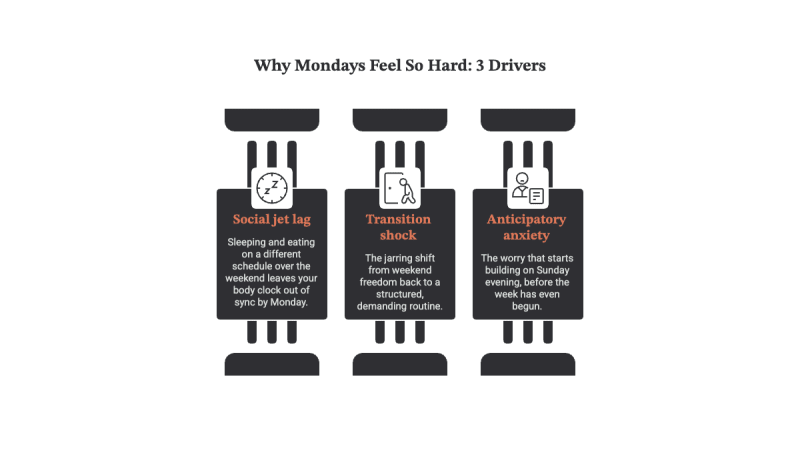
- Social jet lag: sleeping and eating on a different schedule over the weekend leaves your body clock out of sync by Monday.
- Transition shock: the jarring shift from weekend freedom back to a structured, demanding routine.
- Anticipatory anxiety: the worry that starts building on Sunday evening, before the week has even begun.
On top of this, cortisol naturally rises in the first hour after you wake to help your body get going. For an already anxious mind, that normal wake-up surge can feel like a threat, setting a tense tone before the day has started.
“Your Monday morning thoughts set the tone for your whole week. See yourself getting stronger, and living a fulfilling, happier and healthier life.” – Germany Kent
Early in the morning, what you eat and drink can also contribute to a higher level of anxiety. If you drink a cup of coffee first thing in the morning, the caffeine will increase your cortisol levels, and if you don’t get enough hours of sleep on Sunday night, worried about what’s going to happen the next day, you’ll probably wake up anxious in the morning.
These are just some of the many reasons you might feel anxious or get an anxiety attack on the first day of the week. It can be difficult to switch from a relaxed day to a busy one.
Symptoms of Monday Morning Anxiety

Monday morning anxiety can show up in both your body and your mind. Common symptoms include:
- A racing heart or tight chest soon after waking
- A sense of dread or low mood before the day begins
- Trouble concentrating, or a foggy and unfocused mind
- Irritability or feeling on edge with people around you
- An upset stomach or loss of appetite
- Difficulty getting out of bed and getting started
These usually ease once the day gets going. Pairing a calm morning routine with positive thinking practices at work can meaningfully shift how the week starts.
How Can You Stop Getting Anxious On Monday Morning?
Feeling anxious on Monday can set a negative impact on your mood for the entire week. Maintaining a healthy work-life balance is important by not overindulging in anything on weekends.
Personal time is crucial for you to prepare yourself for all the due work that is lying ahead of you.
“It’s Monday. Get a new perspective. Whatever obstacle you’re facing, it’s not permanent.” – Unknown
Even if you’re having a hard time starting the week on a positive note, you should try to take a 30-minute break or pause to give yourself the time to experience what you’re feeling or what is making you anxious.
Mondays are a slow ramp for many teams. In one workweek survey, only 24% of managers rated Monday their most productive day, compared with 39% for Tuesday, so easing into the week is more common than you might think.
5 Ways To Beat Monday Morning Anxiety
Here are five effective ways you can try to boost your motivation and start the week with a more positive outlook -
1. Relax And Rejuvenate Yourself Over The Weekend
Part of Monday blues or waking up anxious on Monday morning is mostly because of the different sleep patterns and lifestyles on Saturdays and Sundays. It is important to have fun or try to do activities that make you happy, but at the same time, you need to keep a balance.
It will help you unwind while letting to have fun or maintain your routines over the weekend.
Try to make the most of your weekend doing activities or traveling if possible if that helps you destress and gives you joy and peace of mind. End your Sunday with a happy state of mind so that you can wake up the next Monday morning with a positive outlook.
2. Disconnect And Revamp Over The Weekend
If you see yourself stressing over work-related issues or meeting deadlines, or over-scheduling your week on weekends, you need to pause and think about setting stricter boundaries between work and play.
Building those habits early is one of the most effective ways of managing workplace stress before it takes a real toll. Monday blues or anxiety is your call to make some changes to your priority list.
Weekends are meant to relax and not for work, so if you catch yourself constantly checking emails, picking up your phone, or dreading what’s going to happen on Monday, you stop right there to prevent burnout.
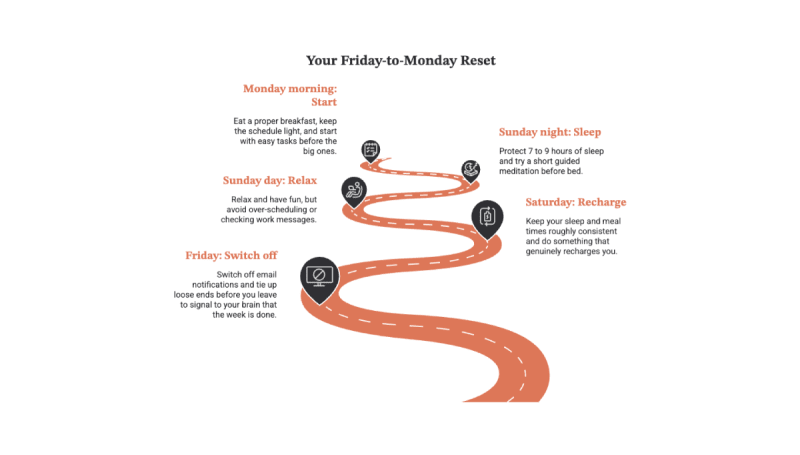
Try to unplug yourself from work-related problems by turning off your email notifications on Fridays and focusing on your time.
3. Do Not Mess With Your Sleep Pattern
It might sound basic, but it is one of the most effective ways to beat those anxious thoughts that you might get first thing in the morning, i.e., enough sleep, especially on weekends. If possible, try to get those 8 hours of luxury sleep.
Avoid waking up late on Sundays or going late to bed on Saturdays. If you can get proper rest and sleep on Sunday, you’ll feel more energized and refreshed on Mondays. Try to engage yourself with some stimulating physical activities that will further help you get the amount of sleep required to recharge your body to face Monday again.
Remember, good sleep can help you get away with many mental health woes.
Researchers call this social jet lag: sleeping in on the weekend shifts your body clock, so waking early on Monday feels like a jolt, much like flying across time zones. The bigger the gap between your weekend and weekday sleep times, the harder Monday lands.
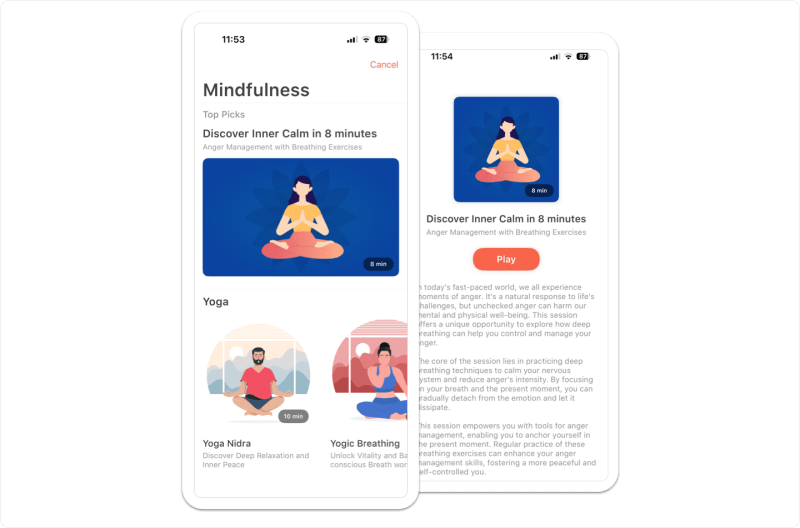
One habit that makes Sunday-night wind-down easier: a short guided meditation before bed.
Platforms like Vantage Fit include a library of 5-to-20-minute mindfulness sessions alongside daily mood tracking, so instead of lying awake cataloguing Monday’s to-do list, you have a structured practice that signals to your brain it’s time to rest.
Tracking mood over time can also surface patterns: if anxiety consistently spikes on Sunday evenings, that data helps HR teams design support that addresses the root cause rather than offering generic wellness tips.
Suggested read: How Sleep Deprivation Affects Work Performance
4. Do Not Overbook Your Mondays
Don’t book your Mondays with big meetings and tasks. It is common to feel overwhelmed when you have tons of work to do after a weekend of relaxation. Try to avoid doing the big ones for a change and start with easy tasks.
Instead, delegate your concentration-filled work to Tuesday and Wednesday, and it will make you feel less stressed and prepare you for the big ones later on.
Also, avoid worrying about a packed schedule by planning ahead and not piling up pending tasks for the next week.
For a practical set of routines to pair with tip 4, see 11 Mindful Monday tips to re-activate your best self at work.
5. Treat Yourself To A Healthy Breakfast
Generally, your mood is influenced by your gut, so waking up with an empty stomach can disrupt your mood. You can always go out to your favorite cafe or cook your favorite breakfast to beat the Monday blues for a more positive start to the day.
It is crucial to start your day off with a good breakfast since it gives you something to look forward to and keeps you energized as you ease back into your weekly routine.
The Fix Self-Help Tends to Skip: Accountability
A lot of what we call Monday anxiety is not really about Monday. It is about the report left half-finished, the email you kept avoiding, and the loose ends you dragged into the weekend. Self-care helps you sit with that feeling, but it does not remove the cause.
No amount of meditation or positive thinking will quiet the dread while the work you are dreading is still sitting there, undone.
This is the part that self-help culture tends to skip. When you do your work properly and on time, close out what you promised, and reach Friday with nothing hanging over you, there is simply less waiting to greet you on Monday. Peace of mind here is earned through follow-through, not soothed into existence.
Accountability is not the opposite of looking after yourself. It is the part that makes everything else actually work.
This applies to everyday dread, not to a clinical anxiety disorder. If the anxiety persists no matter how organized and on top of your work you are, it may be something more, and the signs in the next section can help you tell the difference.
Is It Normal Monday Dread, or Something More?
Most Monday morning anxiety is temporary and eases as the day gets going. But if the feeling is intense, lasts all week, or stops you functioning, it may point to an anxiety disorder worth discussing with a doctor or therapist. Use the table below as a rough guide, not a diagnosis.
| Normal Monday dread | When to consider professional help |
|---|---|
| Eases within a few hours once the day gets going | Anxiety lingers all day and through most of the week |
| Mild reluctance or low mood on Sunday evening | Panic attacks, a racing heart, or a sense of doom before work |
| Sleep is slightly off on Sunday night | Insomnia or waking through the night on most nights |
| You can still get up and start your day | You often cannot face work, or call in sick to avoid it |
| Settles once you are into your routine for the week | The same symptoms show up on other days, not just Mondays |
| Eases with routine changes like better sleep and a lighter Monday | Self-help changes do not help, or the worry feels out of your control |
If several signs on the right sound familiar, consider speaking with a mental health professional. Combining professional support with the self-care steps above tends to work better than either alone.
Summing It Up
Face your fears. Live with uncertainty. Take control of your life.
As a result, anxiety symptoms are difficult to avoid and are made worse by the added Monday blues. However, even though these symptoms can get extremely uncomfortable and overwhelming, they are highly treatable with the right mindset and treatment.
Even though you cannot automatically shut down your anxiety attack, you can tame it and deal with it better by acknowledging it and taking more time to focus on yourself to deal with it.
I hope this article helped you overcome Monday morning anxiety and face the week with a more positive outlook. If you continue to feel the same for the rest of the day, you may want to combine professional treatment with self-care strategies to calm your anxiety and feel more hopeful.
Frequently Asked Questions
What is Monday morning anxiety?
Monday morning anxiety is the stress, dread, and low mood many people feel at the start of the workweek. It is not a clinical diagnosis, but it is common and treatable through small changes to your weekend and Monday routine.
Why do I get anxiety every Monday morning?
Two things usually combine: the sudden shift from a relaxed weekend back to work, and a natural cortisol spike in the first 45 minutes after waking. Poor Sunday-night sleep, caffeine, and a packed Monday schedule can make it worse.
Is Monday morning syndrome real?
Yes. Monday morning syndrome, also called the Monday blues, describes the real dip in mood and energy at the week's start. Research even finds measurable effects: people who feel anxious on Mondays show higher cortisol levels weeks later, so it shows up in the body, not just in your head.
How do I stop dreading work on Mondays?
Protect your Sunday-night sleep, keep a light Monday schedule, and plan one thing to look forward to, such as a good breakfast or a short walk. A brief guided meditation before bed and a calm morning routine make the transition easier.