Introduction
The short answer: Daylio is the best mood tracker app for most people, because a full entry takes two taps. How We Feel is the best free option, with no ads and no paywall. Bearable is best if you want mood linked to sleep, pain, or medication. eMoods is best when a clinician needs your data.
A mood tracker app records how you feel and charts those entries into patterns. If you only want a daily record, Apple Health already logs mood on every iPhone. For a workplace check-in, Vantage Fit is a corporate wellness platform that puts mood logging next to challenges and activity tracking for companies with 500 to 10,000+ employees.
The need is well documented. The WHO and the ILO estimate that 12 billion working days are lost every year to depression and anxiety, at a cost near US$1 trillion. Gallup’s State of the Global Workplace 2026 report puts only 34% of employees as thriving in their wellbeing.
All prices and platform availability below were checked in September 2026.
Key Takeaways
- Daylio is the fastest daily log, How We Feel is the best free app, Bearable connects mood to physical symptoms, and eMoods produces a clinician-ready PDF report
- You can track mood for free permanently, because How We Feel and Apple Health State of Mind both cost nothing and have no paid tier at all
- Sanvello is no longer available as a standalone app, having become AbleTo SelfCare+ and left both app stores in June 2024
- Paid tiers almost always unlock the analysis layer rather than the logging itself, so free is enough if you only want a daily record
- For teams, anonymity and aggregate-only reporting matter more than features, because without both the check-ins get gamed or ignored
Best Mood Tracker Apps in 2026
| App | Best for | Free version | Platforms | Paid plans from |
|---|---|---|---|---|
| Daylio | Best overall. Fastest daily logging, two taps per entry | Yes, ad-supported | iOS, Android | $35.99/year |
| How We Feel | Best free app, emotion vocabulary | Yes, no ads or paywall | iOS, Android | No paid tier |
| Bearable | Mood alongside sleep, pain, and medication | Yes, unlimited custom tracking | iOS, Android | $34.99/year |
| eMoods | Bipolar tracking and clinician PDF reports | Yes, Always Free edition | iOS, Android | $50/year |
| Apple Health (State of Mind) | Built-in option, already on your iPhone | Yes, preinstalled | iPhone only | No paid tier |
| Moodfit | Full mental-fitness toolkit with CBT tools | Yes, core tracking | iOS, Android | Varies by plan and region |
| Wysa | AI chat support and CBT exercises | Yes, AI chat and core exercises | iOS, Android | $74.99/year |
| Worry Watch | Tracking anxiety triggers | Yes, free download | iOS only | Optional annual subscription |
| Reflectly | Journaling and guided self-reflection | Yes, limited | iOS, Android | Paid subscription |
| Calm | Pairing a mood check-in with meditation | Yes, limited content | iOS, Android, Web | Paid subscription |
Prices checked September 2026. Tap any app name to jump to its full review. Looking for a workplace check-in across a team rather than a personal tracker? See mood tracker apps for teams and workplaces below.
Detailed Overview: Best Mood Tracker Apps Compared

Daylio
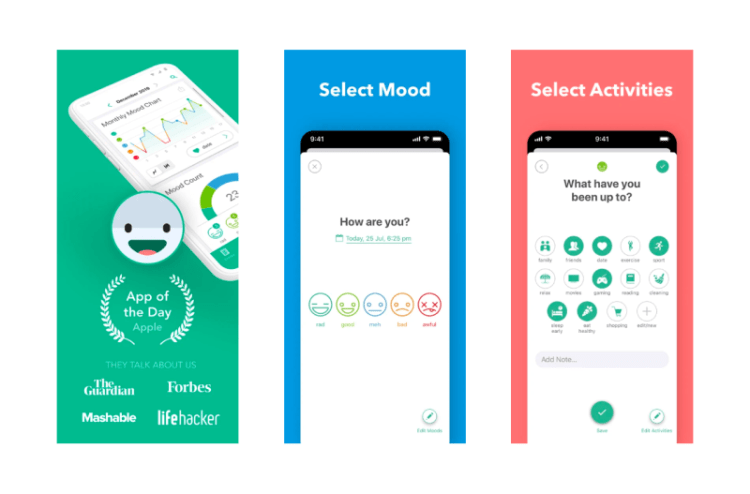
Daylio is the best mood tracker app for most people, and the reason is friction. You pick one of five mood faces, tap a few activity tags, and save. No writing required.
It then charts those entries into streaks, a month-view heatmap, and correlations between your mood and your tagged activities. That is where it earns its place. You can see that your worst days cluster around late nights or long commutes.
You can still add notes, photos, or voice memos if you want them. The free tier is ad-supported and covers daily logging. Premium removes ads and unlocks the deeper stats.
Pros: Fastest daily entry of any app here. Heavy customization of moods and tags. Strong correlation charts.
Cons: The best statistics sit behind Premium. Ads in the free tier. No clinical or therapist features.
Recommended for: Anyone who has abandoned a mood tracker before. If logging takes more than a few seconds you will stop, and Daylio is built around that fact.
Android App
Yes
iOS App
Yes
Two-tap mood entry
Custom moods and activity tags
Month-view heatmap and streaks
Mood and activity correlations
Photo and voice notes
Data export
Free:
Yes, ad-supported
Premium:
$4.99/month or $35.99/year

How We Feel

Bearable

eMoods

Apple Health (State of Mind)

Moodfit
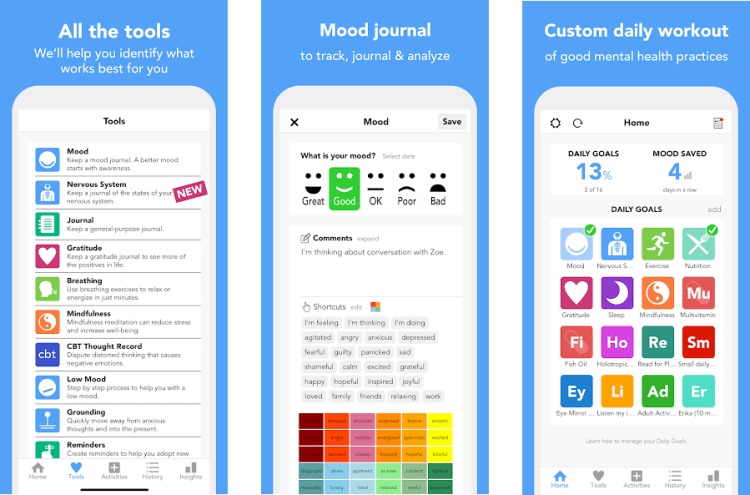
Moodfit treats mental health like physical fitness. You log your mood, then work through exercises aimed at moving it. It is the most tool-heavy option on this list.
The toolkit includes CBT-style thought records, gratitude prompts, breathwork, and goal tracking. Insights then show how your mood moves against sleep, exercise, and the habits you have chosen to track.
It has picked up recognition from both CNET and Verywell Mind, which is a fair signal of quality. The trade-off is that the breadth can feel like a lot on day one.
Pros: Deep set of CBT and breathwork tools. Highly customizable tracking. Clear insight charts.
Cons: More setup than a simple logger. The full library requires Premium. Published pricing varies by plan and region, so check in-app before subscribing.
Recommended for: People who want the tracker to come with a toolkit. If you want a CBT thought record and a breathing exercise in the same place you log your mood, this is the pick.
Android App
Yes
iOS App
Yes
CBT thought records
Breathwork and mindfulness exercises
Gratitude journal
Goal setting and habit tracking
Mood insights and analytics
Customizable tracking metrics
Free:
Yes, core tracking and journaling
Premium:
Paid subscription, price varies by plan and region

Wysa
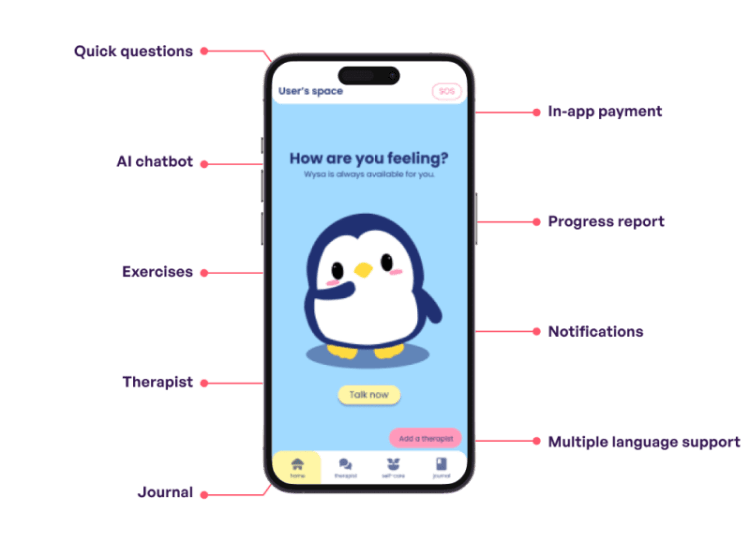
Wysa is the strongest AI pick here. Instead of only logging a mood, you talk to an AI penguin that walks you through the feeling using CBT, DBT, and mindfulness techniques.
The library runs to more than 200 tools and guided programs covering stress, sleep, anxiety, and mood. Conversations are anonymous, which lowers the barrier for people who would not open a journal.
Human coaching is available on top, billed per session. That makes Wysa the middle step between a self-serve app and actual therapy.
Pros: Core AI chat and many exercises are free. Anonymous by design. Genuinely useful at odd hours.
Cons: Coaching is text-based only. Some people find chatbot responses repetitive. Not a crisis service.
Recommended for: Anyone who wants to talk something through at 2am. The AI chat is free, anonymous, and available whenever the feeling actually shows up.
Android App
Yes
iOS App
Yes
24/7 AI chat support
CBT and DBT based exercises
200+ guided tools and programs
Anonymous by default
Optional human coaching
Mood and progress tracking
Free:
Yes, AI chat and core exercises
Premium:
$74.99/year, 7-day free trial
Coaching:
From $19.99 per session

Worry Watch
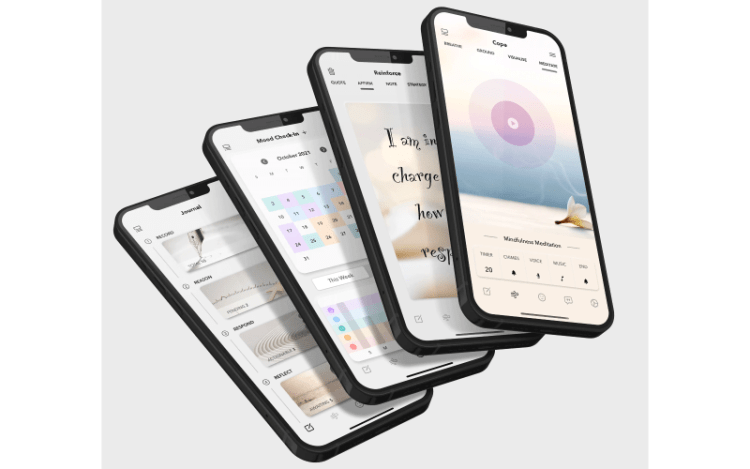
Worry Watch is the most specific app on this list, and that is the point. It tracks anxiety, not general mood, through a structured flow: record the worry, reason about it, respond, then reflect later.
That last step is what makes it work. You go back and mark whether the thing you feared actually happened. Over weeks, that becomes hard evidence against your own catastrophizing.
It is iOS only, which rules it out for Android users. The interface is deliberately plain, with passcode protection and offline access.
Pros: Purpose-built for anxiety triggers. The reflect step challenges anxious predictions directly. Private and offline.
Cons: No Android version. No meditations or guided therapy. Narrow by design, so it is a poor general-purpose tracker.
Recommended for: People whose low moods are driven by anxiety rather than sadness. It is built to show you how few of your worries actually came true.
Android App
No
iOS App
Yes
Record, reason, respond, reflect flow
Anxiety trigger tracking
Outcome review of past worries
Patterns and trends
Passcode protection
Offline access
Free:
Yes, free download
Premium:
Optional annual subscription, check the App Store for the current rate

Reflectly
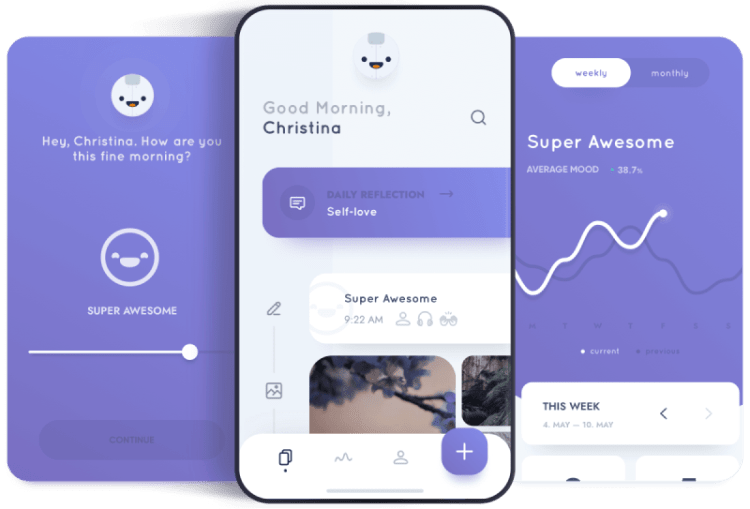
Reflectly sits between a mood tracker and a journal. You rate the day, then answer AI-generated prompts about what drove it.
This is the best option if you searched for a mood diary or mood journal app rather than a tracker. The writing is the product, and the mood rating is the index you browse it by.
The design is deliberately calm and it syncs across devices, including Apple Watch. That polish is a real part of why people keep using it.
Pros: Prompts make journaling much easier to start. Attractive, low-pressure interface. Syncs across devices.
Cons: Weaker trend analysis than Daylio or Bearable. Most features need Premium. No third-party wellness integrations.
Recommended for: People who want to write, not just rate. If a number on a scale feels hollow, the guided prompts give you somewhere to put the actual thought.
Android App
Yes
iOS App
Yes
AI-generated journal prompts
Daily mood rating
Guided self-reflection
Cross-device sync including Apple Watch
Mood analytics
Minimalist design
Free:
Yes, limited
Premium:
Paid subscription, check in-app for the current rate

Calm
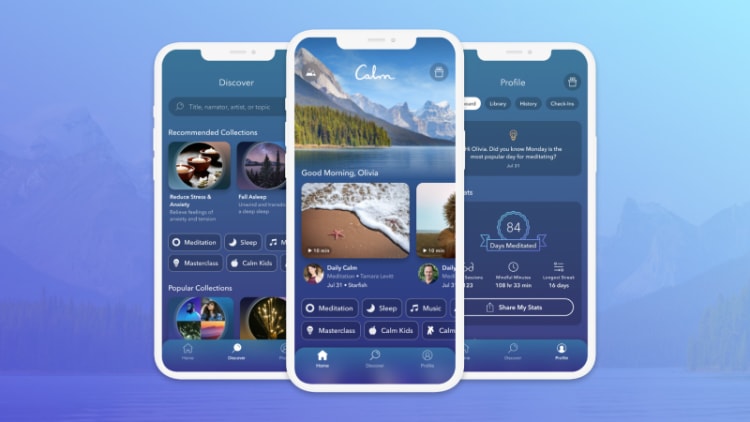
Calm is a meditation app with a mood check-in attached, and it is worth being clear about that order. If you want detailed trend analysis, pick Daylio or Bearable instead.
What Calm does well is the next step. You log how you feel, and it points you at a guided meditation, a breathing exercise, or a sleep story built for that state.
It also has a business tier, which is why it turns up in workplace wellness conversations. Individual pricing is a standard subscription with a free tier on top.
Pros: Large, high-quality meditation and sleep library. Very easy to use. Available on most platforms.
Cons: Mood tracking is shallow compared with dedicated apps. Limited free content. The library can feel overwhelming when you just want a quick fix.
Recommended for: People who want the app to do something about the mood it just recorded. The check-in is light, and the meditation library behind it is the real draw.
Android App
Yes
iOS App
Yes
Web
Yes
Daily mood check-in
Guided meditations
Sleep stories
Breathing exercises
Mindful music and soundscapes
Calm for Business workplace tier
Free:
Yes, limited content
Calm Premium:
Paid subscription, check current rate
Calm for Business:
Quoted per organization
Best Free Mood Tracker Apps With No Subscription
How We Feel is the best free mood tracker app, because it has no paid tier at all, so nothing is ever withheld from you. Apple Health State of Mind is the better pick if you own an iPhone and want zero setup. Both are free permanently, not for a trial period.
Free forever, with no upgrade to sell: How We Feel and Apple Health State of Mind. Neither one has a paid tier, so the free version is the entire product. Choose these if you want to stop thinking about cost.
Generous free tier, with one real limit each: Bearable caps history at 30 days, Daylio holds back its correlations, and eMoods withholds only custom metrics and dashboards. All three still cover unlimited daily logging at no cost.
The free pick that surprises people: eMoods puts its clinician PDF report on the free tier. Paid apps normally paywall exactly that feature, so it is worth knowing if a therapist needs your data.
The pattern is consistent across all five. Free tiers limit the analysis, not the logging. A daily record costs nothing, and finding out why your Tuesdays are worse is usually the part you pay for.
Best Mood Tracker App for Bipolar Disorder, BPD, and Clinical Care
If you are tracking mood because a clinician asked you to, or because you are managing a diagnosed condition, the requirements change completely. You need medication logging, symptom granularity, and a report someone else can actually read. eMoods is the strongest pick for bipolar disorder, and Bearable is better for BPD or CPTSD.
For bipolar disorder, choose eMoods: It is the only app here built around handing data to a psychiatrist, and its monthly PDF report is free. It tracks highs, lows, irritability, sleep, and medications together.
For BPD, CPTSD, or chronic illness, choose Bearable: Mood alone will not tell you much when pain, medication, or sleep is driving it. Bearable's correlation engine is built to separate those out.
For anxiety-driven lows, add Worry Watch: Its record, reason, respond, reflect flow is closer to a CBT worksheet than a mood log, and the outcome review gives you evidence against anxious predictions.
One important limit: None of these apps diagnose anything, and none replace care. They are useful because they give a clinician better data than your memory of the past three weeks. If you are in crisis, contact a local emergency service or crisis line rather than an app.
Which Mood App Is the Most Popular?
Apple Health has the largest reach by a wide margin, simply because State of Mind ships on every recent iPhone. Most people using it never chose it. Among dedicated downloads, Daylio is the most widely recommended, and Wysa leads the AI wellness app category for mood support.
How We Feel is the most recommended free pick, and Bearable dominates conversations where physical symptoms are involved.
Popularity is a weak signal here, though. The right app is the one whose logging flow you will still be using in six weeks. That is usually the fastest one, not the most featured one.
How Can I Track My Mood Daily?
To track your mood daily, attach the check-in to an existing habit, log your mood plus one contributing tag, keep the entry under ten seconds, and review the chart weekly rather than daily. Tracking works when it becomes automatic. These four steps are the difference between a habit and an app you deleted in week two.
Step 1. Anchor it to something you already do: Pick a fixed moment: after your morning coffee, or right after you put your phone on charge at night. A reminder at a random time gets dismissed. A reminder attached to an existing habit gets acted on.
Step 2. Log the mood and one tag, nothing more: Rate how you feel, then tag one contributing factor such as work, sleep, or people. Do not try to journal on day one. The tag is what makes the data useful later, and it costs you two seconds.
Step 3. Keep the entry under ten seconds: This is the whole game. If logging feels like a task, you will skip it on exactly the days that matter most, the bad ones. Daylio and Apple Health both clear this bar comfortably.
Step 4. Review weekly, not daily: Day-to-day mood is noise. Patterns show up over three or four weeks. Set aside five minutes on a Sunday to look at the chart, and ask which tags cluster with your worst days.
Miss a day and just carry on. Streak pressure makes people quit trackers, and a gap in the data is far less costly than abandoning the habit.
Mood Tracker Apps for Teams and Workplaces
Team mood tracking is a different product category from personal mood tracking, and it fails for different reasons. Tools such as TeamMood, Range, and MoodFirst run anonymous check-ins and roll them into a manager dashboard. Vantage Fit instead puts mood logging inside a wellness platform employees already use, the same approach taken by the broader employee wellness apps category. Before you roll any of them out, be honest about the objections.
The skepticism is fair: HR practitioners openly question these tools. The recurring worries are survey fatigue, scores that feel like a gimmick, and dashboards that report a number without telling anyone what to do about it. Every one of those is a real failure mode, not a reason to dismiss the category.
Anonymity is non-negotiable: If employees believe a manager can trace an entry back to them, they will log fine every day. Aggregate-only reporting, with a minimum team size before results display, is what makes the data worth collecting at all.
Cadence beats frequency: Daily check-ins burn out fast in most teams. Weekly is usually the sweet spot: frequent enough to catch a downward trend, infrequent enough that people still think before answering.
The data has to trigger something: A dashboard nobody acts on teaches employees that answering is pointless. Decide in advance what a sustained dip means: a workload conversation, a manager check-in, or a change to the sprint. Then say so publicly.
Put it where employees already are: A check-in inside an app employees already open for challenges or activity tracking gets completed. A standalone survey link in an email does not. This is the strongest practical argument for logging mood inside an existing wellness tool rather than buying a separate one.
Do not use it as a mental health service: Aggregate mood data tells you something about workload and morale. It does not identify who needs clinical support, and it should never be treated as a substitute for an EAP or real mental health benefits.

Vantage Fit
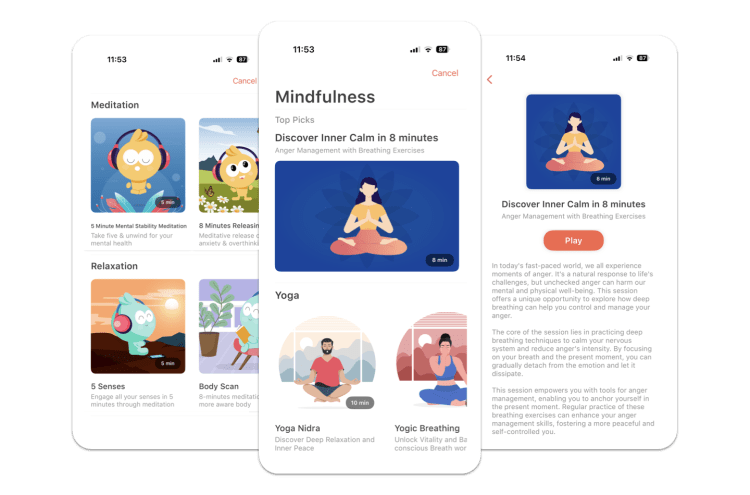
To be clear about the category: Vantage Fit is not a mood tracker app. It is one of the employee wellness apps built for organizations, and mood logging is a single feature inside it. If you want personal trend analysis, correlations, or a clinician report, pick from the 10 apps above instead.
What it does is the logging half. Employees record how they are feeling and tag the contributing factor, whether that is work, family, food, or travel. HR sees the aggregate, never the individual entry.
The reason to mention it here is placement. The check-in sits next to activity tracking, challenges, and the guided meditation library, so it is not one more thing to open. That holds up better than a standalone pulse survey, which people learn to click through.
In IBS Software’s 28-day March to Fitness campaign, 130 employees logged their mood daily and 95 engaged with mental wellness content, inside a program that hit 88% engagement across 500+ active participants.
Pros: Mood logging lives where employees already are. Aggregate-only reporting for HR. Pairs with challenges, meditation, and activity data.
Cons: Not a mood tracker app, so no personal trend analysis or correlation charts. Sold to organizations, not individuals. No clinician-ready reports. If stress is the specific problem, dedicated stress management software may fit better.
Recommended for: HR and wellness teams that want a workplace mood check-in employees will actually complete. It is not an alternative to the 10 apps above, which are personal mood trackers.
Android App
Yes
iOS App
Yes
Web-Based Portal
Yes
Mood logging with custom emotions
Guided Meditation Library
Mindfulness Minutes
Wellness Challenges and Leaderboards
Aggregate admin dashboard
Audience Targeting by department or country
IBS Software
Tata Motors
Wipro
Landmark Group
Single Challenge (4 weeks)
Basic from $250 at 25 employees, rising to $4,000 at 1,000
Unlimited (annual)
Basic from $500 at 25 employees, rising to $8,000 at 1,000
Pro tier
25% above Basic at any headcount
Above 1,000 employees
Custom pricing
What Changed in Mood Tracking Apps in 2026
One change is worth flagging because older roundups still get it wrong. Sanvello is no longer available as a standalone app. After UnitedHealth merged it with AbleTo’s Self Care service, it became AbleTo SelfCare+ and was pulled from both the App Store and Google Play in June 2024. It is now limited to AbleTo members, so it is not something a general reader can download.
MoodMission has also changed. It is still on the App Store, but it moved from a free download to a paid one, so guides describing a free version are out of date.
The broader shift is that free has gotten genuinely good. How We Feel and Apple Health State of Mind both cover daily tracking at no cost, which puts real pressure on paid apps to justify a subscription with analysis rather than logging.
What Is a Mood Tracker App?
A mood tracker app is a tool that records how you feel over time and turns those entries into patterns you can act on. You log an emotion, usually on a scale or a color-coded grid, then tag what was happening around it. Daylio, How We Feel, and Bearable are three common examples.
The value is not in any single entry. It is in what four weeks of entries reveal about your sleep, workload, medication, or relationships. Some apps also add wearable data, CBT exercises, or a report you can share with a clinician.
Mood trackers are not only apps. A paper journal, a notes file, or a habit tracker all count. The app version simply does the charting for you.
How to Choose a Mood Tracker App
Six factors decide whether you will still be using a mood tracker next month, and speed of entry matters more than any feature list. Work through them in this order, because a slow app with brilliant analytics loses to a fast one you actually open. Platform and pricing come after that.
Speed of entry: The single best predictor of whether you stick with it. Test the logging flow before you commit to anything else. If it takes more than ten seconds, look elsewhere.
What free actually covers: Almost every app here has a free tier, but they limit different things. Check whether free includes the trend charts, or only the daily log.
Platform: Worry Watch is iOS only. Apple Health State of Mind is iPhone only. If you use Android, or switch between devices, confirm availability first.
What you are actually tracking: General mood, anxiety triggers, and mood alongside physical symptoms are three different jobs. A general tracker will disappoint you if the real question is whether your medication is working.
Clinician-ready reports: If a therapist or psychiatrist will see this data, you need exportable reports. eMoods is built for exactly that. Most consumer apps are not.
Evidence behind it: Prefer apps grounded in something: CBT, DBT, or published research. How We Feel's link to Yale's Center for Emotional Intelligence and Wysa's CBT foundation are meaningful; a nice interface on its own is not.
Privacy deserves one final check. Read what the app does with your data before you log anything sensitive, especially if it is free and ad-supported.
What Are the Benefits of Tracking Your Mood?
Consistent mood tracking builds self-awareness, surfaces triggers you would otherwise miss, and gives a clinician better data than your memory of the past three weeks. It does a few specific things well, and it is worth being realistic about which ones. Here is what the habit actually delivers.
Builds self-awareness, because naming an emotion precisely is harder and more useful than calling it a bad day
Surfaces triggers you would otherwise miss, such as irritability that reliably follows short sleep or long shifts
Gives a clinician real data instead of your recollection of the past three weeks
Shows change over time, which is genuinely hard to judge from the inside
Creates a pause between feeling something and reacting to it
The honest limit: tracking describes a problem, it does not solve one. Noticing that your mood drops every Sunday evening is useful only if you then change something about Mondays. Apps that pair tracking with an exercise or a next step tend to help more than apps that only chart.
Mood Logging vs Mood Tracking: Which Do You Need?
These solve different problems and the distinction saves you money. Logging is the record itself: you note how you felt, maybe tag why, and that is it. Tracking is the analysis layer, charting weeks of entries to tell you that your Tuesdays are consistently worse than your Fridays.
Every app above does both. You may only need the first. If a daily record is all you want, a notes file, a habit tracker, or Apple Health already covers it at no cost.
The same logic applies at work. Vantage Fit includes mood logging inside its corporate wellness platform, where employees record how they are feeling and tag the contributing factor, whether that is work, family, food, or travel. It sits alongside activity tracking and challenge participation rather than in a separate app.
So decide which you are buying. Trend analysis, CBT exercises, or clinical support means picking from the list above. A low-friction daily check-in that lives where you already are means logging is enough.
FAQs
Q. What is the best mood tracker app in 2026?
A: Daylio is the best for most people, because a full entry takes two taps. How We Feel is the best free option. Bearable is best for linking mood to physical symptoms, and eMoods is best for clinician reports.
Q. Which mood app is the most popular?
A: Apple Health State of Mind has the widest reach, since it ships on every recent iPhone. Among dedicated apps, Daylio appears most often in expert roundups and user recommendations.
Q. How can I track my mood daily?
A: Attach the check-in to an existing habit, log your mood plus one contributing tag, keep the entry under ten seconds, and review the chart weekly rather than daily. Missing a day does not matter.
Q. Are there any free mood tracker apps?
A: Yes. How We Feel is completely free with no ads or paywall, and Apple Health State of Mind is preinstalled on iPhone. Bearable, eMoods, and Daylio all have free tiers too.
Q. What is the best mood tracker app for bipolar disorder or BPD?
A: eMoods is built for bipolar tracking and emails a monthly PDF report to your doctor. Bearable suits BPD and CPTSD better, because it links mood to sleep, medication, and physical symptoms.
Q. Which mood tracker app is best for anxiety and stress?
A: Worry Watch is built specifically for anxiety triggers, and its reflect step shows how few worries came true. Wysa offers free AI chat with CBT exercises for stress in the moment.
Q. Is there a mood tracker app for teams at work?
A: Yes. TeamMood, Range, and MoodFirst run anonymous team check-ins. Vantage Fit puts mood logging inside a wellness platform employees already use, so it is not a separate survey.
Q. What is the difference between mood logging and mood tracking?
A: Logging is the record: you note how you felt and optionally tag why. Tracking is the analysis on top, charting weeks of entries to surface patterns. Only tracking really needs a dedicated app.
Q. Do mood tracker apps actually work?
A: They reliably build self-awareness and surface triggers, and they give clinicians better data than memory. They do not diagnose or treat anything. For serious concerns, see a professional rather than relying on an app.
Q. How much do mood tracker apps cost?
A: Most are freemium. Daylio Premium is $35.99/year, Bearable is $34.99/year, Wysa is $74.99/year, and eMoods runs $50 to $100/year. Free tiers usually cover logging but limit trend analysis.
Q. Is Sanvello still available?
A: No. Sanvello became AbleTo SelfCare+ and was removed from the App Store and Google Play in June 2024. It is now only available to AbleTo members, so most readers cannot download it.