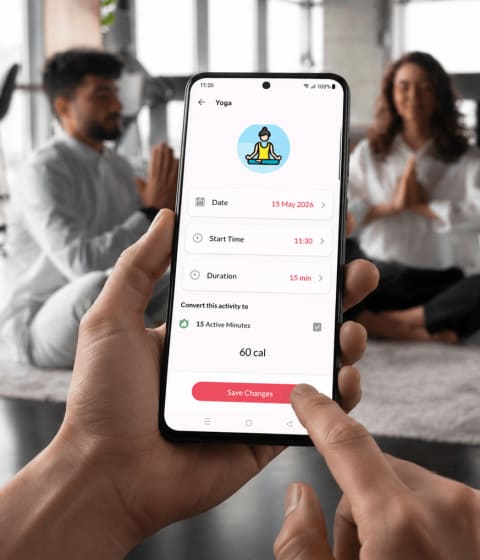
Employee health goals are specific, measurable commitments across movement, nutrition, sleep and mental health that a person can sustain for a year rather than a January. The baseline they start from is low: only 24.2% of US adults met both federal aerobic and muscle-strengthening guidelines in 2020 (CDC National Center for Health Statistics). Vantage Fit keeps those goals visible in one place.
Key Takeaways
- Only 24.2% of US adults met both the aerobic and muscle-strengthening guidelines in 2020, so most health goals begin from a standing start.
- The federal target is modest and concrete: 150 minutes of moderate activity a week plus two muscle-strengthening days, which is 30 minutes across five days.
- Goals fail on specificity, not ambition. "Exercise more" has no completion condition; "30 minutes, five days" does.
- Pair each goal with a measurement method decided in advance, otherwise progress becomes a matter of memory.
- Employer-run challenges work because they supply social accountability and a deadline, the two things solo resolutions lack.
It’s not about perfect. It’s about effort. And when you bring that effort every single day, that’s where transformation happens. - Jillian Michaels
That time of the year has approached when nobody can control their excitement! Because it’s New year.
Like every year, you, too, must have made a long list of new year’s resolutions with some fantastic health goals as your top priority!
So what are you planning to do this new year? Most take long hours of sleep or travel and make bigger goals for good health and wellness. Or if not much, you might be spending new year’s eve on your couch binge-watching Netflix or video calling your extended family.
For many planning, new year’s resolutions are often short-lived. Yet, mapping out a few resolutions and aspiring for a better year is still in vogue.
How Do You Make a Good New Year’s Resolution for 2026?
Maintaining a sound mind and body rewards us with fulfillment and joy.
Be it cutting down those guilty calories or improving the sleep routine. A renewed focus on health and wellness tops our new year’s resolution chart.
Making a fair new year resolution doesn't need to be complicated or fancy.
Making a fair new year resolution doesn’t need to be complicated or fancy. It can be simple and easy. And also engaging so that it inspires you to wake up every morning with high-spirited energy and a positive mind.
One surefire way to make your resolutions successful is by dividing them into short-term and long-term goals. Or share with like-minded people to stay motivated and reach your goals together.
Goals make an individual disciplined and productive. Also, follow the SMART goals framework to ensure faster performance.
Goals make an individual disciplined and productive.
Also, follow the SMART goals framework to ensure faster performance.
How Many Employees Actually Hit Their Health Goals?
Fewer than most wellness planning assumes, which is the single most useful fact to hold on to when setting them.
The federal guideline for adults is 150 minutes of moderate-intensity aerobic activity a week, plus muscle-strengthening activity on at least 2 days. That works out to half an hour across five days, which is a deliberately reachable target rather than an athletic one.
Even so, NCHS Data Brief No. 443, drawing on 2020 National Health Interview Survey data, found that 24.2% of US adults aged 18 and over met both parts of the guideline. Roughly three in four adults did not.
Two things follow for anyone setting health goals inside a company.
First, set the bar at the guideline rather than above it. A workforce where most people are not yet at 150 minutes a week does not need a marathon program. It needs a credible route to half an hour, five times a week, and a reason to keep going once motivation fades.
Second, be specific about what counts. The gap between intention and outcome is usually definitional rather than motivational. “Get fitter” has no completion condition, so it cannot be succeeded at or failed. “Thirty minutes of brisk walking on five days, and two strength sessions” can be checked on a Friday. Goals that can be checked are goals that can be supported, and that is the entire premise of running them at work instead of leaving them to individuals in January.
6 Top Health Goal Ideas To Look For In 2026
1. Enrich Your Diet With Vitamins And Minerals

A poorly nourished individual is at greater risk of various microbial infections. So, maintaining a healthy diet is important to fight diseases, stay fit and live longer.
You can do so by enriching your diet with vitamins and minerals like:
-
Vitamin C: reduces the risk of chronic diseases as a powerful antioxidant.
-
Vitamin D: keeps your bones strong and healthy
-
Zinc: boosts your immune system and metabolic functions.
-
Magnesium: helps the proper functioning of the mind and body. And improves your sleep quality.
2. Self Workout Is The New Norm

Workouts are imperative for your health and well-being. But maintaining an exercise routine at home seems disappointing as you need to put in that extra effort.
One way to maintain your shape is by investing in home gym equipment.
So how about gifting yourself a new pair of dumbbells or a treadmill? And continue maintaining your health goals as your new year resolution.
Many people are tight on their budget or facing difficulty losing weight. But, they can try a simple 7-minute workout to boost physical health. Regular cardio exercise and healthy eating are the most effective ways for weight loss. A 30-minute workout includes jogging, bicycling, power walking, and aerobics, which can burn an average of 295 calories!
One way to maintain your shape is by investing in home gym equipment.
3. Taking Care Of Your Mental Health

Good mental health at work contributes to increased employee productivity.
But after the outbreak of COVID-19, employees have started working, sacrificing their work-life balancew. Cases of burnout and decreased productivity have risen, including quiet quitting, moonlighting, etc.
Thus, focusing on managing spiritual, behavioral, physical, and mental health in the workplace has become a must today.
Employers can promote these easy stress management tips to start with:
-
Encouraging frequent breaks
-
Mindfulness meditation
-
Providing access to mental health services
-
Helping them to unplug from work after the office hours
An enhanced corporate wellness program can reduce the problem and boost employees’ health and wellness. According to a study backed by Rand Corp. and the U.S. Department of Health and Human Services, 80% of businesses with more than 50 employees feature an advantage linked to corporate wellness. Corporate wellness programs can help decrease absenteeism and boost productivity and employee well-being. They also create a positive workplace culture.
Related: 35 Amazing Spiritual Wellness Activities To Elevate Employees’ Wellness.
4. Focus On Building Immunity

The new year is a few days away, and this year’s health goals must be more solid.
While vaccine boosters are making their way out, the mass rollout and distribution are still uncertain. Hence building immunity and taking precautions is the only best way to prepare for the upcoming year.
Learn More
Include fruits and vegetables in our diet as they have many health benefits that help strengthen the immune system and help combat illness.
Apart from intaking nutritious foods and minerals, the following practices can improve your immune system:
-
Get the required amount of sleep duration
-
Drink eight glasses of water daily
-
Follow Ayurvedic wellness practices
-
Include herbs and spices in your meals
-
Reduce stress with yoga and meditation
5. Quit Smoking And Unhealthy Habits

It’s a fact that smoking is harmful to health. It affects your lung and throat, inhibiting your body’s stimulus and immune system. Studies suggests, around 21 million Americans have faced addiction disorders, where only 10% seek treatment.
Due to workplace stress and anxiety, employees seek harmful substances as a coping mechanism. Habits like smoking can increase these employees’ risk of COPD and serious health issues.
So how about pledging to quit smoking as a new year’s resolution for 2025?
As a manager, you can boost your employees’ health by running a fantastic wellness campaign using Vantage Fit, like the smoke cessation campaign. It will help spread awareness and form a habit among your employees.
6. Introduce Corporate Virtual Wellness Activities

Acquiring a habit takes 21 days, and making it a lifestyle takes up to 90 days or more.
As a wellness authority or health coach, try to achieve your employees’ full support by following these wellness program participation ideas. And make the entire process a success. Help your employees achieve specific goals and turn them into their lifestyle for good.
Also, an excellent corporate goal-setting and fitness-tracking app have become valuable in employee well-being.
The Vantage Fit corporate wellness platform focuses on preventive healthcare & fitness. It promotes healthy lifestyles and habits with many built-in designs for corporate challenges.
Are you Excited to implement corporate virtual wellness activities in your organization? Request a Vantage Fit demo now!
Benefits Of Following Effective Health Goal Strategies
Setting strategic health goals triggers new behaviors and helps you focus and sustain the momentum of your life. Here are the top 5 benefits you and your employees enjoy from healthy goal setting in the workplace.
1. Fosters A Healthy And Meaningful Life

Leading a life of health and contentment is the ultimate life’s purpose. Infusing mindfulness meditation, holistic wellness practices, etc can foster a healthy, meaningful, and engaged workforce.
Achieving such a feat in a world full of materialistic distractions is only possible if we define some set of goals. We also acknowledge that being too vague about our health goals can lead us to give up easily.
Frequent distractions at work can force one to procrastinate health priorities.
Likewise, employees will find thousands of excuses for not participating in wellness programs. But, it would help if you motivated them to stick to their wellness goals.
But before that, it’s essential to define your purpose of setting up an effective wellness program. So that your employees can find meaning and motivation during the process.
Related: 5 Ultimate Health Promotion Strategies To Boost Your Employee Wellness.
2. Keeps Control Over Healthcare Cost

Nearly every corporate organization is emphasizing its efforts.
It has become an important workplace goal that doesn’t compromise health and wealth simultaneously. Well-defined plans are the only way to streamline your wellness efforts.
Healthy employees are imperative to your company’s development.
One of the main benefits of achieving health goals in the workplace is to improve in-built employee health and preventive wellness system.
3. Develops An Achievers Mindset
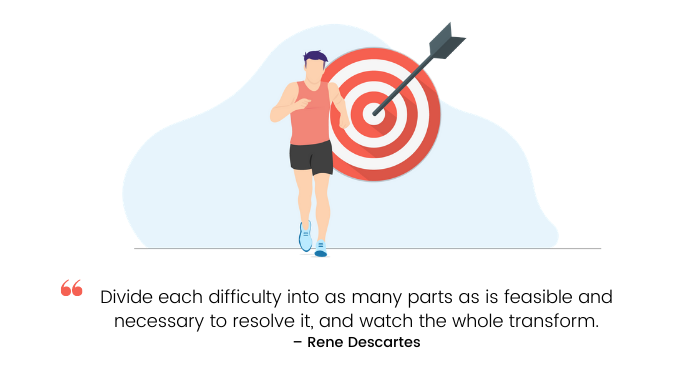
According to 1990 research on goal-setting theory by Locke and Gary Latham, having goals affects behavior and dramatically impacts employee performance. It helps streamline energy, leading to a higher effort on an individual’s health.
Such higher action leads to persistent steps in building the achievers’ mindset. Setting health goals can be a potent tool in shaping your employees’ life at work.
Accomplishing these goals can either lead to job satisfaction or further contribute to their motivation.
Accomplishing these goals can either lead to job satisfaction and further contribute to their motivation.
4. Builds A Resilient Workforce

Workplace stress is a common issue across any work culture.
A healthy amount of stress can be beneficial to make work done. Employees with tight schedules have a high energy level and are motivated to push through challenges.
But when stress becomes unmanageable, productivity suffers, and employee morale comes at stake.
Employers can solve this issue by helping their employees set wellness goals. A clear plan allows your employees to practice time management, makes them feel less stressed, and lessens the feelings of failure.
It gives your employees authority over their lives and creates a resilient mindset crucial for achieving goals.
5. Measure Progress

Regular tracking of our progress is quintessential for achieving health goals. Whether you follow your team’s health using the employees’ wellness app or manually keeping a record of their calorie-burning walking with a pen and logbook doesn’t matter.
You can incentivize real progress and create a sense of achievement when employees meet their goals.
The ultimate goal is to help us see employees’ potential for health and wellness. Another way to measure progress is by setting clear goals that lay a foundation of authority toward the target.
Conclusion
I hope you find some of these health goals useful to be taken up as a new year resolution for 2025.
As an employer, you can also motivate your employees from time to time with soul-touching wellness quotes for better engagement.
Know that a poorly devised wellness plan demotivates your employees and makes them feel worse before starting the program. When you set an unreasonable goal, it’s easy to get your employees distracted when they don’t witness results.
The key to success is to devise a plan and follow it religiously by creating SMART health goals.
Now over to you!Frequently Asked Questions
What are good health goals for employees?
Goals tied to the federal guideline work best because they are concrete and checkable: 150 minutes of moderate activity a week, muscle-strengthening on two days, a consistent sleep window, and one nutrition change such as a planned lunch instead of a skipped one. Each should have a stated way to measure it.
How many adults actually meet physical activity guidelines?
About one in four. CDC NCHS Data Brief No. 443 found that 24.2% of US adults aged 18 and over met both the aerobic and muscle-strengthening guidelines in 2020. That is the realistic starting point for most workforces, so programs should aim at reaching the guideline rather than exceeding it.
Why do most health goals fail?
Usually because they are not specific enough to be checked. A goal like "get fitter" has no completion condition, so there is no point at which it is met or missed. Goals with a number, a frequency and a measurement method can be supported, reviewed and adjusted.
How can employers help employees stick to health goals?
By supplying the two things solo resolutions lack: social accountability and a deadline. Team challenges, visible progress tracking and a scheduled wellness calendar give a goal recurring prompts through the year rather than a single burst of motivation.