The most common office workers’ health problems are musculoskeletal disorders, infections picked up from shared surfaces, headaches, eye strain, obesity, EMF exposure, mental health troubles, and cardiac events. A study by the International Labor Organization found that workplace accidents and illnesses claim 2 million lives a year.
For employers looking to address sedentary behavior, activity tracking can be one practical part of a broader workplace wellness program. Vantage Fit tracks more than 30 types of physical activity and provides participation data that HR teams can use to understand engagement and encourage employees to stay active.
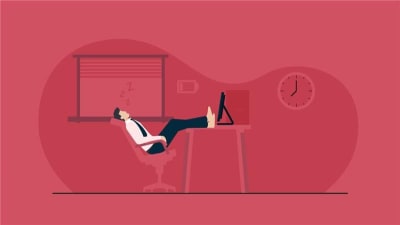
Sitting for long periods of time in front of a computer screen has become the new normal for corporate employees. On top of the hours at a desk, the regular office worker deals with a lot of stress, whether from deadlines, finances, or office conflicts, and poor posture compounds the damage.
The same ILO report puts the cost of office illnesses and accidents at $1.25 trillion a year to the global economy. These problems cripple a workforce’s motivation and willpower to deliver its best, which is why employers must pay close attention to them. Eliminating health risks entirely is not possible, but identifying the frequent ones is where reducing them starts.
Key Takeaways
- Workplace accidents and illnesses claim 2 million lives a year and cost the global economy $1.25 trillion, according to the International Labor Organization.
- Musculoskeletal disorders are the most common office ailment, affecting 1.71 billion people worldwide and driving almost 30% of all workers' compensation costs.
- Screens are the second big driver: 85% of employees with increased screen time report more digital eyestrain, and the 20-20-20 rule is the standard countermeasure.
- Depression and anxiety cost roughly 12 billion working days a year globally, which is about $1 trillion in lost productivity.
- Most remedies are cheap and structural: regular movement breaks, proper posture and lighting, surface disinfectants, hydration, and an AED on site.
What Are the 8 Most Common Office Workers’ Health Problems?
1. Musculoskeletal disorders

The term “musculoskeletal disorders” refers to injuries to the muscles, nerves, tendons, joints, cartilage, and spinal discs. Many may wonder how working at a desk can cause musculoskeletal disorders.
This disorder occurs when an individual is exposed to repetitive motions or sitting in poor posture for prolonged periods. Repetitive motions involve bending, climbing, crawling, reaching, and twisting.
Musculoskeletal disorders don't involve injuries due to slips, trips, falls, or other such incidents.
Statistics suggest that 1.71 billion people suffer from musculoskeletal conditions worldwide. This disorder reduces an individual’s mobility and agility. Eventually, such workers are bound to retire early or have decreased work performance.
Office workers mostly suffer musculoskeletal disorders like stiff muscles, joint pain and stiffness, and swelling in the affected area. It is worth noting that such issues may develop in the upper or lower body.
According to the Bureau of Labor Statistics, MSDs are among the most commonly occurring workplace injuries. These are responsible for almost 30 percent of all workers’ compensation costs.
Some of the commonly seen musculoskeletal disorders include:
- Sprains
- Muscle strains
- Back pain
- Neck pain
- Carpal tunnel syndrome
Here are some effective home remedies that may help with MSD:
- Hot and cold therapy
- Body conditioning and strength exercises
- OTC medications
Based on the severity of the condition, other remedies that health experts suggest include physiotherapy, acupuncture, chiropractic, and steroid injections.
Employees should take short regular breaks while working, focus, and maintain a good posture. They must practice hand stretches and chair yoga poses in their workspace.
2. Viruses/Bacteria

Public places and transport are the breeding ground of uncountable viruses and bacteria. But that is not all. Even the usual workstations are full of these microorganisms. Other than this, the phones, laptops, and mice used for personal or work purposes are also full of germs waiting to infect the next host.
Moreover, some employees habitually munch or eat at their desks. While some employees clear their space after eating, they may accidentally miss a spot or two. This is where the problem lies.
Workplaces that lack proper food hygiene practices also pose a threat to employees, leading to foodborne diseases. CDC estimates that 48 million people get sick, 128,000 are hospitalized, and 3,000 die from foodborne diseases each year in the United States.
Here is what employees and employers can do in this case:
Workplaces should be equipped with surface disinfectants and hand sanitizers. Employees should disinfect their workstations and devices regularly.
Additionally, they should sanitize their hands while working and after using the washroom. Surface cleaners should be available for employees to keep their desks clean.
Another study reports common illnesses such as colds, influenza, and gastroenteritis significantly impact healthcare costs, absenteeism, and productivity among workers. Adult influenza infections alone result in approximately $87 billion per year in healthcare costs, projected lost earnings and loss of life.
3. Headaches

Headache at work is inevitable. Why? It may be due to recurring work stress, undesirable office temperature, too much screen time, too much caffeine intake, poor sitting posture, etc. Undoubtedly, stress plays the biggest role in causing headaches among employees.
According to Harvard Business Review, nearly 47 million Americans and over a billion people worldwide suffer from migraines, peaking in the most productive professional years (25-55 years old).
Sitting in a poor posture and even improper lighting can trigger tension headaches while working.
How to deal with or prevent mild headaches at work?
- Staying hydrated throughout the work hours is a must. Studies suggest even mild dehydration can lead to headaches.
- Practice the 20 20 20 rule for the eye. To do this, employees have to look away 20 feet for a duration of 20 seconds after every 20 minutes of working on their laptops.
- Gently massaging both sides of the head (temples) is seen to alleviate headaches.
For severe headaches, it is recommended to consult with a healthcare professional. In such cases, they may prescribe over-the-counter medications.
4. Eye Strain

Since today’s work requires working in front of a desktop all day, most workers develop eye strain. Eye strain is commonly associated with dry eyes and a painful sensation. It happens as a result of staring at the computer screen for a long period of time.
How to avoid eye strain?
- Employees should have proper lighting at the employee desk and adjust the brightness of the computer screen. They must not have the setting to the highest intensity.
- As mentioned above, every computer worker should practice the 20-20-20 eye exercise for long hours.
- The use of lubricating eye drops can help avoid and alleviate eye strain. However, one should consult with an eye specialist before using one.
As per the Transitions Optical Workplace Wellness Survey, over half (53 percent) of employees spend more time in front of their work computer screens. Among those employees with increased screen time, 85 percent say they experience more digital eyestrain.
5. Obesity

Another common health issue for employees working in an office is gaining weight. A whole day of sitting in front of a desktop doesn’t favor weight loss. Obesity in the workplace occurs because of unhealthy eating issues, lack of exercise, stress, a sedentary lifestyle, etc.
How do we minimize employee obesity issues?
- Encourage physical exercises around the workplace.
- Install an office gym.
- Offer in-office nutritious meals.
- Start yoga sessions in the workplace.
- Offer incentives to employees who carry out wellness activities.
Reducing sedentary risk starts with making movement visible and easy to track. Vantage Fit’s Active Minutes feature lets employees log activity across 30+ exercise types, from a ten-minute desk yoga session to a lunchtime walk, and tracks weekly progress against WHO activity recommendations.
In Tata Motors’ 6-month Step & Stride Challenge, participants maintained an average organizational BMI of 24, demonstrating what consistent, structured movement can do at scale.
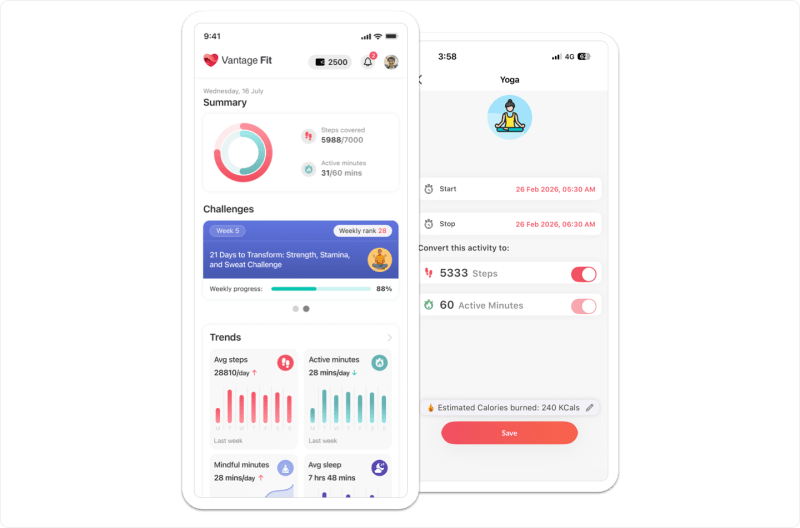
When Dudley Building Society set out to find a wellness platform, feature breadth quickly became the deciding factor. As William Slater from HR explains: “We’ve received excellent feedback from colleagues on the Vantage Fit app. Its user-friendly experience, wide range of features, and robust functionality set it apart from the other apps we considered.”
6. Exposure to ELF Electric and Magnetic Fields
Extremely Low Frequency (ELF) Electric and Magnetic Fields (EMF) may unknowingly affect the human body. Radiating from all kinds of electronic devices like phones, computers, and Bluetooth devices, extremely low-frequency EMF is considered dangerous to human health.
Although the chances of ELF Electric and Magnetic Fields inducing health troubles are highly unlikely, its repercussions cannot be ignored. So, it’s important that employers take the basic precautionary measures to safeguard their employees’ health.
The tricky part about safeguarding employees is that it’s almost impossible to make any place ELF- and EMF-free. Whatsoever, here’s what you can do:
- Encourage employees to spend time away from electronics whenever possible.
- Carry out periodic assessments in the workplace to monitor the radiation levels.
7. Mental Health Troubles

Mental health is as important as physical health. In the current competitive environment with growing workplace stress levels, employees are more vulnerable to mental health issues. It is for this reason that you must take proper care of their mental health issues.
How do we safeguard employees’ mental health?
- Keep the option to take a mental health day off.
- Offer professional help when necessary.
- Start yoga sessions in the workplace.
- Partner with a corporate wellness provider that offers customized challenges and mental health support programs.
Studies in 2019 suggest about 15% of employed adults had some mental disorder. Globally, approximately 12 billion working days are lost at a cost of US$ 1 trillion yearly due to employees battling with depression and anxiety.
8. Cardiac Arrests

Cardiac arrests are another fatal health problem in the workplace. It can be a result of a heart attack, electrocution, or Asphyxiation (death or unconsciousness due to lack of oxygen in a confined space).
More terrifyingly, your employees without any heart disease history may fall prey to it as well.
To avoid such a mishap, employers must keep an automated external defibrillator (AED) in the office at all times. An AED is a medical accessory to check heart rhythm and deliver an electric shock when necessary to restore the heart rhythm to normal.
Employers can also support cardiovascular health by integrating wellness programs that include heart rate monitoring and activity tracking, giving employees a clearer picture of their physical health over time.
There are about 10,000 cardiac arrests in the United States workplace each year, according to a report from the US Occupational Safety & Health Administration.
These are 8 of the common office workers’ health problems that you must look for. As employers, you must realize the depth of their impact on your employee’s work-life and act accordingly.
Bottom Line
Uplifting employee health should be a priority for employers to grow their business exponentially. Also, attracting and retaining employees requires more than just offering a handsome salary.
Nowadays, workplaces that promote employee wellness and offer adequate financial compensation are most likely to retain their employees.
For starters, as an employer, you can ensure your employees’ health is well and good. Hope our list of office workers’ health problems comes in handy for you to create an ideal workplace.
Frequently Asked Questions
What are the health risks of working in an office?
Some of the most common health risks of working in an office involve-
- musculoskeletal disorders
- viral or bacterial infections
- heart diseases
- poor mental health issues
What disorder problem do office workers commonly suffer from?
Almost every office worker commonly suffers from back pain troubles. This usually happens as employees sit in improper postures while working for longer periods.
What are the 5 types of occupational disease?
5 types of occupational diseases frequently affecting employees are-
- Musculoskeletal disorders like back pain and carpal tunnel syndrome.
- Heart disease
- Skin disorders
- Poor mental health
- Dry eyes
What is the 20-20-20 rule for eye strain?
Every 20 minutes of screen work, look at something 20 feet away for 20 seconds. It gives the eye muscles a break from holding a close focus, which is what produces the dryness and ache of digital eyestrain. Pair it with adjusted screen brightness and proper desk lighting.
How can employers prevent office health problems?
Most of the effective measures are structural rather than medical: build in regular movement breaks, fix posture and lighting at the desk, keep surface disinfectants and sanitizer available, make nutritious food easy to get, offer mental health days, and keep an AED on site. Tracking participation tells you which ones are actually being used.