Corporate mindfulness programs are structured workplace initiatives that teach employees meditation and present-moment awareness to lower stress and sharpen focus. Mindfulness itself means noticing your thoughts, feelings, and bodily sensations as they happen, calmly and without judgment.
These programs answer a real need. In the American Psychological Association’s 2023 Work in America survey, 77% of US workers reported workplace stress in the past month, and 57% said it had hurt them through emotional exhaustion, low motivation, or a wish to quit.
Done well, a mindfulness program eases that pressure and lifts employee well-being across the company. The sections below walk you through the five benefits research supports, what a program includes, and seven best practices for building one that lasts.
Key Takeaways
- Corporate mindfulness programs teach employees short meditation and awareness practices, and research links mindfulness to lower stress, sharper focus, better teamwork, more creative thinking, and lower healthcare use.
- The strongest workplace evidence comes from Aetna, where more than 13,000 employees reported 28% less stress after joining its mindfulness and yoga classes.
- A program can combine in-person workshops, app-based guided sessions, online courses, and daily micro-practices, sized to the budget and the time employees can spare.
- Programs last when leaders take part, formats suit different schedules, participation is recognized, and employee champions carry the message across teams.
- Mindfulness works best inside a wider wellbeing strategy that also covers physical health, finances, work-life balance, and social connection.
The Power of Pause: 5 Benefits of Corporate Mindfulness Programs
What is the beauty of corporate mindfulness programs? They’re universally accessible. Regardless of age, background, or experience level, anyone can benefit from these programs and bring more mindfulness to their workday.
Practicing mindfulness might sound simple, but it can be a game-changer for busy professionals. Here’s how:
1. Reduced Stress and Burnout

Are you feeling like you’re about to explode? Mindfulness techniques can help you manage stress, anxiety, and fatigue. You can equip your employees with tools and stress management programs to reduce burnout. It will help to lead to a calmer and healthier office environment!
At Aetna, more than 13,000 employees joined the company's mindfulness and yoga classes and reported a 28% reduction in stress levels, along with a 20% improvement in sleep quality.
2. Enhanced Focus and Productivity

Ever feel like your brain is scattered across a dozen tabs? Mindfulness training helps you focus, make better decisions, and eliminate distractions that impede productivity.
In a University of California, Santa Barbara study, two weeks of mindfulness training raised students’ working memory capacity and GRE reading scores, equal to a 16 percentile-point boost on average.
3. Better Teamwork and Communication

Mindfulness can help improve communication, collaboration, and teamwork by fostering empathy and emotional intelligence.
Practicing mindfulness builds stronger bonds and breaks the ice among teammates, creating a more supportive environment where colleagues listen to each other, solve problems creatively, and enjoy working together.
A 2017 meta-analysis in Human Performance, covering 270 studies and 58,592 adults, found that mindfulness goes hand in hand with positive work relationships, lower burnout, and higher job performance.
For a deeper dive into this topic, check out our podcast episode on Mindfulness and Emotional Intelligence to reduce overwhelm.
4. Boosted Creativity and Problem-Solving

Do you ever feel stuck or experience creativity block? Mindfulness can help unlock new perspectives and ignite creative thinking, leading to innovative solutions and a more engaged workforce. It further helps employees improve their problem-solving and decision-making skills.
In a study of experienced meditators, researchers at Leiden University in the Netherlands found that open-monitoring meditation, where you notice any thought or sensation without judging it, boosted divergent thinking, a key driver of creative ideas.
5. Potential Cost Savings

Studies suggest that mindfulness programs can lower healthcare use and improve productivity, thanks to reduced stress and better overall health.
Incorporating an employee mindfulness program is more like investing in your employees’ well-being and your company’s success. Aetna found that employees in its program gained an average of 62 minutes of productivity a week, which the company valued at about $3,000 per employee each year.
Healthcare use falls too. In a Massachusetts General Hospital study, people who learned relaxation techniques such as meditation and yoga used 43% fewer healthcare services in the year after the program.
What Does a Corporate Mindfulness Program Entail?

Corporate mindfulness programs come in all shapes and sizes, so you can tailor them to fit your company culture and employee needs. Here’s a breakdown of key elements:
-
In-person workshops and guided meditation: Led by qualified instructors, these sessions provide a structured learning environment.
-
App-based training modules and mindfulness exercises: Offer flexibility with personalized learning tools and exercises employees can access anytime using wellness app and programs.
-
Online courses: Self-paced online classes offer a structured learning approach with the convenience of remote access.
-
Time Commitment: Programs can range from weekly group sessions to daily micro-practices integrated into the workday.
-
Budgeting and Costs: Costs can vary depending on program type, duration, and provider. Remember, the potential cost savings from a healthier and more productive workforce can outweigh program costs.
Before starting a corporate mindfulness program, you can conduct an employee benefits survey. This will help you get to know your employees by asking them about their work-related stress, mental health, and interest in meditation classes throughout the company.
Cultivating a Mindful Workplace – 7 Best Practices For Implementing And Maintaining a Successful Corporate Mindfulness Program

Corporate mindfulness programs are more than just a passing trend. They can potentially become a paradigm for organizational design and employee well-being. But how do you ensure your program thrives in the long run? Here are key best practices to cultivate a lasting culture of calm:
1. Make Sure The Leaders Are On Board.
This is the cornerstone of success. Leaders actively participating in mindfulness training set a powerful example and encourage employee engagement. Furthermore, ongoing support ensures resources like time and budget remain available for program maintenance and growth.
2. Foster Open Communication and Transparency.
Clear communication is one key step for implementing a successful corporate mindfulness program. Explain program benefits and participation methods and address any concerns upfront. To keep the program relevant and engaging, you can gather regular feedback through employee surveys or suggestion boxes.
3. Offer a Multi-Faceted Approach
It is important to remember that a one-size-fits-all approach doesn’t apply to employee wellness. You need to cater to diverse needs by offering a variety of program formats:
-
Leadership Training: Develop mindfulness-based emotional intelligence skills to address leadership challenges such as self-awareness, time management, and conflict resolution.
-
Meditation Training: Provide introductory courses to equip employees with basic practices, such as breathing or body scan meditations, for individual practice.
-
Mindfulness Micro Practices: Promote ongoing integration of mindfulness into daily work through short, accessible practices like the “STOP” technique (Stop, take a breath, Observe, Proceed).
-
Mindfulness Coaching: Facilitate team coaching sessions to enhance collaboration, communication, and team culture through techniques like active listening and appreciative communication.
Suggested Read: 6 Reasons Why Wellness Coaching Is Your Next Corporate Initiative
4. Make Mindfulness Accessible and Flexible

Make it easy to take part wherever and whenever people work, whether on-site, remote, or on shift. Ensure the program is inclusive for all employees regardless of age, background, or experience level.
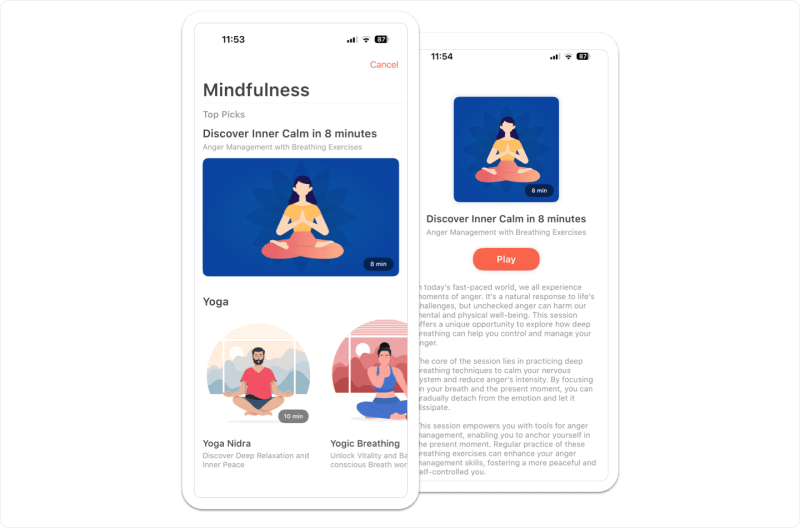
For example, the Mindfulness library in Vantage Fit makes mindfulness accessible at scale, with guided audio sessions across seven categories, from meditation to sleep. Sessions run about 5 to 35 minutes, play offline, and are logged automatically, no instructor required.
In Tata Motors’ Step Up & Elevate challenge, active participants averaged 9 minutes of daily mindfulness throughout the program, which shows mindfulness can hold its place inside a broader wellness challenge.
See the full data in the Tata Motors Step Up & Elevate case study.
5. Integrate mindfulness into the Workplace Culture
Encourage mindfulness breaks throughout the workday, and bring short practices into meetings to promote focused collaboration. Offer resources and coaching so employees can apply mindfulness exercises on their own.
An employee seeing their colleagues engaging in the program normalizes the practice and makes it part of the company’s culture. Consider scheduling recurring mindfulness training sessions and invite a group to participate together.
6. Motivate and Recognize Participation

One effective way to engage your employees is by encouraging healthy competition and offering incentives such as badges or rewards. It’s also important to recognize employee efforts and celebrate program success stories to maintain enthusiasm.
Wellness challenges make that recognition easy to build in. In Vantage Fit, for example, HR can add a mindfulness session as a task in a wellness challenge, so meditation time earns points and rewards on the same leaderboard as steps.
7. Cultivate Mindfulness Champions

Publicizing the program only through the wellness coordinator is not enough. Recruit passionate employees from different teams as program champions, and give them a visible role, so the message reaches every level of the organization and the practice feels normal.
Why Should Mindfulness Be Part Of A Comprehensive Well-being Strategy?
“Mindfulness is not just about focus and attention; we rely on the wisdom that mindfulness and compassion practices enable an ability to step back and evaluate where you are for yourself and those around you.”- Parneet Pal.
Mindfulness is a powerful tool, but it’s most effective when integrated with a holistic well-being strategy. It means addressing various aspects of employee health:
-
Physical Health: Encourage healthy eating habits and offer fitness initiatives.
-
Financial Wellness: Provide resources and education to help employees manage their finances.
-
Work-life Balance: Promote healthy boundaries and encourage time management skills.
-
Social Connections: Foster a positive and supportive work environment that promotes social interaction.
Mindfulness practices can be seamlessly integrated with these efforts. For example, mindful stretches can be incorporated into fitness breaks, or stress-reduction techniques can be taught as part of a work-life balance program.
Summing It Up
Corporate mindfulness programs have the potential to revolutionize how companies approach employee well-being and productivity. By implementing a multi-faceted corporate wellness program that caters to diverse needs and offers ongoing support, you can cultivate a calmer, happier, and more productive workforce.
Imagine a workplace where stress is replaced by focus, and collaboration thrives. Ready to take the first step toward a more mindful workplace?
Together, let’s cultivate a workplace culture that prioritizes both success and well-being, one mindful minute at a time.
Frequently Asked Questions
How much does a corporate mindfulness program cost?
Cost depends on the format. App-based programs usually charge per employee, while live workshops and coaching are priced per session or per instructor. Many companies start with an app for everyone and add a few live sessions for the teams under the most pressure.
What is the difference between corporate mindfulness training and coaching?
Training teaches a group the core practices, such as breathing and body-scan meditation, through classes or courses. Coaching is smaller and ongoing: a coach works with one leader or team to apply mindfulness to real problems, such as conflict, communication, or pressure.
Can corporate mindfulness classes run online?
Yes. Live classes run well over Zoom, Google Meet, or Microsoft Teams, and recorded or app-based sessions let remote and shift workers practice at any hour. A mix of live and on-demand sessions reaches the widest group of employees.
How soon do employees see results from mindfulness training?
Some gains appear quickly. In a UC Santa Barbara study, students improved their working memory after only two weeks of training. Lasting changes in stress and habits take longer, so plan a program that runs for several months with regular check-ins.
How do you measure the success of a corporate mindfulness program?
Track sign-ups, session attendance, and minutes practiced, then run a short stress and wellbeing survey before launch and again a few months in. Comparing the two surveys, alongside absence and turnover trends, shows whether the program is working.
How do you get employees to join a mindfulness program?
Schedule short sessions inside the workday, so taking part never means staying late. Invite managers to attend alongside their teams, thank regular participants publicly, and offer both live classes and on-demand sessions so every schedule has an option.