Overwork means working such long hours, or carrying such a heavy workload, that the body and mind no longer recover. The WHO and ILO link working 55 or more hours a week to a 35% higher risk of stroke and a 17% higher risk of dying from ischemic heart disease.
Overwork often grows out of company culture. Competitive markets push employers to ask for the “extra mile,” well beyond the usual workload, and when that becomes the norm, long hours start to look like commitment. In practice they bring absenteeism, lower productivity and poorer health.
Spotting the signs early gives HR time to act. Below, you’ll find how to recognize an overworked employee, what overwork does to the body and mind, and how HR teams can help people recover, including with wellness tools like Vantage Fit.
Key Takeaways
- Overwork shows up early as fading motivation, growing cynicism, low energy and rising absence, so these signs deserve attention before illness sets in.
- Physical and mental symptoms follow, including poor sleep, frequent illness, weight gain and constant irritability.
- Heart disease and stroke are the most serious risks, and long hours are also linked to type 2 diabetes in lower socioeconomic groups, depression and burnout.
- Sleep loss compounds the damage, because a tired brain forms new memories less well and makes more mistakes at work.
- HR can ease overwork by encouraging real time off, cross-training staff, recognizing extra effort and adding people when long hours become routine.
What Does Overwork Look Like?
Leading a team means motivating people to work harder and better, and the key is knowing the difference between hard work and overwork. Hard work builds productivity, while overwork leads to burnout. Some stress comes with any job, but when it becomes chronic, it starts to harm health.
Protecting your employees’ health begins with recognizing who is overworked. Overwork usually signals stress from unrealistic workloads or poor management, so keeping an eye on your team is the first step toward preventing burnout. Watch for these signs:
-
Low motivation to work
-
Disengagement, or no longer enjoying the work
-
Falling job satisfaction
-
Cynicism about the job
-
Low energy or mental exhaustion
-
Reduced professional efficacy
-
Rising absenteeism
The World Health Organization defines burnout as "a syndrome conceptualized as resulting from chronic workplace stress that has not been successfully managed." Exhaustion, cynicism and reduced efficacy, three of the signs above, are its three dimensions.
Workplace Symptoms of Overworked Employees
Many workplaces are so focused on output that they reward overwork without meaning to. Knowing the symptoms helps you spot employees at risk early and give them room to recover, whether that means a lighter week or a mental health day.
Here are the physical and mental symptoms to look for:
-
Lack of energy for anything
-
Trouble sleeping
-
Frequent illness from a weaker immune system
-
A constantly low or irritable mood
-
Weight gain
-
Poor work-life balance
-
Declining overall health
If you notice several of these in your team, act early. They are only the start: overwork has deeper effects on health, as the next section shows.
In 2021, the WHO and ILO estimated that long working hours led to 745,000 deaths from stroke and ischemic heart disease in 2016. That makes long hours the risk factor with the largest occupational disease burden.
The Effects of Overwork on Employee Health
1. Bad for the Heart
Years of long hours raise the risk of stroke and ischemic heart disease, the condition behind most heart attacks and angina. Constant work also leaves little time for exercise, which adds to the strain on the heart.
Related Article: 20 Desk Exercises That Help To Boost Employee Health
2. Sleep Deprivation
Non-stop work often cuts into sleep, through workplace stress and late evenings in front of a screen. An irregular sleep schedule then takes a toll on mental health.
Sleep deprivation also affects memory. A Nature Neuroscience study found that a single night without sleep significantly reduced activity in the hippocampus, the brain region that forms new memories, so people retained less of what they learned.
3. Type 2 Diabetes
Diabetes is one of the most common illnesses among adults and one of the frequent office workers’ health problems. Long hours can add to the risk, especially for people in lower socioeconomic groups.
A 2015 meta-analysis of 222,120 workers found that working 55 or more hours a week was linked to a 29% higher risk of type 2 diabetes among people in lower socioeconomic status jobs, with no link in higher-status groups.
4. Burnout
Long hours at a stretch can also lead to employee burnout. The WHO describes it through three signs: exhaustion, growing mental distance or cynicism toward the job, and reduced professional efficacy.
Burnout can spill into personal life too, pulling people away from friends and family. These patterns build quietly, so early awareness matters.
Vantage Fit supports early awareness with a private mood log, guided sessions from its mindfulness library, and light wellness challenges that fit into the workday. Employees can check in with how they feel, take a few minutes to relax, and build recovery habits through the day.
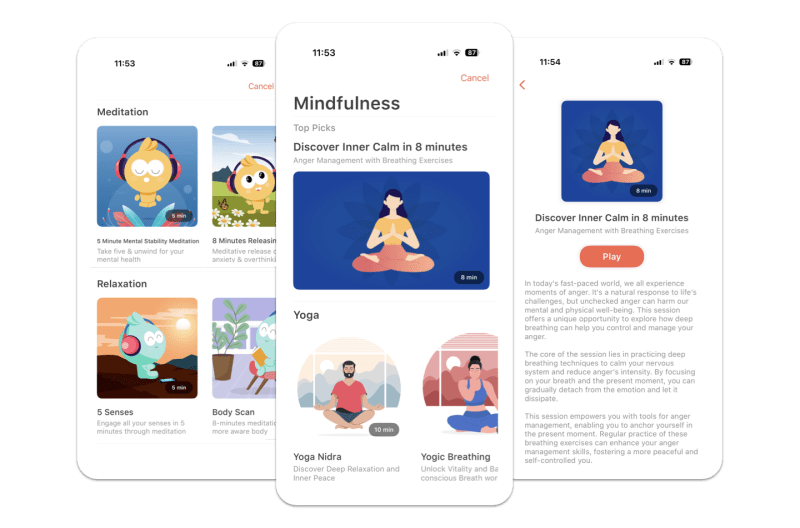
Celegence, a Vantage Fit client, said this about the guided sessions:
"One of the features I loved the most is the Yoga Nidra session, which helped us relax in the stress-induced environment."
— Celegence
5. Workplace Depression
Overwork can also lead to depression. A Kyoto University study in the Journal of Occupational and Environmental Medicine found that employees who worked at least 60 hours a week and usually had too much work faced a higher risk of depression.
Constant stress and a lack of work-life balance feed that risk, leaving people feeling low and isolated, with knock-on effects for their mental health.
6. Harms Work-Life Balance
One of the classic effects of overwork is a poor work-life balance. A healthy balance between work and personal life supports productivity, clear thinking and better mental health.
Without it, workers feel exhausted, low and unmotivated. A proactive employee wellness and stress management strategy is a practical way to restore that balance before chronic overwork takes hold.
7. Prone to More Mistakes at Work
Long hours drain the mind’s ability to focus, so overworked employees make more mistakes. That hurts performance and confidence, and the errors can cost the business more than the extra hours produce.
8. Psychiatric Disorders
Research also links heavy work habits to psychiatric symptoms. In a study of 16,426 Norwegian workers, 32.7% of workaholics met screening criteria for ADHD, compared with 12.7% of other workers, and 25.6% met the criteria for OCD, compared with 8.7%.
The study cannot show which comes first, since the symptoms may also drive the heavy work habits. Either way, the constant stress and anxiety of working around the clock take a toll on emotional stability.
Related Article: 15 Emotional Wellness Activities To Practice In The Workplace
9. Physical Effects
Long, unbroken stretches at a desk also take a toll on posture. As people lose track of how they sit, neck and lower back pain often follow.
These are some of the most common ways overwork harms employee health. The next step is knowing how to reduce it.
How Do You Handle Overworked Employees?
Overwork leads to chronic stress, which in turn leads to burnout and exhaustion. Telling hard-working employees apart from overworked ones is the first step toward a healthier balance. These steps help reduce overwork and keep your team healthy:
Encourage Employees to Take Time Off
When employees are overwhelmed, encourage breaks beyond lunch, such as a short walk or a chat with a colleague. Lead by example by taking breaks yourself, so your team feels free to do the same.
Promote Cross-Training
Cross-training spreads responsibility across the team. When colleagues can cover for each other, people can take a break or a vacation without worrying about work piling up, and they return fresh. Short sessions or workshops are an easy way to start.
Encourage Professional Development
Show employees that growth comes from steady effort over time. Support their career development and recognize good work, which keeps people motivated and satisfied in their roles.
Appreciate Your Employees
Appreciation builds a positive culture, loyalty and productivity. When employees put in extra hours for a special project or cover a gap to meet targets, recognize it with a reward, time off in lieu or a simple show of gratitude. Feeling valued improves engagement and retention.
Add Staff When Long Hours Become Routine
Hiring has a cost, but it can save money in the long run. If long days, weekend work or extra hours have become normal, the team may simply be too small. Temporary or contract staff can cover busy periods without a long-term commitment.
Wellness programs can support these steps, too. Psychiatrist and executive coach Dr. Rozina Lakhani, a guest on the Vantage Fit podcast, explains when they help:
"Yes, if they focus on the whole person, not just one aspect of thing, but if they address both the physical and mental wellness together, and if it increases fairness and helps them improve their perspective towards their work, yes, corporate wellness can help prevent burnout and prevent injuries related to burnout."
— Dr. Rozina Lakhani, MD Psychiatrist and Executive Coach | Listen to the full episode
Conclusion
As an employer, it is natural to want the best from your team, because that is how a business succeeds. But that output must never come at the cost of your employees’ health.
Protecting worker health is one of a modern employer’s core obligations. Watch for the signs, act early, and build habits that keep people well.
Frequently Asked Questions
Can overworking make you sick?
Yes. Long working hours are linked to heart disease, stroke, depression and poor sleep, and in lower socioeconomic groups, to a higher risk of type 2 diabetes.
How many hours a week counts as overwork?
The WHO and ILO use 55 or more hours a week as their threshold for long working hours, compared with a standard week of 35 to 40 hours.
What is the difference between overwork and burnout?
Overwork is the cause: too many hours or too heavy a load. Burnout is one possible result, a state of exhaustion and detachment from work that the WHO ties to unmanaged chronic workplace stress.
How can HR prevent employee overwork?
Watch workloads and hours, make breaks and time off normal, cross-train people so they can step away, and add staff when long hours become routine. Recognizing extra effort helps too.
Does overwork affect mental health?
Yes. A UK study of 2,123 civil servants found that working 11 or more hours a day more than doubled the odds of a major depressive episode, compared with working 7 to 8 hours.