
In today's fast-paced world, working professionals have to deal with numerous responsibilities and face copious amounts of stress daily. Being under too much stress and pressure can hinder their ability to get adequate sleep, which is essential for optimal physical and mental performance.
Sleep deprivation is a serious concern, and it can cause many health problems among employees such as:
- Heart problems
- Obesity
- Stroke
- Hypertension
- Depression
- Stress
- Impaired memory
Also, a sleep-deprived employee has a higher risk of sustaining injuries from accidents due to impaired alertness.
The National Sleep Foundation recommends that adults should get 7-9 hours of sleep daily. However, many busy professionals fall short of those numbers, affecting their performance and productivity at work.
Holistic wellness practitioner Sindhujaa Kumar puts it simply:
"Sleep is the greatest healer. This is when the body and mind get to completely regenerate."
Ways sleep-deprived employees can affect the entire organization
If your employees frequently feel tired at work and cannot focus properly, they are not getting enough sleep.
Healthy and productive employees are valuable assets to an organization and are crucial for its success. But, with poor sleeping habits, employees will have difficulty concentrating and will become inefficient at work.
Research led by Professor Vicki Culpin at the Hult International Business School found that lack of sleep among employees can seriously hinder their ability to perform at their best and affect their mental and physical health.
Here are some ways sleep-deprived employees can affect your organization and why you should pay attention.
Decreased productivity
Without proper sleep, your employees are likely to feel tired at work. They will have trouble focusing on tasks and learning new things and will be easily distracted. Decision-making and creative thinking are among the first capabilities to suffer, and no amount of extra effort or caffeine fully compensates for lost rest. Also, tired employees will be less productive during work hours and will have to take their work home, creating a continuous cycle of poor sleeping habits.
Low employee productivity can cause huge losses for your organization. The connection between employee wellness and productivity is well established: without a rested, healthy workforce, companies struggle to maintain output and stay competitive.
Poor employee health
Sleep helps restore and rejuvenate your employees' bodies and minds. It helps to repair body tissue, synthesize hormones, and contribute to increased immunity. Your employees require adequate sleep, and without it, they will become unhealthy and will not be able to function correctly in their daily lives. Poor sleep habits can cause physical and mental problems that can seriously hinder their performance at work.
If your employees are unhealthy, they will take frequent sick leaves and be absent from work. Ill employees are also likely to be less productive than healthy ones. Moreover, poor employee health will significantly increase your organization's healthcare expenses.
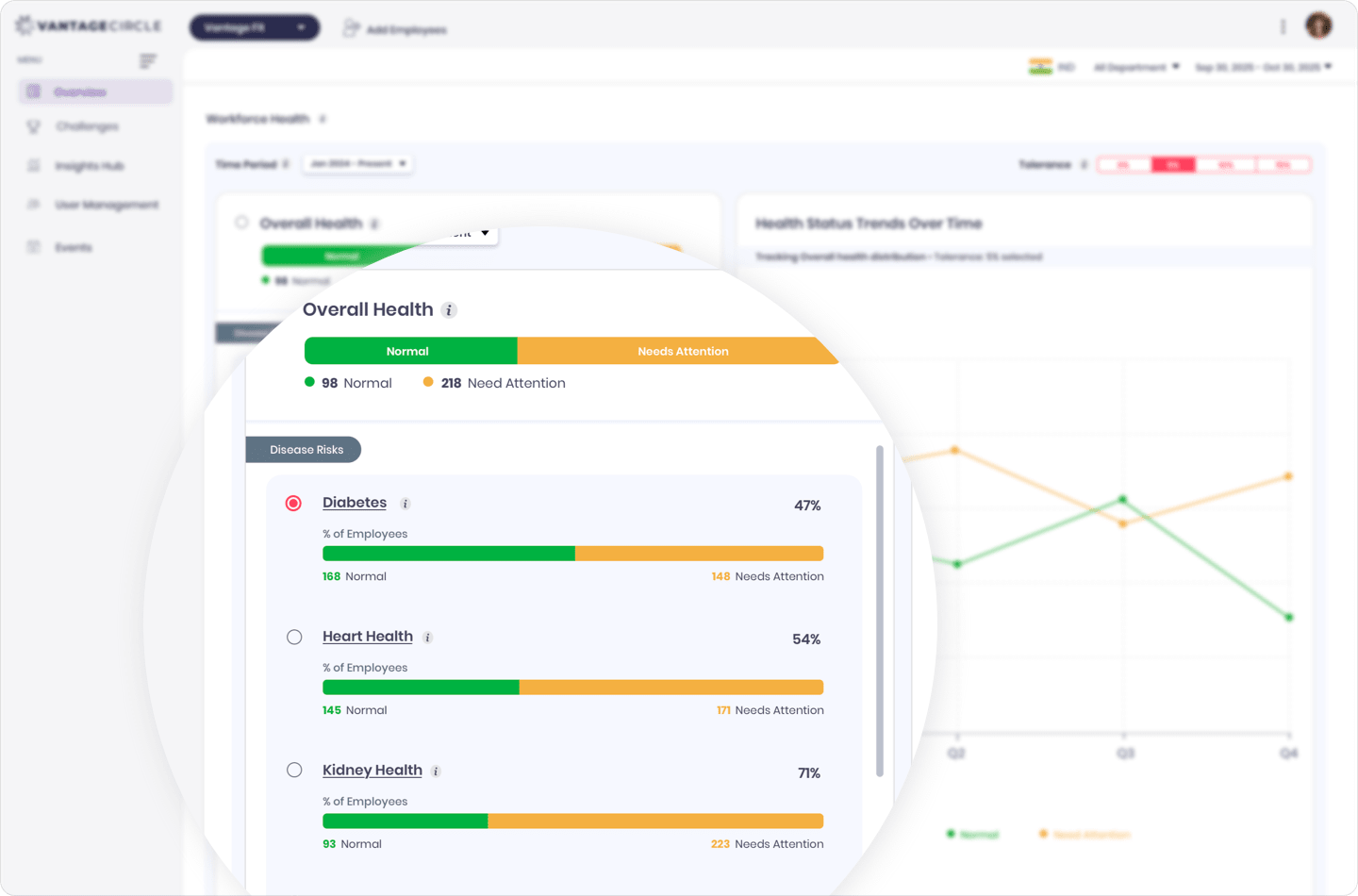
Vantage Fit gives HR teams a practical way to act early. Employees can log their sleep and track their mood in one place, helping them see how rest affects their daily performance.
At the organizational level, the platform highlights health trends across teams, giving HR a clear view of where support is needed most.
Increased absenteeism
As mentioned above, if your employees do not get sufficient sleep, they will become unhealthy, tired, and take more sick leaves. Increased employee absenteeism can affect the bottom line and output of your business. Its impact can be widespread, involving you and your employees as well.
Increased absenteeism rarely stays isolated. Poor sleep cascades into chronic stress, which compounds into further health decline, making employee stress management an essential part of any meaningful effort to reduce time away from work.
Negative workplace environment
Sleep deprivation can cause your employees to be stressed and anxious at work. It can also make your employees more irritable and cranky. Such negative behaviors can cause conflicts among your workforce, affecting individual relationships and team productivity. Chronic sleep deprivation also lowers emotional intelligence, making it harder for employees to empathize with colleagues or manage disagreements constructively. Over time, this erodes the psychological safety that teams need to collaborate effectively. Also, your employees are more likely to make rash decisions when they are stressed or irritated.
Introducing structured wellness initiatives, including workplace sleep challenges, can help address these behavioral patterns at the organizational level.
Final words
All these factors can contribute to a very poor and negative work environment, wherein employees are dissatisfied and unproductive. Organizations that invest in employee health proactively, through structured corporate wellness programs that address physical, mental, and sleep health together, tend to see measurable improvements in productivity, morale, and long-term business performance.