A SMART fitness goal is a fitness target that is Specific, Measurable, Achievable, Relevant and Time-bound. “Do 20 push-ups in a row within three months” is a SMART goal. “Get fit this year” is a hope. The five checks turn that hope into a plan you can follow every day.
The framework matters because fitness resolutions fade fast. According to U.S News, people start giving up on their fitness new year resolution by February, and by March, a whopping 80% of them let it go. No wonder so many people fall short of their health goals.
Measuring progress keeps a goal alive, and Vantage Fit builds that in from the first sign-in. Employees can pick one fitness goal, such as losing weight, gaining muscle or getting fitter. The app combines it with height, weight, age and activity level to set a daily calorie target.
So are you ready to make long term changes to your health and fitness this 2026? Let’s start with what a SMART goal looks like in practice.
Key Takeaways
- SMART fitness goals pass five checks (Specific, Measurable, Achievable, Relevant, Time-bound), so each one names an action, a number and a deadline.
- The Relevant check ties a goal to your own reason for getting fit, such as a health issue or a wedding, and that reason carries you through the hard weeks.
- Big targets become manageable as weekly steps: losing 25 kilos in a year works out to about half a kilo a week.
- Writing a goal down and reporting progress to a friend each week roughly doubles the odds of reaching it.
- A weekly log of steps, workouts and calories shows whether the plan is working, and the scale is one measure among several.
What Are Some SMART Fitness Goal Examples?
Each example below passes all five checks: one clear action, a figure to hit, a starting level most beginners can manage, a link to health or everyday life, and an end date. Swap in your own numbers and keep the deadline.
- Steps: Raise my daily average from 5,000 to 8,000 steps over the next six weeks, adding 500 steps each week.
- Running: Run 5 kilometers without stopping within 10 weeks by following a beginner plan of three runs a week.
- Strength: Add 5 kilos to my squat in six weeks by training legs twice a week.
- Weight: Lose 4 kilos in eight weeks by walking 30 minutes a day and cutting out sugary drinks.
- Flexibility: Stretch for 10 minutes after every workout for the next 30 days.
- Sleep: Be in bed by 10:30 PM on weeknights for the next four weeks to reach seven hours of sleep.
7 Best Ways To Set S.M.A.R.T. Fitness Goals for 2026
1. Know your “Why”
Did you set your fitness goals this year? How is your progress going? Were you able to achieve your goals?
If you feel confused answering these questions, then the chances are likely that you’re still unclear about your “Why Fitness”.
So before you can embark on a successful fitness journey, you need to find why? Which is being aware of the inner motivation within yourself.

Please take a moment to assess why you want to achieve your health goals so desperately, be it losing or gaining weight. If your reasons are like “I’m overweight” or “I’m too skinny,” it is not good enough.
So you need to dig a little deeper with your context.
For instance, some fitness goals examples can be like “I want to lose weight for my wedding” or “I want to lose weight as I am suffering from health issues”.
Be it any cause, make sure you can answer it honestly and confidently. This will give you the strength to carry you through as you level up your progress.
If your reason for losing weight or getting fit is merely aesthetic i.e., based on a particular celebrity or influencer, then it is advisable to re-evaluate your fitness motivation because this could lead to an unhealthy physical and mental obsession.
It is essential to love and accept yourself before you can make any changes. Accept and embrace the fact that we all are different, perfect in our ways. Once you have found your inner motivation, please write it down as this would be your key to success.
2. Be Specific About your Fitness Goals
Having fitness goals is a surefire way to self-confidence and a healthy lifestyle. But have you ever thought about setting some specific fitness goals?
No, right?
Well,it is a common habit. Most of us set our goals based on how we want to look rather than what we want to feel.
In this process, we become overconfident and set some unrealistic goals which are way beyond our reach. And failing to achieve such long term goals leaves us feeling demotivated, so much that we don’t even bother to continue further.
So once you know your “Why”; the next step is to set some realistic fitness goal that inspires you to take action every single day.
Try to answer these questions before you start:
- What should I do to start?
- How will I measure my progress?
- How long will it take to get there?
These answers lie in setting S.M.A.R.T. fitness goals.

Here are some smart fitness goals examples to help you understand:
Specific
Rather than focussing on “I am going to lose weight” you should target “I will lose 25 kilos by this year”.
Measurable
Once you have set your goal, you need to calculate how long it would take you to achieve your target.
So let’s do the math!
If your goal is to lose 25 kilos a year, which means you need to lose 2 kilos a month. This means you can achieve this by losing half a kilo a week!
Achievable
Your goal sounds achievable when you quantify it.
Remember focussing on huge goals can seem overwhelming. So once we break them into smaller chunks, our goals appear more manageable and specific.
The CDC recommends losing 1 to 2 pounds, or about 0.5 to 0.9 kilos, per week.
Logically, “The heavier you’re, the quicker will be the weight loss in initial phases and vice versa.”
Relevant
A relevant goal connects to the “Why” you found in the first step. If your reason is a health issue, a goal like lowering your blood pressure or resting heart rate fits. If your reason is a wedding, a weight or strength target fits.
A goal that matters to you is one you will stay patient with, so invest your time and energy in it.
Never follow any shortcuts!
Time-Bound
Every goal should have a time-bound. Otherwise, there would not be any urgency in attaining your fitness goals in the first place.
3. Make an Actionable Workout Planner
So you got your basics right. Now it’s time for you to level up with your wellness plan.
Remember, setting a smart fitness goal is just a small part of this strategy. It makes no sense if you don’t have an actionable plan.
A goal without a plan is just a wish.

This is where you need to be clear about the very nitty-gritty of the entire process.
Ask yourself some questions like:
- What workout do I need to go for?
- Which unhealthy habit should I quit?
You must make sacrifices, get out of your comfort zone and make real changes in your lifestyle.
To initiate the process, you can start writing down your actionable SMART Goals in your journal or take a screenshot and make it your mobile wallpaper.
A goal-setting study by psychologist Gail Matthews at Dominican University found that more than 70% of people who wrote down their goals and sent weekly progress updates to a friend reached them or got more than halfway, compared to 35% of people who kept their goals unwritten.
Your list need not be fancy, but make sure you got the right kind of realistic targets that truly aligns with your schedule and lifestyle.
Setting a weight goal for your team? Use the free Workplace Weight Loss Challenge Template, which includes goal-setting worksheets and 8-week tracking logs.
4. Slow and Steady Wins the Race
Are you completely new to the fitness space, or maybe that fast-food lover who now wants to change for the better?
If Yes, then read on.
Break the myth that “You’re going to get fit quickly.”
This isn’t a comfortable journey, and breaking your old habits can be painful in the initial stages.

Here are a few things you can do:
- Start small
- Never give up
- Build the momentum with every level
Remember, trying to change quickly or forcing your body into hardcore fitness is only an invitation to failure.
5. Be with Like-minded People
Fitness isn’t an easy process, and when you share your fitness journey with a few like-minded people, it keeps you focused and accountable. It can be your workout partner, a fitness trainer, an online community, or a family member who can cheer you up when things get tough.

Keep in mind with whom are you sharing your fitness goals? Not all people want the best for you; some might sabotage your spirit in the wrong way. Hence it would be best if you share only with a trustable partner or community.
Remember it’s your life, your body, and your goal.
If you don’t want to attract any negative energy from your community, it’s better to keep it private.
6. Always Track and Act
The only way to ensure that you are on the right path towards your goals is when you keep track of your progress. There are many ways to track your goals; one is by keeping a workout journal or using a health and wellness app.
You can note down your weights and body composition to know that you’re going in the right direction with your fitness goal.

You can make a detailed journal of your weekly fitness goals and monthly fitness goals noting down the calories burned, the number of steps walked, or workouts you did.
This way, you also get an idea of the number of hours you spent in the gym and the amount of weight you lifted in the previous workouts.
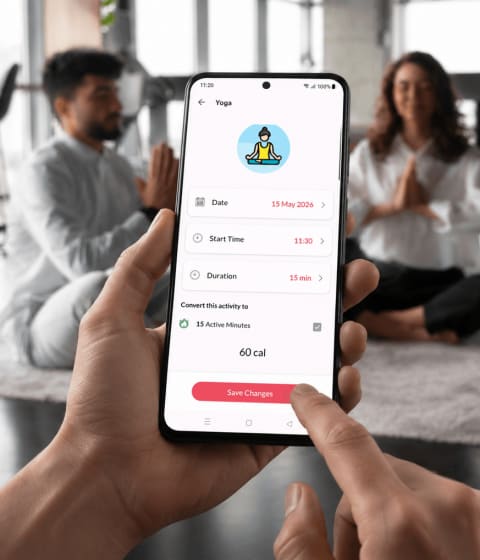
Do your workouts happen in a pool or a yoga class? Use the free Activity to Step Converter to turn swims, yoga sessions and spin classes into steps, so every workout counts toward a daily step goal.
Remember, the number on the scale should not determine your progress. By this, you will also get stronger as you make progress both physically and mentally.
7. Live by your SMART Fitness Goals
Now you know how to set smart fitness goals that are just right for you.
Does everything end here?
Know that this is a permanent lifestyle change, bigger than any new year resolution.
It carries on past any target weight and sets you on a path to a healthier and happier life, so the journey continues every day.

There would be lots of ups and downs. If you can foresee this and avoid falling back into your lazy habits, then you’re bound to achieve your success irrespective of any obstacles.
Achieving our goals isn’t about willpower; instead, developing the right skills and strategies is.
This is where help from a good health and wellness app comes in handy, and Vantage Fit is what we recommend.
How Vantage Fit can Help You Achieve Your SMART Fitness Goals

Vantage Fit is a corporate wellness app that helps employees build a fitness goal into their daily routine. Its training plans, such as Couch to 5K and the Walking Habit Plan, build a week-by-week schedule that gets harder at a steady pace. Each finished session counts as progress.
The app also suits employees who sit for most of the workday. A guided 7-minute workout fits into a short break. Wellness Leagues place each employee in Gold, Silver or Bronze on their average daily steps, which turns the daily step goal into a gamified experience.
HR teams follow progress on the admin dashboard through group trends, such as active users and wellness scores by department. Each employee’s health profile, including weight and BMI, stays private to them.
So what are you waiting for? Request a demo right now.
Frequently Asked Questions
How many fitness goals should I set at once?
Set one to three fitness goals at a time. A short list lets you give each goal real effort every week. Once a goal turns into a habit, such as a daily walk, you can add the next one.
How long should a SMART fitness goal take?
Most SMART fitness goals work best over one to three months. That is long enough to see progress and short enough to keep the deadline real. Bigger goals, such as a marathon, can run for a year, so break them into three-month stages.
How much weight is safe to lose in a week?
A safe pace is 1 to 2 pounds a week, according to the CDC. People who lose weight at this steady pace are more likely to keep it off than people who lose it quickly.
What should I do if I fall behind on a fitness goal?
Adjust the goal and keep going. Push the deadline back or shrink the weekly target, then check that your reason for starting still holds. Steady progress over several months counts for more than a perfect first week.
How do you measure progress on a fitness goal?
Pick one number that matches the goal, such as weekly distance, reps, or average daily steps, and record it on the same day each week. A fitness tracker or app can log most of these automatically.
What is a good first SMART fitness goal for beginners?
A walking goal is a good start: walk briskly for 30 minutes on three days a week for one month. It is easy to measure, suits most fitness levels, and builds a base for harder goals.