A staff wellbeing board is a dedicated space in the workplace that promotes health, happiness, and work-life balance for employees. It is a central hub for sharing information, resources, events, and initiatives related to overall well-being.
It is the simplest tool in most corporate wellness programs, and it earns its place because it sits where people already walk past.
Here are 10 ideas worth putting on one.
Key Takeaways
- The point of a board is to make support visible. People use what they can see, and most employees never go looking for the wellness resources a company already pays for.
- Placement decides whether it gets read. Put it where people already stop, near the entrance, the break room, or the coffee station, at eye level and in good light.
- Around 3ft x 4ft suits most offices, leaving room for a few distinct sections without taking over a wall. Size up only if you have the content to fill it.
- A working board mixes several kinds of content: monthly health observances, a live challenge, practical tips, mental health resources, peer recognition, and something interactive people can add to.
- A stale board is worse than no board. Give a group of wellness champions ownership rather than one person, refresh it on a schedule, and let employees submit what goes on it.
A thoughtfully designed well-being board demonstrates your commitment to employees and can lead to a happier, healthier, and more productive workforce. Whether you already have a basic board or are starting from scratch, this blog will provide actionable steps for maximizing its potential.
Let’s get started and transform your office well-being board into a vibrant hub for health and engagement!
Why put up a staff wellbeing board?
You will see the same thing called a wellness board, a wellbeing wall, or a wellness bulletin board. The name changes by workplace and by country. The job does not.
The purpose of a well-being board is twofold. First, it informs employees about wellness topics, local events, mental health support, and company benefits. This raises awareness about available resources. Second, it motivates employees to prioritize their health by highlighting wellness campaigns, sign-ups for activities like yoga classes, and success stories.
An effective well-being board reflects the interests and needs of the specific workforce. For example, a tech startup may focus on stress management tips, while a nursing staff may feature self-care information.
The content should be engaging and updated regularly to maintain relevance. Ideally, a team of wellness champions collaborates on the board rather than one person managing it alone.
Benefits of a Wellbeing Board at Work
1. Improves awareness of health resources and activities
A well-being board makes employees more aware of the many programs, activities, and resources available to support their health. Employees are more likely to utilize these options when clearly presented centrally. The board also promotes new offerings like meditation classes or EAP counseling.
2. Encourages social connections and peer support
The well-being board facilitates social connections between coworkers around shared health interests. When a new fitness challenge gets posted, it brings colleagues together toward a common goal. Coworkers can share tips, encourage, and foster new bonds.
Neha Pant Tewari, a happiness coach, makes the same point on the Vantage Fit podcast. She singles out the work environment as the part of wellbeing worth acting on, because it is the part anyone can actually change:
"40% of your happiness … is derived from the environment that you live in. And this is the chunk of happiness, which is a controllable chunk … How is your equation with your boss and how is your equation with your colleagues? … Are you able to sense a state of flow or not? … How close or how further away are you from your stressors?"
— Neha Pant Tewari, Happiness Coach | Listen to the full episode
3. Promotes open dialog about wellness topics
The board helps break stigmas by sparking conversations around mental health, chronic conditions, family care, financial wellness, and more. This open dialog makes employees more comfortable seeking support.
4. Reinforces health-conscious culture
A vibrant well-being board is a daily reminder of the company’s commitment to employee health. When employees arrive at work and see the latest wellness challenge front and center, it reinforces that culture.
5. Allows employees to recognize peers’ achievements
The board offers a space to highlight individual employees or teams making positive strides toward health goals. Giving kudos for accomplishments make achievements visible.
6. Provides a sense of community and a morale boost
Sharing events, resources, and success stories fosters a sense of community. Knowing their well-being is valued boosts morale. The board shows “we’re in this together” when prioritizing health.
7. Serves as a daily reminder to prioritize wellbeing
With health inspiration always visible, the wellbeing board passively nudges employees to care for themselves. It tops up their motivation tanks. Performance improves when employees arrive ready to take on the day fueled by well-being.
8. Boosts engagement as employees help shape content
Employees feel ownership when they can actively participate by sharing their wellness interests and needs. Features like suggestion boxes create buy-in and lively interest in the board.
9. Helps attract and retain top talent
Today’s top talent prioritizes self-care and work-life balance, and the wider picture gives that some urgency.
Gallup’s State of the Global Workplace puts global employee engagement at 20% in 2025, its lowest level since 2020, with only 34% of employees thriving.
A vibrant well-being board signals your commitment to supporting the whole person, which gives a competitive edge in recruitment and retention.
Where to Place Your Staff Wellbeing Board?
Choose a high-traffic location where employees frequently gather and pass through, such as:
- Near the entrance/lobby
- Employee break room or lounge
- Along main walkways and thoroughfares
- Adjacent to the water cooler or coffee station
Make sure the board is easily visible and accessible. Place it at eye level and ensure the area is well-lit. Avoid cramming it into a corner or sole placement on an intranet site. The more exposure your well-being board gets, the better!
Determining the Size of Your Wellbeing Display Board
Consider the following factors when deciding on size:
- Number of employees and departments
- Amount of content to showcase
- Overall office space and wall availability
- Visibility needs - can people see it from far away?
In general, larger boards allow more freedom of content. For most offices, around 3ft x 4ft is a sensible starting point, with enough room for a few distinct sections without dominating a wall. Adjust up or down based on your space and needs.
Having ample room for eye-catching visuals and text will make the board more engaging. Leave breathing room between elements and utilize vertical space.
10 Creative Staff Wellbeing Board Ideas
1. Monthly Health Observances
Designate a section of the board to highlight upcoming health observance months or days, like Mental Health Awareness Week in May or World Cancer Day on February 4th, the annual campaign led by the Union for International Cancer Control.
For each observance, provide a brief description of its purpose and significance. List any local events, fundraising campaigns, or awareness activities that employees can participate in to support the cause. This shows the company’s commitment to important health initiatives and gives employees opportunities to get involved.
For example, for World Alzheimer’s Month in September, share warning signs of the disease, brain health tips, and information on Memory Walk to support research. Encourage participation by forming a team. This facilitates meaningful involvement in an issue of shared concern.
2. Wellness Challenges
Post fun monthly wellness challenges that employees can participate in together. These could include step count competitions tracked through fitness devices, hydration tracking boards where employees log daily water intake, or team “no soda” weeks.
Friendly work-based challenges not only unite employees around a common goal but also motivate and normalize healthy behaviors through peer support. Consider handing out small prizes to challenge winners.
Variety is key for ongoing engagement. After a step count challenge, switch it up with a plank hold competition tracked through phone apps, then a water drinking contest, followed by a challenge to pack zero-waste lunches.
Challenges could tie into monthly health observances too, like a 10,000 steps a day challenge could be hosted in February for American Heart Month. Cultivating a spirit of friendly competition keeps things fresh and fun.
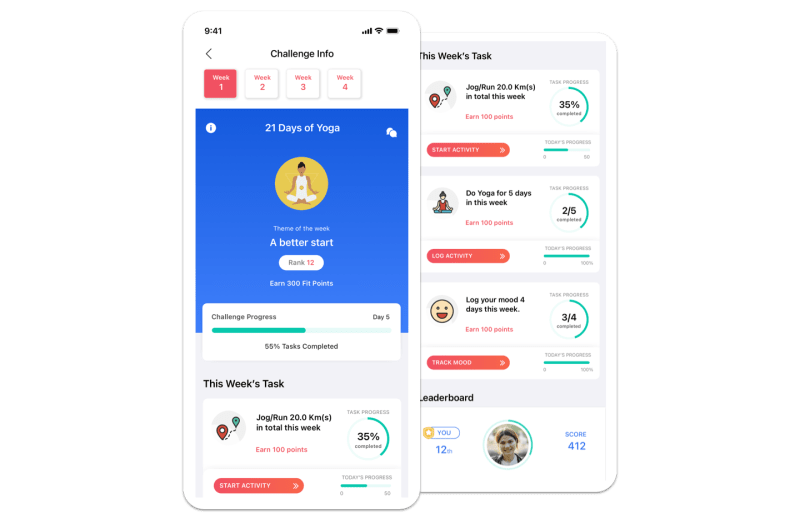
To see how this translates beyond a physical wellbeing board, take a look above at the digital dashboard inside Vantage Fit.
The screen brings everything into one place. Employees can view the active challenge, such as a “21 Days of Yoga” program, check the weekly theme, track their current rank, and see how many Fit Points they have earned.
A progress bar highlights overall completion, while a dedicated section outlines weekly tasks like running goals, yoga sessions, or mood tracking, each with clear progress indicators and daily updates.
The experience also includes a live leaderboard. Participants can see their position and compare scores with peers, which keeps motivation high through friendly competition.
All of this sits in a single, easy-to-access dashboard. Employees get a clear view of their activity and progress, while employers can monitor participation and engagement in real time.
And its impact is resounding.
At Brazosport ISD’s Fit Wars challenge, a structured 2-week program drew 86% employee engagement, with participants averaging 6,000+ daily steps. It is a kind of result that stemmed directly from combining visible board promotion with real-time digital tracking.
3. Health & Safety Tips
Dedicate a section of the board to provide quick daily or weekly health and safety tips. These could cover ergonomics for computer work, stress management techniques, self-care practices, mental health coping skills, or other topics relevant to employees’ safety and well-being. Make them easily scannable with bullet points or infographics.
Tips should be actionable and relatable. For example, for self-care, provide tips like “take a tech-free walk outdoors” or “write in a gratitude journal before bed.”
Keep it simple yet practical. Consider involving employees by crowdsourcing suggestions for future tips that resonate with their needs and interests.
4. Physical Activity Promotion
Use the board to promote ways for employees to get active.
For instance, highlight any corporate gym membership discounts available or announce upcoming charity 5K races or intramural sports teams employees can join. Removing barriers to exercise and providing convenient fitness options (from group sign-ups for charity runs to structured workplace challenges) facilitates employee participation.
Go beyond just providing information by facilitating sign-ups and coordination to convert interest into action. For a charity 5K, have a sign-up sheet where employees can commit to taking part as a group.
For office sports teams, assign someone to handle outreach and scheduling. Make it as turnkey as possible for employees to take that first step to get more active. Follow up to celebrate participation and results.
5. Nutrition Info
Encourage healthy eating by:
- sharing nutritious recipes submitted by employees,
- spotlighting nearby farmers’ markets or CSA drop-offs for fresh produce,
- posting nutrition facts or healthy eating tips, or
- promoting food tracking apps.
Making nutrition info readily available allows employees to make informed food choices each day. Consider a section for employees to post their go-to healthy snacks.
Engagement will be higher if employees actively contribute content. Allow employees to submit original healthy recipes to share on the board, whether for home-cooked meals, easy snacks, or office-friendly breakfasts and lunches.
When spotlighting local food options like farmers markets, have employees post reviews of which ones they recommend, tips for making the most of them, and suggested Community Supported Agriculture programs to join.
6. Mental Health Resources
Increase awareness of available mental health resources by:
- posting contact information for scheduling counseling through the employee assistance program,
- listing apps that support employee mental health, from meditation to mood tracking,
- detailing current therapy coverage under company health insurance plans and
- compiling other mental health services and support options for employees.
Easy access facilitates the use of these resources.
Combat stigma by framing mental health care as routine wellness, not just crisis management. Highlight apps and techniques employees can use anytime for self-care, like mood tracking, relaxation techniques, or virtual coaching through mental health chatbots.
For clinical resources, normalize their role in prevention and ongoing care. Suggest easy first steps like requesting a list of EAP-approved therapists or downloading a meditation app.
7. Rewards & Recognition
Call out recent accomplishments from individuals or teams making progress on their health and wellness goals. Giving kudos for steps in the right direction, like completing a Couch to 5K program, sustaining a healthy habit for a month, or dropping a pant size, provides positive reinforcement that motivates continued improvement.
To encourage more participation, actively solicit employee submissions of wellness accomplishments for recognition on the board. The submissions themselves can spark conversations about how they achieved their goals.
Recognize not just outcomes but also small milestones, and frame stories positively even when goals weren’t fully met. This celebratory spirit helps make the board a source of inspiration rather than pressure.
8. Volunteer Opportunities
Post flyers about local volunteer activities with health benefits, like 5K benefit runs for charities, park or beach cleanups, or building houses with Habitat for Humanity. Representing volunteerism as a way to give back while bonding with coworkers frames community service as both altruistic and fun.
Volunteerism promotion will be most successful if there is a point person to coordinate sign-ups and logistics. Offer to organize transportation, create online sign-up sheets, collect donations, or set up an internal fundraising competition between departments.
Handle any barriers to make community participation frictionless. Lead by example by actively participating and sharing testimonials about how volunteering enriched you.
9. Wellness Success Stories
Solicit and feature employee success stories detailing how they improved their health in some way, overcame a health condition, or boosted their overall well-being.
For example, share how someone incorporated more activity into their routine and increased stamina or how another found an effective stress management strategy. Peer-to-peer inspiration motivates others to take steps toward their own health goals.
To encourage vulnerable sharing, set submission guidelines that focus stories on accomplishments rather than details of medical conditions themselves. Seek a diversity of examples, from simple lifestyle changes to major fitness journeys to managing chronic illnesses.
Share stories anonymously if desired. Follow up with contributors to show their courage makes an impact. Amplify the voices of those less heard to foster true community, belonging, and empathy.
ISKL, an international school community, found that team-based wellness programs through Vantage Fit generated exactly the kind of social bonds worth celebrating on a success stories board:
"Colleagues also developed friendships because of the camaraderie of the Vantage Fit teams."
— ISKL (email Q&A)
10. Interactive Elements
Add interactive elements to the board to drive greater employee participation. For example:
- install a suggestion box for ideas on future content,
- hold polls or votes to help guide what tips or topics to feature,
- utilize dry-erase boards for people to leave notes of encouragement,
- track goals,
- post informal competitions.
Finding ways to get employees actively engaged with the board boosts its impact.
Choose interactive features that align with your workplace culture. An informal office may enjoy playful competitions via dry-erase boards, while a corporate setting may prefer polished suggestion box notes.
Promote features when new via email, intranet, and word-of-mouth. Change interactions regularly to sustain interest. Most importantly, respond to input received to close the feedback loop.
Making the board a true two-way conversation facilitates ongoing use and a sense of community ownership.
Promoting and Maintaining the Wellbeing Display Board
1. Designate wellness champions to help manage and regularly update the board. Don’t let it become stale!
Appoint a few “wellness champions” from different departments to share the responsibility of managing the board. With multiple people handling updates, there is less chance of the board becoming outdated. Rotate primary ownership quarterly so one person doesn’t get burned out.
2. Promote the board during meetings, emails, and events. Invite participation.
During all-hands meetings, highlight recent wellbeing board updates, contests, or events to ensure everyone is aware. Send out occasional emails pointing people to new board content. Keep it top of mind!
3. Solicit ideas and content submissions from all employees to foster engagement.
Consider a suggestion box where employees can propose desired topics and resources. Invite people to share personal stories or tips by submitting to a “guest column.” This collaborative approach gets more people involved.
4. Occasionally revamp the aesthetics, layout, and design elements to maintain interest.
Every few months, change up the board format and visuals. Add photos, illustrations, or color schemes to capture attention. Rearrange sections or introduce new categories. This refreshed look piques curiosity.
5. Track participation metrics and employee feedback to refine your approach.
Note sign-up numbers for challenges, likes/comments on posts, and usage of resources. Periodically survey employees on what they find valuable or new elements they want to see. Apply these insights to improve content.
6. Celebrate successes stemming from the board! Recognize employees who utilize the resources.
When participation goals are met for a walking challenge, congratulate participants. Share quotes from employees who found a new favorite recipe. Credit contributors by name. Recognition, even for small wins, fosters engagement and validates efforts.
Frequently asked questions
What size should a staff wellbeing board be?
Around 3ft x 4ft works for most offices. That gives you room for four or five distinct sections without the board taking over a wall. Go larger only if you genuinely have the content to fill it, since empty space reads as neglect faster than a small board does.
Where should you put a staff wellbeing board?
Somewhere people already stop rather than somewhere convenient to hang it. The entrance or lobby, the break room, a main walkway, and the area around the coffee station or water cooler all work. Keep it at eye level, make sure the spot is well lit, and resist tucking it into a corner or moving it onto the intranet.
How often should a wellbeing board be updated?
Monthly at minimum, and ideally something small changes every week. A board nobody has touched in two months teaches people to stop looking at it, which is harder to undo than starting from scratch. Tie the refresh to a fixed date so it does not depend on anyone remembering.
Who should be responsible for the wellbeing board?
A small group of wellness champions rather than one person. Single ownership means the board goes quiet the moment that person is busy or on leave. A group of three or four can rotate the monthly refresh, gather content from their own teams, and keep the tone varied.
How do you make a wellbeing board interactive?
Give people something to add rather than only something to read. A suggestion slot for future content, a gratitude or shout-out section where colleagues post notes about each other, a sign-up sheet for the current challenge, and tear-off slips for helplines or resources all invite a hand rather than just an eye. Anything people write on should sit at a height everyone can reach.
What should go on a mental health noticeboard at work?
Resources people can act on quietly. List your EAP or counselling service with the actual contact details, name the internal mental health first aiders if you have them, and add external helplines on tear-off slips so nobody has to be seen writing a number down. Pair that with coping techniques and a note on what support the company covers, which is the part employees most often do not know.
Do staff wellbeing boards work in schools and hospitals?
Yes, and often better than in an office, because staff rooms and shift-handover areas are natural gathering points. The structure is the same; what changes is the placement and the content. Put it where breaks actually happen, keep sections short enough to read in the two minutes a break allows, and lean towards recognition and practical resources over long-form reading.
Conclusion
A vibrant, engaging staff well-being board benefits your employees and your organization. Craft a board that caters to your workplace culture and wellness goals. Make it a collaborative, evolving project that employees can actively participate in.
Place your board prominently, promote it, and track how employees respond. Use these creative ideas to enhance your current board or build a new one from the ground up.
When thoughtfully implemented, the well-being board becomes a visible step toward creating a culture of wellness that employees carry with them well beyond business hours.