Yoga in the workplace is a wellness practice where employees do guided yoga, stretching, and breathing exercises during the workday, onsite or virtually. Such a practice lowers stress and absenteeism while improving posture, focus, energy, and morale. A 2020 meta-analysis of six workplace trials in the Journal of Functional Morphology and Kinesiology found that yoga programs significantly reduced employees’ perceived stress.
Key Takeaways
- Lower stress: A 2020 meta-analysis of six workplace trials found that yoga programs significantly reduced employees' perceived stress compared with no intervention.
- Small time commitment: Starting with 10 to 20 minutes a day, or one to two 45-minute sessions a week, makes yoga easy to fit into the workday.
- No studio needed: Chair yoga poses such as seated twists, shoulder rolls, and chest stretches can be done at a desk in a few minutes.
- Challenges build the habit: A team yoga challenge with logged sessions and leaderboards turns occasional classes into a regular routine.
- Start with interest: Survey employees first, then hire a qualified instructor and schedule sessions when workloads are lighter.
“Yoga is a light, which once lit will never dim. The better your practice, the brighter your flame.” — B.K.S. Iyengar
The health benefits of yoga are astonishing. Originating at the very dawn of human civilization, practicing yoga helps strengthen the mind-body connection to attain composure.
Now, attaining a calm and composed demeanor is essential for those striving to thrive in the corporate world. Moreover, job seekers nowadays are drawn to organizations that value employee wellness. So, if you want to level up the wellness game for your employees, introducing yoga in the workplace is a great way to do it. Platforms like Vantage Fit make it easy to roll out and track yoga alongside other wellness activities.
Employees are already open to it. According to the CDC’s National Center for Health Statistics, 16.9% of U.S. adults practiced yoga in 2022, and 80% of them did so to restore their overall health.
Yoga has the power to enhance your employees’ work performance, too. So, if you want to improve the employee experience at the workplace, yoga is the key. We have created this blog to shed more light on how practicing yoga helps employees master their well-being and work performance.

Yoga in the Workplace: An essential addition to a company’s employee wellness program

Having health benefits that have been proven throughout history, yoga has been gaining prominence in workplaces worldwide. The demand for corporate yoga has risen so much that many yoga teachers and instructors provide their services specifically for corporate offices.
There are many benefits of incorporating yoga in your workplace. From increased energy levels to increased productivity, here are 18 corporate yoga benefits.
Relax with Savasana.
You might also like: How to run a yoga session at work for International Yoga Day
How does incorporating yoga in the workplace help an organization?
At the organizational level, yoga lowers healthcare costs, reduces absenteeism and presenteeism, curbs attrition, and fosters a more positive work environment. All of these benefits are known to improve productivity. Here is how each benefit plays out.
1. Decreased healthcare costs
Employer health costs keep climbing. KFF’s 2025 Employer Health Benefits Survey found that the average annual family premium for employer coverage reached $26,993, up 6% from 2024. Workers paid $6,850 of that on average, and employers covered the rest.
Yoga won’t lower a premium on its own. But it addresses two common drivers of avoidable claims, chronic back pain and stress, which is why it belongs inside a broader corporate wellness program.
2. Lesser Absenteeism

Back pain and stress are two of the most common reasons employees miss work. A NIOSH and CDC analysis of National Health Interview Survey data found that 19.0% of workers with frequent, severe low back pain missed at least one full workday in the previous three months.
Yoga is one of the first treatments doctors recommend for that pain. The American College of Physicians’ 2017 guideline lists yoga among the nondrug therapies patients should try first for chronic low back pain. As a result, employee absenteeism linked to pain and stress can come down.
Offering yoga once or twice a week gives employees a regular, low-cost way to manage both.
3. Increase in productivity
Yoga benefits your employees’ physical health and your workplace in many ways. This ancient exercise increases energy levels and boosts employee morale, making them more productive in their work.
Also, when your employees are free of pain or health problems, they will be present more often. And be more attentive, focused, and productive.
4. Less employee attrition rate
Unmanaged work stress is one of the reasons employees leave. When people have a regular way to decompress at work, such as a weekly yoga class, they have one less reason to look elsewhere. Recognize employees who attend consistently, so the program reads as a real investment rather than a perk on paper.
5. Less presenteeism
Presenteeism, where employees show up but can’t work at full capacity, is more common than most managers realize. In a competitive work culture, people often come in despite feeling low or unwell.
This is where practicing yoga turns out to be helpful for employees. Incorporating yoga into employees’ daily routines helps reduce stress and build mindfulness. This, in turn, assists them in handling stress better, reducing the chances of presenteeism.
6. Positive work environment

When employees practice yoga activities, which help enhance their mindfulness, it automatically helps create a positive workplace atmosphere. They feel more connected and focused on their work, leading to enhanced productivity and job satisfaction. This, in turn, leads to improved morale and better team dynamics.
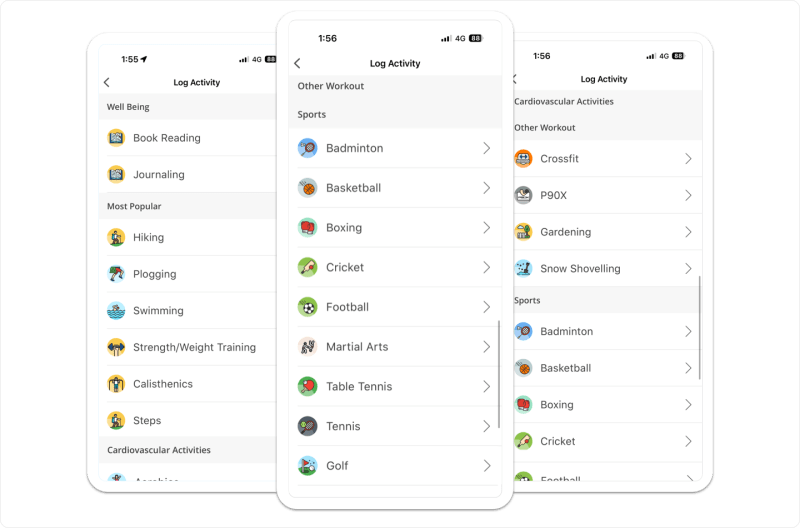
For organizations that want to move beyond one-off sessions, platforms like Vantage Fit make it easy to log and track yoga alongside all other activity types. With 65 activity types supported, every desk stretch and full session counts toward employees’ daily wellness goals.
For instance, in Tata Motors’ Step & Stride Challenge, employees averaged 50 minutes per yoga session across a 6-month program. This shows how a structured wellness platform turns occasional practice into lasting habit.
How does workplace yoga help employees?
For employees, workplace yoga increases energy, reduces stress, and sharpens focus, while improving posture, breathing, morale, and flexibility. In the long run, employees witness better health and stronger work performance.

A 2025 systematic review from Kingston University looked specifically at desk-based workers. Compared with no intervention, yoga was linked to better psychological and physical well-being, lower perceived stress, better sleep, and less musculoskeletal discomfort.
1. Increased Energy
In our daily lives, while trying to balance work and family life, we often become victims of a sedentary lifestyle. Working for 6-8 hours every day decreases blood circulation and creates stress which causes fatigue and lowers energy.
Any physical exercise, even moderate stretching, has been known to increase blood circulation and help produce energy. Through its dynamic movements, yoga increases blood flow throughout the body and helps reduce fatigue.
Moreover, simple office yoga poses and stretches can be done for short periods to achieve the benefits of yoga while working.
2. Reduced Stress
There is no denying the fact that long hours at work can be very stressful. Stress is one of the major factors which affects workplace productivity and employee health. Companies have to face substantial monetary losses because of the ill effects of stress.
Organizations also see an increase in employee absenteeism, turnover, workplace accidents, and decreased productivity. This is why it is imperative for employers and employees alike to adopt ways to reduce stress in the workplace.
Yoga for stress relief at work has measurable effects. A 2017 meta-analysis of 42 randomized trials in Psychoneuroendocrinology found that yoga was associated with lower levels of cortisol, the stress hormone, and a lower resting heart rate. Even a short session during the workday gives employees a reset.
"If you talk about workplace stress, according to the American Institute of Stress, 80% of employees report feeling stress at work, and 60% of absenteeism is associated with stress. Work stress particularly leads to burnout."
— Parwage Alam, Lifestyle & Wellness Expert on Vantage Fit Corporate Wellness Podcast
3. Increased Confidence

Being physically fit and flexible builds a person’s confidence. Yoga exercises and poses make the practitioner more flexible while improving their core body strength and overall health.
Getting stronger and more flexible enhances confidence in one’s own body. Over time, this confidence gradually flows into all aspects of one’s life.
4. Improved Posture
Corporate employees spend most of their time sitting in chairs for long hours, hunched forward to stare at their computers. Though they may not realize it, this unnatural position is detrimental to their health. It can cause back and neck pain further hampering their productivity.
In fact, back pain is one of the main reasons why people take up yoga. Yoga can help relieve pain through its stretches and poses. Its poses stretch major muscle groups and help increase flexibility to prevent stiffness and joint aches.
5. Better Overall Health
Unlike weight training or other exercises that focus on specific muscle groups, yoga combines strength, flexibility, breathing, and relaxation in one practice.

That combination matters for long-term health. Yoga counts as physical activity, it helps employees manage stress, and it eases the aches that come from long hours at a desk.
So, encourage your employees to practice yoga regularly. Healthier employees are less likely to take sick leave and more likely to stay productive at work.
6. Increased Focus
A stressful corporate life with crunching deadlines, heavy workloads, and endless meetings can create mental clutter, hindering your employees’ decision-making. It can impede their ability to concentrate on the tasks at hand.
Yoga poses and meditation can help clear away this mental clutter, helping your employees feel more alert and focused. The breathing and attention practice built into yoga trains people to bring their focus back to the task at hand.
Moreover, yoga and meditation can teach your employees to have a still and focused mind. This is a handy skill to have in a demanding work environment.
7. Improved Breathing

Yoga and meditation make people aware of their breathing. Breathing exercises in yoga, called pranayama, teach employees to inhale and exhale slowly and deeply.
Slow, deep breathing is a simple tool employees can use at their desks when a deadline or a difficult meeting raises their stress. It takes a minute and needs no equipment.
8. Increased Morale
Being stressed at work causes frustration and anger among employees, causing them to be less motivated and less productive. When your employees are physically and mentally unwell, it will hamper their morale.
With its stress reduction properties, yoga is beneficial in elevating your employees’ mood and keeping their anger at bay. It is a great way to improve mental and physical health, helping them be more motivated and confident.
With all its benefits, yoga boosts morale which will help create a harmonious workplace. So, conduct a yoga class for your employees to promote its health benefits and foster a healthy workforce.
9. Increased Creativity
Yoga increases focus and concentration among employees, making them more productive. With increased concentration and better focus, creativity also follows.

A regular yoga practice gives employees space to step back from a problem. That pause, combined with a calmer mind, makes it easier for them to approach tasks creatively and find new solutions.
Put a number on it: Use the free Employee Wellness ROI Calculator to estimate what a yoga and wellness program could return for your team.
10. Better Flexibility
Flexibility helps reduce stiffness and joint discomfort, lowers the risk of strain injuries, and supports better posture.
Yoga poses require a great deal of flexibility. And with lots of practice, it increases your employees’ body flexibility. Also, by increasing flexibility, they learn how to apply it in other aspects of their lives.
They learn how to go with the flow of things and not get worked up about little things. Situations that felt hard and inflexible do not feel so rigid anymore.
11. Better Digestion
A corporate lifestyle usually means sitting all day, often with quick, processed meals. Long hours of sitting and stress can both leave employees feeling sluggish and uncomfortable after eating.

Gentle movement and twisting poses can help employees feel less bloated and more comfortable during the afternoon. Yoga’s stress relief also helps, since stress often shows up as digestive discomfort.
Avoid performing yoga immediately after meals.
12. Lesser Irritability and Aggression
Yoga relaxes the body and calms the mind. A calm person reasons and is not angered by any stimulus. Also, a stress-free and calm person tends to have a positive outlook on life and is less likely to be involved in counterproductive work activities.
Stress-free employees are more likely to be productive than employees who are not. Such employees will function harmoniously and handle incidents of hostility with a calm and rational mind.
This is one more reason why engaging in one or two yoga sessions every week is beneficial to workplace productivity and employee health.
Things to consider before starting a Corporate Yoga Program
Before starting a corporate yoga program, assess employee interest, then hire a qualified instructor who can run short one-on-one check-ins before and after the program. Set a realistic session length and schedule, provide a comfortable space, and recognize regular attendance with incentives. Ask employees with injuries or health conditions to check with their doctor before they start.
Here are some of the basic key points to keep in mind before executing the program.
1. Assess the level of Interest
A yoga program only works if employees want it. Before you plan anything, find out how many people are interested and what format they prefer: onsite or virtual, morning or lunch hour, beginner or mixed level.
A short employee wellness survey gets you those answers in a few days and gives you a baseline to measure against later.
2. Hire a Yoga Expert

The instructor makes or breaks the program. Look for a certified teacher, such as one registered with Yoga Alliance at the RYT-200 level or above, who has experience teaching beginners and adapting poses for people with limited mobility.
If onsite classes aren’t practical, hire a virtual instructor instead. Online sessions let you work with a qualified teacher anywhere, which also makes it easier to include employees across offices and time zones.
3. Personalized Conversation
Group classes are the core of the program, but give each employee a short one-on-one conversation with the instructor at the start and end. The first conversation flags injuries or limits so the instructor can suggest modifications. The second shows employees how far they’ve come, which keeps them motivated.
4. Session Duration
Two months with 20 classes work just fine. But you can modify it as per your budget and other requirements. A 45-minute yoga session is all your employees need to practice the asanas properly together with breathing exercises and meditation.
Schedule sessions at a time when most employees aren’t in the middle of deadlines or meetings. People can’t relax into a practice if they’re worried about pending work.

The goal of yoga in the workplace is to develop optimal health, increase productivity and boost the performance of the entire workforce.
5. Schedule yoga classes at convenient times
Offer yoga classes at times convenient for employees to attend, considering different work schedules and preferences.
6. Provide a comfortable and accessible space
Designate a dedicated space for yoga classes that is well-lit, spacious, and equipped with necessary props.
7. Promote yoga participation
Encourage employee participation in yoga classes through incentives, workshops, and wellness campaigns.
Some employees may hesitate to join because they don't believe yoga will make a real difference. Sharing short, evidence-based posts about its benefits and recognizing employees who attend regularly can gradually build interest.
Additional considerations for remote employees
Remote employees need the same access to yoga as office staff. That means easy-to-join virtual classes, recorded sessions they can follow on their own schedule, and an online space where they can share progress and keep each other accountable.
1. Provide clear instructions and resources for accessing virtual yoga classes.
Ensure remote employees can access the technology and platforms to participate in virtual classes. Provide clear instructions on how to join and participate in these classes.
2. Consider offering pre-recorded yoga sessions.
Create a library of pre-recorded yoga sessions that remote employees can access. This provides flexibility for those with busy schedules or who prefer practicing independently.
3. Encourage peer-to-peer support and accountability.
Establish online communities or forums where remote employees can connect, share their experiences, and motivate each other to maintain their yoga practice.
How do you run a workplace yoga challenge?
A workplace yoga challenge sets a shared goal, such as two yoga sessions a week for four weeks, and lets employees log each practice toward it. Teams, a visible leaderboard, and small rewards keep people coming back, which turns occasional classes into a weekly habit.
Here is how to set one up:
- Pick a simple goal. Use a session count or total yoga minutes, and keep it achievable for beginners. A goal that only regular practitioners can hit will lose most of your workforce in the first week.
- Choose individual or team format. Team challenges spread motivation, because people show up for their teammates. If teams vary in size, score by average rather than total so smaller teams can compete.
- Count every kind of practice. Desk yoga, a lunch-hour class, a virtual session, and a home practice should all count. This keeps the challenge open to remote and hybrid employees.
- Make logging take seconds. If recording a session takes more effort than doing it, participation drops. Use one place for everyone to log.
- Show progress. A leaderboard and a weekly shout-out in your team channel keep the challenge visible after the launch email is forgotten.
- Reward consistency, not difficulty. Recognize streaks and attendance rather than advanced poses, so beginners have as much chance to win as experienced practitioners.
- Review and repeat. Check participation at the end, ask for feedback, and run the next round quarterly or around International Yoga Day on June 21.
Vantage Fit, a corporate wellness app, supports this format. Yoga is one of its 65 loggable activity types, admins can add a custom activity such as “Office Yoga”, and its multi-activity challenges put yoga sessions alongside steps, mindfulness, and other activities on a shared team leaderboard.
Ways to include Yoga in your regular Work Routine
You can fit yoga into the workday with short, simple practices. Take a 10-minute meditation break, do chair or desk yoga poses such as seated twists and shoulder rolls, step outside for fresh-air stretching at lunch, or run quick desk exercises between tasks. None of these require a studio or much time.
Employers have multiple methods to incorporate yoga in their workplaces, but employees have simple options too.
If you are a stressed employee looking for a time-out from work, try to inculcate a yoga break in between work. Take yoga breaks and embrace that relaxation your mind and body seek.
1. Meditation
The one thing you can do anytime and from anywhere. Scheduling meditation breaks is considered a primary task if you want to disconnect yourself from work.

Take a 10-minute meditation break and focus on your breathing and close your eyes. Slowly, practice the various breathing exercises right there, sitting on your desk. If you want a change in place, you can always go to the conference room because it is all quiet in there.
2. Yoga poses
You may feel practicing yoga poses requires a designated space. That is true, but you can do some yoga poses at your desk. Yes. You can try chair yoga poses, which is also known as desk yoga.

Yes, you heard that right. A simple spinal twist while sitting can also contribute to physical wellness. So here let me tell you a little about the sitting exercises.
-
Chair twist: You have to sit straight in your chair with your feet flat on the floor. Put your right hand on the back of your chair. Now bend towards the right while using your left hand to rotate your spine. Now, try the same with the other side for maintaining balance.
-
Heart opener: Sit at the edge of your chair while keeping your feet on the floor. Taking your hands behind your back, intermingle them. Now inhale, pushing your knuckles towards the floor and chest upwards.
3. Out-of-workspace yoga asanas
As we know, yoga is all about asanas and meditation, but we fail to realize that there is more to it. Taking a 30-minute time off work to go out someplace and inhale some fresh air can be a part of meditation.

If the place is some nearby park, one can practice breathing exercises, and some easy yoga poses there. But taking this break at untimely hours is sort of a hassle. Therefore, use your lunch break and fully utilize it.
Step off your desk, go out somewhere peaceful and try some simple yoga poses before eating your food.
4. Other Desk Exercises
We spend half of our days at work, sitting in a chair and staring at that computer screen. Even if concentration in work is essential, it can be arduous for our bodies.
So, here we bring you the extended version of some light yoga exercises, which will take less than 2 minutes.
Also, it does not require us to move away from our desks. This is why these are also known as desk exercises which we have already mentioned above.
1. Shoulder rolls
- Sit straight.
- Lift your right shoulder, bringing it close to the ear.
- Roll your shoulder around, dropping it away from the ear.
- Do the same with your left shoulder.
- Repeat it three times alternatively.
- Lift both shoulders near your ears.
- Take a deep breath in.
- Now exhale, dropping your shoulders away from the ear.
Note: Repeat this five times.
2. Chest stretch
- Sit on the edge of the chair.
- Intertwine the fingers behind you, joining your palms together.
- Tilt forward with the arms held high in the same pose. You will feel the stress on the chest.
- Now, take a deep breath while lifting your chest.
- Release the breath and drop your shoulders.
Note: Repeat this five times.
3. Neck exercise
- Sit tall without the chair’s back support.
- Lift your head a little.
- Drop the right ear on the right shoulder.
- Breathe in, breathe out. You will feel the stretch on the left side of your neck.
- Do the same on the left side.
4. Twisting arms
- Sit straight without chair support.
- Extend your arms out in front on the shoulder level.
- Stick the right elbow into the crook of your left arm.
- Wrap your forearms with the back of your hands facing each other.
- Try to place your left fingers on the right palm.
- Take a deep breath.
- Return to normal.
- Repeat the same with the opposite side.
Related reading: 20 Desk Exercises That Help To Boost Employee Health
How does yoga make employees happier at work?

Yoga makes employees happier at work by lowering stress, easing physical discomfort, and giving them a sense of calm they can return to on a hard day. In a 2012 randomized trial published in Occupational Medicine, British government employees who took part in a workplace yoga program reported less stress and back pain and better psychological well-being than a control group.
Those effects build on each other. Less pain means fewer distractions during the day, and lower stress makes it easier to handle setbacks without frustration. Over time, employees who practice regularly tend to feel more patient, more aware of how they’re feeling, and better able to cope with pressure.
Physical and mental health are connected, so a practice that helps one usually helps the other. That’s what makes yoga a practical addition to a workplace wellness program.
Bottom Line
Yoga gives employers a low-cost way to improve employee health and work performance at the same time. The evidence is strongest for stress and back pain, two of the most common reasons people struggle at work or miss it.
Start small. Survey interest, bring in a qualified instructor, and offer a few sessions a week that fit around the workday. Then run a team yoga challenge to turn those sessions into a habit. Short, regular practice is enough for employees to start feeling the difference.
Frequently Asked Questions
How does yoga help in the workplace?
Promoting yoga in the workplace helps reduce absenteeism and presenteeism, increase employee morale and productivity, and create a positive work environment.
Why is yoga important for corporate life?
Yoga is important for corporate life as it helps employees maintain a healthy work-life balance. With the power of yoga, they can also deliver better work performance and avoid the feeling of burnout.
How can yoga help productivity?
Regular yoga practice tends to improve mindfulness, develop the ability to handle stress better, and maintain a calm mind when required. This in turn helps employees focus more on their work quality, increasing their productivity.
How much yoga do employees need at work?
A short, regular practice is a good place to start. Many teams begin with 10 to 20 minutes a day, or one to two 45-minute sessions a week, and build from there.
Can employees do yoga at their desk?
Yes. Desk or chair yoga, such as seated spinal twists, shoulder rolls, and chest stretches, lets employees practice in just a few minutes without leaving their workspace.
What are corporate yoga classes?
Corporate yoga classes are yoga sessions an employer offers employees, onsite or virtually, during or around the workday. A qualified instructor leads them, with a focus on stress relief, posture, and stretches suited to desk-based work.
What is the ideal duration of a yoga break session at work?
A desk yoga break can take as little as 2 to 10 minutes of stretches and breathing. A full class with poses, breathing, and meditation works well at about 45 minutes, scheduled at lunch or outside peak hours.