A virtual run is a race you complete on your own route, at your own pace, within a set time window. You run the distance anywhere, track it with a running app or watch, submit your result to the organizer, and usually receive a medal or shirt in return.
Running is a terrific exercise for employees, and it doesn’t take much. Even 5 to 10 minutes a day is associated with markedly lower risks of death from all causes and cardiovascular disease, according to a large study in the Journal of the American College of Cardiology.
We all know stress and anxiety are pervasive, especially in the workplace, and running is one great example of cardio exercise that helps employees cope.
Virtual runs took off in 2020, when the pandemic cancelled mass races, and their appeal is simple: anyone can join from anywhere.
That flexibility makes them a natural fit for workplaces. The sections below walk through how a virtual run works, where the idea came from, and five ways employees benefit.
Key Takeaways
- Virtual runs let employees race from anywhere, which removes travel, venues and fixed start times.
- Tracking matters, since many organizers ask for GPS app or watch data as proof before sending a medal.
- Mass virtual racing arrived in 2020, when 37,966 people took part in the remote London Marathon in a single day.
- Charity runs give the activity a purpose, from mental health awareness to fundraising.
- Employees gain the mood benefits of regular running, which suits a workforce dealing with stress and anxiety.
- Workplaces can run one as a step-based E-Marathon or a GPS-tracked race, depending on how many keen runners they have.
Read our blog on: 9 Terrific Tips To Start Running To Work
How Does a Virtual Run Work?
Most virtual runs follow the same steps: register online, run the distance on any route during the event window, record it with a GPS app or watch, and upload the result. Rules on treadmill runs vary by organizer.
This format suits anyone who wants to stay fit and active all year round.
Virtual runs don’t have to be only about running; they can also support a social cause. For example:
- Virtual Runs for creating awareness about Breast Cancer
- Running for donation/charity
- Creating awareness about Mental Health
- Creating awareness about the importance of Physical Fitness
Runners can also share their results online with fellow athletes, where they find people with shared interests and a sense of encouragement, motivation and inspiration.
Suggested Read :How Sleep Deprivation Affects Work Performance
How did it start?
Virtual races have older roots. Years ago, high school runners mailed in their times to a national postal competition before championship meets, and some race directors say virtual races grew from runners’ requests to join physical races from afar.
On 31 August 2008, Nike’s Human Race 10K let UK runners outside London take part in a “Virtual Race”, tracking their run with Nike+.
Let’s just say it and be done with it. Racing hurts. But here’s another truth: having put in the effort to prepare for a race and then not giving it your all hurts even more. The first kind of hurt goes away in hours or a day. The second kind of hurt can last a lifetime.
- Larry Shapiro, author of Zen and the Art of Running.
Be confident in the work you did to prepare for the race. Take a look back at your training logs to remind yourself that you’ve done everything possible to prepare. The race is the fun part, where you get to see the hard work pay off. Enjoy it.
-Desiree Linden, U.S. Olympic marathon star
Things To Know Before Doing A Virtual Run
For any race, training is essential. Whether the distance is long or short, employees need to prepare, though a 5K needs less training than a half or full marathon.
It also helps to plan the run in advance: map the route, decide how to track it, and work out where to get snacks and water along the way.
Here are some things employees may want to carry on a longer virtual run:
- Extra clothes
- Small Lunch
- Keys, credit cards, and other essentials
- Lightweight arm sleeves
- Waterproof jacket (In case it rains)
Tips for packing food :
- Pack a light snack, such as berries wrapped in a paper towel, and secure it with a rubber band so it stays in place.
- Keep bananas or other fruit in a backpack pocket, wrapped in cling film so they don’t mark your clothes.
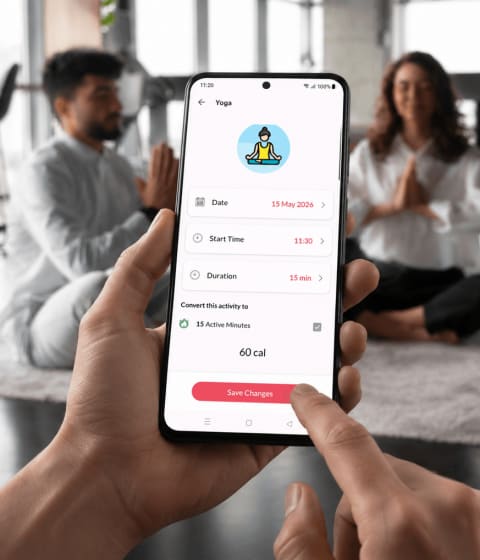
For workplaces, Vantage Fit can turn a virtual run into a team-wide event. Its E-Marathon converts everyday steps into race distance on a shared leaderboard, at 1,000 steps per kilometer. For keen runners, the Vantage Fit team can set up a GPS-tracked Marathon Event, from 5K to a full marathon.
Distance is no barrier: in the Spirit of Wipro Global Step-a-thon, 550 active users logged more than 3 million steps, part of a wellbeing program that reached employees in 30+ countries.

Running for a Good Cause
Virtual runs can be done to raise money or support a good cause. Like many physical races, many virtual races donate to charities. Runners can register online and check the race details before they start.
It is a simple way to give back while staying active.
A great example is running for physical and mental health awareness.
These runs support a healthy lifestyle and encourage people to stay fit. They also get people talking openly about mental health and why it matters at every stage of life, from childhood to adulthood.
As the CDC describes it, mental health includes our emotional, psychological and social well-being, and it is “a state of well-being that enables us to cope with the stresses of life, realize our abilities, learn well and work well.”
There is something magical about running; after a certain distance, it transcends the body. Then a bit further, it transcends the mind. A bit further yet, and what you have before you, laid bare, is the soul.
-Kristin Armstrong
I hated every minute of training, but I said, ‘Don’t quit. Suffer now and live the rest of your life as a champion.’
-Muhammad Ali
As every runner knows, running is about more than just putting one foot in front of the other; it is about our lifestyle and who we are
-Joan Benoit Samuelson
How Virtual Runs Grew During Covid-19
In 2020, the pandemic forced race organizers to rethink their events. The Boston Marathon was cancelled for the first time in its 124-year history and replaced with a virtual event: runners had to finish 26.2 miles within six hours and send proof of their time to receive a medal.
Later that year, 37,966 people took part in the remote London Marathon, setting a Guinness World Record for the most users to run a remote marathon in 24 hours.
Virtual Runs Can Be Creative
Runners may race on a treadmill at home, while others head out into the streets. They can get creative, too, picking a favorite route or a new one to explore.
They can set their own pace as well. Where the race rules allow it, runners can even break a long distance into shorter runs to avoid overstraining.
Running taught me valuable lessons. In cross-country competition, training counted more than intrinsic ability, and I could compensate for a lack of natural aptitude with diligence and discipline. I applied this in everything I did
-Nelson Mandela
How Can Employees Benefit While Participating In A Virtual Run?
Virtual runs have excellent benefits for employees. Physical activity is highly beneficial for symptoms of depression, anxiety and distress, according to a 2023 review of more than 1,000 trials. And when employees feel better, they bring more energy and focus to their work.
Here are five ways employees benefit:
1. More Flexibility:
Unlike traditional running, where the individual has to participate physically in an outdoor setting, virtual races offer flexibility as employees can complete the run outdoors or indoors.
2. Cost efficiency:
The costs associated with virtual runs are less compared to traditional runs as there are no travel costs. In standard runs, people have to travel to a particular place to take part.
Employees also don’t have to deal with crowds at the start line.
3. Boosts performance:
Employees have a lot of work pressure, and it becomes pretty challenging to work. The mind gets clogged, and negative thoughts might pop up.
It is hard to focus when the mind is elsewhere. Fitness programs like virtual runs can help keep energy levels up and lift employees’ mood, and people who feel good tend to do better work.
Health and nutrition coach LeAnn Smith explains why movement is non-negotiable for the body, and by extension, for performance:
"It is not intended to be sedentary. It is not intended to sit. The human body in order for it to actually function properly must move, which is why we are seeing people starting to have chronic back issues, shoulders issues, neck issues, hip issues."
— LeAnn Smith, Health & Nutrition Coach, Vibrant Life Source | Listen to the full episode
Read more on: How mindfulness exercises boost well-being at work
4. Coping with stress:
Work deadlines are a common source of stress, and less stress leaves employees freer to focus, which supports productivity.
Regular exercise helps here. Taking part in a virtual run can improve employees’ state of mind and make stressful work easier to handle.
5. Saves Time:
Traditional races mean traveling from home to the starting line. With a virtual run, employees can start wherever they are, so there is no transport to arrange.
This saves both time and money, leaving employees more time for work and for life outside it.
Fitting a healthy habit around their work is the cherry on the cake.
Some Virtual Run Quotes That Can Help Employees To Live A Healthy Lifestyle
That’s the thing about running: your greatest runs are rarely measured by racing success. They are moments in time when running allows you to see how wonderful your life is
-Kara Goucher, Olympic long-distance runner
If you run, you are a runner. It doesn’t matter how fast or how far.
-John Bingham
Conclusion
Virtual runs are a terrific alternative to traditional running. Runners can run a virtual race on their own. They don’t have to go anywhere but step out of their front door.
Unlike traditional running, there is no specific path or location required. Virtual runs are cost-effective, flexible, and a productive way to keep employees moving.
If your team is ready to make running part of your wellness culture, Vantage Fit’s virtual marathon challenges can help you build, track and reward the experience.
Frequently Asked Questions
How do you prove you finished a virtual run?
Most organizers ask you to record the run with a GPS app or watch and upload the result. The USAF Marathon, for example, encourages a GPS-tracking app that confirms your mileage and time.
Do you get a medal for a virtual run?
Usually, yes. Many virtual races send finishers a medal and shirt once results are in. USAF Marathon virtual athletes receive an official race shirt and finisher’s medal.
Can you do a virtual run on a treadmill?
It depends on the organizer. Some, such as the USAF Marathon, allow treadmill runs, so check each race’s rules before you start.
How long do you have to finish a virtual run?
Each race sets its own time window, and some allow extra days to upload results. NYRR virtual races give runners three days after the window closes.
How can a company host a virtual run for employees?
Choose a distance and a date window, sign employees up through a wellness app that tracks steps or GPS runs, and share a leaderboard so teams can follow progress. Step-based formats let walkers join in too.