












What tax benefits can companies get from wellness programs?

Wellness programs do more than keep employees healthy. When designed correctly, they can also help reduce a company’s tax burden. Employers can access these tax benefits only when their wellness programs comply with specific IRS rules.
Some programs may qualify as medical care under IRS Section 213(d). Some may count as tax-free fringe benefits under Section 132. Employers can also offer wellness programs through pre-tax accounts such as HSAs, FSAs, or HRAs. These options help companies save on income tax and payroll tax.
Here’s how it works:
If a benefit qualifies, the company can deduct its cost as a business expense. If the benefit is also tax-free for employees, the company can save on payroll taxes as well. This makes a wellness program more cost-effective and more valuable.
This content is for informational purposes only and does not constitute tax or legal advice. Employers should consult a qualified tax advisor before implementing any wellness programs.
In this blog, you’ll learn what qualifies, what the IRS expects, and how to build a wellness program that is good for employees and smart for tax savings.
Why do wellness programs come with tax advantages for employers?
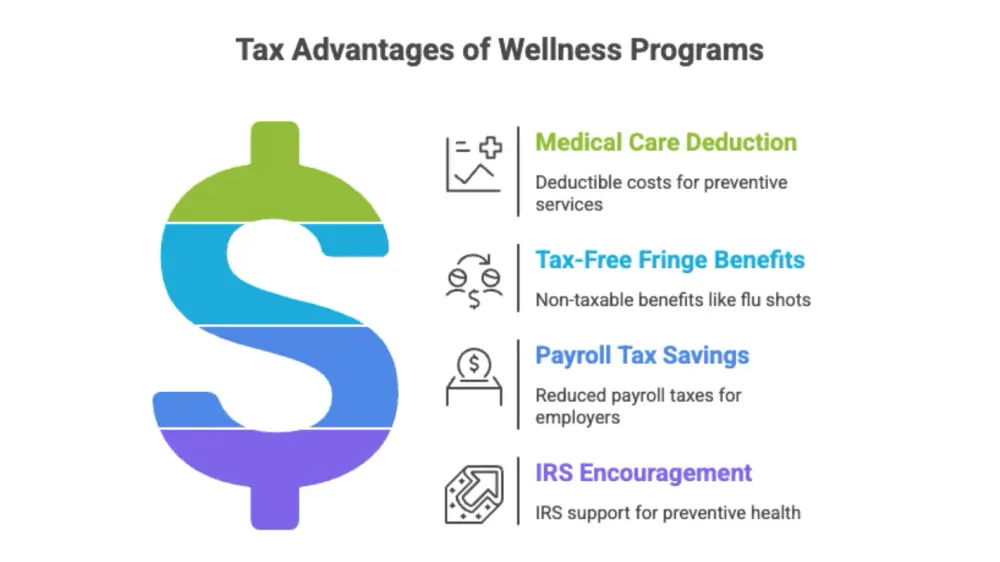
The IRS wants companies to support preventive health. So, when wellness programs follow the rules, they can offer tax savings.
Preventive care, such as screenings, coaching, or mental health support, is often counted as medical care under Section 213(d). If these services are part of the company’s health plan, the company may deduct the cost.
Some benefits, such as flu shots, health screenings, or on-site fitness areas, may qualify as tax-free fringe benefits under Section 132. If they meet IRS rules, tax authorities do not treat them as taxable income to employees.
Advantages also help the company save on payroll taxes. These tax rules give companies strong reasons to invest in wellness programs. But employers must know which programs qualify and how to offer them correctly.
What types of wellness programs qualify for tax benefits?

Not all wellness programs offer tax savings. The IRS only allows benefits that fit its medical care or fringe benefit rules. These programs must have a clear purpose and follow specific compliance requirements.
To qualify as medical care under Section 213(d), the program must help diagnose, treat, or prevent a health problem.
Examples include health risk assessments, smoking cessation, weight loss programs for obesity or diabetes, and condition management services. These programs often need to be part of a group health plan or offered through HSAs, HRAs, or FSAs.
Some programs may qualify as fringe benefits under Section 132. These include on-site fitness areas, flu shot clinics, and low-cost wellness events open to all employees. They stay tax-free only if they meet all IRS rules.
General perks like gym reimbursements, gift cards, or wellness stipends usually do not qualify. If they are not tied to a medical plan or an approved tax structure, the IRS may treat them as taxable income.
Understanding what qualifies is the first step. The next step is learning how to offer these benefits in a simple and compliant way.
Tax-deductible wellness expenses that companies can claim
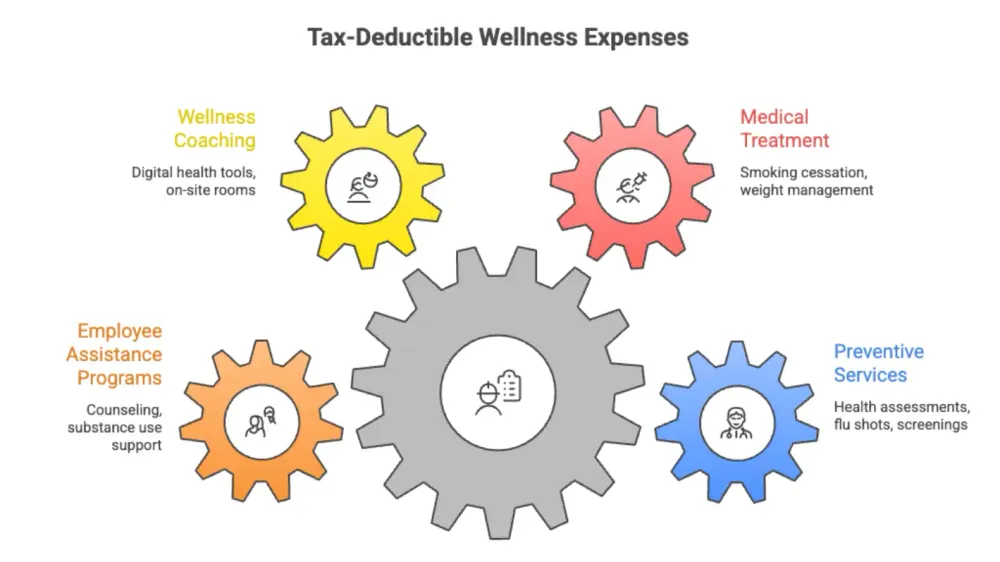
Some wellness benefits help improve employee health and reduce the company’s taxable income. The IRS allows employers to deduct certain expenses, but only when they qualify as medical care under Section 213(d). This means the service must diagnose, treat, or prevent a medical condition.
General fitness perks do not qualify unless they have a clear medical purpose and are offered under a formal plan.
Preventive services usually qualify. These include health assessments, flu shots, blood pressure checks, and screenings for conditions such as diabetes. Smoking cessation and weight management programs may also be eligible if they treat a medical condition.
Employers may also deduct costs for wellness coaching or digital health tools if they help manage a health risk and are part of a formal benefit plan. Even on-site wellness rooms may count if they are used for health-related purposes rather than recreational activities.
Employee Assistance Programs (EAPs) may also qualify. If the EAP provides counseling, support for substance use, or referrals to medical professionals, it is counted as medical care.
To remain compliant, companies should link each wellness expense to a medical purpose and maintain clear records. Programs should be meaningful, organized, and aligned with IRS rules.
Next, let’s see which wellness expenses do not qualify.
Wellness expenses that do not qualify for tax benefits

Many standard wellness perks do not qualify for tax savings. These perks may be treated as taxable income for employees. They typically include wellness activities that do not diagnose, treat, or prevent medical conditions.
Examples include gym memberships, fitness class fees, wellness stipends, or gift cards. Even though they promote healthy habits, the IRS does not count them as medical care unless they are prescribed for a specific condition and offered through a formal plan.
Team wellness events, massages, or fun challenges also do not qualify. Employees may enjoy them, but companies must be careful when offering them for tax reasons.
If a benefit does not meet the medical care or fringe benefit rules, it may be taxable to employees and not deductible to the business. It is essential to review each program before offering it.
Next, let us see how companies can use IRS structures to offer tax-friendly wellness benefits.
Employer tax incentive structures
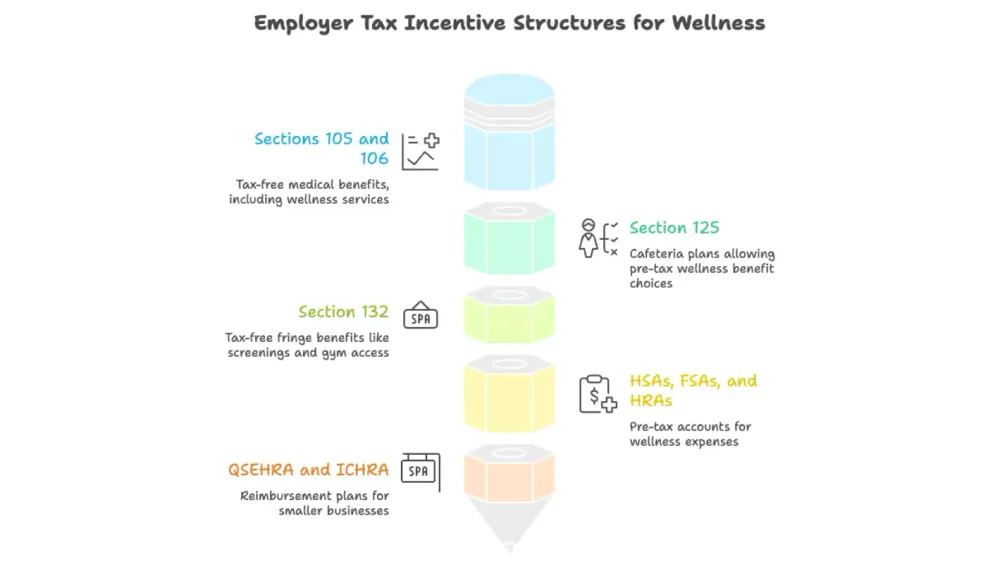
These IRS-approved benefit structures help companies save money while offering wellness support. They work in different ways, but all help make wellness programs more tax friendly.
1. Sections 105 and 106: Employer-provided medical benefits
These rules let employers offer medical care as a tax-free benefit. If wellness services are part of the company’s health plan, they may qualify. The company can deduct the cost, and employees do not have to pay tax on it.
2. Section 125: Cafeteria plans
These plans let employees choose benefits and pay for some of them with pre-tax money. When wellness services are part of this plan, both the company and employees save taxes.
3. Section 132: Tax-free fringe benefits
These include low-cost wellness perks such as basic screenings, on-site flu shots, and access to a company gym. If offered correctly, they are not taxed for employees and can be deducted by the business.
4. HSAs, FSAs, and HRAs: Pre-tax wellness spending
These accounts let employees pay for eligible wellness expenses with pre-tax money. Employer contributions are also tax-free. Eligible services include weight management, mental health support, and chronic condition coaching when tied to medical care.
5. QSEHRA and ICHRA: Wellness reimbursements for smaller teams
These plans help small and mid-sized businesses offer tax-free wellness reimbursements without sponsoring a traditional group health plan. Employers can reimburse employees for eligible expenses, and the reimbursements stay tax-free when the rules are followed.
These structures help companies match their wellness programs with a strong tax strategy. When used well, they lower costs and support employee health.
Pay roll tax savings from pre-tax wellness benefits
Wellness programs do more than reduce income tax; they can also lower payroll taxes.
When employees pay for eligible wellness services with pre-tax dollars, their taxable wages are reduced. This means the company pays less in payroll taxes, such as Social Security and Medicare (FICA). Small savings add up across many employees.
Pre-tax accounts like HSAs, FSAs, and HRAs help even more. Employer contributions to these accounts are not taxed, which saves both the employer and the employee money.
These payroll savings add extra value to offering wellness programs in a tax-friendly way. Next, we look at how companies can make the most of these savings.
Best practices to maximize tax benefits
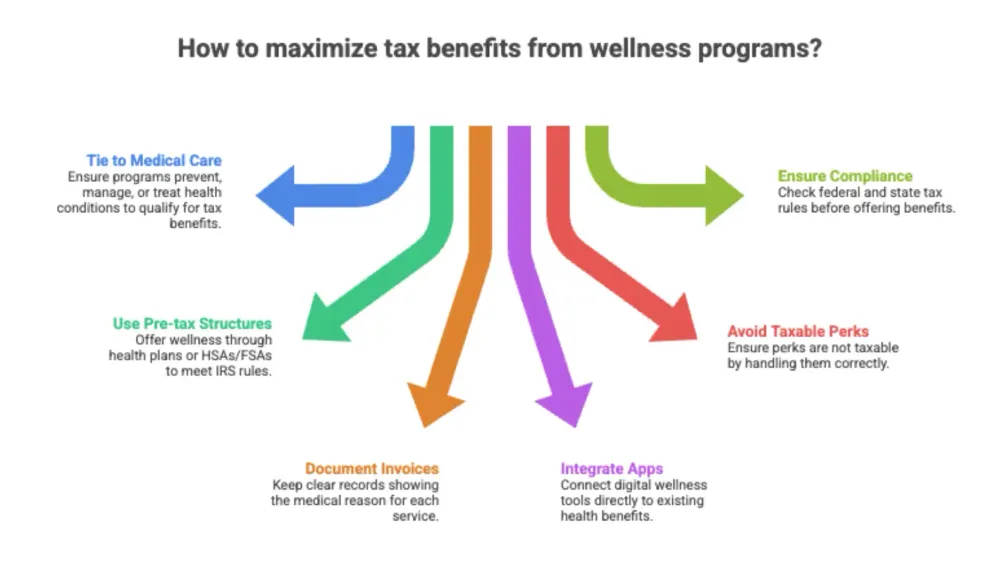
1. Tie wellness offerings to IRS-recognized medical care
Programs should prevent, manage, or treat health conditions.
2. Use pre-tax benefit structures instead of taxable reimbursements
Offer wellness through health plans, cafeteria plans, or HSAs/FSAs to meet IRS rules.
3. Document vendor invoices and program details for medical purposes
Keep clear records showing the medical reason for each service.
4. Integrate wellness apps into your group health plan
Connect digital wellness tools directly to existing health benefits.
5. Avoid offering taxable perks as “wellness”
Gift cards, stipends, or recreational perks may become taxable if not handled correctly.
6. Ensure compliance with federal and state tax rules
Check how different tax laws treat wellness benefits before offering them.
Frequently Asked Questions
1. What are the eligibility criteria for claiming tax benefits?
The program must qualify as medical care, be part of a formal plan, or meet IRS rules for fringe or pre-tax benefits.
2. What documentation does the IRS require to prove wellness is medical care?
Invoices, program descriptions, provider information, and documentation showing that the service prevents, manages, or treats a medical condition.
3. Are wellness programs tax-deductible?
Yes, if they follow IRS rules for medical care and are offered through a compliant structure.
4. Are wellness platforms and mobile apps tax-deductible?
They can be, if they are tied to a health plan and used to manage a medical condition.
5. Are wellness stipends tax-free or taxable?
They are usually taxable unless they are part of a qualified pre-tax or reimbursement plan.


