Employee engagement in wellness programs means more than signing up. It means employees choose to participate and stay engaged long enough to build healthier habits. Getting there, however, can be difficult. In a Integrated Benefits Institute survey of more than 900 employers and employees, only half of employees (49.8%) knew their employer’s wellness program existed, and 64% of those used it.
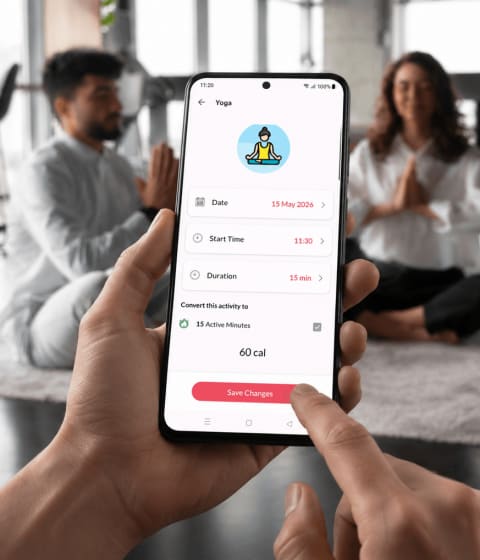
Closing that gap starts with understanding who is actually participating. In Vantage Fit, for example, activities such as steps, workouts, meals, mindfulness, and challenges contribute to an overall participation rate. This gives HR teams a broader view of engagement: not just who signed up, but who is actively taking part.
So what separates real engagement from simple participation?
Implementing wellness programs may seem straightforward, but several key aspects influence their effectiveness and success. In this blog, I will focus on the role of employee engagement in the success of wellness programs.
Consider the two scenarios below:
In one company, employees participate in wellness screenings mainly to avoid higher insurance premiums. This is a classic case of limited participation. They completed forms but made no real lifestyle changes.
In contrast, at another company, employees voluntarily participated in fitness challenges, attended nutrition workshops, and consistently tracked their progress. In short, the participants genuinely invested in their health.
The latter group experienced genuine improvements in well-being and morale. This proves that engagement, not just participation in wellness programs, makes a difference.
Higher engagement in wellness programs not only boosts employee health but also fosters a positive wellness culture. Only then, it can pave the path for an organization to be successful. Engagement shows up in attendance, too. Gallup’s 2024 meta-analysis found that teams in the top quartile of employee engagement have 78% lower absenteeism than teams in the bottom quartile.
The next question in line here is: how can you increase employee engagement in wellness programs? And what does a true wellness program engagement look like? Keep reading to find out.
Key Takeaways
- Engagement is not participation. Participation means signing up, while engagement means employees choose to take part and build habits that last, which is where real well-being gains come from.
- Awareness is the first gap. Only 49.8% of employees know their employer's wellness program exists, according to an Integrated Benefits Institute survey, so promoting a program matters as much as designing it.
- Different employees need different hooks. Enthusiasts respond to progress-based rewards, hesitant employees to easy entry points like team challenges, and skeptics to transparent communication and visible benefits.
- Make wellness a habit, not an event. Weekly rituals, leaders who take part, quarterly feedback audits, and rewards for progress rather than logins keep engagement going over time.
What Does True Wellness Program Engagement Look Like?
True wellness program engagement looks like employees joining voluntarily, returning week after week, and turning activities into lasting habits. It rarely happens all at once. Employees move through stages, from not thinking about change to maintaining new habits, an idea drawn from Prochaska and DiClemente’s stages of change model. Engagement grows when programs support each stage.
In practice, this means you will see participants at very different points at the same time, like:
-
Not thinking about change yet
-
Considering change
-
Preparing to act
-
Taking action to change
-
Maintaining new habits long-term
For instance, Anita is just starting her wellness journey. She’s standing at the base of a mountain (her wellness goal), unsure of the path ahead. She is unsure and hesitant to carry out the tasks in front of her. Over time, with support and encouragement, she begins to climb. She faces setbacks (loses motivation to continue) but steadily moves upward. Eventually, Anita reaches the summit, where healthy habits have become second nature and part of her daily routine.
So, you see, you must support your employees through their different phases while running a wellness program. Some may be reluctant to change, while others may be preparing to do so. Offer education, motivation, and resources that are essential to maximize engagement and help them maintain healthy habits that last.

In a 2019 randomized trial at BJ's Wholesale Club, published in JAMA, 69.2% of employees at worksites with a wellness program reported actively managing their weight after 18 months, compared with 54.7% at worksites without one. Clinical health measures had not changed yet, a reminder that habits take time.
Head over to the next section to find out the different “personas” you may come across in your organization.
Understanding Your Workforce: Who Are You Trying to Engage In Wellness Programs?
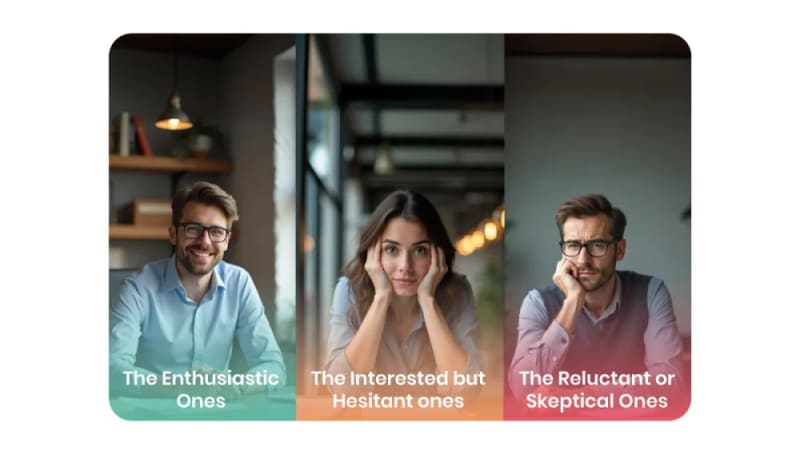
Most workforces include three kinds of wellness program participants: enthusiastic employees who join early and need help staying committed, interested but hesitant employees who need easy ways in, and reluctant or skeptical employees who need trust and visible proof of benefits. Each group responds to a different engagement approach, so one generic campaign rarely reaches everyone.
Human behavior is wonderfully complex. Each person brings their own mix of motivations, experiences, and attitudes to the workplace. This complexity means that when HR introduces wellness programs, they encounter a wide spectrum of responses and engagement styles.
Recognizing these distinct personas helps HR design engagement strategies that resonate with most of the workforce.
Below is a breakdown of the different types of employees HR may encounter when rolling out a wellness program.
1. The Enthusiastic Ones
Motivated, goal-driven participants who lead wellness efforts. Their challenge? Maintaining long-term commitment. For them, providing progress-based incentives and leadership recognition helps maintain their momentum.
2. The Interested but Hesitant ones
This crowd is curious and open to wellness programs. Their challenge? They need encouragement to engage fully. They may face barriers such as time constraints or uncertainty about the program’s value. Offering flexible options, simple entry points, and social incentives, such as team challenges, can help convert their interest into active participation.
3. The Reluctant or Skeptical Ones
These employees are doubtful about wellness programs or resistant to change. They are indifferent and carry negative notions about almost anything new. They may question the relevance or fear additional workload.
How to increase engagement for this group?
-
Build trust through transparent communication
-
Demonstrate tangible benefits
-
Provide low-pressure participation incentives
Understanding these personas enables HR and wellness teams to design inclusive, practical strategies that meet employees where they are, fostering a culture of wellness that resonates across diverse motivation levels.
At the end of the day, garnering engagement is a hit-and-miss situation.
"Happiness is personal."
— Pamela Gail Johnson, Founder, Society of Happy People | Listen to the full episode
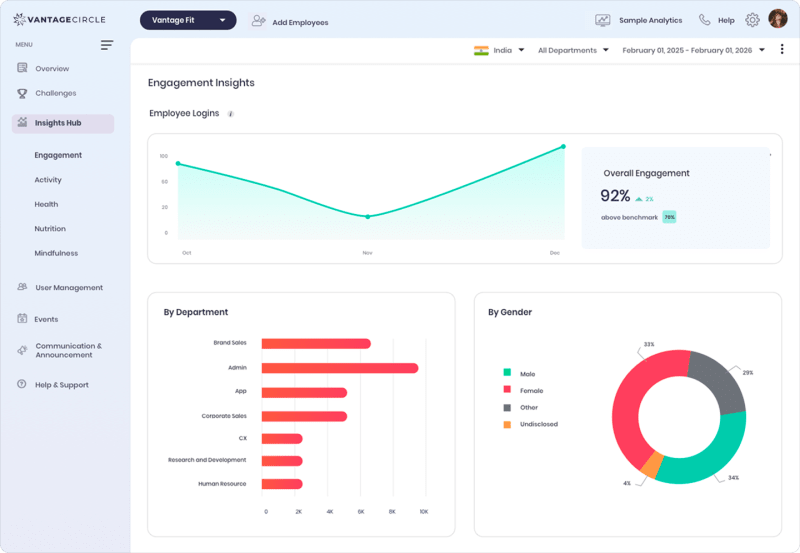
Lasting employee engagement in wellness programs requires more than fancy initiatives. It depends on continuous visibility and interaction. This is where Vantage Fit comes in.
The platform helps organizations track participation through engagement analytics. While features like real-time leaderboards and a social community feed foster a sense of community and friendly competition.
This combination of data and social motivation enables HR teams to understand what drives participation. It is how they can continue to optimize their wellness strategies. In IBS Software’s 28-day “March to Fitness” challenge on Vantage Fit, for example, more than 500 employees took part and the engagement rate reached 88%.
The Vantage Fit Wellness Engagement Framework
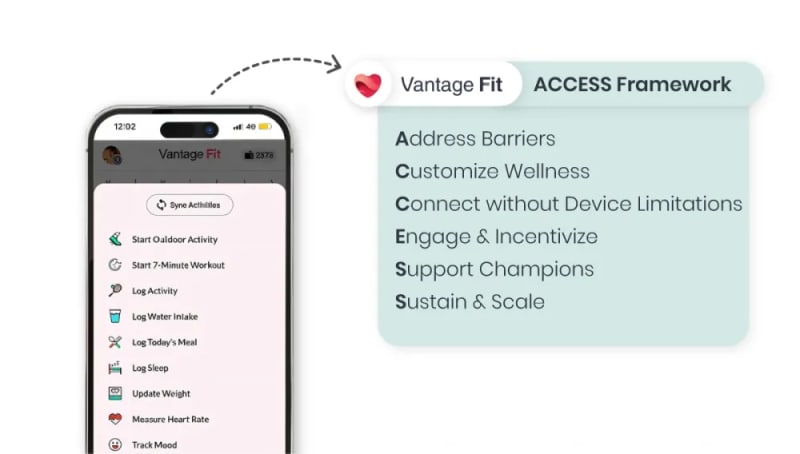
Designing a strategy that drives meaningful engagement in wellness programs can be challenging. That’s where the ACCESS Framework shines. It is a practical approach that Vantage Fit built to overcome the common hurdles in wellness program adoption.
Here is the breakdown of the Vantage Fit ACCESS Framework:
ACCESS stands for:
Address Barriers: From device-dependency to poor awareness and generic offerings, identifying and removing blockers is key to boosting adoption.
Customize Wellness: No one-size-fits-all here. Personalizing wellness plans based on employees’ interests, like mental health, fitness, or nutrition, drives meaningful involvement.
Connect without Device Limitations: Whether employees have wearables or just smartphones, inclusivity ensures no one is left out.
Engage & Incentivize: Using gamification, multichannel marketing, and data-driven rewards keeps employees interested and motivated.
Support Champions: Empower internal wellness advocates to drive participation and build a culture of wellness from within.
Sustain & Scale: A structured wellness calendar and feedback loops help embed wellness into your organizational DNA for long-term impact.
Integrating these principles enables companies to move beyond surface-level participation and foster real engagement. This way, they can nurture a workplace where wellness becomes a shared mission, not just a checkbox.
A Global Construction company witnessed 89% of Engagement in a Walkathon event that Vantage Fit hosted.
10 Wellness Program Engagement Ideas to Build a Lasting Workplace Wellness Culture
1. Create Wellness Rituals, Not Just Events
Help build recurring habits throughout the work week. Introduce breathing exercises before meetings or observe “Wellness Wednesdays” with flexible hours.
Why it works:
Creating such wellness rituals is not just a matter of filling a check box. Ongoing rituals foster consistency and make wellness part of the work culture.
Pro tip:
Start with one ritual per week and scale based on feedback.
2. Form a Cross-Functional Wellness Committee
Select volunteers across departments to co-create and promote wellness initiatives together with HR.
Why it works:
When employees co-own wellness, their engagement drive will be more authentic. In short, empowered employees play a key role in generating engagement in wellness programs.
Pro tip:
Rotate committee members quarterly to keep the ideas fresh and inclusive.
3. Introduce Personalized Wellness Platforms
Wellness platforms allow employees to set personalized physical health goals, track progress, and receive AI-driven nudges. Meanwhile, HR administrators receive real-time data of their employees’ physical activity status and health quality.
Why it works:
Customized experiences increase relevance and long-term engagement in wellness programs.
Pro tip:
Choose platforms with gamification, habit-building tools, and mental wellness features (like Vantage Fit).
4. Make Mental Health a Wellness Cornerstone
Mental health issues are a growing epidemic in the workplace. Include therapy access, emotional well-being check-ins, workshops to tackle burnout, access to mental health resources, and stress-relief tools.
Why it works:
Mental health is a top priority for employees, and it has a direct impact on retention.
Pro tip:
Train managers to recognize early signs of burnout and conduct empathetic check-ins.
5. Diversify Wellness Offerings Beyond Fitness
Offer wellness options for emotional, social, and financial well-being. This can include journaling sessions, budgeting webinars, or group cooking classes.
Why it works:
Employees have diverse wellness needs. Diversifying implies a broad approach that ensures that everyone finds something that suits them.
Pro tip:
Utilize monthly themes (e.g., “Digital Detox July”, “Stress-Free September”) to highlight various wellness dimensions.
6. Incentivize Progress, Not Just Logins
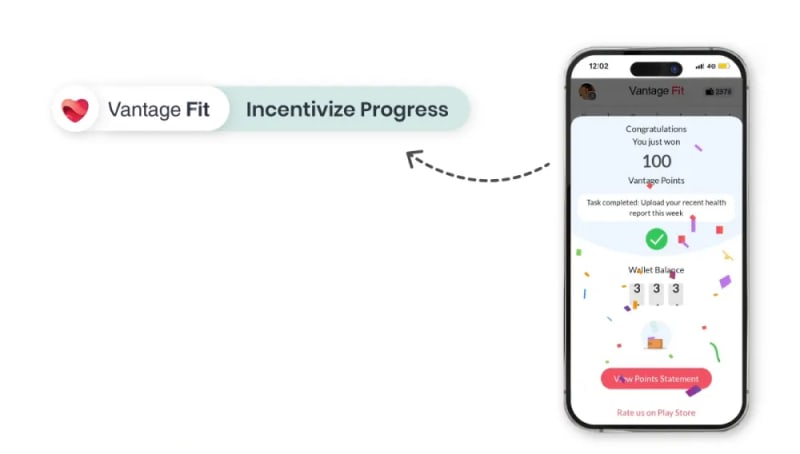
Reward employees for consistency and behavioral improvement. Showing up is one thing, but making progress is what matters most. For instance, some employees have developed the habit of healthy eating. On learning their journey, appreciate and reward them to further keep them engaged in their wellness game.
Why it works:
Meaningful rewards reinforce habit formation and show that effort is valued.
Pro tip:
Offer practical incentives, such as wellness days off, fitness subscriptions, or therapy reimbursements.
7. Run Quarterly Wellness Audits
Collect feedback on your program’s impact every 3 months and act on the suggestions. Taking the input may be a tough responsibility as the responses may include criticism about the HR’s initiative. Always remember that staying unbiased is key to building a flawless wellness program.
Why it works:
When employees feel heard, they’re more likely to stay engaged and even advocate for the program.
Pro tip:
Share “You asked, we did” updates to gain their trust.
8. Have Leaders Model Wellness Behavior
Encourage company leadership to participate in challenges. Share wellness stories and genuinely support work-life balance.
Why it works:
The workforce is known to mirror leadership behavior. Visibility from the top helps build trust among participating employees. With that, they find the zeal to engage and participate in wellness programs.
Pro tip:
Have executives host monthly “Wellness AMAs” or share their wellness goals on the official communication channel.
9. Gamify Purpose-Driven Team Challenges
Run challenges (such as hydration, sleep, or mindfulness) where each team wins and contributes to a shared charity or community goal.
Why it works:
Friendly competition and a social purpose lead to higher motivation and emotional buy-in. Gamification, with the added twist of variety in challenges. It is indeed a great way to boost employee engagement.
Pro tip:
Track progress with a live leaderboard and celebrate wins company-wide. Offer employees special discounts and e-gift cards to celebrate their victories.
10. Integrate Wellness while Onboarding
Plant the seed of wellness benefits and expectations at the beginning of the implementation of a wellness program. A short presentation or video explaining your company’s approach to holistic well-being is a great start.
Why it works:
Early exposure to your wellness culture sets the tone for long-term engagement. Make wellness a core company value and not just a perk.
Pro tip:
Include a welcome wellness kit or onboarding video featuring your program. Have the CEO or HR head briefly share why wellness matters personally to them.
From Participation to Engagement: Let’s Start Building a Healthier Workplace Today
Creating a wellness culture requires more than just rolling out a program. It requires sustained effort and continuous support. It requires creating a safe space where employees get support and motivation to work towards wellness.
It is a continuous process and requires constant evaluation to understand what is working and what is not. By integrating thoughtful, personalized, and consistent wellness practices, HR leaders can achieve genuine engagement and long-term reductions in healthcare costs.
Are you ready to take the next step in employee well-being? Explore strategies that work not only to garner participation but also to build a healthier working environment.
Frequently Asked Questions
How do you get employees engaged in wellness programs?
Start by understanding employees' wellness needs and how ready they are to change. Then offer a mix of activities, easy ways to join, and rewards for progress. Leaders who take part and regular feedback keep engagement going.
What is the difference between participation and engagement in wellness programs?
Participation means employees sign up or complete a required step, such as a health screening. Engagement means they take part by choice and keep at it long enough to build healthier habits.
How can you increase employee participation in wellness programs?
Make the program easy to find and easy to join. Promote it regularly, offer flexible options that fit busy schedules, run team challenges, and reward consistency rather than one-time sign-ups.
What do employees want in a wellness program?
Employees want a holistic program with mental health support, personalized and easy-to-use options, data privacy, and an authentic wellness culture. Read more about what employees want in a wellness program.
What are some examples of wellness activities for employees?
Common examples include step challenges, where teams compete to log the most steps over a few weeks, plus hydration challenges, mindfulness sessions, and nutrition workshops. See more employee wellness program ideas.
Why don't employees participate in wellness programs?
Common reasons include lack of time, not knowing the program exists, and offerings that do not match employees' needs or interests. Programs that feel like a box-ticking exercise also struggle to hold attention.