Managers support their team’s mental health by talking about it openly, checking in regularly, keeping workloads realistic, offering flexibility and pointing people to help such as an Employee Assistance Program. WHO now recommends manager training for this role, because it helps managers recognize and respond to employees in distress.
Those steps matter because mental health struggles often linger silently in the background; an invisible weight employees carry as they navigate their workday. It affects everything: how they show up, perform, and interact with others. Yet, it’s so often overlooked.
Many employees keep those struggles hidden. In a 2019 UK poll of 2,000 people, 55% of those who took a mental health day told their employer they were physically ill. It’s a silence that workplaces, especially managers, can no longer afford to ignore!
In the words of Professor Samuel Harvey, Executive Director and Chief Scientist of the Black Dog Institute in Australia,
Creating a mentally healthy workplace should no longer be considered a peripheral concern for leaders. It is something that needs to be at the core of successful, thriving organizations.
As managers, you stand at a crucial standpoint. It’s within your power to lead this shift, one open conversation at a time. Let’s stop letting these silent battles go unnoticed. Read on to discover how you can catalyze change in your workplace.
Key Takeaways
- Managers shape their team’s mental health day to day, through workload, tone and whether people feel safe speaking up.
- Hidden struggles are common: in BITC’s 2018 survey, just 16% of employees felt able to disclose a mental health issue to their manager or HR.
- Openness grows from the top, when a manager shares their own setbacks, makes time for one-on-ones and listens without rushing to fix things.
- Training gives managers the confidence to spot early signs, handle the conversation and know when to refer someone to professional help.
- Employees in my survey asked most for realistic workloads, flexible hours and quieter workspaces.
- Recognition, clear communication and growth-focused performance reviews turn everyday management into steady support.
Why Supporting Employee Mental Health Matters?
It is a universally acknowledged truth that everything else falters when the mind isn’t in the right place. Productivity suffers, focus dwindles, and the ability to connect with others weakens.
The World Health Organization notes that a lack of support at work, especially for people living with mental health conditions, can affect their ability to enjoy their work and do their job well, and can undermine attendance.
The stark reality? Twelve billion working days are lost every year to depression and anxiety, costing the global economy nearly $1 trillion.
To put things into perspective, I recently conducted a mental health survey with employees across various sectors. One of my questions was regarding workplace challenges that affect their mental health. Overwhelmingly, workload and management-related issues emerged as the top concerns.
One response stood out to me. An employee shared:
I feel that my concerns, whether related to mental or physical health, are often overlooked or dismissed. It feels like they’re seen as excuses rather than genuine issues. This leaves me feeling unsupported. I think my overall condition could improve significantly if my concerns were addressed with more understanding and empathy.
This response sheds light on a critical truth: when employees don’t feel supported, they can’t perform at their best.
According to Mental Health America’s 2021 Mind the Workplace report, about three in five employees (59%) disagreed that their supervisor provides emotional support to help them manage stress. That’s a significant majority feeling unheard when they need help the most.
The consequences extend beyond individual struggles. Neglecting employee mental health directly affects talent retention as well. It’s not just an HR issue; it’s a management issue. Managers, who interact with employees daily, play a pivotal role in setting the tone for addressing mental health in the workplace.
How managers respond, or fail to respond, directly affects whether employees feel heard, supported, and valued.
When that response goes wrong, disclosure itself can carry risk. In Business in the Community’s 2018 survey, 11% of employees who disclosed a mental health issue then faced disciplinary procedures, demotion or dismissal.
This should never be the case. Mental health must be a proactive priority for every organization, with systems in place to support employees long before things reach a crisis point. When companies embrace this approach, it has benefits for everyone: the employees, the organization, and society.
We learned why supporting employee mental health matters. Now, let’s find out how we can aid that with tangible effort.
Shall we?
How can Managers support Employees’ Mental Health?
In this section, we’ll explore 12 actionable ways managers can support their employees’ mental health and create a workplace that promotes emotional and professional growth.
1. Lead by Example: Be Vulnerable with Your Team
One of the most powerful ways a manager can foster openness is by being vulnerable themselves. For example, talking openly about a therapy session, a personal struggle, or admitting the need to take a break can help employees feel safe discussing their challenges.
I recall a time back in 2024 when I was going through a challenging phase, and how my manager, Alif Ahmed, opened the door of humaneness to me. He spoke openly about his setbacks and vulnerabilities, which immediately made me feel seen and less isolated.
While this kind of openness doesn’t replace professional therapy or psychiatric treatment, it fills an essential gap: the need for human connection.
Alif’s humility created a ripple effect that helped everyone in the team feel more comfortable opening up, knowing that he wouldn’t meet their struggles with judgment but with understanding.
2. Encourage Open Dialogue
Secondly, a simple “How are you doing?” can open the door to a deeper, more meaningful conversation. Many employees hesitate to talk about their mental health due to fear of stigma or judgment.
As a manager, you can break down those barriers by creating a space where these discussions feel safe and welcomed.
But don’t stop at the surface. Ask thoughtful, specific questions like:
- “What kind of support would help you right now?”
- “Are you happy with your job? Are you happy with the way things work in this team?”
- “Is there anything I can do to help you out?”
Suggested Read: supporting mental health across every generation
Listen deeply, without judgment, and act on the feedback. Asking for input and then doing nothing with it can backfire. Gallup warns that when leaders survey employees but take no action on the results, engagement is likely to fall and turnover to rise.
When you listen and respond, it shows your employees that their well-being truly matters to you.
Also, please don’t ask them to do more with less!
3. Build a Culture of Connection through Check-Ins

Managers should create structured opportunities for one-on-one or team check-ins. These can be weekly or biweekly conversations where the focus isn’t just work but also well-being. For example:
-
Try inviting them for a coffee or tea break and asking genuine questions like, “ What’s been a highlight and a challenge for you this week?”
-
Notice behavioral changes, like a typically energetic employee becoming withdrawn, and gently ask how they’re doing.
These check-ins create a psychologically safe space, encouraging employees to share their concerns without fear of judgment. Plus, when you truly understand your employees on a deeper level, you reduce the chances of making overly generic or irrelevant comments.
However, it’s important to remember:
-
Take time: Not everyone will feel comfortable opening up immediately. Be patient, check in consistently, and give your employees space to feel secure.
-
Support yourself: Remember, you can’t pour from an empty cup. Prioritize your well-being so you can better support your team.
4. Practice Active Listening
You can make a profound impact by being fully present during conversations, maintaining eye contact, offering affirming gestures like nodding and responding with genuine empathy.
I would like to revisit my experience with my manager. What made it so impactful was how he listened to me, showed warm gestures and established a correlation. Such little things made the interaction a two-way dialogue. It felt genuine and natural, not formal or rehearsed.
The conversation flowed effortlessly, like water.
It is important to note that your employees often aren’t looking for solutions. They want to be heard and acknowledged. They want to feel that they matter; that their struggles matter.
5. Offer Training and Education
Supporting mental health in the workplace begins with empathy and emotional intelligence.
It is often observed that managers feel ill-equipped to handle mental health conversations. To avoid that, providing training on recognizing signs of stress, knowing how to respond, and understanding when to step back and refer employees to professional resources can make a huge difference.
Initiatives like having mental health champions or hosting workshops led by external experts can help managers learn practical skills.
Your emotional state profoundly impacts your team. In a 1993 paper, psychologists Elaine Hatfield, John Cacioppo and Richard Rapson described emotional contagion: the way people tend to mimic one another and, as a result, take on one another’s emotions.
When leaders exude calmness and consistency, they inspire trust and create an environment where employees can flourish.
Drawing from years of working closely with executive teams, this sound perspective was discussed on the Vantage Fit Podcast:
"When I teach them how to be mindful and how to improve their organizational skills of setting up their time and becoming more self-aware, and in touch with their beliefs and what's happening internally that's leading to their decisions and their behaviors, a thousand percent they're much less stressed and to a point where some people would describe them as stress free."
— Dr. Eva Selhub, Founder, Resilience Experts LLC | Listen to the full episode
Daniel Goleman’s Emotional Intelligence is a must-read for those seeking deeper insights. You can also take a look at our in-house corporate mental wellness guide.
6. Normalize the Use of Mental Health Resources
While researching this topic, I came across a TEDx talk on workplace mental health by Tom Oxley that struck a chord. With a mix of humor and honesty, he pointed out how much jargon surrounds mental health discussions at work, but without real action, it’s all just noise.
One of his observations was so interesting. He said:
And we go into work when we shouldn’t really be there. Presenteeism, it’s called. And presenteeism costs the workplace 1.8 times that of absenteeism, being away.
This hits home, doesn’t it? How often do people show up to work when they’re mentally or emotionally unwell, simply because they feel they have no other choice? As a leader, your role isn’t just to provide mental health resources: it’s to make them a natural and accepted part of the workplace culture.
Take inspiration from the biotech firm Roche Genentech, which, as HBR reports, launched a campaign called #Let’sTalk. Senior leaders shared videos about their own mental health on the company intranet, and employees trained as “mental health champions” then made videos about their own experiences.
You can make a difference by weaving these resources into the fabric of your organization. Regularly share information about Employee Assistance Programs (EAPs), wellness apps, or counseling services. More importantly, create an environment where seeking help feels safe, not stigmatized.
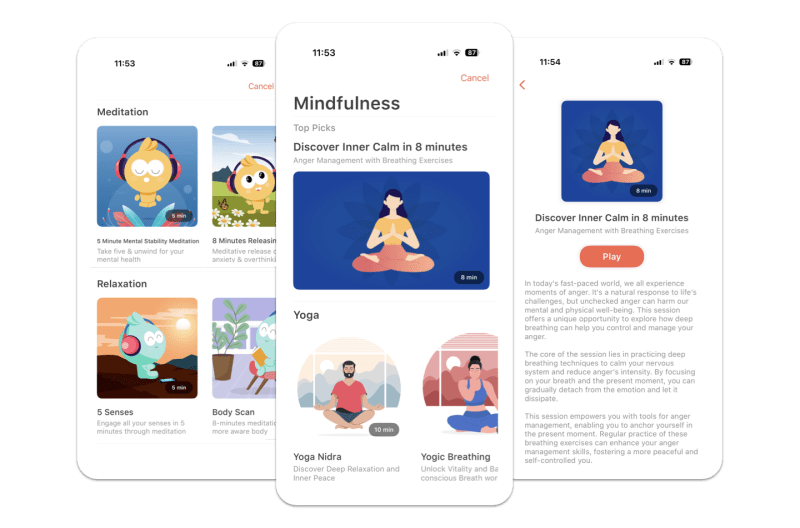
Tools can make that first step easier.
The Vantage Fit app, for instance, lets employees start comfortably and in private. With guided mindfulness sessions and a mood check-in, those first actions can be small: a short session or a quick log of how they feel. Only the employee can see their mood entries.
At the same time, it is important to challenge the pressure to maintain a tough exterior. Encouraging employees, especially men, to drop the ‘tough guy act’ and speak openly about their struggles helps create a more understanding and supportive workplace.
With the right environment, organizations can reduce stigma and make mental wellbeing a natural part of everyday work life.
7. Offer Flexible Work Arrangements

In my survey, many respondents highlighted the need for flexible work options. One participant shared how essential it is for employers to accommodate work-life balance through remote work or flexible schedules.
I think it’s a necessity for many. Remote work, adjusted hours, or compressed workweeks benefit employees juggling caregiving, chronic stress, or other personal challenges.
A working mother, for instance, may feel supported if her manager offers flexibility around school pickups or childcare.
And flexibility doesn’t mean compromising on results! You can still hold employees accountable by focusing on the outcomes of their work rather than micromanaging the process. If the job gets done well, does it matter how or where it happened?
Ultimately, trust and autonomy go hand in hand with productivity and engagement.
8. Be Mindful of Workload and Deadlines
One thing that stood out loud and clearly in my survey was that workload and deadlines are a significant source of stress for employees. Many respondents shared how tight timelines, unclear expectations, and uneven workload distribution leave them feeling stretched thin.
One respondent shared, “ I feel overwhelmed by the sheer volume of work and tight deadlines, leaving little room to recharge.” Addressing this issue is crucial for fostering a healthier, more sustainable work environment.
When asked, “Is there a specific way your manager could create a more supportive work environment for you?” employees shared thoughtful responses:
-
“Delegate the work equally among equal-level roles so that no one is overburdened.”
-
“Distribute the workload according to people’s skills.”
-
“Plan targets realistically, keeping in mind availability and leave schedules.”
For instance, instead of demanding, “You must complete this task no matter what,” consider a more empathetic approach, such as, “ I understand this is a lot. Let’s work together to figure out how we can manage it.”
That slight shift in approach can turn a daunting task into a shared responsibility, showing empathy and building trust.
9. Ensure Quietness in the Workplace
A key insight from my survey was the need for quieter, more focused work environments. Many respondents shared how excessive background noise disrupts their concentration and negatively impacts their mental well-being.
For employees with conditions like migraines or heightened sensitivity due to mental health challenges, a noisy workplace can feel overwhelming. But even for those without such concerns, a calm, orderly environment is essential for productivity.
Here are a few responses from the survey that highlighted this issue:
- “Some of my colleagues are always on the phone talking loudly. I can’t concentrate on my work.”
- “People gossip a lot. They even make up stories, and there’s an unsaid cold war between a certain colleague and me, which greatly affects me.”
- “Unsolicited noise impacts my mental well-being at work.”
One respondent even suggested:
I want my manager to make everyone understand the importance of maintaining decorum to bring some calmness into the workplace.
Disturbance is a legitimate concern, and it’s essential to address it effectively.
10. Recognize and Praise Achievements
Never underestimate the power of acknowledgment. Recognizing and celebrating achievements, big or small, can have a transformative effect on morale and motivation.
A heartfelt “Thank you for your effort” or a genuine public shoutout during a team meeting can make employees feel valued and appreciated.
Recognition can be for anything: punctuality, consistent dedication, teamwork, or creativity. At Vantage Fit, my manager has an excellent habit of giving us public shoutouts, especially at the end of each quarter.
Knowing that someone notices your efforts, even in minor ways, fosters a sense of purpose and pushes employees to perform better.
11. Communicate Clearly and Frequently
Uncertainty breeds anxiety; as a manager, you can replace that unease with clarity. Clear and consistent communication is the cornerstone of a supportive work environment.
Start by prioritizing transparency. Host regular team meetings to share updates. Let employees know what’s happening, why it matters, and how it affects them.
Equally important is giving them space to ask questions or voice concerns. Employees who feel heard are more likely to trust leadership, even during uncertain times.
Dr. Aditi Raghuram, a leadership development and executive coach, highlights the importance of tailored communication. Relying solely on verbal instructions can lead to confusion or missed steps for an employee who has ADHD.
Instead, Dr. Raghuram advises managers to provide written, step-by-step instructions. Clear, actionable communication, like breaking tasks into “Step 1, Step 2, Step 3,” ensures that employees understand what’s expected and feel supported in their work.
It’s about paying attention to the littlest things and doing them differently! When you put in genuine effort, it shows.
12. Redefine Performance Reviews
Finally, change how you conduct performance reviews.
Traditional performance reviews often feel like judgment days, leading to anxiety and defensiveness among employees. As a manager, you can transform this process into a constructive, growth-focused dialogue.
For example, rather than saying, “Your performance is lacking,” you could say, “Let’s explore any challenges you’re facing and figure out how I can support you in achieving your goals.”
Asking questions like, “Is there anything affecting your ability to perform at work?” allows employees to share concerns and seek help without fear of judgment.
Be the Manager You Would Want in Times of Stress.
How can an Employee Wellness Program improve Employee Mental Health?
Employee Wellness Programs (EWPs) are a powerful way to support employees in high-pressure environments, helping them manage stress and improve their mental health.
By offering resources like counseling, stress management workshops, and mental health days, these programs provide employees with the tools to navigate challenges and care for themselves.
WHO recommends interventions that help people build skills to manage stress and reduce mental health symptoms, including psychosocial support and opportunities for physical activity. A well-designed program can bring these together.
At Landmark Leisure, Tarun Rangwani saw the change in his teams after rolling out Vantage Fit:
"Employees became more consistent, more present in meetings, more cheerful and active."
— Tarun Rangwani, Business Head, Citymax Hotels (Landmark Leisure)
At Dudley Building Society, employees particularly liked the on-demand content library. William Slater shared:
"We particularly liked the 'Library' feature which has loads of useful health and wellbeing tips and resources for users. The app has something for everyone!"
— William Slater, Dudley Building Society
Connecting employees to the right resources, and making them easy to reach, is one of the most practical things a manager can act on. If you want to understand the broader case, explore how employee wellbeing programs translate into real organizational outcomes.
Conclusion
When leaders champion mental health by being open, empathetic, and proactive, they send a powerful message: it’s okay not to be OK, and support is always within reach. These small, intentional actions build a culture of care and understanding.
As Charles Duhigg insightfully says,
In general, the route to establishing psychological safety begins with the team’s leader. So if you are leading a team—be it a group of coworkers or a sports team, a church gathering, or your family dinner table—think about what message your choices send. Are you encouraging equality in speaking, or rewarding the loudest people? Are you modeling listening?
These words ring true in every setting, especially in the workplace, where a leader’s actions impact the entire team.
These everyday choices: listening more than speaking and creating a safe space for open conversations, make a real difference.
By prioritizing mental health, managers don’t just help their employees cope; they set them up to thrive, fostering a workplace where everyone feels supported, connected, and capable of bringing their best selves to work daily.
Frequently Asked Questions
Why is manager support important for employee mental health?
Managers control much of an employee’s working day, from deadlines to how problems are handled. In MHA’s 2021 report, being able to talk to a supervisor about changing stressful work was most strongly linked to the healthiest workplaces.
What mental health training should managers have?
Good training covers spotting emotional distress, listening actively, communicating openly and understanding how job stressors affect mental health. WHO first recommended manager training in 2022.
How do you talk to an employee about their mental health?
Choose a private moment, ask an open question about how they are really doing, and listen without judgment. Then ask what support would help, agree on next steps, and point them to an EAP or professional help when needed.
How can managers protect their own mental health?
Managers need the same support they give: realistic workloads, regular breaks and someone to talk to, such as a peer, a mentor or an EAP. Looking after themselves also makes them steadier support for their team.
What workplace adjustments help employees with mental health conditions?
WHO lists flexible working hours, extra time to complete tasks, modified assignments to reduce stress, time off for health appointments and regular supportive meetings with supervisors.
What should a manager do when an employee discloses a mental health issue?
Thank them, listen, keep it confidential and ask what would help. Keep the focus on support: BITC’s 2018 survey found that 11% of people who told their employer about a mental health issue were later disciplined, demoted or dismissed.