Being positive at work is a habit you build through small actions each day: write down one win before you log off, turn each piece of criticism into one next step, and thank a colleague by name for something they did well. When stress builds, take a 10-minute walk outside.
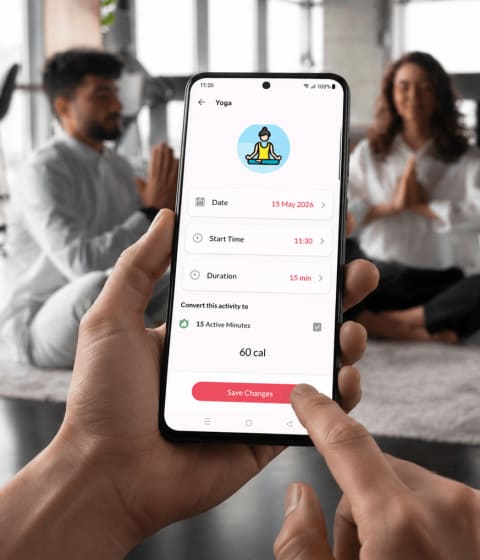
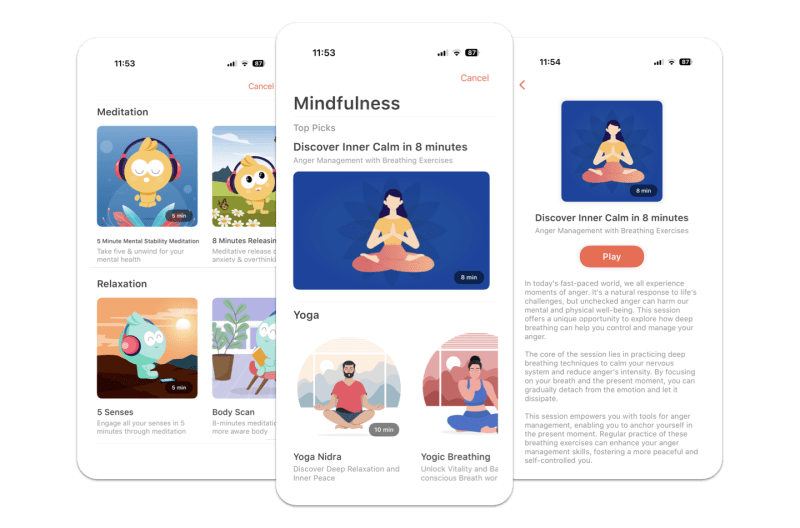
Employers can make these habits easier to keep. On Vantage Fit, employees log their mood on a 5-point scale and play guided meditation sessions in the app, and each finished session counts as a mindfulness activity in their challenges.
Positive thinking means meeting hard situations in a productive way and expecting the best outcome. Mayo Clinic links it to lower rates of depression, lower distress, and better coping in stressful times.
Those benefits show up at work as calmer, more confident teams. Let’s dig into why positivity matters so much at work, and then into 21 simple ways to build it into your team’s day.
Key Takeaways
- Positive thinking at work is a learnable skill, and it pays off on both sides: employees feel less stressed, and teams perform better.
- A review of 225 studies found that happy people tend to succeed at work, and the happiness often comes first.
- A 7-minute workout, a few minutes outdoors, or a short guided meditation each give the mind a quick reset during the workday.
- Brazosport ISD ran 10 to 15-minute mindfulness sessions at least four times a week on Vantage Fit, and its average mood score reached 4 out of 5.
- Regular mood check-ins, such as a short survey, show whether positivity efforts are working, so measure mood before and after a program.
Why is positivity important in the workplace?
Positivity matters at work because it lowers stress and helps people do their best work. Positive employees cope better with pressure, see more options when solving problems, and work well with others. Over time, this shows up as better focus, stronger work performance, and better relationships between managers and staff.
A 2005 review of 225 studies in Psychological Bulletin, by Sonja Lyubomirsky, Laura King, and Ed Diener, found that happiness predicts later success at work, along with higher income and better health.
Negative and self-limiting thoughts hamper performance and add stress. Employees can learn to notice those thoughts and replace them, which supports a healthy lifestyle at work.
Encourage your employees to unlock their vital thoughts and put them into everyday work.
Positive thinking brings these benefits at work:
- Improves the relationship between employers and employees
- Sharpens mental focus
- Raises productivity
- Reduces absenteeism
- Promotes a healthier and happier workplace
- Supports intellectual wellness
- Improves psychological and behavioral health
- Leads to better decision making
- Reduces stress, depression, and anxiety
Organizations can pair these practices with a broader employee wellness and stress management approach, so every employee gets consistent support.
21 Ways to Help Employees Stay Positive at Work
The 21 ideas below mix habits employees can build on their own, such as reading and making time to think, with steps managers can take, such as kind feedback, recognition, and room to relax. Each one works on its own, so a team can start with any of them.
1. The habit of reading books
“Books are a uniquely portable magic.”
– Stephen King .
Thoughts determine the quality of life. Reading will help you develop your thought process and knowledge. It also keeps the mind active. A 2013 study in Neurology linked frequent mental activity across life, such as reading and writing, to slower cognitive decline in old age.
Photo by Alexandra Fuller / Unsplash

It is one of the best ways to add colors to the gray area of the mind.
2. Meditation
“The mind and body are like a high-performance racing car. It will perform at its peak if it remains cool and well-oiled.”
– Robin Sharma.
Meditation is the best way to start your day. It will help your mind shine throughout the day, even at work.
Photo by Antonika Chanel / Unsplash

Meditation helps you to relax. So, please make it a part of your life as positive thoughts dwell in a relaxed mind. Teams that want to build this into the workday consistently can start with structured mindfulness exercises at work.
In a 2010 study in Consciousness and Cognition, four days of 20-minute mindfulness training reduced fatigue and anxiety and improved working memory.
3. Listen to a podcast or watch motivational videos
Nowadays, subscribing to podcasts and motivational videos are the best ways to lift spirit and skills.
Photo by Austin Distel / Unsplash

Listening to a podcast or watching motivational videos will help you magnify your motivation to work efficiently. An employee can spend 10 to 15 minutes a day listening to podcasts or watching a motivational video.
Employers can share motivational videos and podcasts with their employees. A caring workplace is a sign of a healthy workplace.
4. Make time to think
“Change your thoughts, and you change your world.”
– Norman Vincent Peale.
Developing the habit of deep self-introspection is vital for the mind. The success mechanism inside the mind only drives the wheels of positive thinking. Thinking makes a man strategic and thoughtful.
Taking out time to think will make your actions crisp and improve deliberate thinking. Use this time to reframe setbacks: ask what the problem can teach you and what the next step is. Investing your time and energy into potential consideration will never go to waste.
It will lead you to success in all spheres of life. For instance, pairing deliberate thinking with productive hobbies such as journaling, learning a skill, or reading, can deepen this habit over time.
5. Spend time with nature
“Nature brings solace in all troubles.”
– Anne Frank.
Nature teaches compassion. It teaches presence of mind and awareness. Spending time in nature helps to bring clarity in thought and calmness in mind.
Photo by Hanna Postova / Unsplash

Also, it helps you discover new ideas and amend choices. In fact, every office should create a green corner for its employees to make dull corners look refreshing. Walk to work and enjoy the beauty of nature.
6. Networking communication
“Team communication is a crucial factor in success, be it for a sports team like Barcelona or a project team within an organization. Teams that fail to communicate effectively will waste time and energy doing things that aren’t necessary.”
The key to a positive work environment is proper communication. An intuitive conversation is a result of positive thinking. Communication contributes to the growth and maturing of a mind.
Also, it cultivates the art of networking connections within an office. Honest communications develop trust and belonging.
Effective communication in the workplace brings benefits like:
- Team building
- Growth at both the end - personal and organizational
- Innovation and Knowledge sharing
- Employee engagement and productivity
7. Listen twice as much as you speak
“Most of the successful people I’ve known are the ones who do more listening than talking.”
– Bernard Baruch.
To become successful in life, listening is the first and foremost skill. But, it is also essential to add empathy while listening to the other person.
Listening improves communication and cooperation among co-workers. Becoming a good listener will help individuals develop a better understanding of ideas and innovation. And enhance the quality of positive thinking to be efficient at work.
8. Push yourself to work hard
“When you push yourself beyond limits, you discover inner reserves, which you never thought existed earlier.”
– Manoj Arora.
It is essential to push yourself to know your limits at the very best. It will help you become better at work.
Let go of mediocrity in thoughts that hold you back. Pushing yourself forward will make you productive and more trustworthy among your teammates. It will help you commit to excellence and wear your passion on your sleeves.
Encourage employees to be mentally relaxed and physically occupied.
9. Value time
“Your time is limited, so don’t waste it living someone else’s life.”
– Steve Jobs.
Sometimes we find ourselves guilty of wasting our time. Valuing time leads to self-discipline and burgeoning.
Proper organization of time allows us to accomplish goals and targets. So, time management is crucial. Our boundless energy and enthusiasm must be put into action from time to time.
Photo by Georgia de Lotz / Unsplash

In fact, good time management makes more time for other activities too. A lot can be changed in a year if you blend with time, starting from today.
10. Be kind with words
“Gentle words bring life and health; a deceitful tongue crushes the spirit.”
Proverbs 15:4
Politeness is a sign of a wise leader. Positive thinking brings out positive comments, so keep your words soft and warm. Harsh words often end up ruining relationships.
The cost is real: one in two employees have left a job to get away from a manager at some point in their career, according to Gallup.
Anything out of control in your life can harm and damage things. The greatest destroyer is an uncontrolled tongue. So, adopt healthy habits to change your work life.
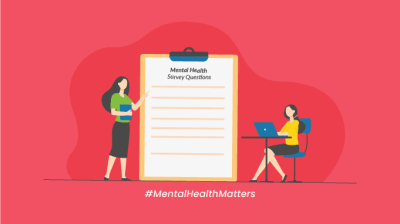
Want to know how your team really feels? Use the free Employee Mental Health Survey Template, with 30 questions across five dimensions and a built-in scoring guide.
11. Avoid gossip
“No one is perfect - that’s why pencils have erasers”
- Wolfgang Riebe
Gossip can turn out to be dangerous. People who become the victims of gossip find it painful to cope. It lowers their self-confidence, makes them dread team meetings, and can lead to anxiety and depression.
Therefore, surround yourself with positive people. It will eliminate the negative attitudes and make the workplace happier. So, forge and foster positive psychology. And avoid making the mind a devil’s workshop.
12. Find time to relax
“Sometimes, the most productive thing you can do is relax.”
– Mark Black.
Relaxing is crucial for intellectual wellbeing and behavioral health, and it is essential for your body, mind, and soul. It drains your tension, cools down your nervous system, and prepares you for the following day, which makes you more productive.
Every workplace should arrange a corner where employees can relax and think. For remote and hybrid teams, that same pause can happen on a phone.
At Brazosport ISD, employees did 10 to 15-minute mindfulness sessions at least four times a week on Vantage Fit, and average organizational mood reached 4 out of 5.
13. Be goofy at work
“Happiness inspires productivity.”
– Shawn Achor.
What’s the point of working somewhere you are not having fun?
The best organizations teach the best employee engagement techniques. Nobody enjoys working in an office where there is no fun. Having said that, “a company that plays together stays together.”

Happy employees promote collaboration, creativity, and commitment. A positive workplace supports healthy work relationships with employees.
14. Let your goals dominate your thoughts
“Your positive action combined with positive thinking results in success.”
– Shiv Khera.
Be the master of your thoughts. It is essential to be goal-oriented and successful in life. Whether in the workplace or personal life. Every thought possesses energy; therefore, stay determined until you put your goal into action.
Setting a goal also will help you stay focused. It will enhance your willpower by leading to self-mastery. And, do not allow your negative thoughts to overshadow you.
Positive psychology research pushes this further. Neha Pant Tewari, a happiness coach and certified NLP practitioner, challenges the conventional success formula in a conversation on the Vantage Fit podcast:
"People have a typical formula: work hard, make progress, become successful, then happy. That's what we're preconditioned to believe. What positive psychology research says is the opposite — happiness is the precursor to success, not the other way around. The happier you are, the higher your potential. Optimism fuels motivation, motivation fuels progress, progress fuels action, action fuels achievement. That's the happiness advantage."
— Neha Pant Tewari, Happiness Coach | Listen to the full episode
15. Practice financial wellness
“Doing a budget means learning an ancient and powerful word: NO”
– Dave Ramsey.
Financial issues attract a series of mental and behavioral stress. Financial wellness is not only about fixing personal finance goals but looking into overall financial health.
Financial stress and anxiety can possibly degrade your health and wellness. But, managing it well can make you overcome all challenges. It will also keep you productive at work and positive towards life.
16. Smile
“Your smile is your logo, your personality is your business card, how you leave others feeling after having an experience with you becomes your trademark.”
– Jay Danzie.
A smile is a universal language. A 2022 multi-lab study in Nature Human Behaviour found that posing a smile makes people feel slightly happier.
Photo by Daria Pimkina / Unsplash

Smiling is a sign of a positive mind. Putting up a smiling face along with a good attitude is a great technique to improve your reputation at work. It helps you enhance your confidence and reduce work-related pressure.
A smile when you greet a colleague or open a meeting makes you easier to approach, so people share ideas and ask for help sooner.
17. Being Proactive
“Whatever you want to do, do it now! There are only so many tomorrows.”
- Michael Landon Jr.
Every individual possesses the power to see problems and take the necessary action to solve them. It is up to an individual to choose nirvana or nightmare.
Proactivity develops the mindset of a true achiever. Being proactive means, you no longer complain about the past or worry over the future. It unfolds the potential to give your best at work. Also, it essentially helps to maintain a positive outlook.
So, being proactive means not letting the dire circumstances shape you. The one with a visionary mindset can lift you emotionally, spiritually, mentally, physically, and professionally.
18. Kaizen
“Good people strengthen themselves ceaselessly.”
Confucius.
In Japanese, Kaizen means constant and never-ending improvement.
Even at work, the approach to continuous, incremental improvement is kaizen. It positively impacts the team and organization by challenging the status quo and striving for improvement. It improves productivity, retention, customer satisfaction, commitment, and team building, and it reduces burnout.
Practicing Kaizen principles will condition your brain to a peak performer. It is a process of self-development and mental mastery. Organizations that embed this mindset into their culture, tracking progress, celebrating small wins, and measuring happiness at work, build teams that improve continuously rather than in bursts.
Regular touchpoints that recognize progress and keep people connected help positivity sustain itself. Shraddha Mishra, HR Generalist & Operations at Checkmarx, found this when the company ran a structured wellness initiative for their team:
"It was an engaging and well-coordinated event that not only promoted healthy habits but also fostered a sense of community among participants."
— Shraddha Mishra, HR Generalist & Operations, Checkmarx
19. Physical fitness goals
“Mens sana in corpore sano,” which translates to “a sound mind in a sound body.”
Physical conditioning keeps your body and mind young. The essence of good living and positive thinking lies in maintaining a youthful body.
See it in action: Browse these smart fitness goals for employees to build a movement habit that sticks.
An individual should do at least a 7-minute workout every day. Even taking deep breaths reduces stress and helps in intellectual nourishment.
The CDC notes that a single session of moderate-to-vigorous activity reduces short-term feelings of anxiety in adults. Physical fitness also increases energy reserves by keeping you active all day long.
20. An act of appreciation
“Organizational leadership begins with personal leadership. You can’t be great at work until you feel great.”
Workplace appreciation means rewarding and recognizing employees for quality work, and it sits at the core of any effective corporate wellness program. It plays a crucial role in positive company culture and strengthening employer-employee relationships.
Photo by Sebastian Herrmann / Unsplash

Appreciation keeps employees motivated and committed to their jobs. A Gallup and Workhuman study that tracked nearly 3,500 employees found that well-recognized employees were 45% less likely to have left their jobs after two years.
Recognition also builds a positive work environment with progressive mindsets. Humans are creatures of emotion. So, it is vital to make them feel good and cared for.
21. Celebrate small wins and have fun
“The leader is the person who brings a little magic to the moment.”
– Denise Morrison.
Big goals take months, so small wins keep morale going in between. Finish a tough task, send a proposal, or hit a step goal, then mark it with a quick thank-you or a team shout-out. Noticing progress every day builds the optimism that positive thinking runs on.
Photo by Tim Mossholder / Unsplash

Having fun at the workplace is essential for employees. Workplace fun makes it easier for employees to enjoy their time with co-workers, and it brings the whole team together.
Conclusion
Positive thinking grows from steady habits. Employees build it through daily practice, and employers make it easier with time to recharge and a culture that notices good work. Start with a few ideas from this list and build from there.
Frequently Asked Questions
How do you stay positive at work when you feel stressed?
Step away from your desk for a few minutes, breathe slowly, and name one thing that is going well. Then break the stressful task into one small next step, and talk it through with a supportive colleague.
What are examples of a positive attitude at work?
A positive attitude shows in thanking colleagues, offering help when someone is busy, taking feedback as a chance to improve, celebrating a teammate's success, and staying calm and polite on a hard day.
How can managers promote positivity in the workplace?
Managers promote positivity by recognizing good work often, giving feedback kindly, stopping gossip early, and protecting time for breaks. Wellbeing apps with meditation and mood logging give employees support they can use every day.
Can positive thinking be learned?
Yes. Mayo Clinic describes positive thinking as a habit you build with practice. Catch negative self-talk, swap it for a balanced thought, and note one thing that went well each day.
How do you stay positive around negative coworkers?
Keep conversations with negative coworkers short and focused on work, and stay out of complaints and gossip. Spend breaks with supportive colleagues, and answer a complaint with a practical next step when you can.
What are some positivity activities for the workplace?
Popular positivity activities include a team gratitude wall, a 30-day gratitude challenge, walking meetings, group meditation sessions, shout-outs in team meetings, and a small-wins board where people post weekly progress.