












Outcomes-Based Wellness Programs: A Complete Guide for Employers

Many companies offer wellness programs, but few know whether they are effective. Participation rates may be high, but employee health often remains unchanged, creating a gap between effort and real outcomes.
HR teams seek clarity; leaders demand proof of impact, and employees want to engage in something that feels meaningful.
Outcomes-based wellness programs bridge this gap by focusing on measurable health improvements. They track whether employees are getting healthier over time and provide HR with clear data to guide decision-making and refine wellness strategies.
These programs are becoming increasingly important because workplaces face rising stress, chronic conditions, and higher healthcare costs. Employees now expect wellness support that extends beyond basic step challenges or one-time events. A program that tracks outcomes offers everyone a clearer picture of progress.
This blog explains what outcomes-based programs are, how they differ from traditional wellness efforts, and why they matter. You'll also learn the key metrics used to track progress, the components that make these programs effective, and how to implement them.
What Exactly Is an Outcomes-Based Wellness Program?
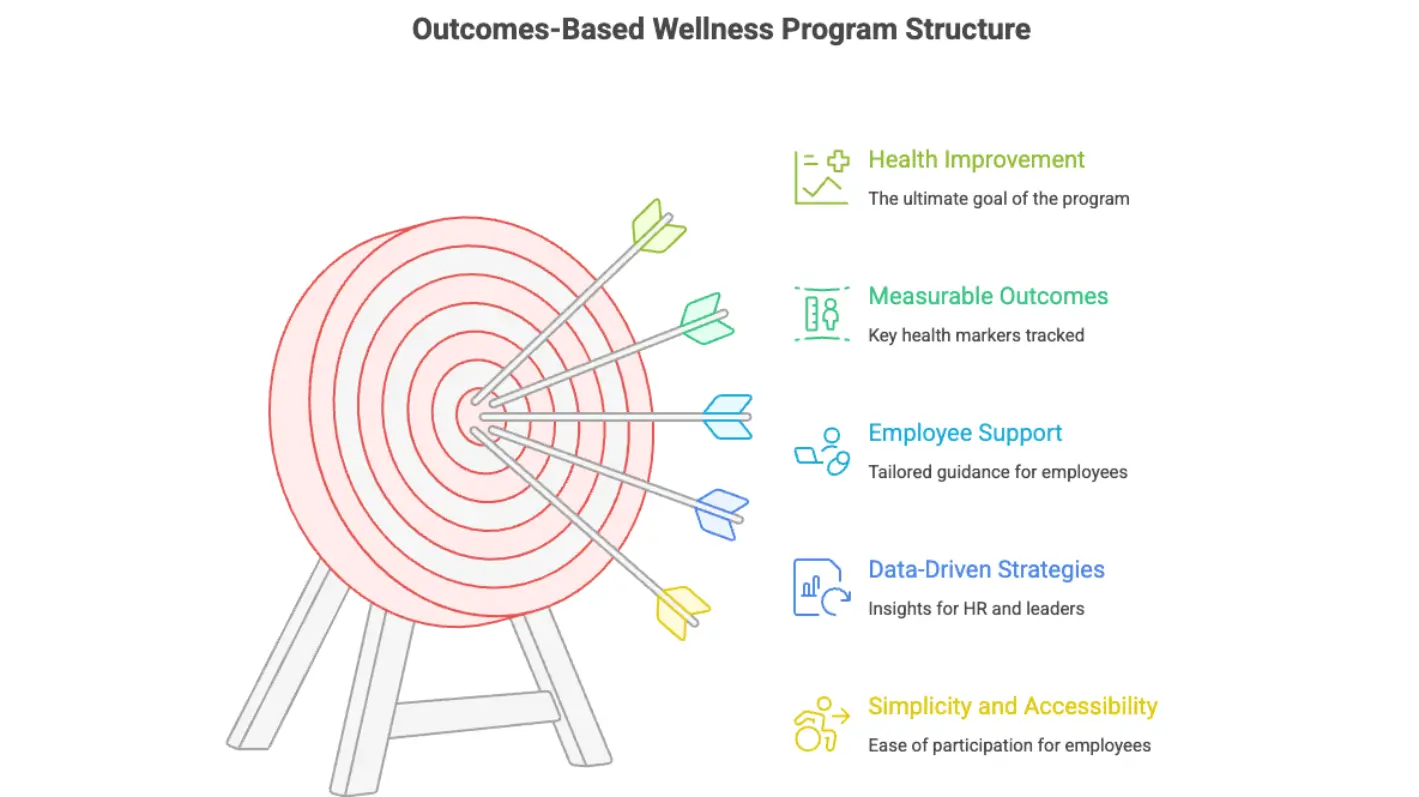
An outcomes-based wellness program is a structured approach that measures fundamental changes in employee health. Rather than tracking participation in activities, it focuses on whether employees improve key health markers, such as blood pressure, activity levels, or stress scores.
The goal is to help employees build healthier habits and to show tangible progress over time. HR teams use this data to refine wellness strategies, while leaders can assess the value of their investment. Employees receive support tailored to their goals and needs.
An outcomes-based program works best when it is simple, measurable, and easy for employees to follow. The focus should be on progress rather than pressure, guiding employees toward healthier habits while providing employers with a clear view of results.
Measurable Health Metrics Commonly Used in Outcomes-Based Programs
Outcomes-based programs depend on clear and quantifiable health data. These metrics help employers see what is changing and where support is needed. They also help employees understand their progress in simple terms.
-
Body Mass Index (BMI) tracks weight-related health risks and long-term trends.
-
Blood Pressure helps track heart health and the impact of stress or lifestyle.
-
Cholesterol Levels show how diet and activity affect cardiovascular health.
-
Blood Glucose Helps identify risks related to diabetes and daily habits.
-
Tobacco Use Tracks progress for employees who want to reduce or quit smoking.
-
Physical Activity Levels measure how often employees move or exercise.
-
Stress or Wellbeing Scores: Simple surveys reveal how employees feel mentally and emotionally.
-
Sleep Quality shows whether employees are getting enough rest to stay healthy.
-
Biometric Screenings provide a complete picture of health risks and improvements over time.
-
Lifestyle Risk Assessments combine data on habits such as nutrition, movement, and stress.
These metrics give HR and leadership clear, easy-to-read indicators of progress. More importantly, they show whether wellness efforts are making a real difference.
Outcomes-Based vs Traditional Wellness Programs: What’s the Difference?
This comparison helps employers see how outcomes-based programs shift the focus from participation to meaningful change.
| Criteria | Outcomes-Based Programs | Traditional Programs |
|---|---|---|
| Philosophy | Focus on improving health outcomes and reducing risks. | Focus on encouraging participation in wellness activities. |
| Measurement of Success | Success is measured by changes in health metrics. | Success measured by participation in activities. |
| Incentive Structure | Rewards based on improvement or achievement of health goals. | Rewards based on participation or event attendance. |
| Employee Experience | Personalized and goal-focused; employees receive support to improve health markers. | Broad and activity-based; employees choose from various activities with no long-term plan. |
| Potential Impact | Creates measurable health improvements and long-term savings. | Increases engagement but may not lead to significant health changes. |
This table makes the shift clear. One model encourages participation. The other delivers measurable change. Employers today need programs that do both.
Core Components of an Effective Outcomes-Based Wellness Program
An outcomes-based program works best when it has a clear structure. These components help employers build a program that is easy to follow and delivers real improvement.
1. Clear health goals: Begin with simple, specific goals that guide employees and provide HR with a measurable way to track progress.
2. Measurable metrics: Choose health metrics that show real change. These can include blood pressure, activity levels, or stress scores. Good metrics make evaluation easier.
3. Personalized support : Employees have different needs. Offer coaching, learning materials, or digital tools that match their health goals. Personal support helps people stay motivated.
4. Regular assessments : Schedule periodic check-ins or screenings. These wellness assessments show what is improving and what needs more attention.
5. Incentives that drive action : Rewards encourage employees to stay committed. Incentives should be simple, fair, and linked to improvement.
6. Easy access to tools : Employees should be able to use the program without confusion. Mobile apps, dashboards, and reminders help keep them on track.
7. Strong communication : Share updates often. Clear communication keeps everyone involved and reduces confusion about goals or expectations.
8. Leadership support : When leaders participate or show interest, employees feel encouraged. Leadership support helps build trust in the program.
9. Use of data and insights : Review data often. Use insights to refine the program and make better decisions.
10. Focus on long-term habits : The goal is steady improvement. Encourage habits that employees can maintain beyond the program period.
Also Read: 20 Healthy Office Habits to Enhance Your Well-being
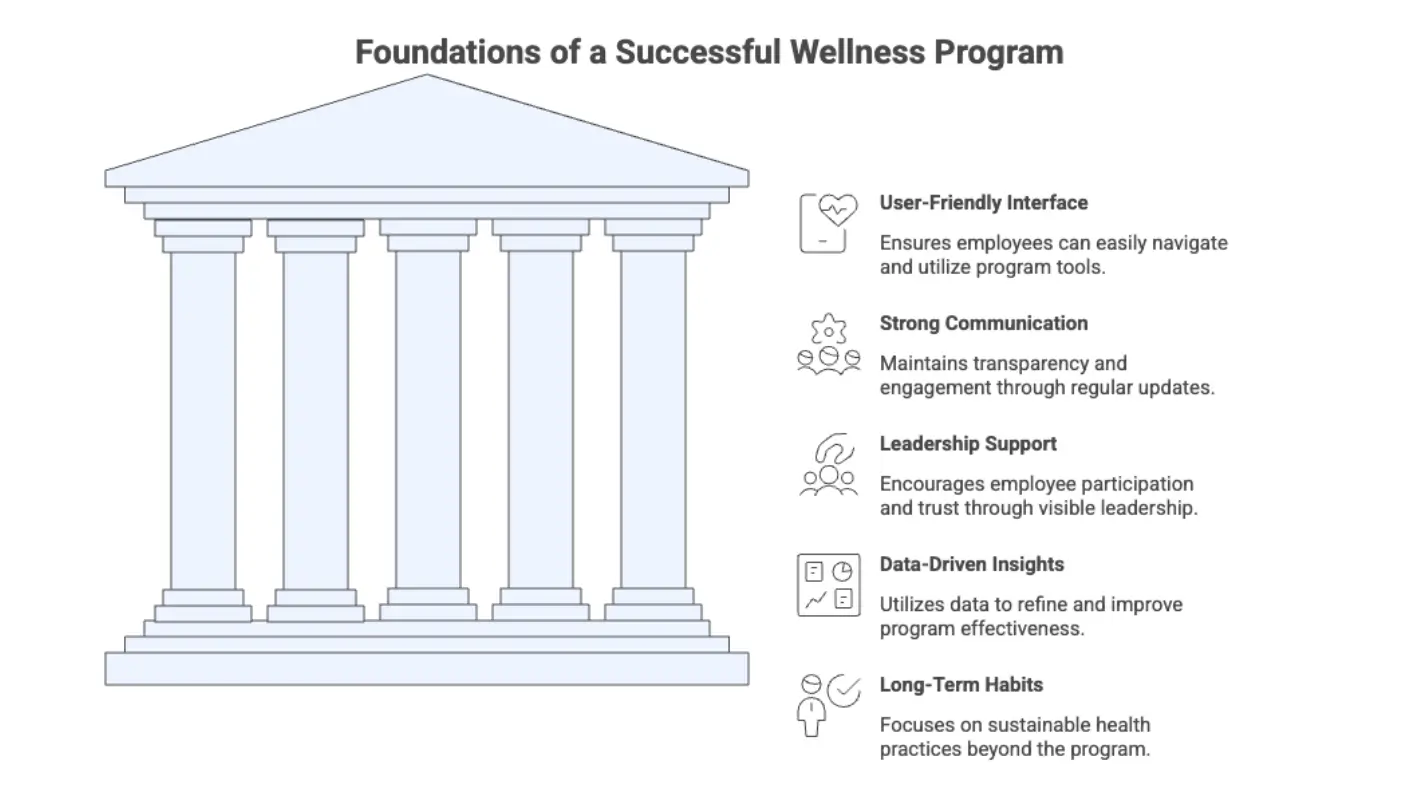
These components help create a structured, simple, and effective program.
Best Ways to Implement an Outcomes-Based Wellness Program
Implementing a program takes planning, but it can be simple with the right approach.
1. Start with a clear purpose : Explain why the program matters. Employees join more confidently when they understand the purpose.
2. Set a health baseline : Begin with assessments to understand current health risks. A baseline helps measure improvement later.
3. Choose the right metrics : Pick metrics that match your organization’s goals. Keep them simple so employees can understand their progress.
Also Read: 9 Employee Wellbeing Metrics That I Believe All Employers Should Keep an Eye On
4. Offer personalized guidance : Provide coaching or digital tools that help employees stay consistent. Personalized support improves engagement.
5. Make incentives transparent : Explain how rewards work. Clear rules build trust and encourage participation.
6. Ensure easy access : Use technology that is simple to navigate. The easier the program is to use, the higher the participation.
7. Train managers : Managers influence daily habits. Teach them how to promote the program and support their teams.
8. Share progress updates : Updates keep employees engaged. Celebrate small wins to maintain momentum.
9. Protect employee privacy : Be transparent about how health data is stored and used. Privacy builds confidence.
10. Review and refine : Check results often. Use insights to adjust the program and improve outcomes.
These steps help HR teams design a program that works for both the organization and its employees.
10 Tips to Increase Participation Rate of Outcomes-Based Wellness Programs
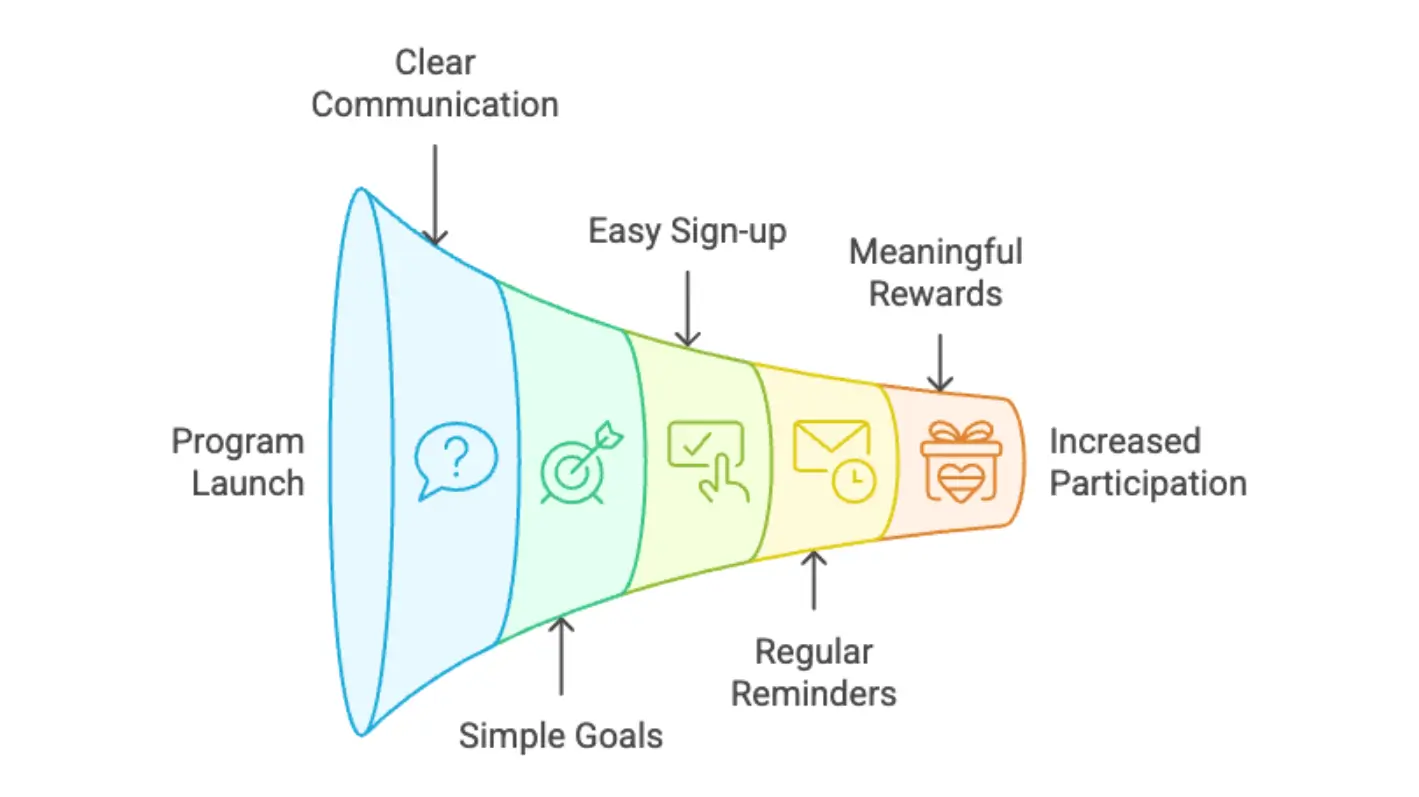
Participation is often the most challenging part of any wellness program. These tips help HR teams guide employees and keep them engaged throughout the process.
1. Explain the purpose clearly
Tell employees why the program exists and how it helps them. Clarity builds interest and trust.
2. Set simple goals
Avoid complicated targets. Realistic and straightforward goals encourage more people to join and stay consistent.
3. Make sign-up easy
Reduce steps. Use simple forms or digital access. A quick enrollment process increases participation.
4. Share reminders often
Regular communication keeps the program visible. Use emails, posters, or short manager updates.
5. Offer meaningful rewards
Provide incentives that employees value. Rewards motivate people to take action and stay committed.
6. Provide personal support
Offer coaching or tailored resources. Personalized guidance helps employees feel supported and confident.
7. Celebrate small wins
Share progress and success stories. Recognition boosts motivation and creates positive momentum.
8. Involve managers and leaders
When leaders show interest, employees follow. Their support helps normalize participation.
9. Use digital tools for tracking
Technology makes it easier for employees to monitor their progress. Simple tracking improves long-term engagement.
Also Read: 10 Employee Wellness Apps For 2026
10. Ask for feedback regularly
Feedback helps improve the program. Employees stay engaged when they feel their input matters.
These tips help create a program that feels simple, supportive, and rewarding for employees.
What Legal Risks Should You Be Aware Of When Designing These Programs?
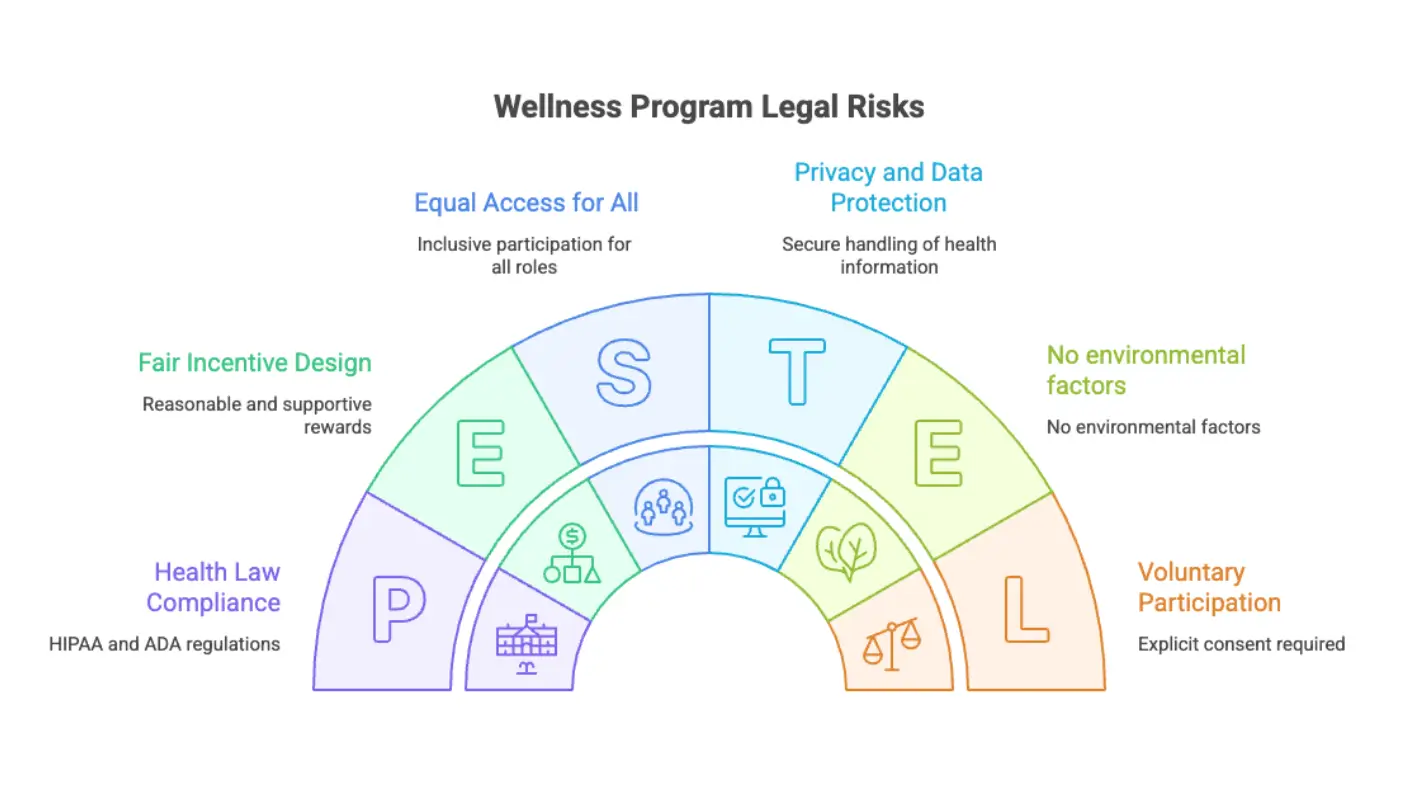
Legal compliance protects employees and the organization. HR teams should understand the key risks before launching a wellness program.
1. Privacy and data protection
Wellness programs collect sensitive health information. Employers must protect this data and explain how will be used.
2. Risk of discrimination
Employees with medical conditions may struggle to meet specific health goals. Programs must offer fair alternatives and equal access.
3. Compliance with health laws
Rules such as HIPAA and ADA may apply in some regions. These laws define how health data is handled and how accommodations should be provided.
4. Fair incentive design
Incentives should not pressure employees. Rewards must be reasonable and supportive.
5. Voluntary participation
Employees should never feel forced to join. Explicit consent protects both employees and the employer.
6. Equal access for all roles
Shift workers, remote teams, and field staff should be able to participate. Limited access can create fairness issues.
7. Accurate assessments
Screenings must be reliable and professionally conducted. Errors can create concerns and reduce trust.
8. Clear communication
Employees should understand how outcomes are measured and what is expected from them. Clear communication reduces confusion and legal concerns.
These guidelines help HR teams design programs that are ethical, compliant, and respectful of employee rights.
Final Thoughts
Outcomes-based wellness programs offer employers a more straightforward way to support employee health, demonstrating whether wellness efforts are leading to real change. When goals are clear, communication is steady, and employees receive proper support.
These programs foster long-term health improvements. Leadership involvement also plays a key role in making wellness part of the daily culture, not just a separate initiative.
Want to try outcome-based wellness programs for your workplace?
Digital tools can help track progress and keep employees engaged. Platforms like Vantage Fit make it easier for HR to follow health trends, support healthy habits, and encourage long-term improvement. Small insights over time can lead to meaningful outcomes for both employees and the organization.
Frequently Asked Questions
1. What are some innovative outcomes-based wellness program examples?
Examples include programs that combine biometric screenings with coaching, digital tracking tools, and incentives for steady improvement. These programs focus on gradual progress and personalized support.
2. What are the biggest challenges in implementing these programs?
The main challenges are low participation, privacy concerns, and limited understanding of how outcomes are measured. Clear communication and simple tools help reduce these barriers.
3. When is an outcomes-based wellness program the right fit for your company?
It is a good choice when employers want measurable results, long-term behavior change, and better control of rising health risks. Companies with strong HR support and leadership involvement benefit the most.