You know the morning after a short night. Coffee does more of the work and small tasks drag. A sleep challenge is a set period, usually 14 or 30 days, in which people build a few sleep habits and track their bedtime, wake time and how rested they feel.
Short nights are common: 33.2% of adults in the US report sleeping less than seven hours per night. At work, that adds up. RAND estimates that insufficient sleep costs the US about 1.23 million working days a year. A team challenge gives everyone a shared reason to rest well.
This guide shows you how to run one at work, from setting the length to choosing the habits worth tracking. Read on for the steps, the habits and quick answers to common questions.
Key Takeaways
- Teams get the most from a sleep challenge when everyone logs sleep daily and reviews the results together.
- Enough sleep lowers stress, sharpens focus and memory, and reduces the risk of health problems and injuries.
- Caffeine, late screens, alcohol, irregular schedules, noise and extreme temperatures are common causes of poor sleep.
- Consistent bed and wake times, kept every day, are the base of better sleep.
- Six hours is the minimum gap between caffeine and bedtime, based on a 2013 sleep study.
- Evening exercise fits well with good sleep, as long as vigorous workouts end more than an hour before bed.
- Bedrooms work best at about 65°F, dark and quiet, with screens off at least 30 minutes before bed.
The Benefits of Adequate Sleep

In today’s fast-paced world, getting enough sleep is challenging for most. Adults need 7 or more hours every night, yet many get less. Our stressful and busy lives, both at work and at home, make maintaining sleep hygiene difficult.
Adequate quantity and sleep quality are essential for your overall wellness and functioning. Maintaining good sleep hygiene is a must for better productivity at work.
Many employees face presenteeism at some point (i.e., experience the feeling of being at work yet unable to perform at your best) due to sleep deprivation.
Thus, treating underlying sleep disorders or practicing the dos and don’ts of sleep hygiene can benefit the employees’ overall productivity and improve mental health conditions.
A good bedtime routine also helps you recover from physical and mental exhaustion. The main benefits of getting sufficient sleep are:
-
Reduced stress levels
-
Improved brain and body function
-
Increased happiness
-
Lower risk of health problems and injuries
-
Healthy body weight levels
-
Better concentration and memory
-
Improved focus
However, despite the benefits, getting proper sleep is easier said than done. And especially for corporate employees, who have to get up early and work till late, it is an even more significant challenge.
Did you know that about 10% of people have chronic insomnia? That means trouble sleeping at least three nights a week for three months or more.
Causes of poor sleep

Short sleep and insomnia are both common. So what causes poor sleep? The answer often lies in our daily habits.
Everything from technology usage to food habits can affect our sleep, positively or negatively. Also, there can be both external and internal factors that can hinder sleep.
Here are some of the most common factors that affect our sleep -
-
Overexposure to blue light at night
-
Consuming caffeine
-
Usage of laptops and mobile phones before bedtime
-
Drinking alcohol
-
Smoking tobacco
-
Irregular sleep patterns
-
Physical pain or discomfort
-
Noise
-
Extreme temperatures
Also read - Office Workers’ Health Problems: 7 Common Ailments & Their Remedies
How Do You Run a Workplace Sleep Challenge?

A workplace sleep challenge runs in four steps. Pick a length of 14 or 30 days, choose a few habits, have everyone log their sleep each day, and review the results together at the end. Our sleep challenge page has a ready-to-use format.
From my own experience, a sleep challenge is a fun and motivating way to sleep better. Try it yourself first. Once you see the results, invite your teammates and your manager to join. To grow it into a broader wellness challenge, the same approach applies.
Before you start the challenge
-
Choose a duration for the challenge. 14 days can be good to start, or you can also go for a 30-day challenge.
-
Create a chart where you can keep track of your daily activities during the challenge.
-
Download one of the many sample templates available online.
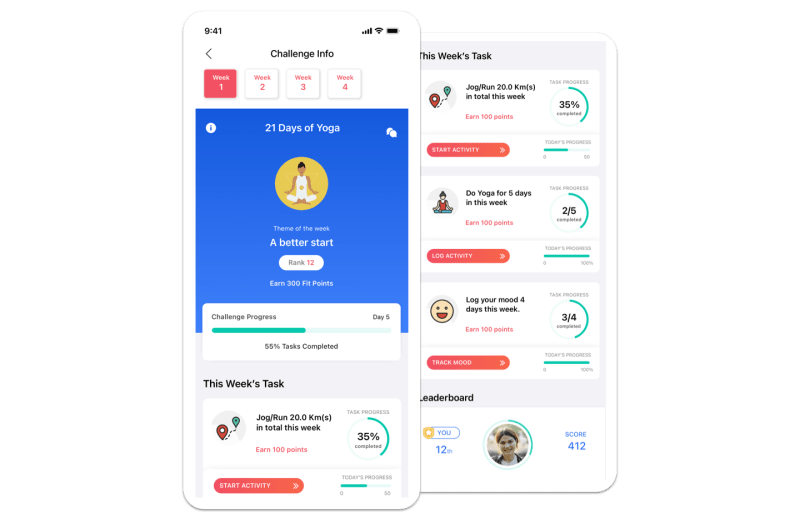
On Vantage Fit, this plan can grow from one person into a company-wide wellness challenge. Employees log bedtime and wake time or sync sleep from a connected device. HR teams see average sleep across the organization on the admin dashboard. In Tata Motors’ 6-month Step & Stride Challenge, the average sleep duration recorded per employee was 7 hours 39 minutes.
Things to do during the challenge
1. Set a schedule

-
Keep track of your daily bedtime and when you get out of bed. You don’t have to be 100% accurate. Just note the timings down when you wake up.
-
Try to go to bed at the same time and wake up at the same time. Doing so will help you realize your body’s natural sleep-wake cycles. At first, you may need to use an alarm clock to wake up, but gradually, you may start waking up without one.
-
Studies show that people who keep a consistent bedtime routine fall asleep better. If you have trouble falling asleep naturally, you can use wellness and health apps to guide relaxation and sleep meditation sessions.
Try the 20-minute rule from the American Academy of Sleep Medicine. If you are still awake after 20 minutes, get out of bed and do a quiet activity in low light. Go back to bed when you feel sleepy, so your bed stays linked with sleep.
2. Maintain a healthy diet and drink habits

-
Stop caffeine and other stimulants at least 6 hours before bed. A 2013 study found that caffeine taken 6 hours before bedtime still disrupted sleep.
-
Reduce alcohol intake and smoking. Too much alcohol and tobacco can disrupt sleep patterns.
-
Try chamomile tea instead. A 2019 review of trials found it improved sleep quality.
-
Skip heavy, sugary treats before bed. If you are hungry, have a light, healthy snack instead.
3. Create a balanced wellness lifestyle

-
Exercise, diet, and sleep go hand in hand. Adopting a consistent sleep-promoting exercise routine can help you improve your sleep quality.
-
Pick a workout time that suits you. A 2019 review found evening exercise is generally fine for sleep. Only vigorous exercise ending within an hour of bedtime may make it harder to fall asleep.
-
Try a sleep meditation, read a book or play a calming instrument 1 to 2 hours before bedtime.
4. Create a good sleep environment

-
Try to transform your bedroom into a peaceful sanctuary.
-
Set your room to about 65°F (18°C), since most people sleep better in a cooler room.
-
Avoid harsh light and noise exposure in your bedroom, as it hinders your sleep cycle.
-
Take a warm shower or bath 1 to 2 hours before bed. A review of 17 studies found this helps people fall asleep faster, as the drop in body temperature afterward prepares the body for sleep.
-
Turn off screens at least 30 minutes before bedtime, as the American Academy of Sleep Medicine advises.
-
Try to eliminate the sources that emit blue light that suppress the melatonin.
Monitor your sleep patterns and habits regularly to identify obstacles affecting your sleep.
Isolate them and take steps to overcome them accordingly.
Frequently Asked Questions
What is a sleep challenge?
A sleep challenge is a short habit program for better sleep. Participants follow a few simple habits, such as a fixed wake time, and log their sleep each day to see what changes.
How long should a sleep challenge last?
Fourteen days is a good length for a first challenge. A 30-day challenge gives new habits more time to settle and gives you a full month of sleep data to review.
What are the benefits of a sleep challenge?
The benefits of participating in a sleep challenge include the following:
- Improved sleep quality.
- Reduced stress and anxiety levels.
- Increased energy levels and overall well-being.
What should employees track during a sleep challenge?
Bedtime, wake time, total hours slept and how rested they feel each morning. Teams can also track habits such as the caffeine cut-off and screen-free time before bed.
What is the 90-minute sleep technique?
It sets your alarm for the end of a sleep cycle, such as 7.5 hours after falling asleep. Cycles average about 90 minutes but vary through the night, so treat it as a rough guide.
How can HR teams support employee sleep?
HR teams can run a team sleep challenge, share sleep hygiene resources and keep meetings and messages within working hours. Shift workers benefit from extra support, since night and rotating shifts work against the body clock.
Final Words
Taking part in a sleep challenge can be critical in helping you achieve your desired amount of slumber every night. Also, monitoring and tracking your sleep patterns will help you realize more about your body, helping you become healthier and happier.
Just go ahead and try out one for yourself to understand what makes you sleep better.