
Mindfulness means consciously bringing awareness to your experiences, thoughts, and emotions in the present moment. It is the basic human ability to clearly see and be in the reality of each moment rather than getting overwhelmed or controlled by the situation.
Jon Kabat-Zinn, the founder of the Mindfulness-Based Stress Reduction (MBSR) Clinic (1979), describes mindfulness as “Paying attention to the present moment, on purpose, non-judgmentally.”
This guide breaks down what it is, the science behind why it works, 13 exercises your team can start today, and how to run guided meditation as a program you can measure. Vantage Fit's built-in library of guided audio sessions is one way to build it into a wellness program you already run.
Key Takeaways
- Mindfulness at work is paying deliberate, non-judgmental attention to the present moment, with no meditation cushion or dedicated room required.
- It works on a physical level: an 8-week mindfulness program is linked to more gray matter in the hippocampus (memory, emotion) and less in the amygdala (stress, fear).
- Meta-analyses of workplace mindfulness trials show consistent, statistically significant drops in stress, anxiety, and psychological distress.
- Start small. Just 2 to 5 minutes a day of breathing, mindful listening, or a body scan compounds faster than occasional long sessions.
- The 13 exercises below range from solo desk practices to team rituals, so HR can build them into an existing wellness program.
What is mindfulness at work?
Mindfulness at work is that same awareness applied to a working day: noticing what is actually in front of you instead of running on autopilot through it. It is less about calm than about choosing your response rather than defaulting to one.
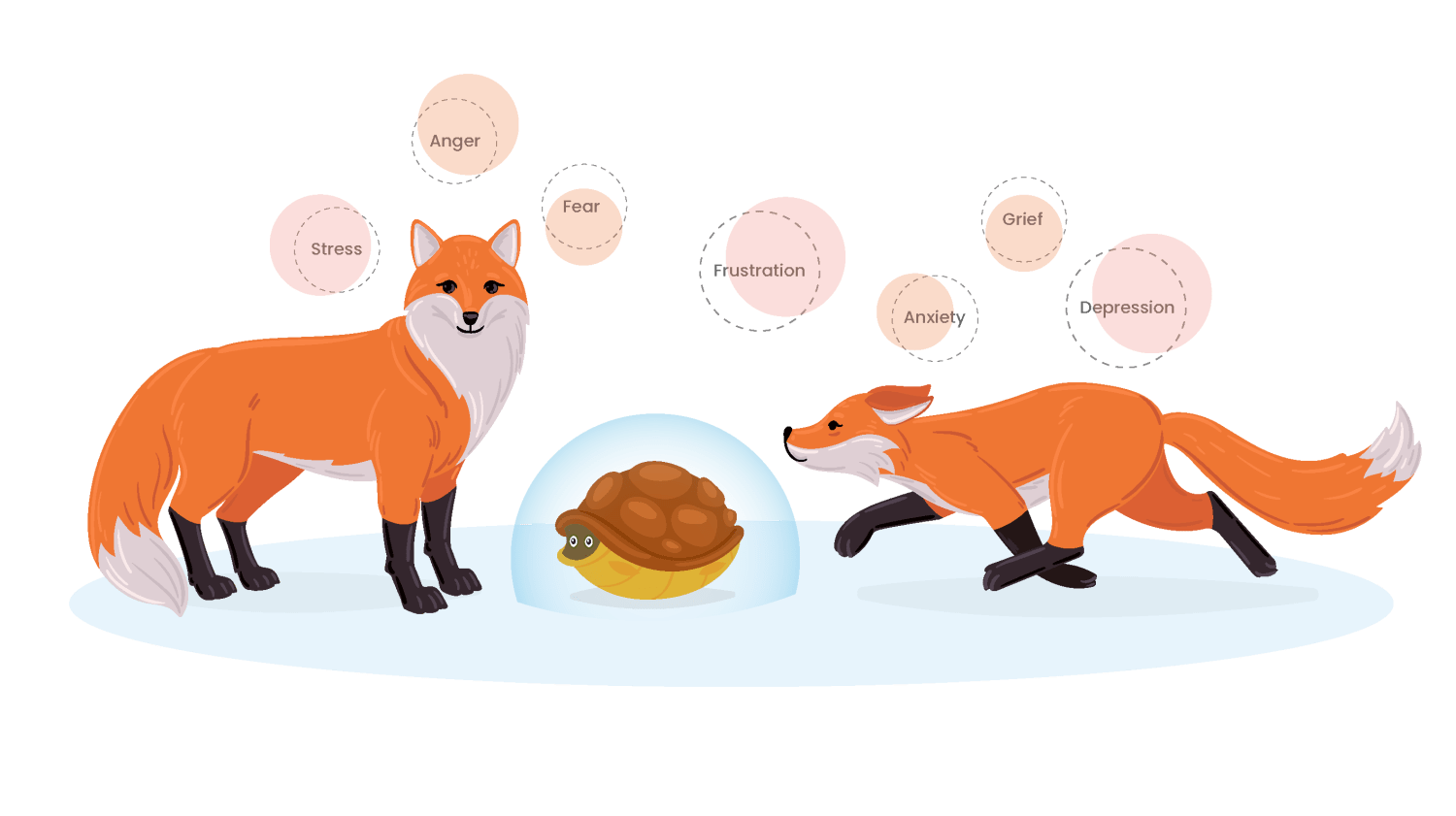
To explain this concept in simplistic terms, let me take the help of a story once narrated by Gautama Buddha about a turtle and a fox. The story is as follows:
Once upon a time, Mr. Turtle and Mr. Fox met in a jungle.
Mr. Fox’s mouth watered, thinking of the “turtle stew” that he’d get to devour that day. "Yummy", he thought.
Overwhelmed with extreme anxiety and worry, Mr. Turtle started panicking a lot. He instantly realized that no amount of sorcery could save his life today!
“Oh no! I am in so much trouble. What to do now?” Mr. Turtle thought.
(You won’t believe what his plan of action was!)
Mr. Brave Little Turtle went inside his shell and stayed still, not reacting but just being attentive. Mr. Fox went round and round Mr. Turtle but got no response. Eventually, he ran short of patience and went away.
The moral of this story is:
When you encounter “foxes” like worry, sadness, or depression in your daily life, respond like a mindful turtle. Go inside yourself and observe these states of mind without reacting or judging. This doesn’t mean escaping your problems.
Rather, it shows your innate ability to realize that these states of mind are temporary, and choosing not to be overwhelmed/ reactionary is the pathway to attaining clarity and wisdom.
"The ability to be in the present moment is a major component of mental wellness."
– Abraham Maslow
Companies have realized that mindfulness has tangible benefits for both employees and the organization as a whole. And integrating mindfulness at work need not be complicated.
What you can do is simply encourage leaders/managers to practice mindfulness and set an example for their teams. Consider organizing mindfulness workshops and providing resources to empower employees with practical tools for well-being.
What does that actually look like in practice? Amy McCae, a Corporate Wellness Trainer and Coach, cuts through the common misconception:
"Mindfulness at work isn't going to look like sitting cross-legged. It looks like more conscious decisions — how you lead meetings, how you talk to coworkers, how you change the schedule. Before a meeting, set some intentions, say some gratitude, ask people to name what they're feeling."
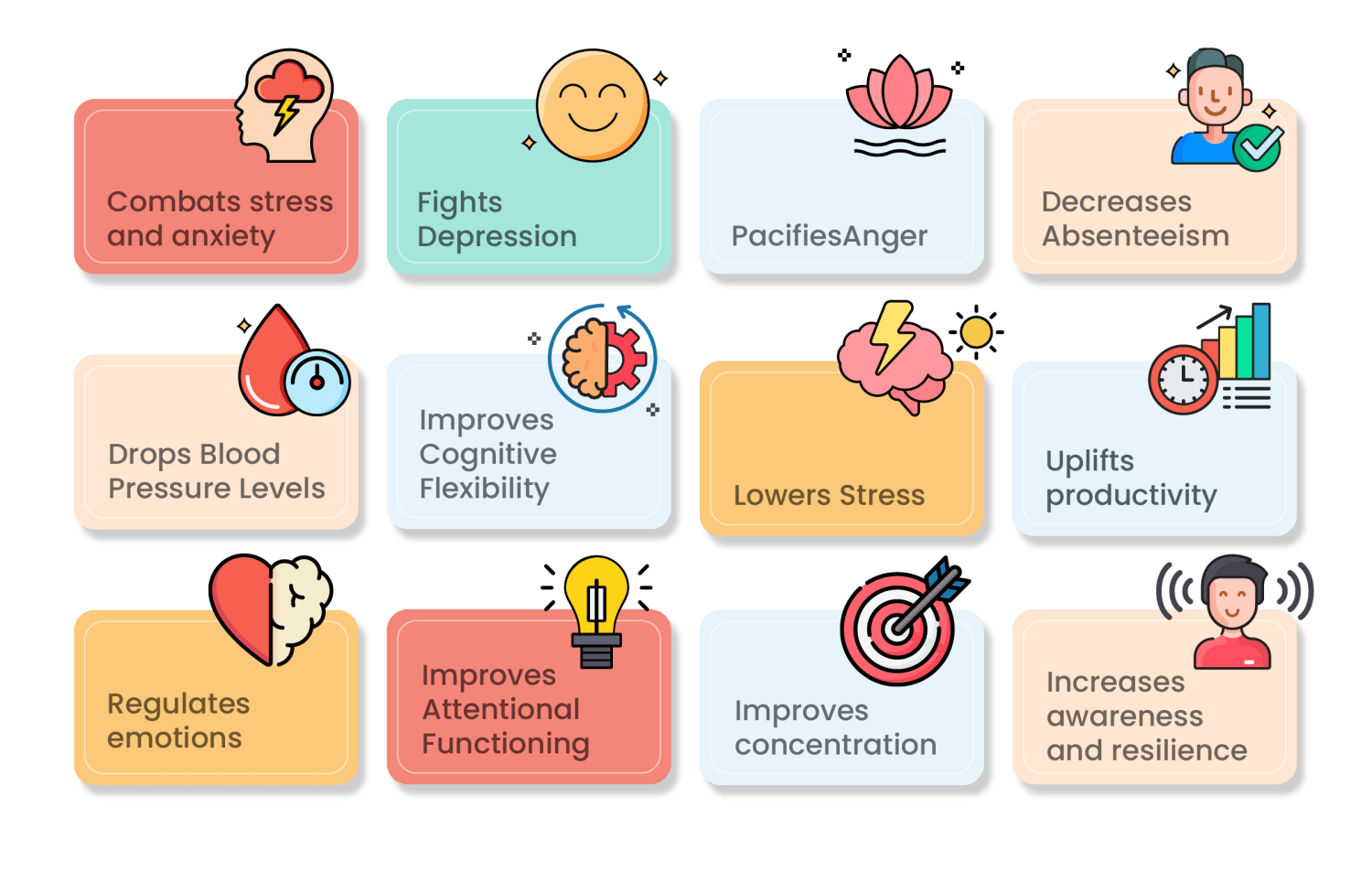
The benefits of building mindfulness into a work routine are wide-ranging:
How does Mindfulness Work?
While mindfulness techniques have long been practiced, modern science demonstrates how and why they work. Mindfulness can physically alter the brain, thanks to neuroplasticity - the brain's capacity to restructure and form new connections throughout life.
Advancements in neuroscience reveal how mindfulness alters the brain’s Default Mode Network (DMN).
The Default Mode Network is a set of interconnected brain structures first identified in 2001 by neuroscientist Marcus Raichle. It enables us to recall memories, envision the future, and self-reflect. Although on the flip side, the DMN can make us feel trapped by keeping our minds looped between anxieties and regrets.
This network connects parts of the cerebral cortex (responsible for thinking and decision-making) to the brain's deeper and evolutionary older structures that govern emotion and memory. When the DMN is overstimulated, the mind can get intensely chaotic. Because of this, Buddhists used to refer to this scattered mental state as the "monkey mind."
You might have heard the adage: “An empty mind is the devil’s workshop.” Scientifically speaking, when your mind has nothing better to do, DMN activity intensifies. The idle mind is not idle at all. It is looping.
For instance, after an 8-week mindfulness (MBSR) program, MRI scans of the practitioners revealed :
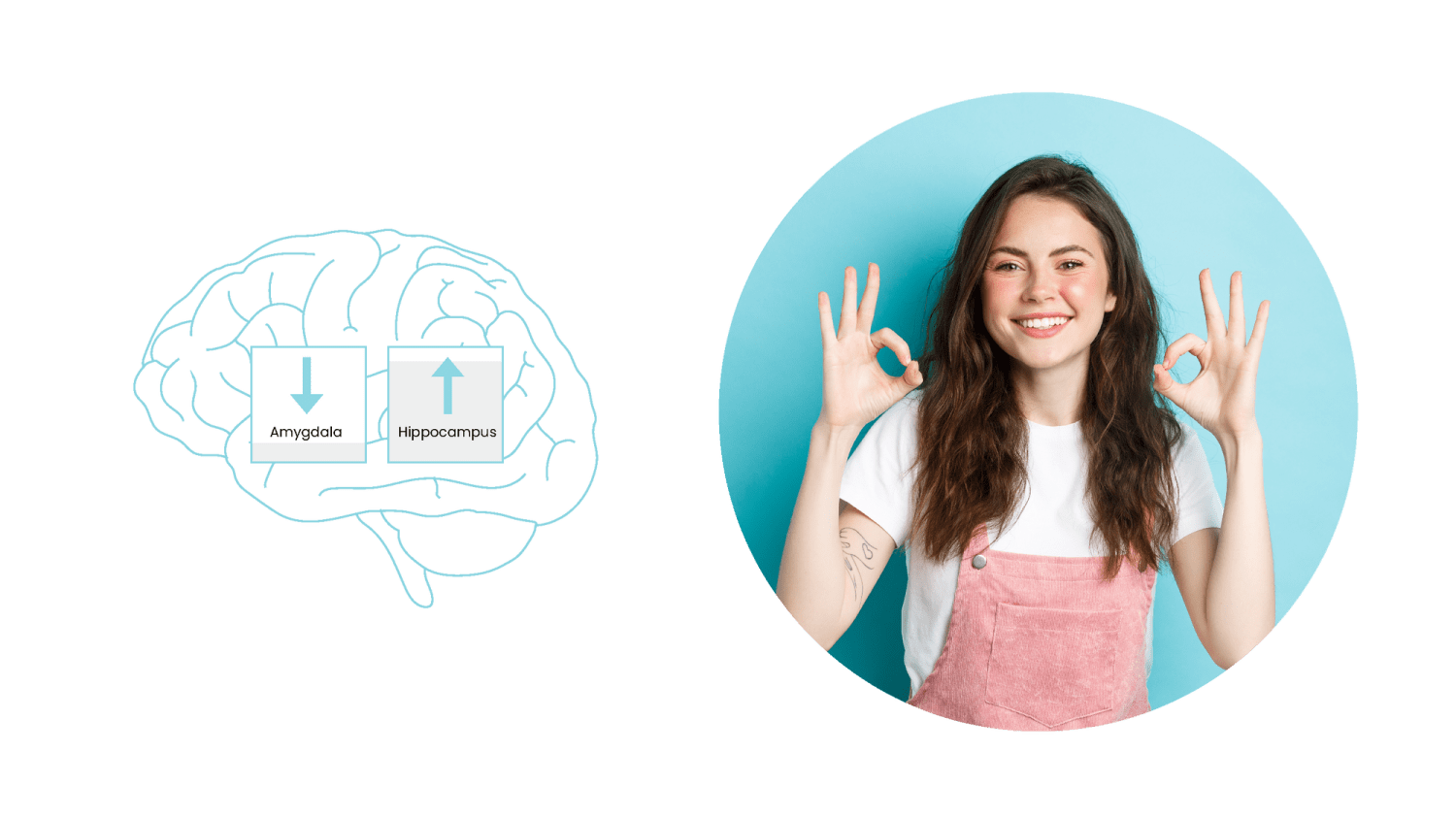
- Increased gray matter density in the hippocampus which led to better memory and good emotions.
- Decreased gray matter in the amygdala, which led to less stress and anxiety levels.
Therefore, mindfulness techniques can silence the “monkey mind” and strengthen networks tied to memory, attention, and emotional regulation.
“Our life is what our thoughts make it.”
– Marcus Aurelius
How Employees Practicing Mindfulness Benefits Employers?
While encouraging employees to work harder may seem like a good way of boosting productivity, studies show that creating a positive, mindful work environment pays off far more for employers in the long run.
A meta-analysis of workplace mindfulness randomized controlled trials found that mindfulness-based programs produce reliable reductions in stress, burnout, and mental distress while improving well-being and job satisfaction.
It holds up outside the studies too. When IBS Software ran its 28-day March to Fitness challenge on Vantage Fit, 88% of its 500+ active employees took part, with 95 engaging specifically with the mental wellness initiatives and 130 logging their mood daily.
Those gains show up for the organization in five fairly practical ways:
- Efficiency. Mindful employees complete tasks with greater focus and accuracy, which shows up as better work quality and fewer missed deadlines.
- Innovation and problem solving. Attention that is not fragmented has more room to produce ideas.
- Lower turnover costs. Better-supported employees leave less often, which saves on recruitment, training, and onboarding.
- Customer relations. Employees who can regulate their own stress handle difficult customers more calmly, which protects both reputation and revenue.
- Conflict resolution. Stronger emotional regulation means fewer disruptions and better team cohesion.
13 Mindfulness Activities for the Workplace
Here are the mindfulness exercises that both employers and employees can perform to balance their work-life:
1. Beginner-friendly Mindfulness Meditation
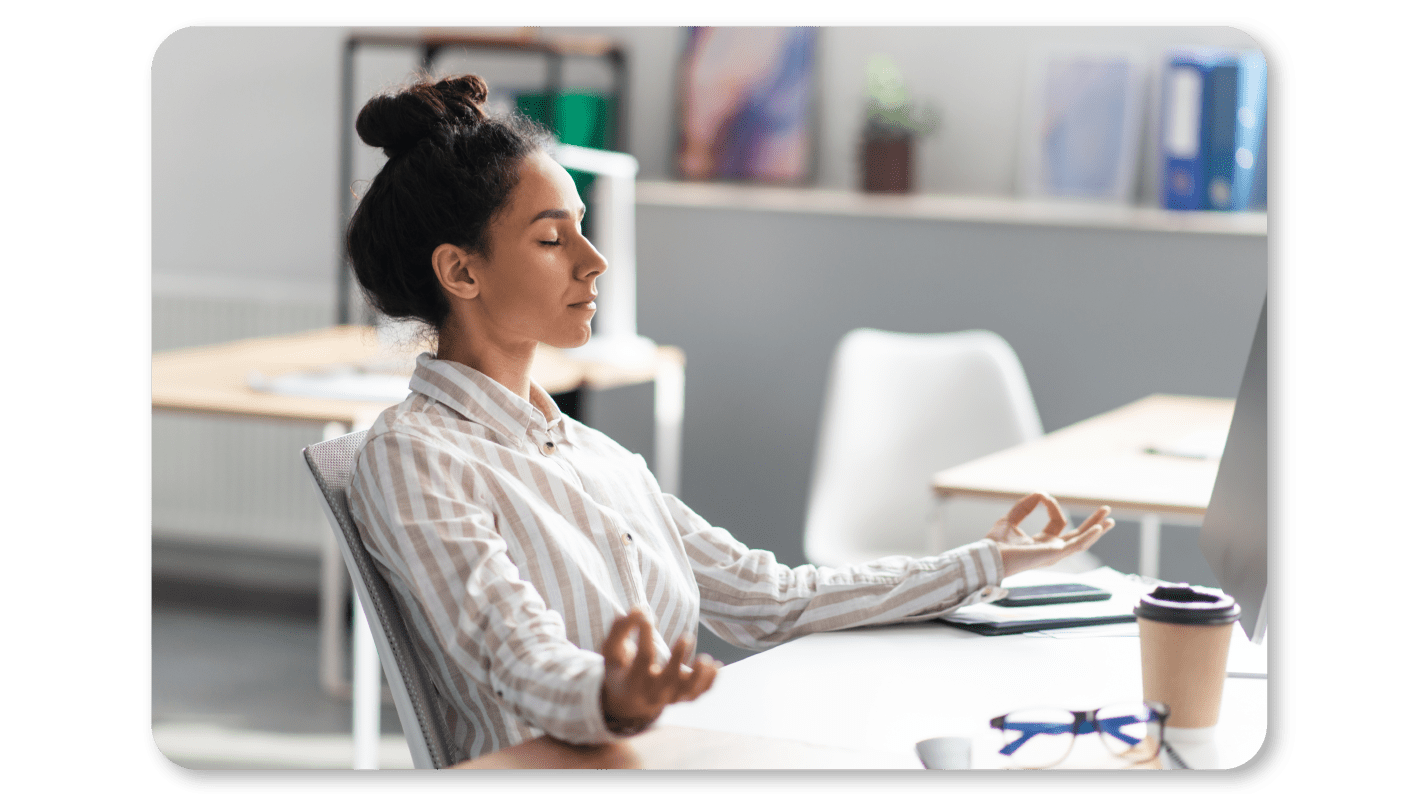 Mindfulness meditation is not about controlling one’s mind or eliminating thoughts or distractions. It is about cultivating focused attention.
The more meditation experience someone has, the less their amygdala reacts to triggers, because practice strengthens the connection between the emotional and regulatory parts of the brain. Employees who want to see that shift for themselves can log how they feel before and after a session with a mood tracker app.
How to Practice?
- Find a quiet place at your workplace and commit to a time frame for your practice. Start with just 2-3 minutes.
- Sit on a chair or on the floor restfully, with your spine erect but not rigid.
- Bring your attention to your breath entering and leaving your body.
When your mind wanders, gently return your focus to your breath. Don't judge yourself, just refocus. - Pay attention to any sensations, thoughts, or feelings that arise. Observe them with curiosity and acceptance.
- Expand your awareness of bodily sensations, sounds, or your general environment.
- When the time is up, slowly deepen your breath and gently open your eyes, carrying mindfulness into your next activity.
It gets easier with repetition, and the benefits compound with consistency rather than with session length.
That first-timer barrier is lower than most HR teams expect:
"Many of our employees had never tried meditation. They enjoyed trying the different types of meditation as part of the wellness challenge."
International School of Kuala Lumpur (ISKL)
2. Mindful Listening:

Mindful listening means giving a speaker your complete attention, without judgment and without planning your reply while they are still talking. We talk to each other constantly at work and listen to each other rarely.
How to Practice?
- Find a quiet and comfortable place at your workplace where you can have an engaging one-on-one. Turn off your phone or put it on silent mode to eliminate distractions.
- Maintain eye contact with your colleague to convey your utmost attentiveness and respect. Ensure that your body language is relaxed and welcoming.
- Practice active listening to fully grasp what the speaker is saying. Avoid formulating your response in your mind while they are talking. Listen with the intent of fully understanding their words and emotions.
- Pause before you reply, and answer what they actually said rather than what you had prepared.
It takes the most patience in exactly the conversations where it matters most.
3. Mindful Eating

In the hustle and bustle of modern workplaces, it’s too easy to fall into the habit of mindlessly munching at your work desk, barely paying attention to what you’re consuming. However, introducing mindful eating at work can fruitfully impact your health.
Here are a few tips for a mindful meal:
- Step away from your desk during lunchtime. Seek out a quiet place to relish your meals.
- Put away your phone.
- Express gratitude for your meal and the nourishment it provides.
- Chew your food mindfully and thoroughly to aid digestion.
- Be mindful of unhealthy cravings. Rather, choose healthier options and be mindful of portion sizes.
- While eating, engage all your senses. Notice the aroma, texture, and the appearance of your food.
- Incorporate vibrant colors into your diet, including abundant vegetables and fruits.
- Track your water intake to ensure proper hydration.
Embracing mindful eating today can improve your physical, mental, behavioral, and spiritual well-being. Therefore, I encourage you to start this practice today.
4. Single-Tasking
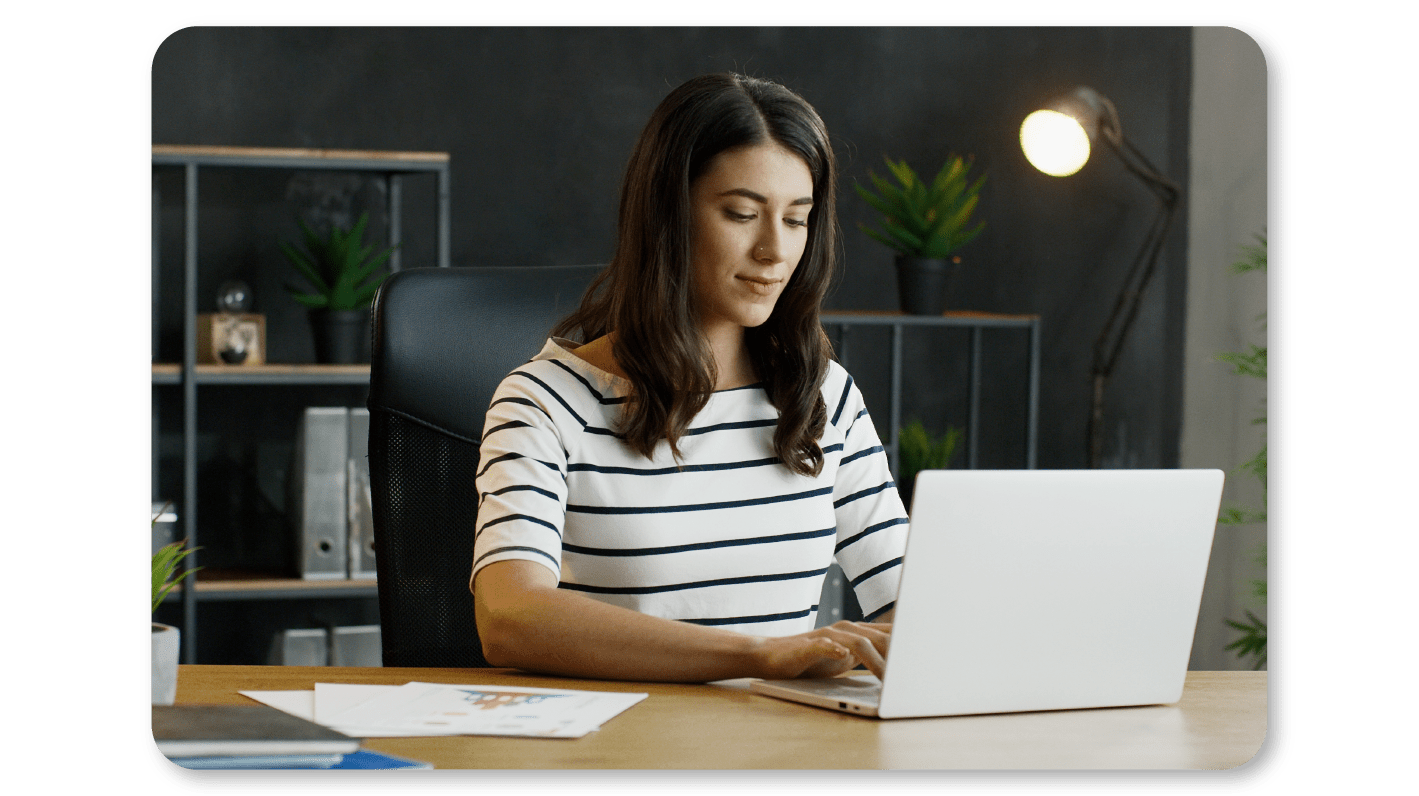
Single-tasking is doing one thing at a time, which is the opposite of how most of us actually work. You pick one job, clear everything else out of the way, and stay with it until it is finished.
The payoff shows up in three places.
Your brain stops spending energy switching between tabs, so focus holds for longer. The work comes out cleaner, because it had your full attention rather than a third of it. And you end the day less frazzled, because you were never juggling. Held long enough, this turns into what psychologists call “flow”, where you lose track of time and distractions stop registering.
How to Practice?
- Silence your phone and switch off pop-up notifications on your desktop.
- Close the browser tabs you are not using, and clear your desk of anything unrelated to the task.
- Set a timer for a short block, 15 or 20 minutes, and give that one job nothing but your attention.
- When your mind drifts, notice where it went and bring it back, rather than switching to a different task.
- Rest for a few minutes before you start something new.
Free template: Employee Mental Health Survey Template. Find out where your team actually stands before you decide which of these to roll out.
5. The 5-4-3-2-1 Grounding Technique

The 5-4-3-2-1 technique brings you back to the present by naming what each of your senses can pick up, counting down from five to one. It is the quickest way to interrupt a spiral of worry, and it works precisely because it gives a racing mind something concrete to do.
Use it when a difficult meeting has rattled you, or when you notice you have read the same email four times without taking any of it in.
How to Practice?
- Five things you can see. Look around and name them silently. The corner of a monitor counts.
- Four things you can feel. The chair against your back, your feet on the floor, the desk under your wrists, the fabric of your sleeve.
- Three things you can hear. Traffic outside, a keyboard, the hum of the air conditioning.
- Two things you can smell. Coffee, or the room itself if nothing stands out.
- One thing you can taste. Whatever is already there.
Finish with one slow breath, and carry that sense of mindful presence into whatever comes next. The whole sequence takes under two minutes, and nobody sitting near you will notice you are doing it.
6. Mindful Body Scan
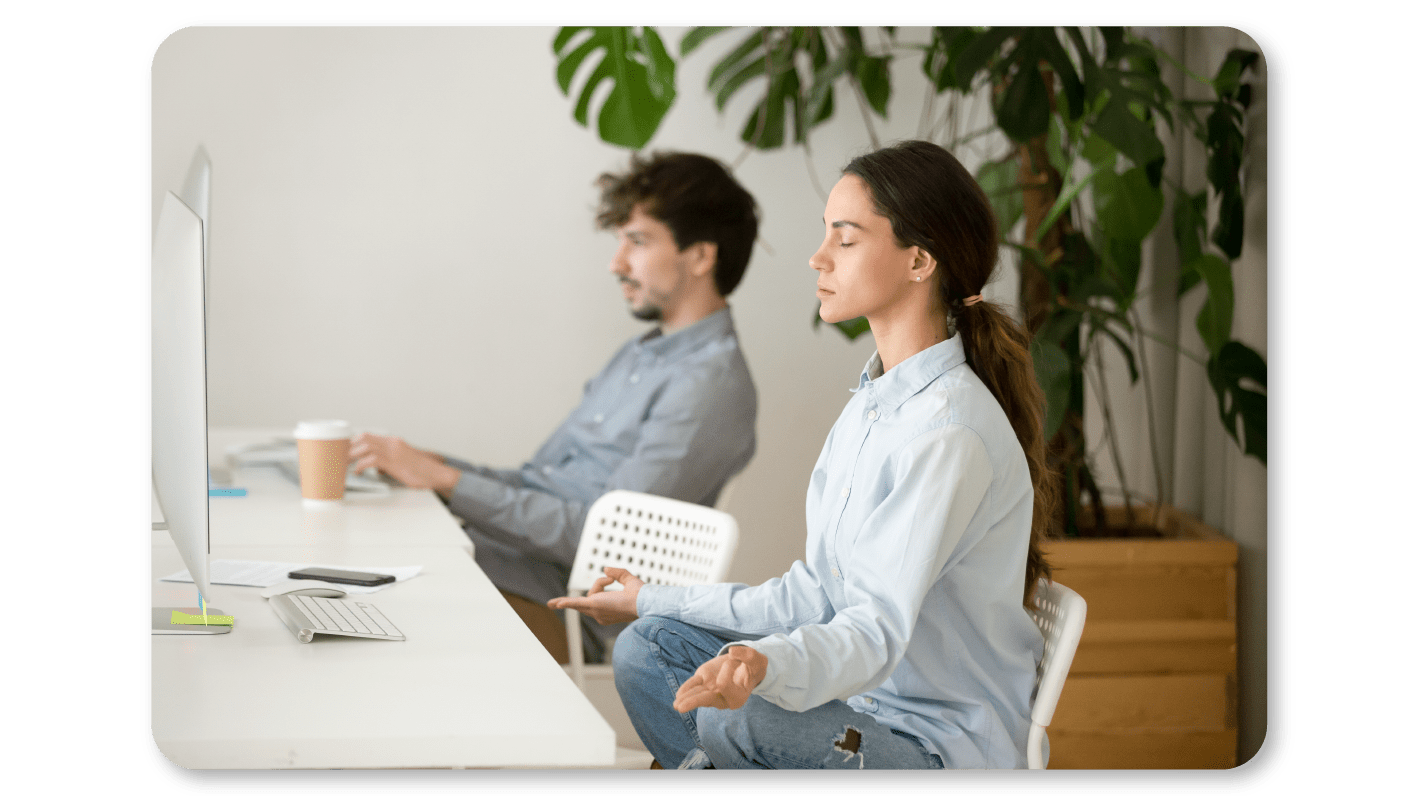
If you want to try something different apart from meditation or normal mindfulness practice, you can opt for the body scan meditation. Body scan meditation (BSM) involves directing your attention toward sensations occurring in different parts of the body. It helps you become more aware of your body language, bodily sensations, feelings, and emotions.
Here’s how you can practice it:
- Close your eyes briefly and mentally scan your body.
- Begin the scan from your toes and slowly move your way up to your head.
- As you progress, try not to let your mind wander. Instead, anchor your attention to each body part you encounter.
- Release all the tension from your body gradually.
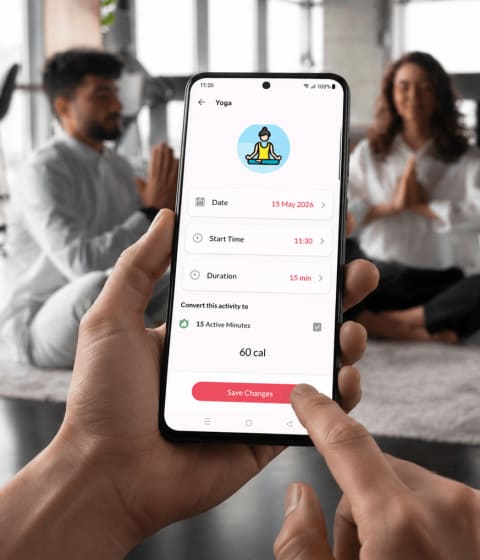
For employees who want structured support, platforms like Vantage Fit make it easier to build this practice into a daily routine. The app carries a library of guided audio sessions across seven categories, including a Relaxation set with a dedicated 8-minute body scan, plus meditation, yoga, sleep, self-awareness and white noise. Sessions run from around a minute to just over half an hour, so there is something that fits an actual gap in the day.
Two details matter more than they sound. Completing a session is logged as activity time, so mental wellness counts the same way a walk does. And sessions play offline and sync later, which is the difference between a program that reaches desk staff and one that also reaches people on a factory floor or out on the road.
Celegence, a life sciences regulatory consulting firm, leaned on exactly this during a high-pressure stretch of work. Yoga Nidra sits in the same Relaxation category as the body scan:
"One of the features I loved the most is the Yoga Nidra session, which helped us relax in the stress-induced environment."
Celegence
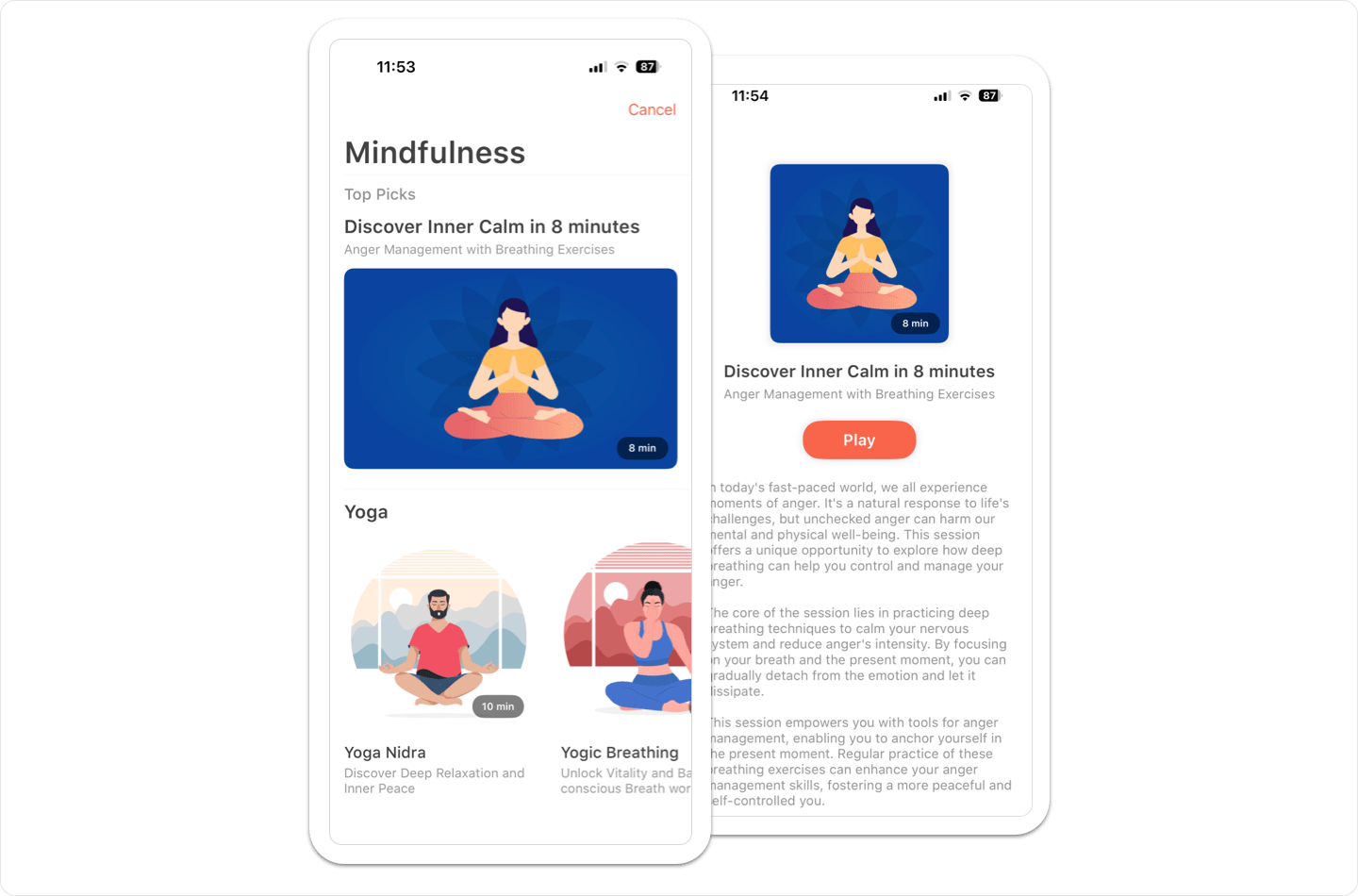
The American College of Sports Medicine found that body scan meditation can promote physical and emotional wellness.
7. Mindful Desk Yoga Stretches
Long hours at a desk can lead to stiffness and discomfort. Fortunately, you can infuse your workday with mindful desk exercises to alleviate stress, boost energy, and enhance overall wellness. Here are two simple office exercises you can incorporate into your work schedule:
Seated Cat-Cow Stretch
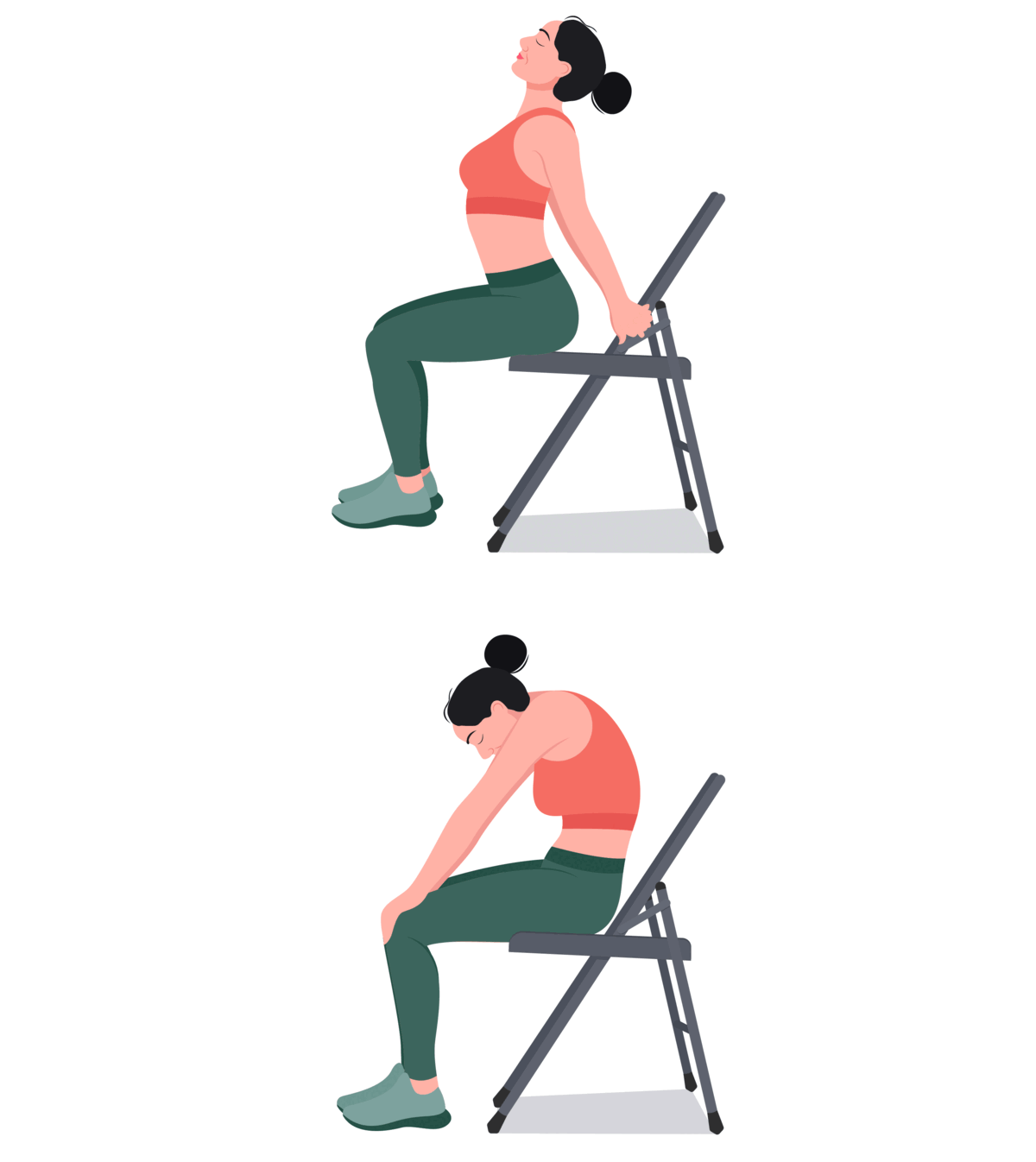
This stretch promotes flexibility in the spine, releasing neck and back tension.
How to Practice:
- Sit with your feet flat on the floor and your hands on your knees.
- Inhale as you arch your back, lifting your chest and chin (Cow).
- Exhale as you round your back, tucking your chin to your chest (Cat).
- Flow between the two with each breath for one to two minutes, then return to a neutral upright seat.
Desk Chair Pigeon Pose
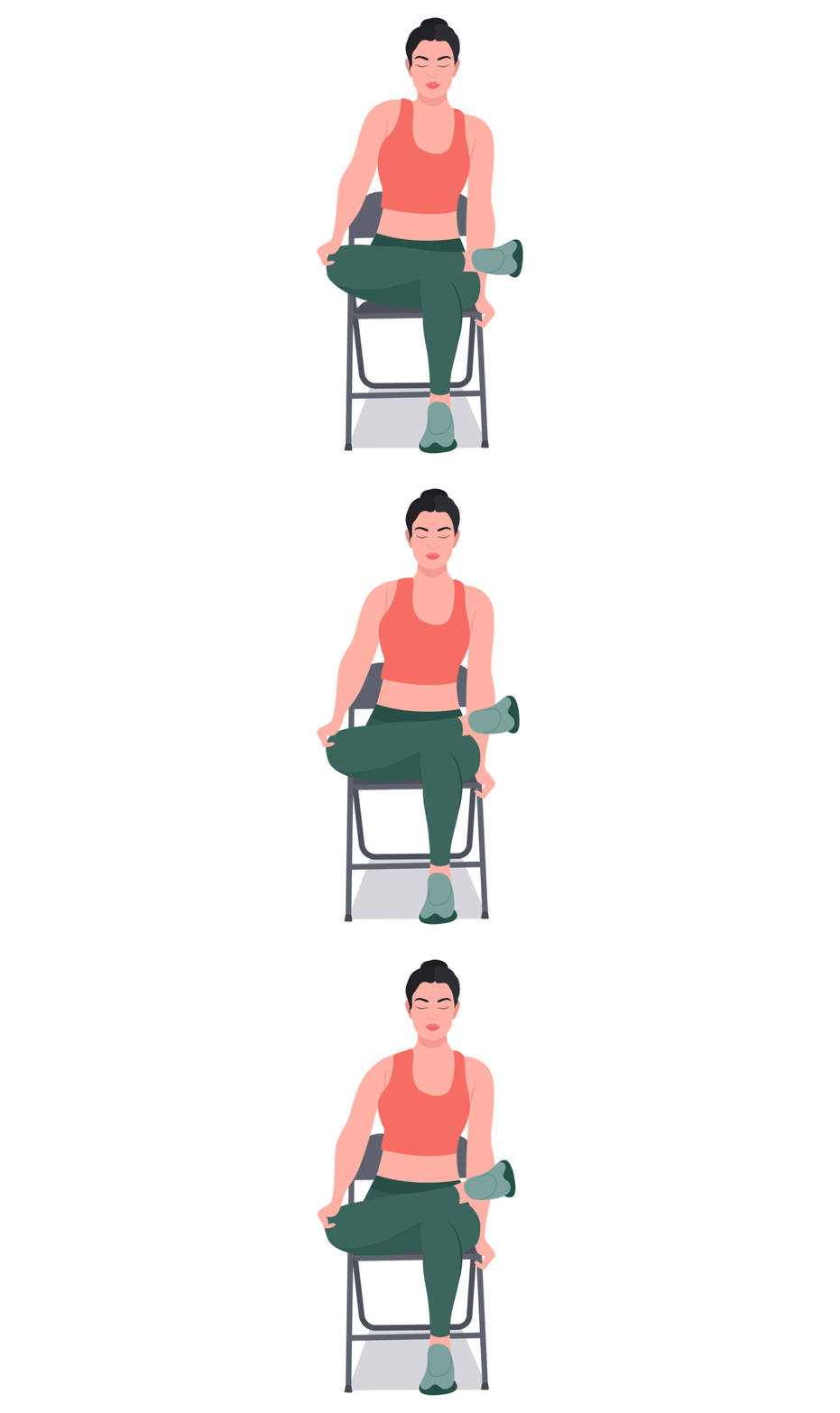
This stretch targets your hips, alleviates lower back pain, and enhances blood circulation in your legs.
How to Practice?
- Sit at the front of your chair with both feet on the ground.
- Rest your right ankle on your left knee, making a figure four.
- Press gently down on the right knee to open the hip. You want a comfortable stretch, not a forced one.
- Hold for 30 seconds to a minute, breathing deeply, then switch sides.
A few minutes of this a day changes how your back feels by evening, and it clears your head at the same time.
Suggested Read: 15 Easy Office Stretches For Better Employee Health
8. Mindful Gratitude

Mindful gratitude is the deliberate practice of noticing and naming what colleagues contribute, rather than assuming they know. It is the one exercise on this list that works on the team rather than the individual.
How to Practice?
- Go first. Thank people for specific contributions, however small.
- Build it into an existing ritual, like the last two minutes of a team meeting.
- Give people a place to do it publicly. Our own Vantage Rewards platform lets employees appreciate each other in writing, with badges and points attached.
Although being grateful to others is crucial to ensure mutual harmony at the workplace, being grateful to one’s own self is equally important. To practice self-gratitude, consider keeping a gratitude journal. Each day, jot down three to five things you’re grateful for. Doing so will help you to count your blessings when work stress blows off the charts!
9. Mindful Observation

Mindful observation means picking one object and giving it your full attention for a couple of minutes, noticing it rather than thinking about it. It is deliberately undemanding, which is the point.
How to Practice?
- Pick something in view that holds your interest. A potted plant, the sky through a window, a bird outside.
- Look at it with curiosity rather than analysis. Notice colors, shapes, textures.
- Breathe steadily and let work thoughts pass without following them.
- Keep going until you notice a detail you had never registered before.
It is a direct workout for attention, which makes it useful for anyone whose focus has been scattered all week.
10. Box Breathing
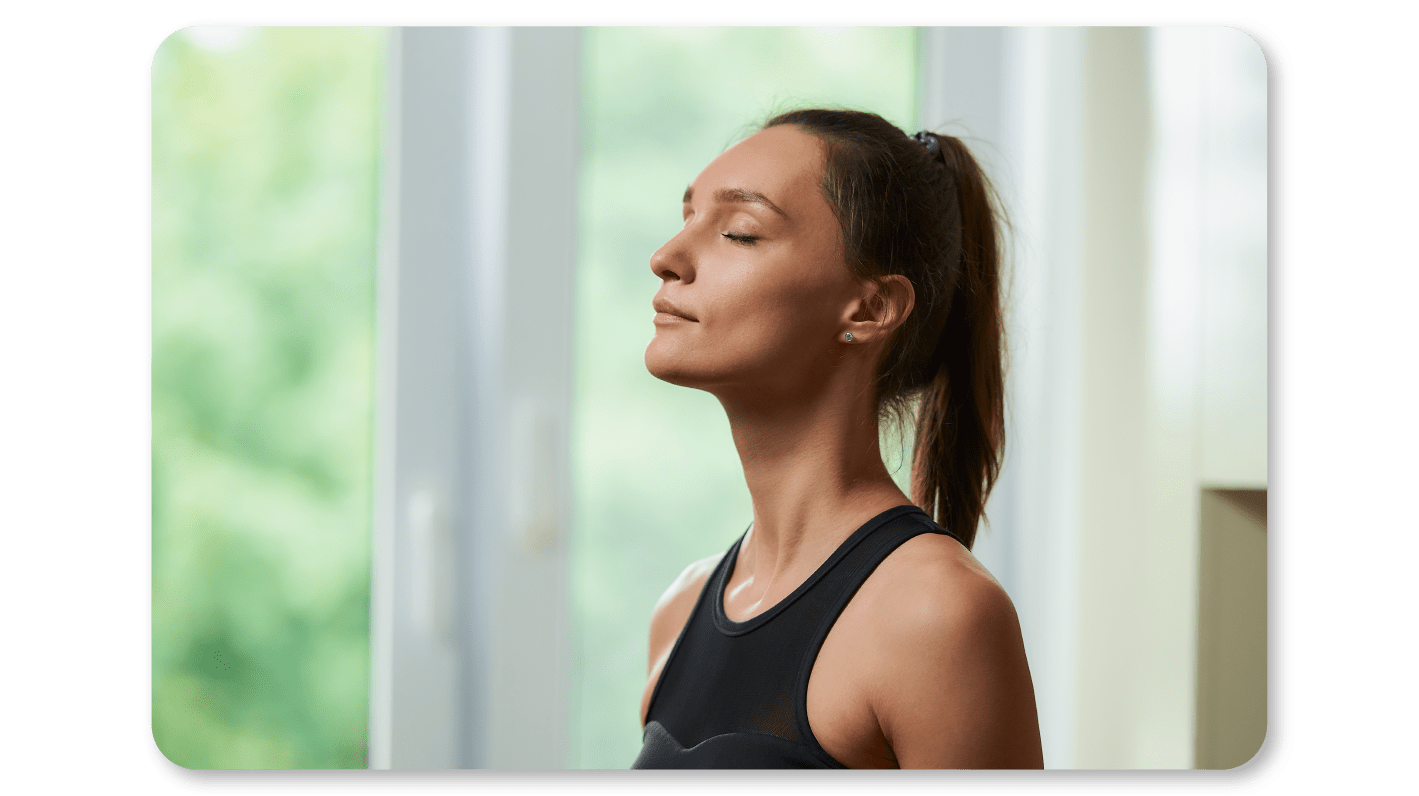
Box breathing means inhaling, holding, exhaling, and holding again for equal counts, usually four seconds each. It is widely used by soldiers and athletes before high-pressure moments, which tells you something about how reliably it holds up.
The mechanism is straightforward. Slowing your breath to an even count brings down your heart rate and blood pressure, and the counting itself hands your brain one small task to hold on to instead of whatever it was spiralling about. It needs no equipment and no privacy, so it travels anywhere.
How to Practice?
- Inhale slowly through your nose for four seconds.
- Hold the air in your lungs for four seconds.
- Exhale through your mouth for four seconds.
- Wait with empty lungs for four seconds. That completes one round.
- Repeat for three to five rounds, then let your breath return to its own pace.
If four counts feels like a strain, drop to three. The even rhythm matters far more than the length.
11. Mindful Unplugging

Mindful unplugging means thoughtfully disconnecting from digital devices and distractions to regain control over your life. It’s about creating moments of presence and mindfulness by chiding away from screens.
How to practice?
- Designate a specific unplugging time during your workday.
- Silence notifications.
- Engage in mindful breathing exercises.
- Step outside for a short walk or simply gaze out the window and observe nature.
- You can also utilize your unplugged time to read books or write about your inner feelings.
Make your lunch break an unplugged ritual. Put away your phone, step away from your laptop, and savor your meal mindfully. Later, go for a nice little walk. It will aid digestion and keep your mental weariness at bay.
12. Walking Meditation

Walking meditation is mindfulness in motion. Instead of sitting still and following your breath, you put your full attention on the act of walking itself: the rhythm of your gait, the lifting and placing of each foot, and whatever is going on around you.
It is the version that works for people who find seated meditation impossible. If closing your eyes and staying still leaves you more restless rather than less, walk instead. Five minutes away from the desk is enough.
How to Practice?
- Stand still for a moment first. Feel your weight, your posture, and your contact with the ground.
- Walk at a natural pace, or slightly slower, whatever lets you keep both your balance and your attention.
- Follow your feet: lifting one, moving it forward, setting the heel down.
- Notice how your weight shifts from one leg to the other with every step.
- Let sounds, the breeze on your skin, and whatever you can see register without judging any of it.
- When your mind wanders, calmly bring it back to your next step.
The slow, repetitive movement is what interrupts rumination, which is why this one works as well in a corridor as it does outdoors.
13. The One-Minute Reset
A one-minute reset is a sixty-second pause used to interrupt stress, clear mental clutter, and get your focus back before you start the next thing. It needs no equipment, no quiet room, and no long sitting practice.
It is the most useful exercise on this list precisely because it asks for so little, and nobody sitting near you will notice you are doing it.
How to Practice?
- Pause. Stop what you are doing, drop your shoulders, and move your phone and laptop out of reach.
- Acknowledge. Notice the tension or the scattered thinking without telling yourself off for it. The noticing is the exercise, not a failure of it.
- Breathe. Inhale slowly for four seconds, then exhale for roughly twice as long. The extended out-breath is what triggers your body's calm response.
- Reset. Pick one small task, or one clear thought, to carry into the next part of your day.
One variation worth knowing. If you have a few private minutes, alternate nostril breathing does the same job more deeply, though it needs a hand at your face, so save it for somewhere other than an open-plan desk.
Thirteen is a lot to look at in one go, so treat the list as a menu rather than a programme. Tick off what you have actually tried below, and add one new exercise a week rather than attempting all of them at once.
Your mindfulness exercise checklist
Tick the ones you have tried at least once. One new exercise a week beats thirteen in a day.
How to run meditation as a workplace program
Everything above is something an individual can do alone. Meditation is the part HR actually rolls out: scheduled, guided, and the same for everyone who joins.
The distinction matters when you are deciding what to fund. Mindfulness is a habit you are trying to spread. A meditation program is something you can put on a calendar, staff, and measure.
Keep the sessions shorter than feels serious.
Two to five minutes is enough to build the habit, and it removes the objection that kills most programs before they start, which is that nobody has half an hour.
Anchor them to something already in the week, like the first two minutes of a team meeting or a standing slot after lunch, rather than adding another invitation to a full calendar.
Make it voluntary, and make that obvious.
Attendance holds up better when people know they can skip a week without anyone noticing.
Guided beats unguided at the start.
Asking a room of beginners to sit quietly with their own thoughts is how programs lose people in week two. A recorded voice giving instructions removes the guesswork, and the session runs the same whether three people join or thirty.
It travels well.
Remote and hybrid teams are usually the hardest group to reach with anything wellness-related, and guided audio is one of the few formats that works identically at a desk, at home, or in a hotel room.
Knowing whether it is working
The usual failure is running sessions for a quarter and having nothing to show at renewal. Decide upfront what you are counting.
- Participation: How many people join, and how many come back after week three. The drop-off point tells you more than the sign-up number.
- Minutes practiced: A better signal than headcount, because it separates the people building a habit from the people who tried it once.
- Mood over time: A daily one-tap check-in gives you a trend line instead of a single end-of-quarter survey.
Make it a task, not just a resource. The most common reason a meditation library goes unused is that nothing points anyone at it.
In Vantage Fit you can set "complete a mindfulness session" as a task inside a wellness challenge, so the sessions sit in the same place employees are already competing, logging and earning points, rather than in a corner of the app nobody opens.
Every completed session is logged as activity time, which is what gives you the participation and minutes figures to report on at the end of a quarter.
Mood works a little differently. Employees can log it from the mobile app, the web app, or without leaving Microsoft Teams, but it is not a chart HR pulls up on the dashboard. If you need mood reporting at an organization level, the Vantage Fit team can extract it on request.
The self-service route is the same trick as above: make mood logging a task inside a challenge, and participation shows up in the challenge results alongside everything else.
Wipro ran a short, focused version of exactly this. Its Inbox to Inner Peace initiative, a two-week International Yoga Day program in June 2025, drew 57 active employees who completed 163 yoga sessions and logged 1,279 mindfulness minutes between them.
Two weeks, one theme, and a number to put in front of leadership afterwards. You can see the fuller picture in the Wipro global wellbeing case study.
Supporting employees who are struggling
Everything above is a habit, not a treatment. Some employees are dealing with considerably more than a stressful quarter. The World Health Organization estimates that 332 million people globally live with depression, and anxiety disorders are similarly widespread.
Mindfulness exercises are not a substitute for care, and it is worth saying so plainly when you introduce them. What HR can do is make the route to real support short and unembarrassing: publicize the EAP, train managers to notice and refer rather than diagnose, and run a corporate mental health program that people actually know how to reach.
For severe cases of depression and anxiety, professional help is the right answer, not a breathing exercise.
Wrapping Up
You do not need a program to start. Any one of the thirteen exercises above works on its own, today, for a single employee who tries it before their next meeting.
What a program adds is consistency. Guided sessions on a calendar, kept short and kept voluntary, are what turn a good intention into something a team actually keeps doing, and something you can report on at the end of the quarter.
Pick one exercise. Run it for two weeks. Count who comes back.
Frequently Asked Questions
How do we introduce meditation at work without it feeling forced?
Start small and attach it to something already in the calendar, like the first two minutes of an existing team meeting or a fixed slot after lunch. Keep sessions guided, keep them voluntary, and say clearly that skipping is fine. Programs that launch with a company-wide mandate tend to lose people faster than ones that start with a single willing team.
How do I get leadership to back a workplace meditation program?
Lead with cost and effort rather than wellbeing. Guided sessions need no room booking, no equipment and no external facilitator, and they run in under five minutes. Then agree what you will report on before you start. Participation, repeat attendance and practice minutes are all measurable from week one, which turns the renewal conversation into a data question instead of an opinion.
Are two to five minute sessions long enough to make a difference?
Yes, provided they are regular. Frequency does more than duration. A few minutes most days builds the habit far more reliably than one long session a week, and short sessions are the ones people actually keep turning up to.
How do you exercise mindfulness at work?
You can do the following exercises to practice mindfulness at work:
- Take brief moments to check in with your breathing and physical sensations throughout the day.
- When your mind drifts, gently return your attention to the task at hand.
- Look for opportunities to pause and refocus.
With regular micro-practices, you can stay centered even in demanding environments.
What are the mindfulness activities at work for anxiety?
A few of the mindfulness activities at work for anxiety are:
- Mindful Breathing,
- Short Meditation Breaks,
- Mindful Walks,
- Present-Moment Task Focus,
- Yoga Stretches.
Training your mind to stay grounded in the now rather than getting carried away by anxious thoughts is key. Anchor yourself regularly with sensory awareness and gentle redirection of attention.
Does mindfulness at work actually work?
Yes. Meta-analyses of workplace mindfulness randomized controlled trials find consistent, statistically significant reductions in stress, anxiety, and psychological distress, along with gains in well-being and job satisfaction. Brain imaging studies also show that sustained practice is linked to physical changes, more gray matter in the hippocampus and less reactivity in the amygdala, that support calmer, more focused work.
What is the difference between mindfulness and meditation at work?
Meditation is a formal, set-aside practice: sitting quietly and focusing on the breath for a fixed time. Mindfulness is broader: it's the quality of present-moment awareness you can bring to any activity, including meetings, emails, or lunch. Meditation is one way to train mindfulness, but you can be mindful throughout the workday without ever formally meditating.