Vantage Fit
Vantage Fit
Nutrition & Hydration

No Caffeine Challenge for Employees

A 30-day individual program that helps your team gradually cut back on caffeine, eliminate it entirely, and discover how energy, sleep, and focus shift without it. Progression-first — not cold turkey. Every clean day is logged and every phase is recognised.

Duration 30 Days
Format Individual
Tracking Self-Reported
Works for All Teams
Level Intermediate
No Caffeine Challenge for Employees — 30-day program to eliminate caffeine dependency and improve energy and sleep on Vantage Fit

What Is the No Caffeine Challenge?

The No Caffeine Challenge is a 30-day individual program that helps your team gradually cut back on caffeine and eventually eliminate it from their daily routine. It starts where most people are — multiple cups of coffee or tea per day, often supplemented by energy drinks or sodas. Over four weeks, participants cut consumption by half, then to a single serving, then eliminate caffeine entirely, and finally sustain a caffeine-free baseline while auditing how their energy and focus change.

The approach is progression-first, not cold turkey. Your team is not asked to stop on Day 1. They move through four phases with clear weekly tasks, daily self-reporting, and milestone recognition at each stage.

Fully self-reported and open to every team member regardless of fitness level — no wearable required. Works equally well for in-office, hybrid, and remote teams.

Challenge Snapshot

Everything at a glance

Duration 30 days
Format Individual
Tracking Vantage Fit app (food log, self-reported task completion)
Best For All teams: in-office, hybrid, and remote
Difficulty Intermediate
Why it matters

Benefits of the No Caffeine Challenge

Caffeine is the most widely used psychoactive substance in the world. Research published by the National Institutes of Health has found that caffeine dependence is a recognized clinical syndrome — one that affects sleep quality, anxiety levels, and cardiovascular health for millions of employees who consider it a routine part of their workday.

The challenge works on a different wellness lever than step or fitness programs: the quality of rest and mental energy. Most caffeine withdrawal symptoms peak around days 2–3 and resolve by day 7. The gradual four-week reduction plan minimizes severity compared to cold turkey and makes participation sustainable.

  • Improved sleep quality and duration — most notable in weeks 3 and 4 once caffeine is fully cleared from the system
  • Reduced anxiety and afternoon energy crashes once withdrawal passes — replaced by more stable energy throughout the day
  • More consistent mood and focus — employees gain a clearer picture of their baseline energy without stimulants
  • Better hydration habits as water and herbal tea replace caffeinated drinks across all four weeks
  • A clearer understanding of how caffeine has been masking natural energy levels — insight that outlasts the 30-day window
  • Tackles a common but often-overlooked source of workforce fatigue and anxiety: habitual caffeine overconsumption
  • Works on a different wellness lever than fitness challenges — targeting rest quality and mental energy rather than physical activity
  • Fully self-reported and open to every team member regardless of fitness level — no wearable required, no shared equipment
  • Pairs naturally with any sleep or stress awareness initiative — improved sleep quality from weeks 3–4 has a direct impact on next-day focus and performance
  • Works as a quarterly reset program or a complement to a broader nutrition initiative — accessible to in-office, hybrid, and remote teams on equal footing
  • Individual log entries are private — HR sees only aggregate task-completion data, never personal consumption details
88% employee engagement

IBS Software achieved 88% employee engagement in a 28-day multi-activity wellness challenge on Vantage Fit — 17% above the 70% industry benchmark.

See it in action
Simple to run

How the No Caffeine Challenge Works

1

Set up the challenge

As an HR leader or wellness coordinator, you configure the challenge duration (30 days), the four weekly phases with daily self-report tasks, and the point value for each completed day. Scope the challenge to specific departments or your entire workforce — enrollment can be open or invitation-based.

2

Week 1 — Employees audit and cut by 50%

On Day 1, employees log their current daily caffeine intake and set a personal reduction target: if they drink four cups per day, they aim for two. The daily task is to log current intake and confirm the 50% reduction was met. The goal in Week 1 is awareness and gradual reduction, not elimination.

3

Week 2 — Reduce to one serving per day

Week 2 brings intake down to a single serving of caffeine per day. This is typically when withdrawal symptoms surface — headache, fatigue, irritability — and then pass. Employees log their intake and confirm they stayed at or below one serving and identify one caffeine-free replacement they used.

4

Week 3 — Full elimination

All caffeine is removed. Employees replace caffeinated drinks with herbal teas, water, or decaf and log each caffeine-free day. The daily task: confirm zero caffeine consumption and log the replacement choice. Leaderboard standings and participation rates are shared to sustain momentum through the hardest phase.

5

Week 4 — Sustained and assessed

Employees maintain their caffeine-free baseline and complete a personal energy audit — logging a caffeine-free day and submitting one observation about energy, focus, or sleep quality. HR announces final standings, badge recipients, and aggregate participation data for leadership.

Ready to run this challenge for your team?

No equipment needed. Up and running in minutes — for remote, hybrid, and in-office teams.

Book a Free Demo
Progressive by design

Sample No Caffeine Challenge Plan

This is a suggested 4-week structure that reduces caffeine intake one phase at a time — gradual reduction, further reduction, full elimination, and sustained assessment. As an HR leader or wellness coordinator, you configure the exact task list and point values to match your workforce's goals.

Week 1: Gradual Reduction (Days 1–7)

Daily task

"Log your caffeine intake and confirm you cut it by 50% today."

Employees audit their current daily caffeine intake and begin cutting by 50%. If they're drinking four cups a day, the target is two. The goal in Week 1 is awareness and initial reduction, not elimination. Team members who complete all 7 days earn first-phase streak recognition.

Milestone

Team members who complete all 7 days earn first-phase streak recognition.

HR Action

Send a kickoff communication explaining the four-week reduction plan. Recommend herbal tea or sparkling water as replacements. A short overview of what to expect each week reduces early drop-off.
Week 2: Further Reduction (Days 8–14)

Daily task

"Log your caffeine intake and confirm you stayed at one serving today."

Reduce to one serving of caffeine per day. This is the week most withdrawal symptoms surface — headache, fatigue, irritability — and then pass. Employees log daily and identify one caffeine-free replacement they used. Team members who complete both weeks earn mid-challenge recognition.

Milestone

Team members who complete both weeks earn mid-challenge recognition.

HR Action

Send a mid-challenge message acknowledging Week 2 is the hardest week and that withdrawal symptoms are temporary. Recognise participants with full task compliance to reinforce momentum.

Week 3: Full Elimination (Days 15–21)

Daily task

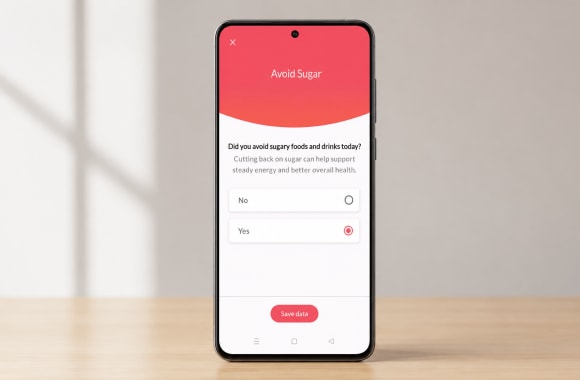
"Log zero caffeine today — what did you drink instead?"

All caffeine is removed. Team replaces caffeinated drinks with herbal teas, water, or decaf alternatives and logs each caffeine-free day. Team members who complete all 21 days earn three-week streak recognition.

Milestone

Team members who complete all 21 days earn three-week streak recognition.

HR Action

Share participation rates and leaderboard standings to drive engagement through the most demanding phase. Highlight the percentage of participants who have made it this far.

Week 4: Sustained and Assessed (Days 22–30)

Daily task

"Log a caffeine-free day and record one energy observation."

Maintain the caffeine-free baseline and complete a personal energy audit. Employees log each caffeine-free day and submit one observation about energy, focus, or sleep by week's end. Team members completing the full 30 days earn the Challenge Completion Badge. Those completing tasks on at least 25 of 30 days earn the Consistency Badge.

Milestone

Challenge Completion Badge for every employee who finishes all 30 days. Consistency Badge for those who complete tasks on at least 25 of 30 days. Top 10 leaderboard positions receive the Leaderboard Rank Badge.

HR Action

Announce final leaderboard standings and badge recipients. Share aggregate participation data with leadership to demonstrate the program's reach and completion rates.

Keep them motivated

Rewards and Points

You configure the point value for each daily task during setup. Because the leaderboard ranks by total points rather than any health outcome, the challenge rewards consistency and effort — a participant who logs every day, regardless of how difficult they found cutting caffeine, earns the same recognition as someone who found it easy.

Challenge Completion Badge

Awarded to every employee who completes all 30 days of the No Caffeine Challenge, including the Week 4 energy audit.

Leaderboard Rank Badge

Awarded to the top 10 participants on the final leaderboard — ranked by total points accumulated across 30 days of daily task completion.

Consistency Badge

Awarded to employees who complete tasks on at least 25 of 30 days — participants can miss up to 5 days and still earn this badge.

Points earned through the challenge are added to the employee's Vantage Points balance. Employees can redeem these points for gift cards from Amazon, Starbucks, Nike, and hundreds of other options through the Vantage Fit rewards marketplace. Points carry over and combine with earnings from other active challenges.

Built on Vantage Fit

Running the No Caffeine Challenge on Vantage Fit

The No Caffeine Challenge runs on Vantage Fit's food log, self-reported task system, and automated notifications — configured as a Custom (Multi-Activity) challenge. Setup takes under 30 minutes. All tracking is done from the employee-facing mobile app.

Food log for caffeine tracking

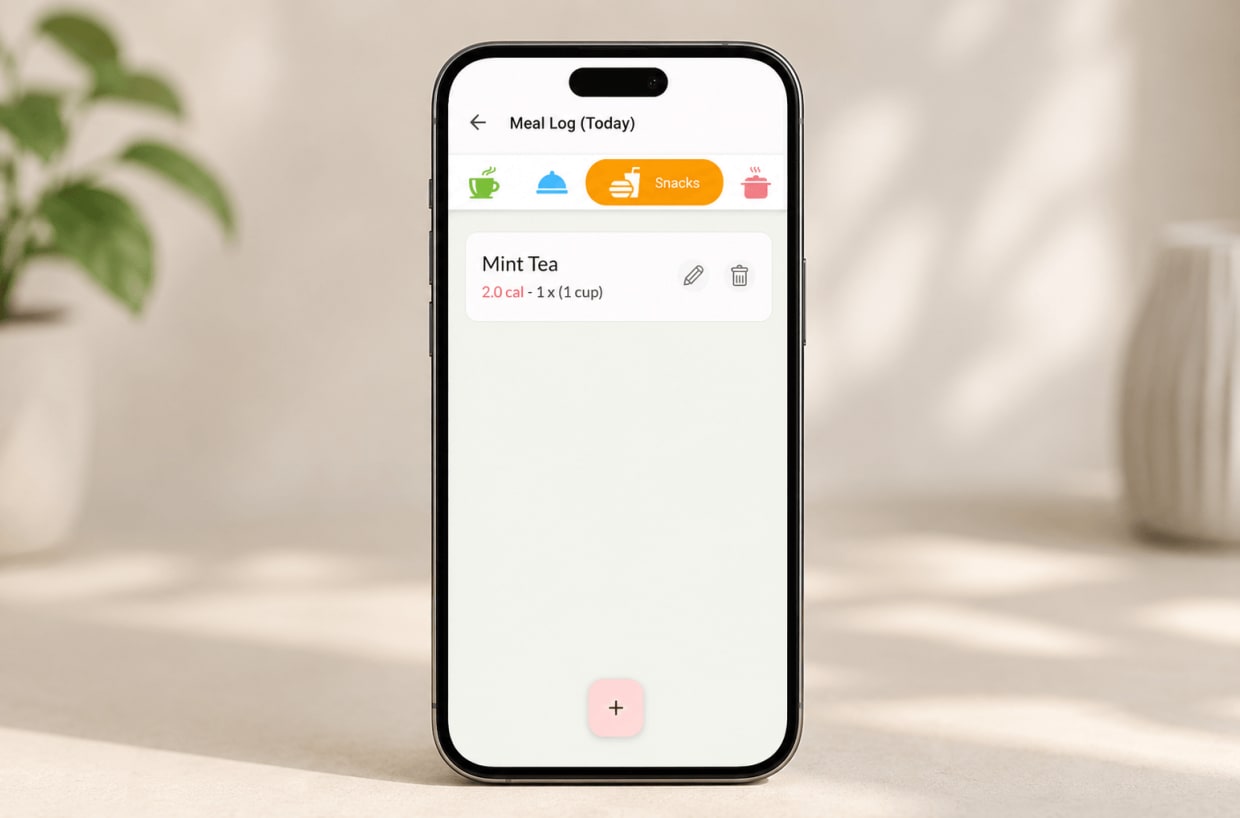
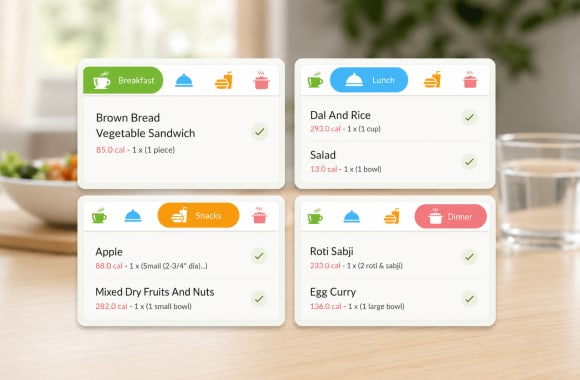
During Weeks 1 and 2, employees use the Vantage Fit food log to record caffeinated beverages — coffee, tea, energy drinks, sodas. The searchable database includes common caffeinated drinks with serving sizes. From Week 3 onward, the daily task switches to self-reported confirmation that no caffeine was consumed.

Custom multi-week challenge setup

Configured as a Custom (Multi-Activity) challenge type in the admin portal. Four weekly themes (Gradual Reduction, Further Reduction, Full Elimination, Sustained and Assessed) with daily self-report tasks for each. HR can set point values per completed day and scope enrollment to departments or the full workforce.

HR dashboard and participation insights

Real-time task completion rates and week-by-week participation trends are visible in the admin dashboard. Individual log entries are private — HR sees only aggregate task-completion data, never personal consumption details or individual caffeine logs.

Automated notifications

Launch notification, daily reminders to log and complete the day's task, phase-transition notifications at the start of each new week, and a wrap-up notification with final leaderboard standings. All sent automatically — no manual follow-up required from HR.

Frequently Asked Questions

Can remote employees participate in the No Caffeine Challenge?

Yes. All tasks are self-reported through the Vantage Fit mobile app. No in-person components or equipment requirements. Team members in different time zones, countries, and work arrangements participate on equal footing.

How is caffeine intake tracked?

During Weeks 1 and 2, employees use the food log to record caffeinated beverages. From Week 3, the daily task switches to self-reported confirmation that no caffeine was consumed. Individual log entries are private — HR sees only aggregate completion data.

How long should a No Caffeine Challenge run?

30 days. The four-week structure allows one week per phase: reduction by half, reduction to one serving, full elimination, and sustained caffeine-free living. A shorter challenge compresses the reduction timeline, increasing withdrawal intensity for heavy caffeine consumers.

What if an employee experiences withdrawal symptoms?

Caffeine withdrawal (headache, fatigue, difficulty concentrating) is most common in days 2–5 and resolves for most people within a week. The gradual reduction approach minimizes severity compared to cold turkey. Team members with severe or prolonged symptoms should consult a healthcare provider.

What if an employee misses a day?

Missing a day does not remove a participant. They simply do not earn points for that day. The Consistency Badge is awarded to those who complete tasks on at least 25 of 30 days — so participants can miss up to 5 days and still earn the badge.

How is the winner determined?

The final leaderboard ranks participants by total points across 30 days, earned through daily task completion, weekly milestone completion, and the Week 4 energy audit submission. The Leaderboard Rank Badge goes to the top 10. Everyone who completes the challenge receives the Challenge Completion Badge regardless of final rank.

Trusted by 100+ companies worldwide

Launch the No Caffeine Challenge on Vantage Fit

IBS Software saw 88% engagement in a 28-day wellness challenge on Vantage Fit. Help your team reduce caffeine dependency, improve sleep, and sustain energy naturally.