Vantage Fit
Vantage Fit
Team Challenge

Team Step Challenge for Employees

May the Best Team Win

Pit departments head-to-head in a step-count race and watch team spirit take over. Aggregate steps, dual leaderboards, and rewards that keep every employee moving — for in-office, hybrid, and remote teams.

Duration 30 Days
Format Team
Type Race
Works for All Teams
Level Beginner
Team Step Challenge for Employees — department step-count race with team leaderboards on Vantage Fit

What Is the Team Step Challenge?

The Team Step Challenge is a team-based competition built around step count. Instead of tracking distance or duration, it focuses on the steps your employees log throughout the challenge. Those steps add up to a shared team total, and your teams are ranked on a leaderboard based on average step count.

The format works well for in-office, hybrid, and fully remote teams. Shared goals create social accountability and help participation stay strong beyond the first week.

Challenge Snapshot

Everything at a glance

Duration 30 days
Format Team
Tracking Vantage Fit app, Apple Health, Google Fit, Fitbit, Garmin, or manual entry
Best For All teams: in-office, hybrid, and remote
Difficulty Beginner
Why it matters

Benefits of the Team Step Challenge

Step challenges are easy to join because steps can come from walking, stair climbing, or any everyday movement. No equipment, no gym membership, no prior fitness experience required. The CDC recommends 150 minutes of moderate-intensity aerobic activity per week — a target that regular steps can meet entirely.

The team format adds a social layer that keeps participation strong. When employees are part of a team, they're less likely to lose interest halfway through — and even employees who struggle individually feel motivated to contribute to their team's total.

  • Accessible movement: steps can come from walking, stair climbing, or any everyday movement — no equipment, no gym membership, no prior fitness experience needed
  • Lower health risks: daily movement supports cardiovascular health and links to lower risk of chronic conditions like Type 2 diabetes and hypertension
  • Better energy and focus: a daily step habit reduces cortisol levels and supports mood regulation — employees who move report lower stress throughout the workday
  • More connections: the team format gives colleagues a shared goal — employees across departments, locations, and time zones find common ground through the leaderboard
  • Motivating for all fitness levels: the team dynamic means even employees who struggle individually feel motivated to contribute to their team's total
  • Keeps people engaged: team challenges usually get better participation and retention than individual ones — Tata Motors saw 43 teams participate with 70% engagement and 7,600+ average daily steps
  • Simple to join: every step adds to the team total — a better fit for employees who may not want to take part in a solo fitness challenge
  • Helps control long-term costs: active wellness programs benchmark at $250 in annual healthcare savings per employee
  • Connects distributed teams: a shared step challenge gives hybrid and distributed teams one common thread to rally around — letting employees across offices and time zones compete together
70% employee engagement

Tata Motors ran a 43-team step challenge on Vantage Fit, achieving 70% engagement with employees averaging 7,600+ daily steps throughout the challenge.

See it in action
Simple to run

How the Team Step Challenge Works

1

Form the teams

Before the challenge starts, assign employees to teams: group by department, office, or business unit, or mix into cross-functional teams. Most programs work well with 8 to 20 employees per team.

2

Employees track steps daily

Steps tracked by device or wearable — smartphone, fitness band, or smartwatch. Every step logged adds to the employee's individual total AND their team's aggregate.

3

Teams race on the leaderboard

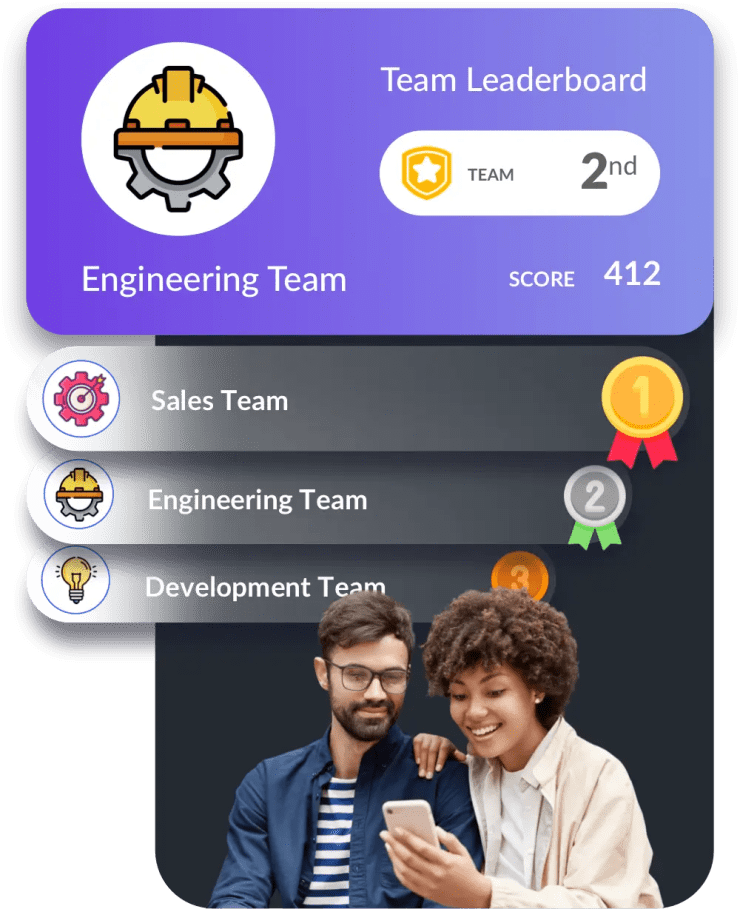
A team leaderboard ranks all participating teams by their aggregate step total. Individual contributions within each team are also visible, so teammates can see who is contributing and who may need encouragement.

4

Mid-challenge milestones keep engagement high

Employees who hit personal single-day step records are recognized regardless of where their team sits on the leaderboard. This dual structure — team competition plus individual achievement — keeps motivation active across the full 30 days.

5

Final standings and recognition

Declare the team with the highest aggregate step count the winner. All employees who completed the challenge receive recognition. Individual top performers are also recognized separately.

Ready to run this challenge for your team?

No gym required. Up and running in minutes — for remote, hybrid, and in-office teams.

Book a Free Demo
Progressive by design

Sample Team Step Challenge Plan

This is a suggested 4-week structure that progressively raises the weekly step target — building momentum from participation to competition. As an HR leader or wellness coordinator, you configure the exact task list and point values to match your workforce's goals.

Week 1: Team Kickoff (Days 1–7)

Daily task

"Log your steps today and contribute to your team's total"

Get every team member active and tracking from Day 1. Weekly target set at an achievable level so even the least active employees can contribute meaningfully. Focus is on 100% team participation, not raw step volume.

Milestone

Every team member who logs steps on Day 1 contributes to the team total and appears on the leaderboard — signaling to the whole team that the challenge is live.

HR Action

Send a Day 1 welcome message outlining the weekly target, the 4-week progression, and practical tips for adding steps to the daily routine — walking to a farther lunch spot, taking stairs, parking farther away.
Week 2: Build the Momentum (Days 8–14)

Daily task

"Log your steps — the mid-challenge leaderboard is live"

Raise the weekly team target. The mid-challenge leaderboard is published for the first time and teams can see where they rank. Competitive motivation begins to drive daily engagement.

Milestone

Employees who have logged steps every day across Weeks 1 and 2 earn Consistency Badge recognition.

HR Action

Share mid-week leaderboard on Day 10 or 11. Highlight the team with the biggest improvement from Week 1 and the individual with the highest step total so far.

Week 3: Push for Position (Days 15–21)

Daily task

"Log 10,000+ steps today — push your team up the leaderboard"

Increase the weekly team target again. Teams close in the standings push harder to separate themselves. Individuals hitting 10,000+ steps per day begin driving significant team totals.

Milestone

Employees who reach 10,000 steps on any single day this week unlock the 10,000-step daily badge.

HR Action

Post a group total showing the combined steps all participating employees have logged so far. That collective metric strengthens team identity and gives every participant a visible reason to keep contributing.

Week 4: Final Sprint (Days 22–30)

Daily task

"Every step counts — finish strong for your team"

Set the highest weekly team target. Final leaderboard positions are decided in the last 72 hours. Every step counts for both individual badge eligibility and team ranking.

Milestone

Challenge Completion Badge awarded to every employee who completes the full challenge. Top 10 individual contributors receive the Leaderboard Rank Badge.

HR Action

Send a Day 30 wrap-up email with final team leaderboard standings, total steps logged across the organization over 30 days, and recognition for every employee who completed the challenge.

Keep them motivated

Rewards and Points

Step Milestone Badges reward employees who hit single-day step records — 3k, 5k, 7k, 10k, 15k, and 20k steps. Completion and consistency badges keep motivation active beyond the final sprint. Because the team leaderboard ranks by aggregate steps rather than individual physiology, every employee's daily contribution matters.

Challenge Completion Badge

Awarded to every employee who completes the full 30-day Team Step Challenge.

Leaderboard Rank Badge

Awarded to the top 10 individual contributors on the final step leaderboard.

Step Milestone Badges

Awarded when employees hit single-day step records: 3k, 5k, 7k, 10k, 15k, and 20k steps in a single day.

Consistency Badge

Awarded to employees who log steps every day across Weeks 1 and 2 — building the streak before the mid-challenge leaderboard goes live.

Best Walk Badge

Awarded to the employee who logs the highest single-day step count at any point during the challenge.

Points earned through the challenge are added to the employee's Vantage Points balance. Employees can redeem these points for gift cards from Amazon, Starbucks, Nike, and hundreds of other options through the Vantage Fit rewards marketplace. Points carry over and combine with earnings from other active challenges.

Built on Vantage Fit

Running the Team Step Challenge on Vantage Fit

The Team Step Challenge runs on Vantage Fit's step tracking, team formation, and dual leaderboard features — combined into a single 30-day challenge structure. All tracking and leaderboard views are available from the same employee-facing app.

Step Tracking & Auto-Sync

Connects to fitness trackers employees already use. Syncs automatically from Apple Health (iOS), Google Fit (Android), Fitbit, and Garmin. Employees connect devices once during onboarding; steps are captured in the background thereafter. Manual step entry is available for employees without wearables. Supports Active Minutes conversion to steps. Historical step data backfill is available so late joiners don't start at a disadvantage.

Team Formation & Dual Leaderboards

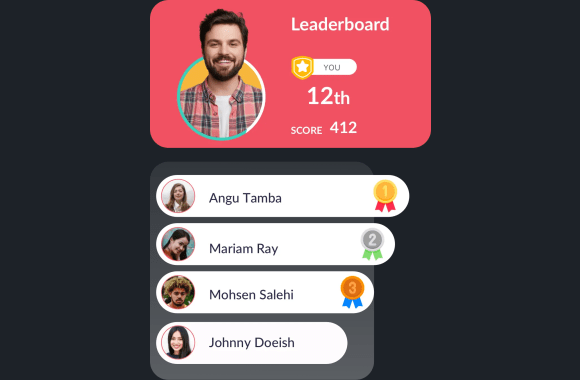
Before launch, assign employees to teams in the admin dashboard — by department, office location, business unit, or mixed cross-functional groups. Two simultaneous leaderboard views run throughout the challenge: a team leaderboard ranking all participating teams by aggregate step total, and an individual leaderboard for all participants. Filter results by department or location.

Anti-Cheating Controls

Steps are capped at 10,000 per hour and 50,000 per day per employee to protect the integrity of the team competition. Unusual activity patterns can be flagged for administrator review.

HR Dashboard

Real-time team totals, rankings, participation rates, and department-level activity breakdowns — all in one view. Download leaderboard data during or after the challenge. Track engagement and catch participation gaps early.

Frequently Asked Questions

How are teams formed for the challenge?

As HR Administrator, you assign employees to teams before the challenge begins through the admin dashboard. Group by department, office location, job function, or mixed cross-functional teams. Once the challenge starts, the team structure stays fixed for the full duration.

Can remote employees participate?

Yes. The team format is specifically designed to work across in-office, hybrid, and fully remote workforces. Employees can participate on their own devices from any location. The leaderboard connects teams across geographies.

How are steps tracked?

Each employee's steps are tracked by their device or wearable. Step data syncs automatically from Apple Health (iOS), Google Fit (Android), Fitbit, and Garmin. If the administrator enables manual entry, employees without a wearable can log steps that way. Every employee's daily steps roll into the team's aggregate total.

How is the winning team determined?

The winning team is the team with the highest total aggregate steps at the end of the challenge period. All team members' steps across all challenge days are summed to produce the final team total. The team leaderboard reflects this ranking in real time throughout the challenge.

What happens if an employee misses a day?

Missing a day doesn't disqualify an employee or their team. Steps from every active day are counted regardless of days missed. In a close leaderboard competition, consistent daily contributions are an advantage — which is why the team dynamic naturally encourages members to stay active even on low-energy days.

How long should the Team Step Challenge run?

The standard format is 30 days, organized as four progressive weeks. This duration is long enough for measurable habit formation and meaningful team competition without engagement dropping off. Shorter formats of 14 or 21 days also work well as introductory challenges for workforces running a step competition for the first time.

Trusted by 100+ companies worldwide

Launch the Team Step Challenge on Vantage Fit

Tata Motors ran a 43-team step challenge on Vantage Fit, reaching 70% engagement with employees averaging 7,600+ daily steps.