What Is a Positive Work Environment?
A positive work environment is one where employees feel psychologically safe, respected, and supported, with open communication, recognition, and opportunities to grow. It runs on energy, trust, and belonging, and shows up in how work feels day to day, not just in the policies on paper.
People often use “positive” and “healthy” interchangeably, but there is a difference between the two. A healthy work environment is the conditions you put in place: safety, fair workloads, support for wellbeing, and sensible policies. A positive one is how those conditions feel to the people inside them. You can build a technically healthy workplace that still feels flat, so the goal is to get both right. If you are setting up the underlying conditions first, see our guide to building a healthy work environment.

A positive work environment shows up across four dimensions:
- Physical: The space people work in, office or home, is safe and comfortable.
- Social: Relationships run on trust, inclusion, and real collaboration, not polite small talk.
- Emotional: People feel safe speaking up, raising concerns, and admitting mistakes.
- Structural: Fair processes, clear expectations, and honest paths to grow hold the other three together.
Get these four right, and the engagement, retention, and productivity gains tend to follow.
Why a Positive Work Environment Matters
A positive work environment matters because it directly shapes employee engagement, retention, and productivity. A workforce that feels safe and supported stays longer, performs better, and costs far less to replace.
The numbers make the case. According to SHRM, replacing a single employee costs $15,000 to $25,000 when you factor in hiring, onboarding, and lost productivity. Keeping people is far cheaper. Backing physical and mental health is not a soft perk. It is a measurable lever for reducing burnout, absenteeism, and costs.
Engagement is the throughline beneath it all. Gallup’s research links high engagement to stronger productivity and lower turnover.
A positive work environment is not solely HR’s job. It is built, or quietly eroded, by four groups acting every day.
Who Owns a Positive Work Environment?
| Role | What they own |
|---|---|
| Leadership | Sets the values, models the behavior, and funds the budget that makes everything else possible. |
| HR | Builds the systems: surveys, wellbeing programs, and the policies that turn intent into practice. |
| Managers | Translate culture into daily reality through 1:1s, honest feedback, and fair workloads. See how managers can support mental health. |
| Peers | Sustain the culture through inclusion, everyday support, and recognition that does not wait for review season. |
When all four pull together, the nine factors take hold. When one checks out, employees feel it fast.
9 Ways to Build a Positive Work Environment
To build a positive work environment, focus on nine factors: psychological safety, open communication, recognition, overall wellbeing, work-life balance and growth, collaboration, a good workspace, fairness, and shared purpose.
These factors work as a system. Strengthen one, and the others get easier; neglect one, and employees notice fast. The list runs in rough order of impact, so start at the top.
"Psychological safety is a level of trust in an organization to take interpersonal risk: to express thoughts, opinions, ideas, to make mistakes and near misses and report them without any fear of reprisal or blame, for the simple purpose of learning, growing, and improving efficiencies."
Ruthann Weeks, Workplace Psychological Safety Strategist | Listen to the full episode
-
Psychological safety and trust. It is the foundation; without it, the other eight never fully take hold. Psychological safety is the shared belief that people can speak up, take risks, and admit mistakes without being punished. Research on teams shows leaders build it by meeting bad news with curiosity, not blame.
-
Open communication. Information should flow up, down, and across, with feedback running both ways. People who feel heard stay engaged and raise problems early. Hold regular 1:1s, share the reasoning behind decisions, and let people take a mental health day without second-guessing it.
-
Recognition and appreciation. Acknowledge good work often, not once a year at review time. The same goes for healthy habits, where a weekly shout-out goes a long way. Recognition is central to driving engagement in wellness programs.
-
Overall wellbeing. Employees stay in organizations that truly care for their wellbeing. Arrange wellness workshops, offer workplace counseling services, and provide a wellness budget they can use to reimburse any medical expenses.
-
Work-life balance and growth. Sustainable workloads, real flexibility, and genuine health support keep people well enough to do their best work. Chronic overwork is the fastest route to burnout, so protect boundaries, encourage time off, and provide real support for employee wellbeing. Career growth is another factor that matters just as much. People want a visible path to advance, and stagnation pushes good employees out. Offer development plans, stretch assignments, and a learning budget they can use to upskill.
-
Collaboration and belonging. A positive workplace includes diverse people working toward shared goals, and belonging fuels innovation and retention. Build it by announcing wellness initiatives like mixed-team step challenges, recipe swaps, or complimentary yoga sessions. Deloitte’s research on belonging ties inclusion directly to performance.
-
Physical and digital workspace. The space people work in, office or home, should be safe, comfortable, and well-equipped, because the environment shapes focus and energy. Invest in ergonomic setups, such as wellness rooms and napping pods. And maintain a budget to support remote staff working from home.
-
Fairness and autonomy. Treat people equitably, set clear expectations, and give them ownership over their work. Perceived unfairness drives disengagement fast. Make pay and promotion criteria transparent, then judge results instead of hours logged.
-
Shared purpose and values. Work feels different when it connects to a mission people believe in, and purpose sustains motivation when the work gets hard. Tie daily habits like taking 5k steps to a shared wellness goal like delivering a good health report.
At-a-Glance: The 9 Factors and How to Act on Each
Scan this if nothing else. It maps each factor to its highest-impact action and the signal that tells you it is working.
| Factor | Build it by | You'll know it's working when |
|---|---|---|
| 1. Psychological safety | Responding to mistakes with curiosity, not blame | People flag problems early instead of hiding them |
| 2. Open communication | Holding regular 1:1s and sharing the "why" behind decisions | Questions surface in meetings, not in side channels |
| 3. Recognition | Making appreciation frequent and timely | Wins get named in real time, not just at reviews |
| 4. Overall wellbeing | Offering wellness workshops, counseling, and a medical reimbursement budget | People feel genuinely cared for and choose to stay |
| 5. Work-life balance and growth | Protecting boundaries and funding a clear path to advance | PTO actually gets used and people can name their next step |
| 6. Collaboration and belonging | Running mixed-team wellness initiatives like step challenges and yoga sessions | People from different teams connect and feel they belong |
| 7. Workspace | Investing in wellness rooms, napping pods, and home-office support | Remote and in-office staff feel equally equipped |
| 8. Fairness and autonomy | Making pay and promotion criteria transparent | People trust how decisions get made and own their work |
| 9. Shared purpose | Tying daily habits like 5k steps to a shared wellness goal | Teams rally around a shared, visible health goal |
How to Measure a Positive Work Environment
Measure a positive work environment with two things: employee sentiment and business outcomes. Track pulse-survey scores, health data reports, voluntary turnover, and absenteeism, then compare results before and after each initiative.
You cannot fix what you do not measure. The clearest gauge of sentiment is eNPS, the Employee Net Promoter Score. It rests on one question: how likely are you to recommend this company as a place to work, on a scale of 0 to 10?
- Promoters (9–10): Engaged employees who advocate for the organization.
- Passives (7–8): Satisfied, unlikely to promote or criticize.
- Detractors (0–6): Disengaged employees who can drag down morale.
To calculate eNPS, subtract the percentage of Detractors from the percentage of Promoters. The score runs from -100 to +100, and the trend over time matters far more than any single number.
Do not confuse participation with engagement. A program can have high participation and low sentiment at the same time, so measure both.
This is where a wellness platform earns its keep. Platforms like Vantage Fit link eNPS surveys to a specific wellness program, so you can compare sentiment before and after a campaign rather than guessing. For more on survey design, see our guide to measuring program satisfaction with surveys.

Building a Positive Work Environment in Remote and Hybrid Teams

Create a positive remote work environment by establishing clear communication norms, fostering public recognition, and intentionally connecting. Regular check-ins, virtual events, and shared experiences prevent isolation and keep distributed teams engaged.
The same nine factors apply when teams go remote; the tactics do not. In an office, trust builds through hallway moments you never plan. Remotely, nothing happens by accident, so you have to design it. Four practices carry most of the weight.
- Make async communication the default. Document decisions and updates in shared spaces everyone can reach, so people across time zones stay aligned without back-to-back calls.
- Recognize people in public. Remotely, appreciation has to be deliberate. Celebrate wins in team channels or the newsletter so good work actually gets seen.
- Schedule the informal. Office relationships grow through casual moments, so create them on purpose: virtual wellness challenges, lunch-and-learn sessions.
- Treat isolation as the real risk. Loneliness is the quiet threat to remote wellbeing. Gallup’s research shows that strong social connections boost engagement among remote workers.
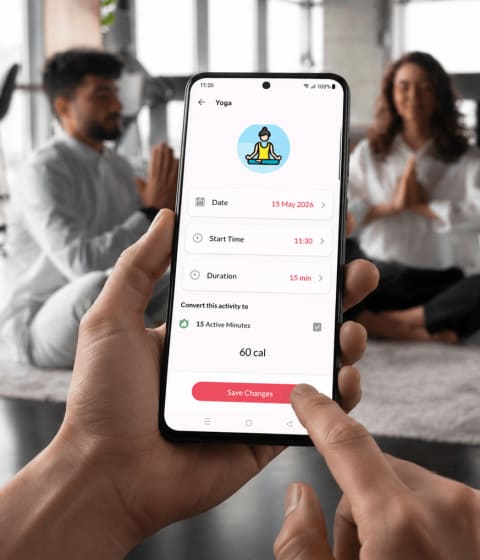
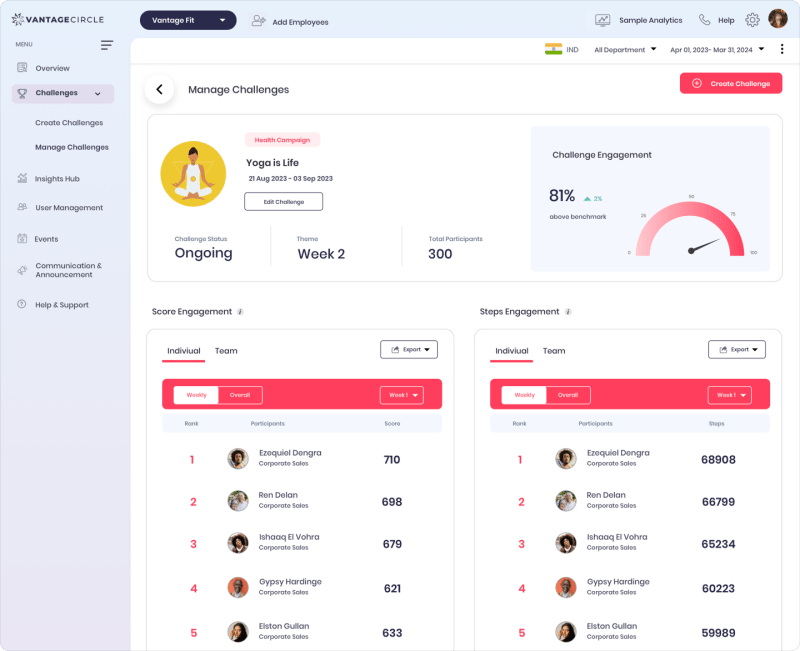
Shared activities rebuild connection across distance. Platforms like Vantage Fit offer shared activities across 10+ challenge formats, from step races to mindfulness streaks. The goal is to make distributed teams move and connect even when they never share an office.
For instance, across three connected challenges in 30+ countries, Wipro tripled participation and logged 46.53 million cumulative steps in 2025. Find the Wipro global wellbeing case study for more insights.
To learn more about the wellbeing side of distributed work, see our guide to reducing remote work stress.
Signs of a Negative Work Environment and How to Turn It Around
Common signs of a negative work environment include high turnover, fear of speaking up, constant gossip, burnout, favoritism, and little recognition. You can turn it around by measuring honestly and rebuilding trust.
Every factor here has an opposite, and when the nine erode, a workplace turns negative. The cost is real: according to MIT Sloan Management Review, a toxic culture is the single strongest predictor of attrition, far ahead of pay. It often starts small, like a manager who criticizes a struggling employee behind their back instead of coaching them. Confidence erodes, and good people leave, not over the work but because they no longer feel respected.
Seven signs HR should watch for:
- High turnover. Good people leave faster than you can replace them, and exit interviews start to sound the same.
- Fear of speaking up. Meetings end with no questions, and problems surface only after they get expensive.
- Gossip and cliques. Information moves through rumors and inner circles, which erodes trust across teams.
- Chronic burnout. Everything is urgent, workloads never reset, and people push through fatigue.
- Favoritism. The same names get the opportunities, and the criteria are never made clear.
- Unclear expectations. People are unsure what success looks like, so motivation slowly drains away.
- Little recognition. Strong work goes unnoticed, and appreciation is occasional rather than the norm.
Spotting the signs is the easy part. Turning the environment around takes deliberate, visible effort in three steps.
- Measure honestly. Run an eNPS and pulse survey before you act, so you fix what employees actually flag, not what you assume. This becomes your baseline.
- Fix the top two drivers first. Pick the two systemic issues with the widest impact, usually chronic workload and a broken feedback loop, and solve those visibly.
- Rebuild trust in the open. Show people their input changed something. A burned-out team does not need another emoji on a thread; it needs the workload addressed head-on. Some platforms reward participation in wellness challenges with points redeemable for gift cards and completion certificates, so healthy effort is also acknowledged. Vantage Fit is one example HR teams use to re-engage a worn-down workforce.
Frequently Asked Questions
What are some words to describe a positive work environment?
A positive work environment is supportive, inclusive, collaborative, transparent, respectful, and motivating. It is a space where people feel safe, valued, and engaged in their work.
What is an example of a positive work environment?
The perfect example of a positive work environment is where managers hold regular 1:1s, recognize good work in public, and support flexible schedules. Employees speak up freely and trust that their input matters.
What are the 5 characteristics of a healthy work environment?
The five characteristics are safety, open communication, recognition, growth opportunities, and wellbeing support.
What are the 4 types of work environments?
Work environments are commonly grouped into four types by setup: in-office, remote, hybrid, and flexible or activity-based.
How is a positive work environment different from a healthy one?
A healthy work environment is about the conditions you put in place, such as safety and fair workloads. A positive one is about how those conditions feel, including trust, energy, and belonging.
Start Measuring, Start Improving
A positive work environment is not built in a single town hall or a one-time perk. It is a cycle: measure honestly, act on what you find, then measure again. The nine factors tell you what to build, and pulse surveys tell you whether it is working.
You do not have to fix everything at once. Pick one factor, run a baseline survey, and make one visible change this quarter. Progress compounds when employees see their feedback turn into real action.