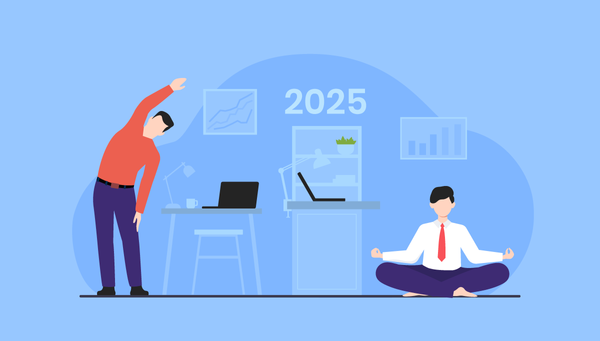
What started as a pandemic response has now become a permanent operating model for millions of employees worldwide. While remote work offers flexibility, it also introduces structural risks to employee wellbeing that most companies still underestimate.
The old phrase "out of sight, out of mind" has become a real management risk in distributed teams. But this isn't just about physical absence; it's about emotional disconnection. The data now confirms what HR leaders have suspected for years: remote work has created a measurable wellbeing crisis. According to Buffer's State of Remote Work report, 23% of remote workers struggle with loneliness, and 22% cite an inability to unplug as their biggest challenge.
Traditional wellness programs were designed for office environments. Think gym subsidies tied to a single location or on-site yoga classes. These benefits collapse the moment your workforce becomes global.
In this blog, we will explore the best leading employee wellbeing platforms for hybrid work environments. These platforms help combat isolation, foster connection across time zones, and reduce burnout.
Remote Work Isn't the Problem — Outdated Wellbeing Strategies Are
Remote work is often blamed for employee struggles, but the real issue is how we approach wellbeing in distributed environments.
Isolation & Loneliness: Without spontaneous "watercooler" interactions, employees operate in psychological silos.
The "Always-On" Trap: Without physical exit rituals, work bleeds into nights and weekends.
Physical Health & Ergonomics: Many remote workers rely on makeshift setups, kitchen tables, or couches, leading to ergonomic strain and sedentary habits.
Cultural Disconnection: Engagement stagnates when employees no longer feel anchored to a shared mission.
Before jumping into the list, look for these non-negotiable features:
Asynchronous Capabilities: Can employees participate in their own time? Live Zoom yoga doesn't work if half your team is sleeping.
Mobile-First Design: If the experience is clumsy on mobile, adoption will fail.
Global Accessibility: Does it support multiple languages and time zones?
Integration Ecosystem: Does it talk to Slack, MS Teams, or your HRIS? If it disrupts the workflow, people might not use it.
Short on Time? Here’s a Quick Comparison of the 10 Best Wellbeing Platforms for Remote Teams
| Platform Name |
Best For |
Starting Price |
Key Strength |
G2 Rating |
Free Trial |
| Vantage Fit |
Gamified fitness challenges & leaderboards |
$1.00/user/month |
Global leaderboards create shared virtual competition space |
⭐⭐⭐⭐½ (4.5) |
Yes |
| Headspace for Work |
Mental health, stress reduction & burnout prevention |
$5.83/user/month |
Science-backed mindfulness with 24/7 digital access |
⭐⭐⭐⭐½ (4.6) |
Yes |
| Wellhub (Gympass) |
Distributed teams wanting local gym + digital app access |
$11.99/user/month (copay) |
Access to 50,000+ gyms globally + premium wellness apps |
⭐⭐⭐½ (3.7) |
Contact vendor |
| Wellable |
HR teams wanting full customization of wellness challenges |
$100/month (up to 25 users) |
Highly customizable challenge builder for remote culture |
⭐⭐⭐⭐½ (4.7) |
Yes |
| Donut |
Building social connections & breaking silos |
$59/month (up to 24 users) |
Virtual coffee pairings recreate watercooler moments |
⭐⭐⭐⭐½ (4.5) |
Yes (Free tier) |
| Calm for Business |
Teams dealing with anxiety, sleep issues & work-life blur |
$70/user/year (~$5.83/month) |
Best-in-class sleep stories & anxiety management content |
⭐⭐⭐⭐½ (4.5) |
Yes |
| Thrive Global |
Enterprises shifting away from “always-on” burnout culture |
Contact for quote (premium) |
Behavior-change microsteps & burnout risk detection |
N/A |
Yes (demo) |
| BetterUp |
Leadership development & retention of remote talent |
$99/session (Individual) |
Premium 1:1 virtual coaching for personal growth |
⭐⭐⭐⭐½ (4.6) |
Yes (demo) |
| Nectar |
Boosting morale through peer recognition |
Contact for quote |
Social recognition feed makes remote wins visible |
⭐⭐⭐⭐½ (4.7) |
Yes |
| WellSteps |
Structured, compliant wellness with guaranteed ROI |
Contact for quote |
Evidence-based program with hands-off HR management |
N/A |
Contact vendor |
10 Wellbeing Platforms Built for Remote Work
Ratings
G2 - 4.5/5
Capterra - 4.5/5
App Store - 4.3/5
Google Play Store - 4.5/5
Read more +
A gamified, all-in-one corporate wellness platform designed to drive daily participation across fully distributed teams.
Best For: Companies wanting to boost engagement through gamified fitness challenges and leaderboards.
Remote-Work Standout Features:
Global Leaderboards: Creates a shared virtual space where employees in London, New York, and Tokyo can compete on the same "step count" board.
Virtual Marathons: Runs location-agnostic events where teams "walk" a distance together virtually, regardless of where they physically are.
Asynchronous Participation: Challenges run over weeks, allowing employees to participate whenever it fits their time zone and schedule.
Key Capabilities:
Comprehensive activity tracker (steps, distance, calories). Heart rate and mood monitoring logs. Customizable corporate challenges (e.g., "Walk to the Moon"). In-app redeemable gift cards for global brands. AI-based squat tracking via smartphone camera.
Integration Capabilities:
Wearables: Apple Watch, Garmin, Fitbit, Google Fit.
Communication: Slack, Microsoft Teams.
Pricing:
Growth Plan: Starts at ~$1.00 per user/month (typically with a minimum monthly commitment, e.g., $500/month).
Transform Plan: ~$1.80 per user/month (adds dedicated success manager).
Pros:
High engagement due to gamification elements. Very cost-effective for smaller teams. Excellent mobile UI that works well for non-desk employees.
Cons:
Optimized for tracking movement and activity; users seeking more comprehensive mental wellness tools may find the offerings lighter. Manual input may be needed for select activities beyond step tracking.
Ideal Company Profile:
Company Size: SMBs to Mid-Market (50–1,000 employees).
Industry Fit: Tech, Sales, or Competitive cultures.
Remote Work Maturity: Developing; looking for ways to "gamify" culture.
Ratings
G2 - 4.6/5
Capterra - 4.6/5
App Store - 4.8/5
Google Play Store - 4.3/5
Read more +
The world's most recognized mindfulness app, re-engineered to help remote teams switch off, focus, and sleep better.
Best For: Companies prioritizing mental health, stress reduction, and preventing burnout.
Remote-Work Standout Features:
"The Wake Up": Daily bite-sized video content that gives remote workers a routine start to their day.
Focus Mode: Curated music playlists designed to help remote workers block out home distractions.
Digital-First Access: 100% mobile and desktop access ensures support is available 24/7, critical for global teams with no central office.
Key Capabilities:
Hundreds of guided meditations for stress, focus, and sleep. "Move Mode" for quick at-home mindful workouts. Leadership workshops on compassionate management. Sleepcasts and wind-down exercises. Clinical-grade anxiety support (depending on tier).
Integration Capabilities:
Communication: Slack, Microsoft Teams, Zoom (for starting meetings mindfully).
HRIS: Workday.
Pricing:
Teams Plan (Self-Service): $69.99 per person/year (approx. $5.83/month) when bought online for small teams.
Enterprise: Volume discounts available for large headcount (typically drops to ~$4.50/mo).
Pros:
Extremely high user adoption due to brand recognition. Science-backed content proven to lower stress. Zero learning curve for employees.
Cons:
Can be expensive for smaller teams compared to competitors. Limited physical fitness features; strictly a mental health tool.
Ideal Company Profile:
Company Size: Mid-to-Large Enterprises (500+).
Industry Fit: Knowledge workers, Creative, High-stress sectors.
Remote Work Maturity: High; acknowledging "always-on" culture issues.
Ratings
G2 - 3.7/5
Capterra - N/A
App Store - 4.3/5
Google Play Store - 2.4/5
Read more +
A complete corporate wellbeing subscription that gives remote employees access to thousands of gyms and premium wellness apps worldwide.
Best For: Distributed teams that want the flexibility of local gym access combined with top-tier digital apps.
Remote-Work Standout Features:
Location Independence: An employee in Berlin gets access to local gyms just like an employee in Austin.
Digital App Suite: Includes premium subscriptions to apps like Calm, Strava, and MyFitnessPal, ensuring rural remote workers still get value.
Virtual Classes: Live-streamed classes from top studios for those who prefer working out from their living room.
Key Capabilities:
Access to 50,000+ gyms and studios globally. 1-on-1 virtual personal training. Nutrition planning and sleep tracking apps included. Holistic coverage: Physical, Mental, Nutritional, and Financial health.
Integration Capabilities:
HRIS: ADP, Workday, SAP SuccessFactors.
Apps: Apple Health, Strava, Garmin.
Pricing:
Corporate Fee: Custom base fee paid by the company.
Employee Copays (2024/2025 Tiers):
Starter: ~$11.99/mo (Basic access).
Basic: ~$37.99/mo (Standard commercial gyms).
Bronze: ~$59.99/mo.
Gold: ~$194.99/mo.
Pros:
Unbeatable flexibility for distributed teams in different cities. High perceived value by employees (access to premium gyms). Consolidates multiple wellness vendors into one.
Cons:
Implementation is complex; requires "referring" your company to get started. Rural employees may have fewer physical gym options than urban staff.
Ideal Company Profile:
Company Size: Large Enterprise (1,000+).
Industry Fit: Global corporations, Consultancies.
Remote Work Maturity: Hybrid/Remote Global teams.
Ratings
G2 - 4.7/5
Capterra - 4.8/5
App Store - 4.6/5
Google Play Store - 4.3/5
Read more +
A highly customizable wellness platform that lets companies build their own challenge-based programs tailored to their specific remote culture.
Best For: HR teams that want full control to design specific wellness challenges (e.g., "Hydration Week").
Remote-Work Standout Features:
Holistic Challenges: Can run challenges based on "checking in with a colleague" or "meditating," not just steps—great for inclusive remote culture.
Multimedia Content Library: On-demand articles and videos accessible anytime.
Text-Message Integration: Can send nudges via text, reaching non-desk remote workers effectively.
Key Capabilities:
Custom challenge builder (Physical, Mental, Environmental). Personal wellness assessment tools. On-demand fitness classes and health coaching. Tobacco cessation and weight management modules. Gift card rewards mall.
Integration Capabilities:
Wearables: Connects with all major apps (Apple Health, Fitbit).
Communication: Slack, Microsoft Teams.
Pricing:
Essentials: Starts at $100/month (covers up to ~25 users).
Pro: Starts at $150/month.
One-Time Challenge: ~$1,000 flat fee.
Pros:
Highly affordable to small-to-medium businesses. High customization allows for creative, culture-specific events. Strong privacy controls.
Cons:
UI is functional but less slick/modern than consumer apps like Headspace. Requires more HR admin time to design and manage challenges effectively.
Ideal Company Profile:
Company Size: Small to Mid-Sized (50–500).
Industry Fit: Any; great for budget-conscious teams.
Remote Work Maturity: Any level.
Ratings
G2 - 4.5/5
Capterra - N/A
App Store - N/A
Google Play Store - N/A
Read more +
The ultimate Slack/Teams integration for recreating the "watercooler" moments that remote teams desperately miss.
Best For: Building social connections, onboarding new remote hires, and breaking down departmental silos.
Remote-Work Standout Features:
Virtual Coffee Pairings: Randomly pairs employees for a 15-30 minute video chat, bridging the gap between teams that never interact.
Remote Onboarding: Automated "buddies" for new hires to ensure they don't feel lost in their first week.
Timezone Awareness: Smarter scheduling ensures pairings don't happen at 3 AM for one party.
Key Capabilities:
"Intros" channel for random pairings. "Watercooler" topics (daily prompts like "What's your favorite travel spot?") to spark chat. "Celebrations" for birthdays and work anniversaries. Usage analytics to see which teams are isolated.
Integration Capabilities:
Core: Built exclusively for Slack and Microsoft Teams.
Video: Zoom, Google Meet (for the actual calls).
Pricing:
Free: Available (limited features/users).
Standard: Starts at $74/month (monthly billing) or $59/month (annual billing) for the first tier (up to 24 users). It scales up to 199 user count.
Pros:
Lowest barrier to entry—lives where work already happens. Directly attacks the #1 remote issue: Isolation. Fun, lighthearted tone that doesn't feel like "corporate wellness."
Cons:
Not a health platform (no fitness/mental health tools). Can feel intrusive if "forced" rather than opt-in.
Ideal Company Profile:
Company Size: Startups to Mid-Market (20–500).
Industry Fit: Tech, Remote-First Agencies.
Remote Work Maturity: High (teams living in Slack).
Ratings
G2 - 4.5/5
Capterra - N/A
App Store - 4.6/5
Google Play Store - 4.3/5
Read more +
A mental resilience tool that focuses heavily on sleep and anxiety—two of the biggest hidden struggles for remote employees.
Best For: Teams dealing with high anxiety, sleep issues, or needing help "switching off" after work.
Remote-Work Standout Features:
"Sleep Stories": Narrated tales to help employees disconnect and sleep—critical for remote workers with blurred work-life boundaries.
Masterclasses: Expert-led sessions on "Working from Home" and "Social Media Detox."
Family Access: Often includes dependents, supporting the whole remote household.
Key Capabilities:
Daily Calm (10-minute daily meditation). Music for focus (scientifically engineered playlists). Check-ins for mood tracking. Stretching exercises for desk workers. Localized content in multiple languages.
Integration Capabilities:
HRIS: Integration for eligibility management.
Calendar: Embeds mindfulness into daily schedules.
Pricing:
Licensing Range: Choose anywhere from 5 to 300 licenses, with pricing calculated per individual license on an annual basis.
Example for 5 Licenses: $70.00 per license/year.
Pros:
Best-in-class content for sleep and anxiety. Very family-friendly (often includes 5 dependents). High aesthetic quality and user experience.
Cons:
Like Headspace, it lacks physical fitness tracking. Reporting/Analytics is less granular than Vantage Fit.
Ideal Company Profile:
Company Size: All sizes (SMB to Enterprise).
Industry Fit: High-stress environments (Legal, Finance, Tech).
Remote Work Maturity: Any.
Ratings
G2 - N/A
Capterra - N/A
App Store - 4.3/5
Google Play Store - 2.4/5
Read more +
A behavior-change platform founded by Arianna Huffington that uses "Microsteps" to end the burnout epidemic in distributed teams.
Best For: Enterprises looking to culturally shift away from an "always-on" burnout mentality.
Remote-Work Standout Features:
Thrive Reset: A 60-second tool that plays calming visuals/breathing guides before meetings to prevent Zoom fatigue.
Meeting Integration: Nudges users to end meetings 5 minutes early for a break.
Burnout Risk Detection: Analytics that identify teams at risk of burnout based on working patterns.
Key Capabilities:
"Microsteps" (tiny, actionable daily habit changes). Storytelling platform for employees to share wellbeing wins. Modules on Sleep, Food, Movement, and Money. Executive dashboards for cultural health.
Integration Capabilities:
Communication: Slack, Microsoft Teams, Webex, Zoom.
HRIS: Workday, SAP.
Pricing:
Enterprise Only: Custom quoting; generally a premium solution.
Pros:
Focuses on productivity and culture, not just wellness. Deep integration into workflow tools to interrupt stress. Strong leadership/executive focus.
Cons:
Expensive for small companies. Requires genuine leadership buy-in to work effectively.
Ideal Company Profile:
Company Size: Large Enterprise (1,000+).
Industry Fit: Consulting, Finance, Tech.
Remote Work Maturity: Mature organizations focusing on sustainability.
Ratings
G2 - 4.6/5
Capterra - N/A
App Store - 4.3/5
Google Play Store - 3/5
Read more +
A premium digital coaching platform that democratizes executive-level coaching for managers and employees at all levels.
Best For: Companies focusing on leadership development, resilience, and retention of top remote talent.
Remote-Work Standout Features:
Virtual 1:1 Coaching: Provides a dedicated human connection for remote employees who may lack mentorship.
On-Demand Specialist Coaching: Access to experts in sleep, nutrition, or communication skills from anywhere.
Digital Assessment: Tracks personal growth and "mental fitness" over time.
Key Capabilities:
Unlimited coaching sessions (depending on plan). Group coaching circles for peer learning. Library of micro-learning content. "Care" vertical for mental health specifically.
Integration Capabilities:
HRIS: Workday, SuccessFactors.
Calendar: Seamless booking integration.
Pricing:
Individual: Flex sessions cost $99 per 30-minute session and $149 per 45-minute session.
Business: Pricing on Request.
Pros:
Highest impact on individual employee growth and retention. Personalized human interaction (not just an app). High ROI for leadership layers.
Cons:
Prohibitively expensive for rolling out to the entire workforce of a massive company. Requires time commitment from employees.
Ideal Company Profile:
Company Size: Mid-to-Large Enterprise.
Industry Fit: Tech, Professional Services.
Remote Work Maturity: High; focus on talent development.
Ratings
G2 - 4.7/5
Capterra - 4.8/5
App Store - N/A
Google Play Store - 4.5/5
Read more +
An employee recognition and rewards platform that makes appreciation visible and frequent, combatting the "invisible worker" syndrome.
Best For: Boosting morale and company values through peer-to-peer recognition.
Remote-Work Standout Features:
Social Recognition Feed: A company-wide wall where shout-outs are public, ensuring remote wins aren't hidden in private emails.
Digital Rewards: Points can be redeemed for Amazon products, gift cards, or charity, instantly deliverable anywhere.
Birthdays/Anniversaries: Automated celebrations ensure no remote employee is forgotten on their big day.
Key Capabilities:
Peer-to-peer recognition points. Manager spot bonuses. Wellness challenges (can incentivize health behaviors). Swag management (on-demand shipping of company swag).
Integration Capabilities:
Communication: Slack, Microsoft Teams (recognize someone directly from chat).
HRIS: ADP, BambooHR, Gusto.
Pricing:
Pricing on Request
Pros:
Extremely high daily engagement. Directly reinforces company values. Combines "Wellness" incentives with general "Recognition."
Cons:
Can become a "popularity contest" if not managed well. Wellness features are secondary to the rewards features.
Ideal Company Profile:
Company Size: SMB to Mid-Market (50–500).
Industry Fit: Tech, Customer Support, Sales.
Remote Work Maturity: Any.
Ratings
G2 - N/A
Capterra - N/A
App Store - N/A
Google Play Store - N/A
Read more +
A comprehensive, evidence-based wellness program that guarantees ROI by focusing on measurable health outcomes.
Best For: Organizations needing a structured, compliant, and full-service wellness program that handles everything.
Remote-Work Standout Features:
"Rewards Mall": Integrated rewards system that ships digitally or physically to remote staff.
Mobile App Verification: Users can snap photos to verify healthy activities (e.g., "I cooked a healthy meal"), perfect for verifying remote participation.
Virtual Health Coaching: Behavioral coaching available via the platform.
Key Capabilities:
Biometric screening coordination (even for remote). Behavior change campaigns. ROI calculator and health risk assessments (HRA). Wearable integration.
Integration Capabilities:
Wearables: Fitbit, Garmin, Apple Watch.
HRIS: Extensive syncing capabilities.
Pricing:
Pricing on Request (Business)
Pros:
Most rigorous "medical/health" focus of the list. Hands-off for HR (they manage the program for you). Performance guarantees.
Cons:
UI feels more "clinical" and "corporate" than startups like Donut. Setup is heavier and takes longer.
Ideal Company Profile:
Company Size: Mid-Market to Enterprise (200+).
Industry Fit: Manufacturing, Government, Education, Healthcare.
Remote Work Maturity: Low-Medium (need structure).
Prices shown for all platforms reflect rates as of 16 December 2025 (subject to change).
Choosing a wellbeing platform isn't just about buying software; it's about signaling to your team that you see them. With dozens of options on the market, use this 5-step framework to cut through the noise and find the right fit for your distributed culture.
1. Check the "Tech & Time" Fit
If the platform doesn't integrate with your existing tools (Slack, Teams, HRIS), adoption will fail. Furthermore, ensure it creates an equal experience for everyone. Your developer in Tokyo should have the same access to rewards and content as your sales rep in New York.
2. Poll Your People
Stop guessing. Send a distinct, anonymous survey: "What is your primary struggle: Isolation, Burnout, or Physical Health?" If burnout dominates, prioritize platforms like Headspace or Calm. If they say "Isolation," buy Donut or Vantage Fit.
3. Decide: All-in-One vs. Specialized
The "Swiss Army Knife" (e.g., Vantage Fit): Best if you want a single contract, a single login, and offering "something for everyone" (fitness, challenges, rewards).
The "Best-in-Breed" Stack (e.g., BetterUp, Calm): Best if you have a specific, acute problem (like high burnout) and need a clinical-grade solution to solve it alongside other tools.
4. The "30-Day Pilot" Rule
Never sign an annual contract blind. Run a 30-day pilot with a single department.
Metric to watch: Don't just look at sign-ups. Look at Weekly Active Users (WAU) after day 30. High sign-ups followed by silence means the platform is flashy but not sticky.
5. Scrutinize Privacy & Trust
Remote employees are already protective of their digital privacy. If a platform tracks physical activity or mood, your team needs a 100% guarantee that individual data is never shared with management but only aggregated trends.
Explore how Vantage Fit supports remote teams and see how it can help improve your team's wellbeing. Request a demo now to see how it works for your business.
Conclusion
Choosing the right wellbeing platform for your remote team is a strategic decision that can have a lasting impact on employee engagement, productivity, and retention.
By focusing on features that address isolation, mental health, and the challenges of working across multiple time zones, you can create a culture of support that enhances both individual and team success. The key is understanding your team's unique needs, setting clear goals, and selecting a platform that offers the flexibility and tools to meet them.
Whether you're looking for a holistic wellness approach or a solution that focuses on specific areas like mental health or fitness, the right platform can help your team feel connected, supported, and engaged.
Need more personalized guidance to find the ideal wellbeing solution for your remote team?
FAQs
Q. What are some virtual wellness activities for remote employees?
A:
Examples of some virtual wellness activities for remote employees include step challenges, guided mindfulness sessions, virtual team-building, and stress management activities or workshops.
Q. How do companies measure the ROI of remote wellbeing programs?
A:
Companies can measure the ROI of remote wellbeing programs using an ROI calculator, which tracks engagement, productivity, employee retention, and reductions in absenteeism to assess program effectiveness.
Q. Are wellbeing platforms effective for hybrid work models, too?
A:
Yes, well-being platforms are effective for hybrid work models because they offer flexible, asynchronous activities and support both remote and in-office employees in staying connected and engaged.
Q. How much does a remote employee wellbeing platform cost?
A:
The cost of wellbeing programs for remote employee well-being platforms varies, typically ranging from $4 to $15 per employee per month, depending on the platform's features and scale.