A step challenge is a workplace competition where employees track daily step counts, individually or in teams, toward a shared goal, typically over 2-6 weeks. To launch one you need four things: a tracking method, teams, rules, and prizes. In Tata Motors’ six-month Step & Stride Challenge, run on Vantage Fit, the engagement rate reached 59%, with participants averaging 6,246 daily steps.
If your challenge is already on the calendar, this guide gives you the assets to run it: a seven-step setup process, a free workplace step challenge template, proven ways to keep participants moving, and answers to the questions employees actually ask.
I have run one of these at work myself. In our “Stairway to Wellness” challenge, my team set a collective goal to climb the equivalent of Mount Everest’s height (8,848.86 meters), roughly 46,572 stair steps between us. The shared target did more for participation than any prize we offered.
Timing matters less than you might think. Spring kickoffs, March through May, are popular; January and September resets work just as well.
KEY TAKEAWAYS
- Pick a tracking method first: a step challenge app, wearables, or a shared spreadsheet
- Set teams, rules, and a 2-6 week duration before launch day; 4 weeks is the sweet spot
- Use the free DIY step challenge template to skip the setup work
- Reward consistency, not just rank, to keep mid-pack walkers engaged
- Verified results: a 59% engagement rate across Tata Motors' 6-month Step & Stride Challenge
What is a step challenge?

A step challenge is a competition that tracks a person’s steps from walking or running. Unlike a walking challenge, the focus is on step count rather than distance or duration.
In a workplace setting, a step challenge becomes a wellness initiative where employees compete to complete as many steps as possible to achieve daily, weekly, or monthly targets. Participants push themselves by setting personal or predetermined step targets and compete against others individually or as a team, fostering a sense of motivation and teamwork within the organization.
They serve as a powerful tool within a broader wellness challenge program, promoting employee health and building connections at work.
Step challenges trigger positive habits by incorporating benchmarks like reaching 10,000 steps a day, roughly 4-5 miles, or accumulating a specific distance over time. At that pace, a participant covers roughly 120-150 miles over a month. Features such as progress tracking, leaderboards, and team goals foster friendly competition among participants. This, in turn, strengthens team connections and workplace relationships.
The flexibility of running or brisk walking promotes inclusivity, making it adaptable to different fitness levels. These challenges also allow employees to break away from their desks, re-energize, and integrate wellness into their daily routines, contributing to a healthier, more engaged workforce.
Creative step challenges keep participants motivated and engaged. Ideas include a “30-Day Step Journey” turning steps into a virtual trek across famous landmarks. This adds a sense of adventure.
Charitable elements tying steps to donations, or fun activities like photo sharing and scavenger hunts encourage active involvement. Mixed fitness teams and seasonal themes ensure inclusivity and relevance. Celebrating milestones and gathering feedback helps refine and sustain long-term participation.
To ensure a fun and fair step challenge, set clear rules and guidelines:
- How to track: You can track steps daily using step challenge apps or devices. Honesty is key.
- Duration: The length of the challenge typically spans 2-6 weeks; 4 weeks is the most common.
- Who can join: Everyone! Challenges can work for remote, hybrid, or onsite teams.
- Prizes: Look for step challenge prize ideas. Consider offering fun wellness rewards like gift cards, fitness gear, wellness subscriptions, or paid time off for top performers. This can encourage employees to participate.
- Work style flexibility: Step challenges work for any job style. Remote teams can use virtual leaderboards. Hybrid setups can mix in-person walks with app tracking. Onsite teams can host group walks during breaks.
How to set up a step challenge?

Setting up a step challenge takes seven steps: choose a tracking app, set up a leaderboard, personalize goals, promote the challenge, drive participation, keep participants motivated, and make daily steps easy at work. Plan for about two weeks of lead time between deciding and launch day.
1. Set up tracking apps for the event
Tracking devices are key to a successful step challenge. Encourage participants to use apps like Samsung Health, Apple Health, or Fitbit. These tools provide real-time stats, leaderboards, and progress analytics, making progress easy to monitor and stay motivated.
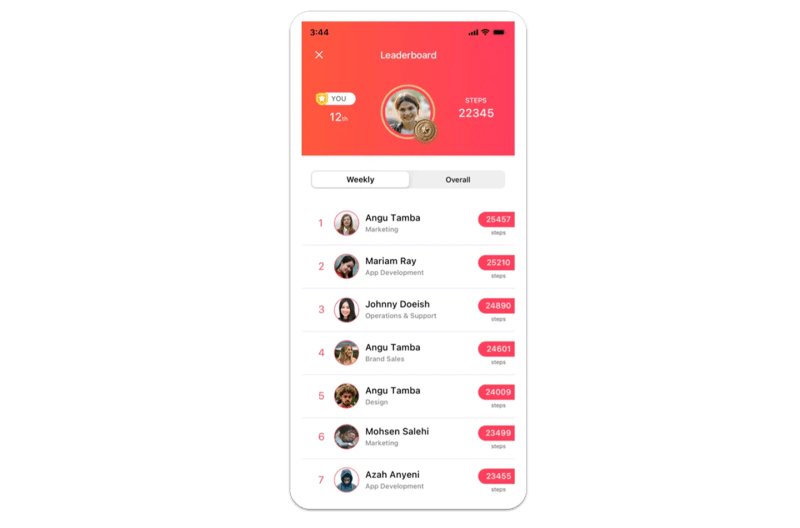
2. Set up a leaderboard for the event
- Manual reporting: Use Excel sheets to help participants log their daily steps.
- Third-party software: Leverage employee wellness platforms for automated tracking and leaderboard updates.
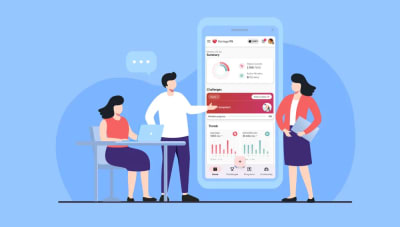
Platforms like Vantage Fit take this a step further: steps sync in from wearables without manual entry, and real-time leaderboards update continuously, giving every participant a live view of where they stand and fueling the friendly competition that sustains engagement throughout the challenge.
3. Personalize goals and activities for the challenge
Create goals for teams or individuals. For team challenges, consider fun names like “The Trail Blazers” or “Step Up Squad.” Adapt the challenge for remote, hybrid, or onsite teams to ensure inclusivity.
Different participants have unique fitness goals. For employees with physical disabilities, set goals like upper-body exercises or wheelchair pushes. Those who swim or cycle can convert their activity into steps with the free activity-to-steps converter.
Introduce surveys for employees to share their fitness goals. This helps align programs with their preferences and ensures inclusivity for all participants.
4. Promote the challenge in the company
Spread the word using creative posters and flyers. Share details through:
- Emails
- Internal newsletters
- Instant messaging
- Video and audio communications
- Social media announcements (e.g., LinkedIn, Facebook, Instagram, TikTok)
5. Increase participation in the challenge
Build excitement by:
- Sharing success stories from previous challenges.
- Encouraging managers to participate and inspire their teams.
- Highlighting collective milestones like “1 million team steps this month.”
Suggested Read: How to Organize a Virtual Run for Your Corporate Team
6. Motivate the participants
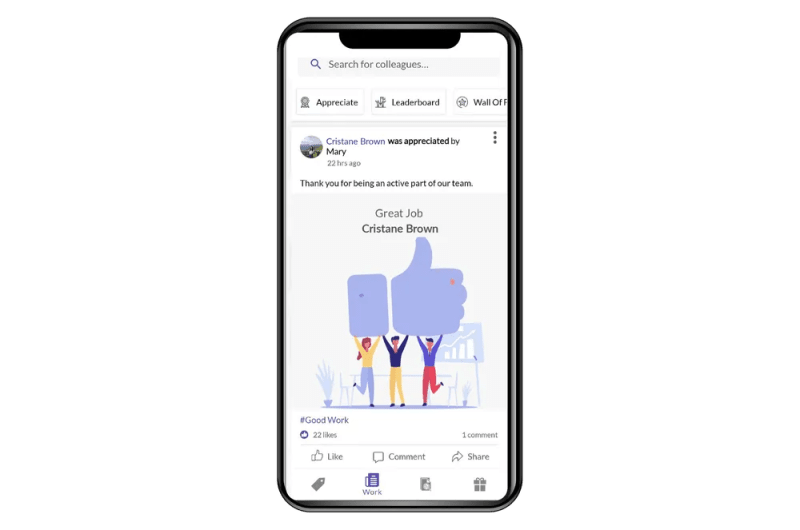
Tailor motivations for different performers:
- Top runners: Offer grand rewards and public recognition.
- New participants: Provide encouragement and small prizes for consistency.
- Midway droppers: Send reminders and motivational quotes to reignite interest.
Health and nutrition coach LeAnn Smith points to friendly competition as the easiest entry point:
"Challenges are a great way because all of us are a little competitive. A step challenge is always a great one — it's easy, it's easy to track, and it's an easy way for people to start getting into it."
— LeAnn Smith, Health & Nutrition Coach | Listen to the full episode
Celebrate achievements by sharing progress and success stories on company social media platforms. Acknowledge participants publicly to build morale and foster healthy competition.
7. Get more steps at work

- Walking meetings: Instead of sitting, have meetings on the go. Walk and talk.
- Walking breaks: Take short walks throughout the day. It’s refreshing and adds steps.
- Park farther away: Choose parking spots further from the entrance.
- Walk during lunch: Use your lunch break for a brisk walk.
- Use the stairs: Skip the elevator. Take the stairs for extra steps. You can also try a stair climbing challenge at work.
Free step challenge template
Your challenge kicks off soon and you need a tracker, rules, and a leaderboard ready to go. The free DIY Step Challenge Template covers daily step logging, team totals, and a ready-made challenge structure you can copy in minutes, in Excel or Google Sheets. It is a complete workplace step challenge template: goal-setting guidance, incentive ideas, and engagement tips included.
Why should a company host a step challenge?

Step challenges deliver measurable gains in physical and mental health, employee engagement, and daily movement habits. The evidence below includes a 267,000-participant meta-analysis on depression risk, a walkathon with around 97% participation at POSOCO, and a 59% engagement rate across Tata Motors’ six-month challenge.
1. Improve physical and mental health
Engaging in daily walking benefits both the body and mind. Regular physical activity reduces stress, enhances mood, and improves overall health. A comprehensive 2018 meta-analysis led by Prof. Felipe Schuch, with co-author Dr. Brendon Stubbs of King’s College London, found that more active individuals have a significantly lower risk of developing depression.
The study analyzed data from nearly 267,000 participants and concluded that higher levels of physical activity were protective against future depression across all age groups and geographical regions. Thus, healthier employees tend to be happier, more engaged, and more productive in their work.
Elsa Robertson of executive search firm Heidrick & Struggles saw the same pattern after her company rolled out a step challenge:
"The app has helped increase the amount of walking people in the office are doing, leading to improved physical health and mental wellbeing."
— Elsa Robertson, Heidrick & Struggles
2. Support weight management
Walking helps with weight management by keeping the body moving. Step challenges encourage daily steps, making it easier to stay fit. A little extra motivation from a company challenge can keep employees on track to reach their health goals.
3. Boost morale through everyday goal setting
Step challenges help employees set small goals and achieve them every day. It’s like turning big dreams into simple, reachable steps. Employees feel proud and motivated to do more when they meet their goals, and the competition and shared targets energize everyone.
The participation numbers back this up. In POSOCO’s two-week “Walking Miles, Losing Inches” walkathon, around 97% of employees participated, logging over 11 million steps. See the POSOCO case study.
4. Build teamwork and lasting healthy habits
Step challenges bring coworkers together to reach a common goal. When employees walk together, they feel more connected, and it’s a fun way to strengthen relationships and build trust. The daily rhythm also helps employees incorporate healthy habits into their routine: regular movement, time away from desks, and consistent activity that lasts well beyond the challenge itself.
Sustained participation is where most wellness challenges struggle. In Tata Motors’ 6-month Step & Stride Challenge, the engagement rate reached 59%, with 1,248 active employees averaging 6,246 steps per day. Staged milestones and automated tracking kept a program that long from fading. Beyond activity, the challenge shaped broader habits. Participants logged over 7,200 meals and averaged 7 hours 39 minutes of sleep nightly. Read the full case study.
What is the best step challenge app for work?
The best step challenge app for work syncs steps automatically from wearables, runs real-time leaderboards, and handles rewards without manual tracking. Vantage Fit is a corporate wellness platform built for exactly this: it syncs with Apple Watch, Fitbit, and Garmin, and updates team leaderboards continuously.
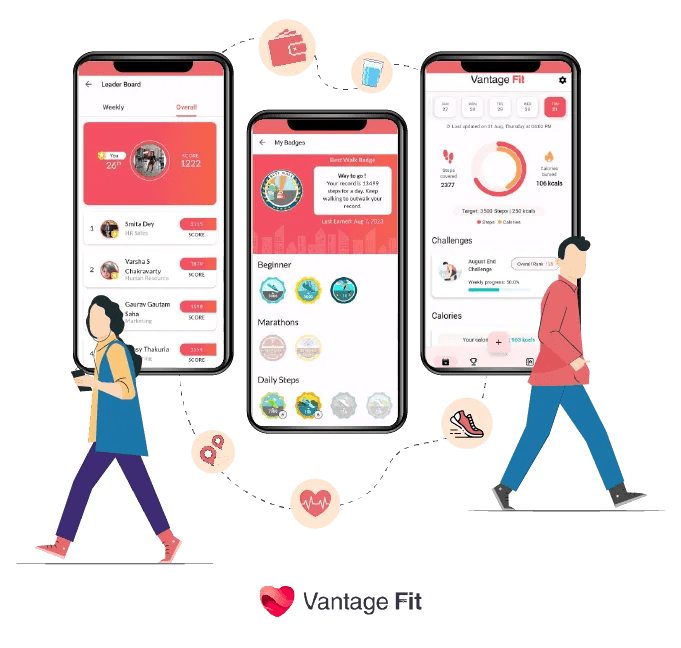
Here’s how Vantage Fit’s Steps Challenge makes running a step challenge easy:
1. Step counting synced to devices
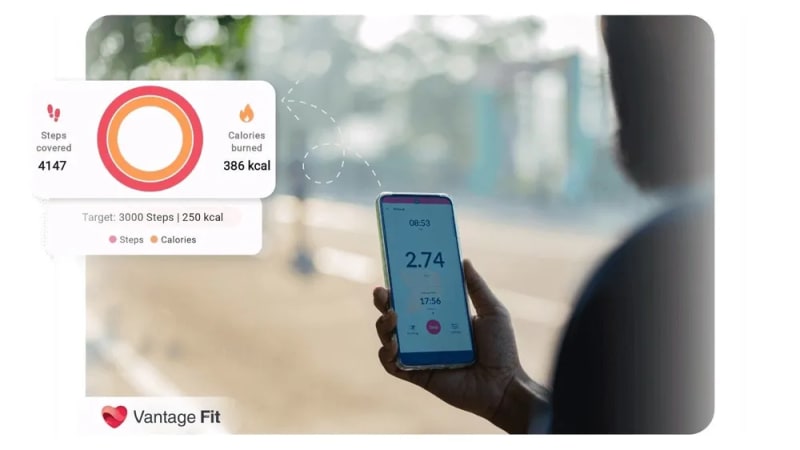
Vantage Fit syncs effortlessly with popular devices like Fitbit and Apple Watch. It tracks your steps automatically without the need for manual input.
2. Automated reminders and engagement boosters
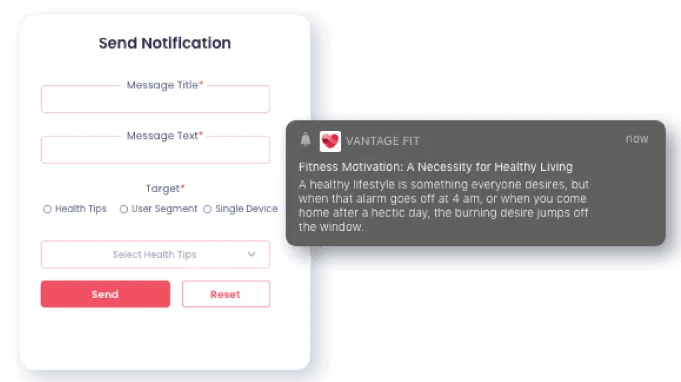
Keep participants engaged with automated reminders and progress updates. Plus, you get fun rewards like badges and milestones to stay motivated. No more manual follow-ups. Vantage Fit keeps you excited and on track without extra effort.
3. Real-time leaderboard tracking
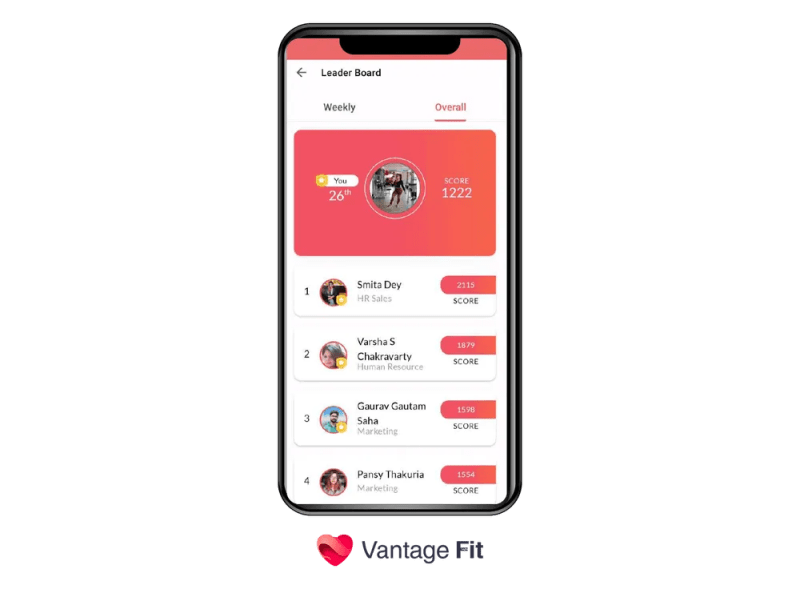
Track real-time progress with automated leaderboards, fostering friendly competition among teams and departments.
4. Customizable dashboard viewing
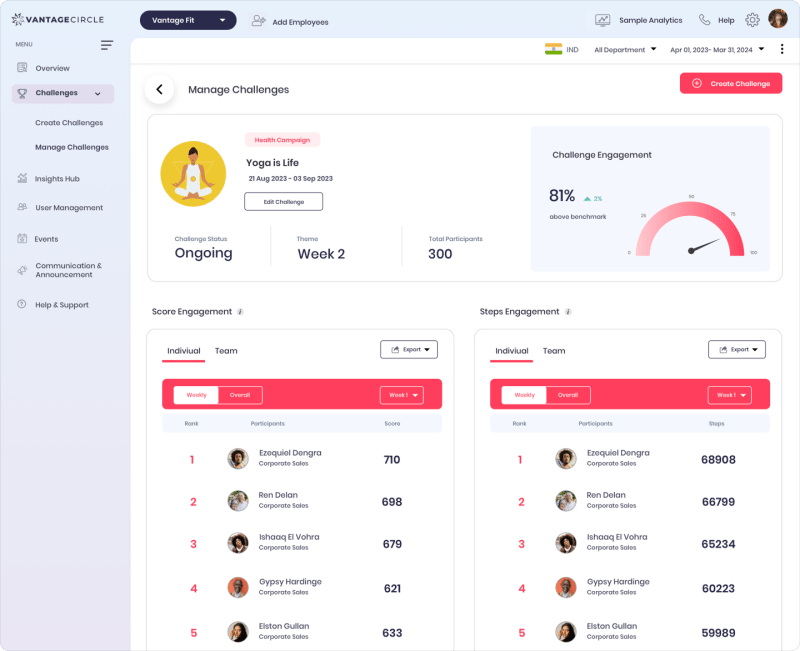
With Vantage Fit’s intuitive dashboard, you can get instant insights into your challenge. Track key metrics and monitor progress to ensure success.
5. Verification and anti-cheating measures

Maintain the integrity of your challenge with Vantage Fit’s built-in anti-cheating algorithms. They ensure fair play and accurate tracking.
Frequently Asked Questions
Does a step challenge help with weight loss?
Yes, walking can help you lose weight. If you walk 10,000 steps in a day, that's roughly 4-5 miles. You can burn around 400-500 calories. If you keep this up, you can lose up to about 1 pound weekly, depending on your diet and overall activity.
What tools can we use to track a step challenge?
You can use devices like Apple Watch, Fitbit, or Samsung Health to track your steps. You can also use a simple pedometer. These tools help you keep track and stay on top of your goals.
Should I use any free step counter platform?
Yes, using a free step counter app is a great idea. Apps like Google Fit or Health Mate can track your steps for free. They're simple and easy to use for a step challenge.
Is a walking competition the same as a step challenge?
No, they are different. A walking competition is about how fast you can walk. A step challenge counts all your steps, whether fast or slow. It's about walking more each day.
How to win a step challenge?
To win a step challenge, stay consistent and exceed daily step goals by walking during breaks, taking stairs, and adding extra steps to your routine.
What other fitness challenges can we do at work?
There are many fitness or wellness challenges to try at work. Some of the most popular include:
- Water Challenge: Track how much water you drink.
- Healthy Eating Challenge: Count healthy meals or snacks.
- Stretching Challenge: Set goals for daily stretches or yoga.
These challenges are significant for overall health and can be done side by side with a step challenge.
How do we track steps better?
To track steps better, focus on these key things:
- Your daily step count
- Time spent walking
- Your average walking pace
Using a wellness app with step tracking is helpful. These apps keep track of all your steps and give you progress updates.
What are the different ways to increase daily step count?
To get more steps, try things like:
- Taking the stairs instead of the elevator. If each floor has 20 steps, you'll add 20 steps every time you skip the elevator.
- Walk while talking on the phone.
- Park farther away or walk to lunch.
These small changes add up and help you hit your step goals.
Do virtual step challenges work the same as offline step challenges?
Yes, virtual step challenges work the same as offline ones. The difference is that you can track your steps from anywhere. It's a great way for remote teams to join in and stay connected.
How many steps should you aim for in a workplace step challenge?
The standard benchmark is 10,000 steps per day, but a good corporate challenge should be inclusive. Setting a daily goal between 7,000 and 8,000 steps is challenging for sedentary employees without causing burnout. For team challenges, a combined weekly goal (e.g., 250,000 steps for a team of 5, about 7,100 per person per day) can be more motivating than individual targets.
What are the basic rules for a team step challenge?
Key rules for a fair step challenge include: using an approved tracking device or app, logging steps daily rather than in bulk, setting equal team sizes, and defining what counts (walking, running, and sometimes cycling converted to step equivalents). Clear anti-cheating guidelines and a defined duration, typically 2 to 6 weeks, also help keep things structured and fair.
How do you start a step challenge at work?
Start by getting leadership buy-in, then choose a tracking method (a wellness platform like Vantage Fit, a shared spreadsheet, or a free step-counting app). Set a clear duration, define individual or team goals, and communicate the rules and prizes before launch day. A kickoff event or email with a leaderboard link drives early participation.
How long should a workplace step challenge last?
Most workplace step challenges run for 2 to 6 weeks, with 4 weeks the most common. A 2-week sprint works well for high-energy bursts, while a month-long challenge is better for building lasting movement habits. For challenges longer than 6 weeks, add mid-point milestones or mini-challenges to keep momentum.
Read more on: Corporate Wellness Programs: Case Studies and Ideas for HR Leaders