What Are Corporate Wellness Programs?
Employer-sponsored health initiatives that reduce costs, cut absenteeism, and drive engagement. Now a strategic business tool, not a perk.
Corporate wellness programs are employer-funded efforts that support employee health through fitness, mental health resources, health screenings, financial education, and work-life balance policies. Also called employee wellness programs or workplace wellness programs, they cut healthcare costs, reduce sick days, and build a healthier, more engaged workforce.
These programs started as nice-to-have perks. Think fruit in the breakroom and gym discounts. Now they're core business tools tied to real outcomes. The shift sped up after the pandemic, when employers saw that workforce health directly drives retention, output, and insurance costs. Today, the best programs run more like health systems than events calendars.
Three data points show why the investment pays off:
- $250 million saved: Johnson & Johnson's wellness program delivered $2.71 for every dollar spent over a decade (Harvard Business Review)
- 4 fewer sick days: Employees meeting 75+ minutes of weekly exercise miss far fewer workdays annually (CDC Physical Activity Employer Guide)
- $1.50–$3 ROI: For every $1 invested in wellness, companies see $1.50 to $3 in returns through reduced healthcare costs and higher output (RAND Corporation / Baicker et al., Health Affairs)
This guide covers 5 program types, 19 proven ideas, a 6-step launch framework, 4 real case studies showing 70–88% employee engagement, and a full cost/ROI breakdown. For a balanced perspective, review the pros and cons of wellness programs alongside this framework.
5 Types of Corporate Wellness Programs
Physical, mental, financial, social, and data-driven. The best programs combine multiple types based on workforce risk profiles.
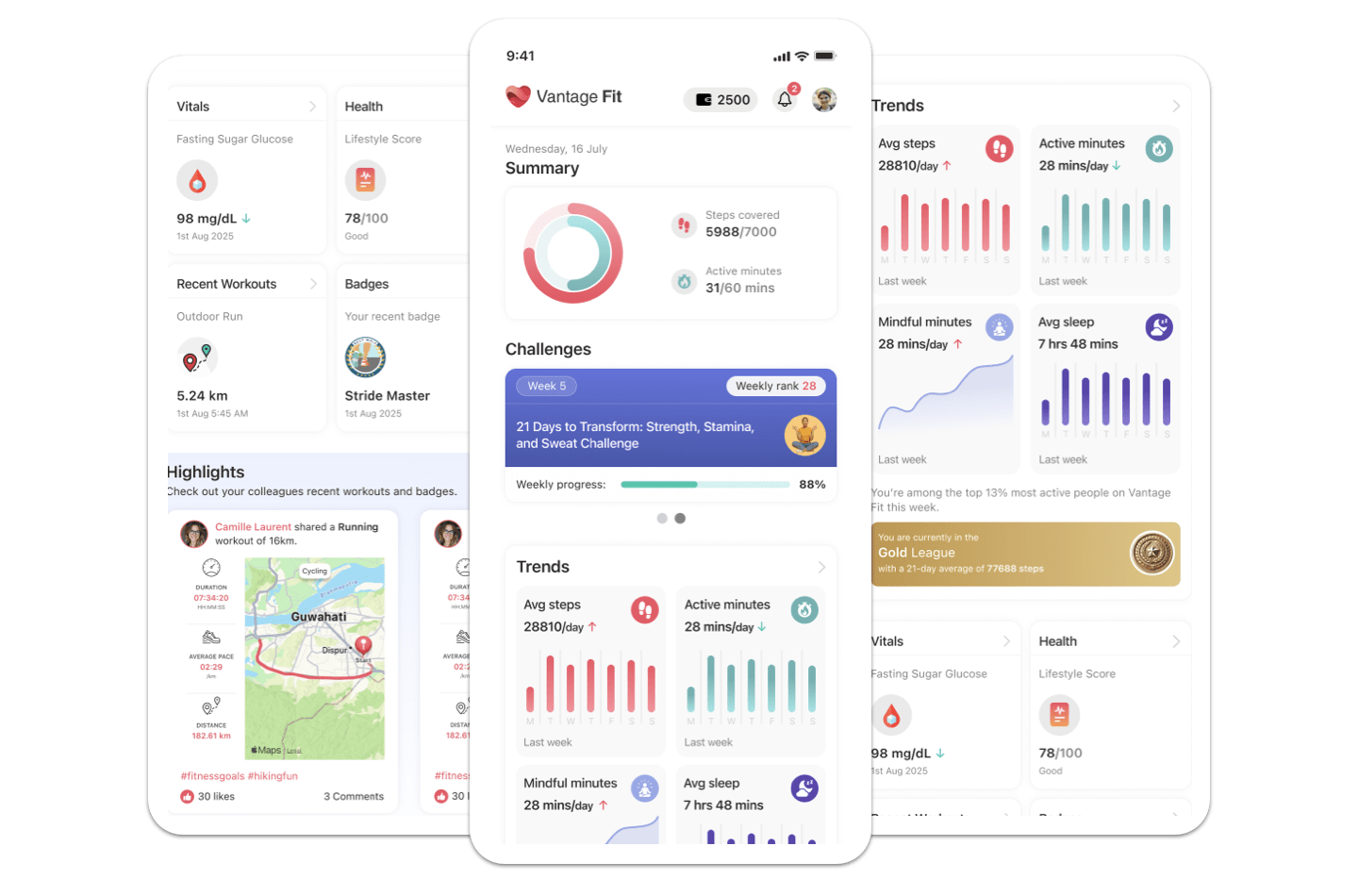
Good programs mix several types based on workforce groups, risk profiles, and business goals. Platforms like Vantage Fit use behavioral science built on a cue-action-reward framework. Reminders prompt action, and rewards like points, badges, and gift cards reinforce the habit. This drives lasting change across all five types.
| Type | Focus Area | Example Activities | Key Metrics | Best For |
|---|---|---|---|---|
| Physical & Preventive | Movement, disease prevention | Step challenges, health screenings, smoking cessation | BMI trends, activity levels, avoidable claims | Sedentary workforces, desk-bound roles |
| Mental & Emotional | Stress, burnout, safety | Counseling, mindfulness, mood tracking | Absenteeism, burnout scores, EAP utilization | High-stress industries |
| Financial Wellness | Financial stress, retirement | Budgeting workshops, LSA benefits, debt counseling | Retention, financial stress surveys | Younger and mid-career employees |
| Work-Life Balance & Social | Flexibility, belonging | Flexible hours, team challenges, volunteering | Retention, team performance scores | Hybrid and remote teams |
| Data-Driven & High-Risk | Biomarker-based risk reduction | Targeted challenges by disease risk, condition-specific programs | Risk distribution shifts, claims trends | Mature programs, self-insured employers |
Physical & Preventive Health

Step challenges, fitness tracking, health screenings, and preventive care. These are the easiest to launch and measure, and where most companies should start. Employees who hit 75+ minutes of weekly exercise take 4 fewer sick days per year (CDC). Begin with a 30-day step challenge to build momentum, then add screenings, smoking cessation, and corporate fitness programs for deeper impact. The key is gradual ramp-up: start desk-bound teams at 5,000 steps, not 10,000. Track: uptake rate, average daily steps, healthcare claims trend.
Mental & Emotional Wellbeing
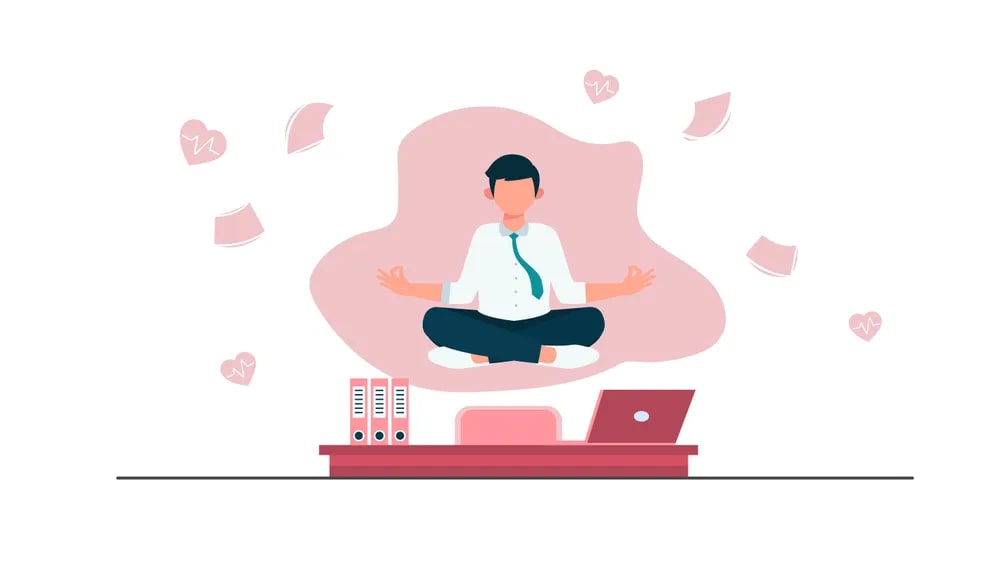
Counseling access, stress workshops, mindfulness programs, and daily mood tracking. Structured mindfulness cuts perceived stress by 25–40% and lowers burnout (PMC Realist Review). Look for a wellness platform with a built-in meditation library so you don't need a separate third-party app. Target high-stress teams first (IT, operations, leadership), then expand based on pulse survey data. Pair EAP access with confidential mood tracking so HR sees workforce trends without exposing individual data. The most common mistake: offering a helpline nobody knows about. Promote it, and make clear that use is confidential. Track: mental-health sick days, burnout scores, EAP use, pulse survey scores.
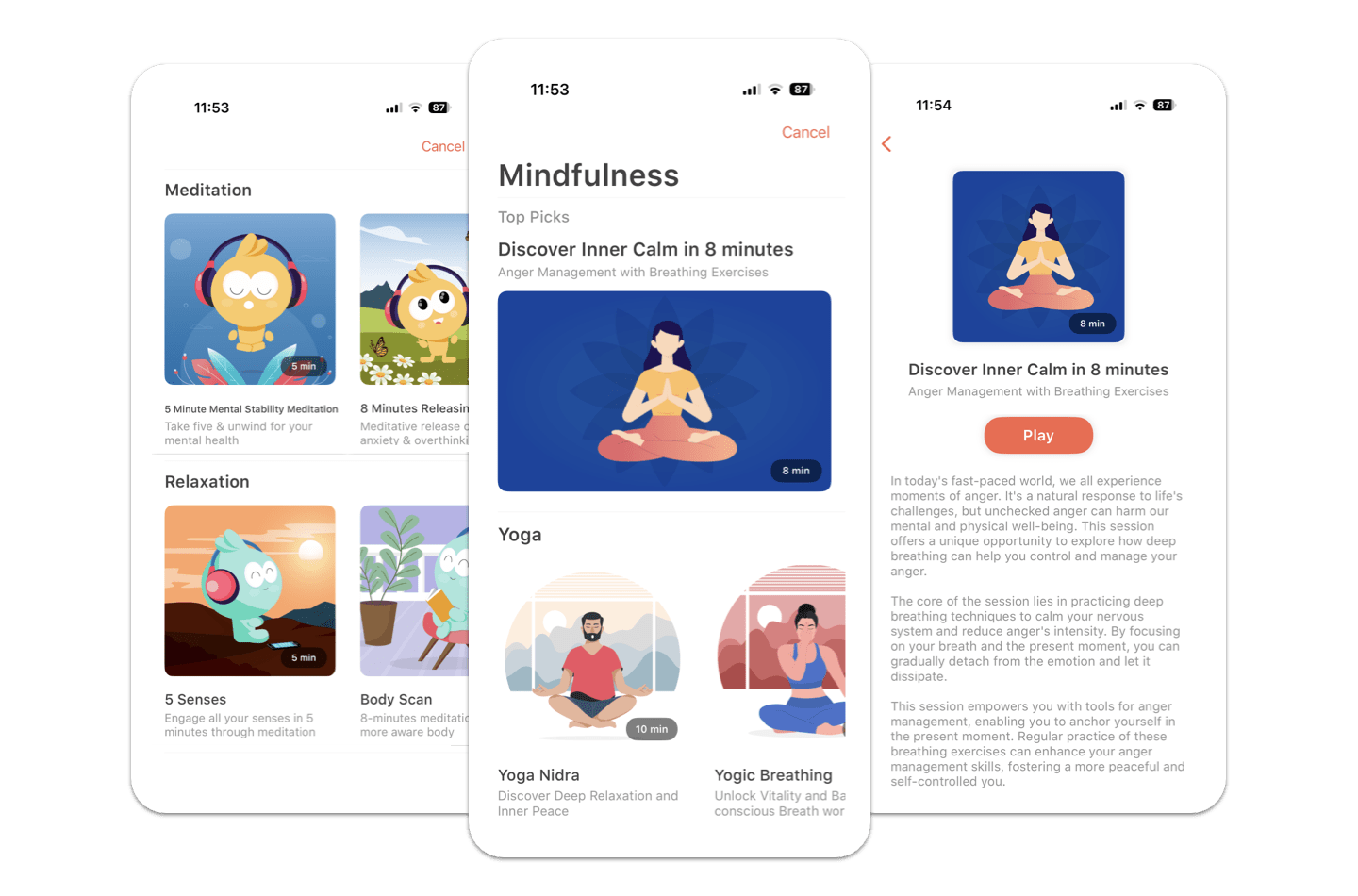
Generational note: Different age groups need different things. 74% of Gen Z rank on-demand mental health support as their top wellness priority, and 91% consider wellness programs non-negotiable in their job search. Gen X employees prioritize financial and caregiving support. Baby Boomers lean toward chronic condition management and physical programs. A one-size-fits-all approach satisfies no single group completely (2026 Industry Report).
Financial Wellness

Budgeting workshops, debt counseling, retirement planning, and Lifestyle Spending Accounts (LSAs). Financial stress quietly erodes focus. Employees distracted by money problems lose hours of useful time each week, and it's hidden from managers. LSAs are a growing benefit. 13% of employers now offer them (Mercer 2023). They let employees choose how to spend wellness dollars across fitness, childcare, or home office gear. Younger employees gain most from debt help; mid-career employees lean toward retirement planning. Track: retention, financial stress survey scores, LSA use, sign-ups for financial education sessions.
Work-Life Balance & Social
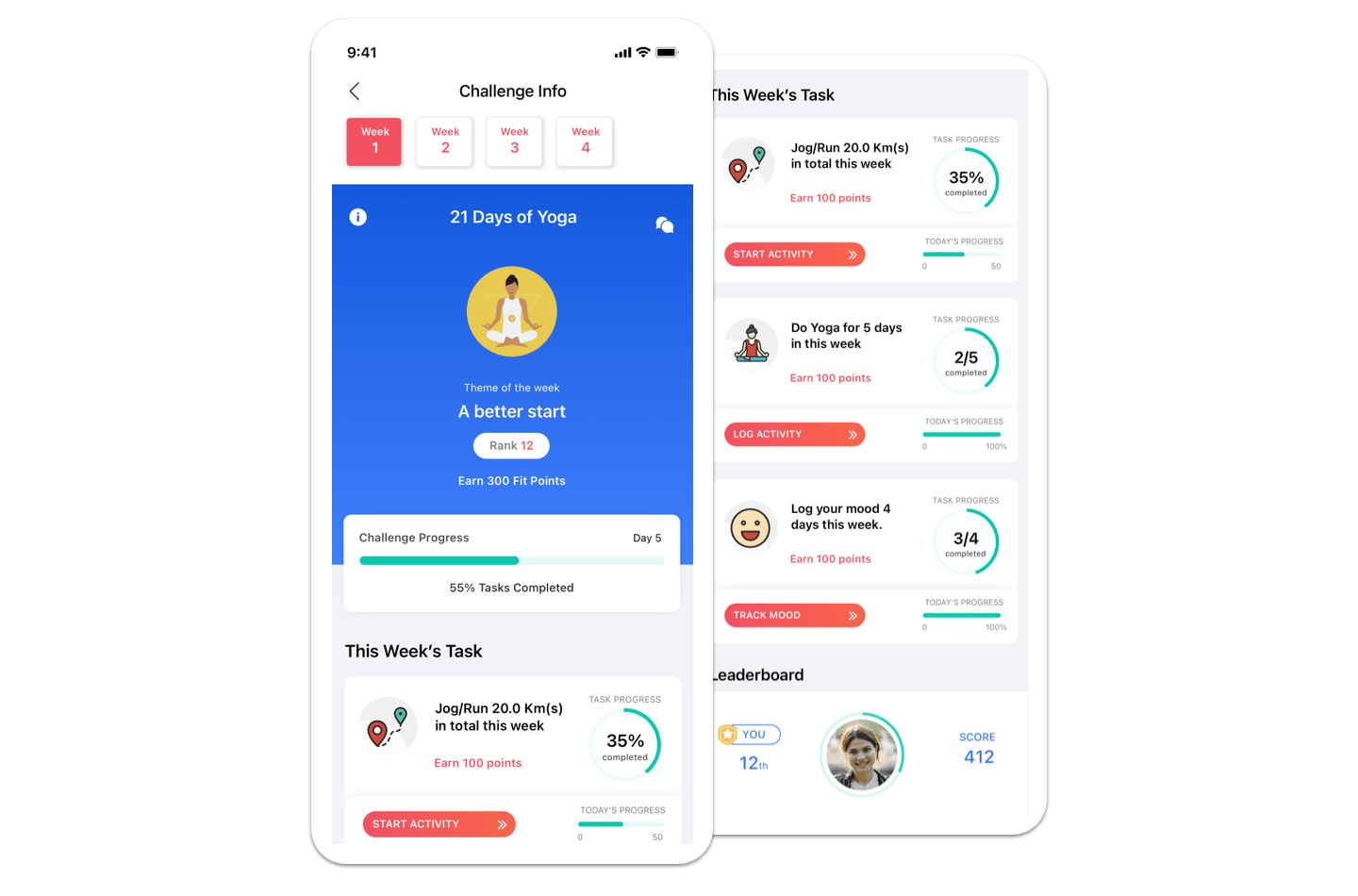
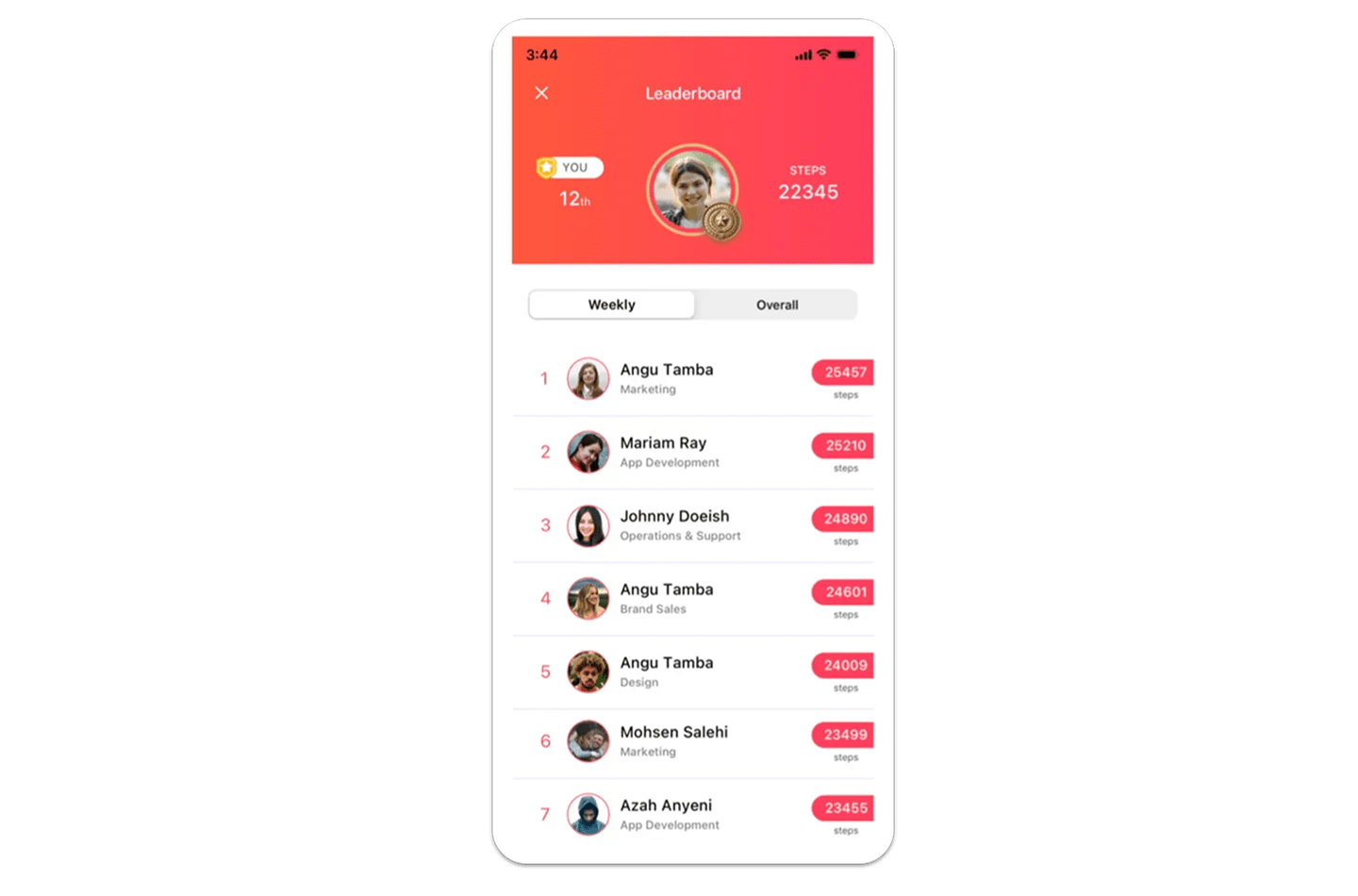
Flexible hours, team challenges, volunteering, and community groups. These levers are often the most powerful and the least used. They drive retention in hybrid and remote teams where isolation erodes engagement over time. Team challenges with dedicated leaderboards and focused chat rooms for topic-based wellness communities strengthen cross-team bonds without adding meetings. Clear, role-based flexible work policies make the difference. Vague promises don't. Track: retention, work-life balance scores, team performance, sign-ups for social events.
Data-Driven & High-Risk Interventions
Targeted challenges based on private health marker data: fasting glucose, lipid panels, metabolic markers. This is where wellness shifts from programs to risk control. Smart companies now upload private lab reports and use AI to spot group-level health trends. Think diabetes risk, heart health, vitamin gaps across the workforce. This data drives focused programs for high-risk groups: sugar-cut challenges for employees with high glucose, movement programs for those with heart risk markers. League-based models (Gold/Silver/Bronze tiers based on 21-day rolling step averages) reward lasting habits over short-term spikes. The focus is progress, not comparison.

Track: risk distribution shifts, claims trends, insurer negotiation leverage.
19 Corporate Wellness Program Ideas That Work
Specific, actionable ideas an HR leader can implement this month. Organized by physical, mental, remote, and financial/social wellness.
Every idea here passes one test: could an HR leader act on it Monday morning?
Physical Wellness Ideas
Virtual Marathon — Run a 5K/10K/21K event over a week with no fixed location. Employees rack up distance at their own pace, and global teams compete on the same leaderboard across time zones. Make sure the platform syncs with wearable devices employees already own (Apple Watch, Fitbit, Garmin) so tracking is hands-free.
Couch to 5K Program — Offer a multi-week running plan for beginners. Gradual ramp-up helps even non-runners build a fitness habit. Works well as a team challenge with weekly check-ins.
Ergonomic Workspace Assessments — Partner with health providers for desk checks, standing desks, and posture training. Key for remote and hybrid workers who set up home offices without help.
Annual Health Screenings — Organize on-site or subsidized screenings covering blood pressure, cholesterol, BMI, and glucose. Link results to tailored wellness recommendations. Screenings create the baseline data that makes every other program smarter.
Smoking Cessation Programs — Offer quit-smoking support with counseling, nicotine patches, and tracked progress. Target groups with the highest smoking rates found through health surveys.
Mental Health Ideas
Guided Meditation — Offer on-demand meditation libraries and structured mindfulness minutes as part of daily routines or challenges. Even 10–15 minutes daily shows measurable stress reduction in high-pressure roles.
Stress Management Workshops — Target high-stress teams with structured workshops on coping strategies, workload management, and resilience. Skip the generic "wellness webinar." Make sessions role-specific.
Mood Tracking — Enable daily mood logging with preset and custom emotions. Group-level data helps HR spot wellbeing trends across teams without exposing anyone's answers.
Digital Detox Challenges — Run time-limited challenges that push employees to reduce screen time outside work hours. Replace scrolling with tracked mindfulness minutes. Pair with walking or outdoor activity goals.
Remote & Hybrid Team Ideas
25% of fully remote workers experience daily loneliness versus 16% on-site (Gallup), and they're 40% more likely to report anxiety or depression. Without a commute, sedentary habits build fast.
Virtual Challenges Across Time Zones — Async participation with global leaderboards. Wipro ran this across 30+ countries and saw 3X participation growth.
Journey Challenges — Milestone-based virtual travel (walk through Europe, trek the Himalayas) gives distributed teams a shared goal without physical proximity.
Movement Breaks + Mindfulness — Step challenges with gradual ramp-up paired with short meditation sessions tracked as challenge activities. Remote workers report 45% stress rates versus 38–39% on-site — mental wellness needs to count alongside physical.
For more, see our guide to wellness activities for remote employees and remote team wellness.
Financial & Social Ideas
Nutrition Challenges — Run meal-logging challenges with calorie and macro tracking. Multi-activity challenges let you combine meal logging, steps, water intake, and mindfulness into a single program. Structured challenges make healthy eating trackable, not just a good idea.
Lifestyle Spending Account (LSA) — Provide employer-funded flexible benefits employees use for fitness, childcare, home office equipment, or personal development. LSAs let each person define what "wellness" means for them.
Retirement Planning Sessions — Partner with financial advisors for group and 1-on-1 sessions. Mid-career and senior employees get the most value. Combine with debt management resources for early-career employees.
Volunteer Days — Organize company-sponsored volunteering tied to wellness themes like park cleanups, charity walks, and health drives. Combine with corporate wellness retreats for deeper team bonding.
Social Wellness Clubs — Create topic-based communities: hiking clubs, book clubs, cooking groups. Topic-based chat groups make this work for distributed teams without requiring everyone in the same office.
Wellness Rewards Program — Boost sign-ups with points employees can redeem for wellness actions. Offer gift cards across many types, from fitness gear to charity gifts. Rewards close the gap between good intent and real action.
How to Build a Corporate Wellness Program
Six steps from data assessment through measurement. The framework works for 500-person companies and 50,000-person enterprises.
Step 1: Assess Workforce Health Data
Start with data, not guesswork. Pull claims data, review sick-day patterns, and run employee health surveys. Where possible, add group-level health marker insights from lab report uploads. A dedicated wellness coordinator can own this process. They bridge the gap between HR strategy and day-to-day program work.
Key questions to answer:
- What are the top 3 health risks driving claims costs?
- Which departments or demographics show highest absenteeism?
- What does your workforce age and lifestyle profile look like?
- Where are the largest gaps between current programs and employee needs?

Step 2: Segment by Demographics and Risk
Stop treating your workforce as one group. Split people by age, gender, department, location, chronic health flags, and activity levels.
Real examples from live programs:
- Women 35–45 in polluted metros → indoor mobility challenges
- Sales teams under 30 with sedentary workloads → cadence-based step goals
- Employees with elevated glucose biomarkers → sugar-restriction challenge programs
Splitting your workforce this way turns a generic program into a focused health strategy.
Step 3: Design Targeted Programs
Match program types to the risk groups you found. Use the 5-types framework above to build a mix of programs, not just one. Start with a wellness program proposal to lay out the business case, define expected results, and get leadership buy-in before spending.
Design principles:
- Focused challenges for private risk groups
- Gradual ramp-up (don't start at 10,000 steps for desk-bound teams)
- Mix individual and team-based activities
- Include mental, physical, and financial dimensions
Step 4: Choose a Wellness Platform
Your platform sets the ceiling on what you can run. Check vendors against these must-haves:
- Multi-activity tracking: steps, meals, mindfulness, water, not just steps
- 10+ challenge types: step, team, journey, multi-activity, streak, custom. You need variety to keep programs fresh each quarter.
- Real-time admin dashboard: data filtered by team, location, and group
- Built-in rewards: points-based prizes with diverse gift card options
- Wearable sync: Apple Watch, Fitbit, Garmin so employees use devices they own
- HIPAA and SOC 2 Type II certified. Non-negotiable for any platform handling health data.
Three questions to ask every vendor:
- How do you handle personal health data privacy at scale?
- Can we target challenges by group, risk profile, or health marker?
- What reports do you provide for C-suite ROI reviews?
Vantage Fit checks all six boxes and supports global deployments across 30+ countries with multi-language, multi-timezone support. For broader research, explore employee wellness apps and corporate wellness certifications to validate your shortlist.

Step 5: Launch with Challenges
Start with a big, visible launch challenge to build buzz. Pre-built challenge templates (monthly themes like Stress-Free Month, Heart Health Month, or Nutrition Month) cut the need to design from scratch. A platform with 10+ challenge types lets you switch formats each quarter so sign-ups don't plateau.
Launch checklist:
- [ ] Communication plan ready (email, Slack/Teams, town halls)
- [ ] Challenge configured with realistic targets by segment
- [ ] Rewards and incentives set up
- [ ] Manager buy-in secured
- [ ] Success metrics defined before launch

Step 6: Measure and Iterate
Track sign-ups, but more importantly, track staying power and health results. Platforms like Vantage Fit offer admin dashboards that show uptake rates, activity trends, and health shifts in real time, filtered by team, location, and demographic group.
Key reports to generate:
- Monthly sign-up and uptake rates by group
- Quarterly health trend reports (group level)
- Risk shifts: share of employees in "Needs Attention" vs "Normal"
- ROI calculations for C-suite presentation
Real Company Examples
Four companies, four industries, 70–88% employee engagement. Each used Vantage Fit to run their wellness programs.
See more companies at companies with wellness programs.
Wipro — Global Multi-Country Rollout
Global IT company in 30+ countries. The core problem: no unified wellness platform across regions. Wipro partnered with Vantage Fit to run three step-by-step challenges: a wellbeing fest (163 users), a yoga-focused program (57 users), then a global step-a-thon reaching 550 active users. Each challenge built on the last. Custom email campaigns and 15–20 live demos across regions drove sign-ups.
| Metric | Result |
|---|---|
| Participation growth | 3X increase (163 → 550 active users) |
| Total step increase | 84% (41.45M → 76.12M steps, May–July) |
| Top countries | Philippines (111), UK (82), Canada (60) |
Tata Motors — 70% Engagement at Scale
Car maker facing India's health crisis: 45.4% of workers not active, 16% at heart risk. Rolled out a 6-month multi-activity challenge across plants in India. Employees tracked steps, meals, water intake, and mindfulness while competing on team boards. The program logged 3,300 meals, averaged 3L water per day, and hit 9 minutes of daily mindfulness per person.
| Metric | Result |
|---|---|
| Employee engagement | 70% |
| Average daily steps | 7,600 (6% increase from baseline) |
| Average BMI | 24 (healthy range) |
| Teams reducing average weight | 53% of 43 teams |
| Top team weight reduction | Sanand 2-Material: −12.36% |
Brazosport ISD — 86% in 2 Weeks
Texas school district with 1,001–5,000 employees. The problem: getting teachers and employees involved in wellness when time is tight and work is physical. Ran a 2-week "Fit Wars" push with rising targets: 40K steps week one, 50K week two, plus mindfulness 4x/week and 8 glasses of water daily. Short timeframe and clear goals drove high sign-ups.
| Metric | Result |
|---|---|
| Engagement | 86% (+16% above 70% industry benchmark) |
| Average daily steps | 6,000+ |
| BMI improvement | 30 → ~27 |
| Mood score | 4 out of 5 |
| Active participants | 132 |
IBS Software — 88% in 30 Days
Software company with 1,001–5,000 employees in Kerala, India. Built a month-long challenge with rising weekly targets. Week one started at 5,000 daily steps. By week four, the target hit 40,000 total steps plus 7-minute workouts, 15 minutes of mindfulness, and 35km. The gradual ramp-up stopped early burnout while pushing steady effort.
| Metric | Result |
|---|---|
| Engagement | 88% (+17% above benchmark) |
| Active participants | 500+ out of 660 enrolled |
| Steps milestone | 236 employees hitting 30K+ steps by week 3 |
| Health tracking adoption | 118 tracking heart rate, 130 monitoring mood |
Costs and ROI
Budget $150–$1,200 per employee per year depending on program depth. Expect $1.50–$3 back for every dollar invested.
For a detailed breakdown, see our guide to corporate wellness program costs.
What to Budget
| Tier | Annual Cost Per Employee | What's Included | Best For |
|---|---|---|---|
| Basic | $150–$400 | Activity tracking, basic challenges, step competitions | Smaller companies starting out |
| Mid-Range | $400–$800 | Multi-activity challenges, rewards, mental health resources | Mid-sized companies with established HR |
| Comprehensive | $800–$1,200+ | Biomarker tracking, tailored interventions, full analytics | Large enterprises, self-insured employers |
The average US employer spends $150–$300 per person. Companies with mature programs invest at the mid-range or higher once you add platform costs, prizes, and screening fees. Programs at this level show stronger engagement and faster payback. The key is not how much you spend. It's whether your spend targets the right groups with the right programs.
What You Get Back
| Metric | Benchmark | Source |
|---|---|---|
| Healthcare savings | $250/employee/year | Industry benchmarks |
| Absenteeism reduction | 4 fewer sick days annually | CDC (75+ min exercise/week) |
| Stress-related health reduction | 40% decrease | Structured program participants |
| ROI ratio | $1.50–$3 return per $1 invested | Harvard / RAND Corporation |
| Mature program ROI | $3.27 per $1 spent | Baicker et al., Health Affairs |
Active programs cut healthcare costs by 25% over time by shrinking insurance claims and needless medical bills. Self-insured employers see the fastest returns because savings flow straight to their bottom line, not to an insurer.
The CFO Test
Can you defend your wellness spend in 60 seconds? If your metrics are "yoga classes offered" or "app downloads," you'll lose the budget. The programs that survive tie wellness data to healthcare costs, sick days, and output. Those are numbers the C-suite already tracks.
Mind the Perception Gap
81% of employers believe their wellness program positively impacts company culture, but only 55% of employees agree. And while 74% of leaders think wellness drives retention, just 48% of employees say the same (Vantage Fit 2026 Industry Report). The takeaway: measure what employees actually experience, not what leadership assumes.
Beyond ROI: Value on Investment (VOI) — Forward-thinking organizations are shifting from narrow ROI (healthcare savings) to Value on Investment, which also tracks talent retention, employer brand equity, innovation rates, and employee satisfaction. VOI reframes wellness from a cost-saving exercise to a strategic growth driver. Read more in the 2026 Global Workplace Well-being Industry Report.
Frequently Asked Questions
What are corporate wellness programs?
Corporate wellness programs are employer-funded efforts that support employee health through fitness, mental health tools, health screenings, financial education, and work-life balance policies. They cut healthcare costs, reduce sick days, and boost workforce engagement.
Modern programs go far beyond gym memberships. They include challenges, wearable sync, mood tracking, meal logging, and data-driven programs aimed at specific health risks.
What are examples of wellness programs?
Common examples include step challenges, virtual marathons, guided meditation, smoking cessation programs, health screenings, budgeting workshops, Lifestyle Spending Accounts, team fitness contests, mood tracking, ergonomic assessments, and digital detox challenges.
The most effective programs combine several of these into a year-round calendar rather than running isolated events.
What are the 7 pillars of wellness?
The seven pillars of wellness are: (1) Physical: movement, nutrition, sleep. (2) Emotional: stress management, resilience. (3) Social: relationships, community, belonging. (4) Financial: budgeting, debt management, retirement readiness. (5) Occupational: job satisfaction, work-life balance. (6) Intellectual: learning, growth, mental stimulation. (7) Environmental: safe, healthy physical surroundings.
A complete corporate wellness program addresses all seven, though most companies start with physical and emotional wellness before expanding.
How do you build a corporate wellness program?
Build a program in six steps: (1) Assess workforce health data and risks. (2) Segment employees by demographics and risk profiles. (3) Design targeted programs matched to each segment. (4) Choose a wellness platform with multi-activity tracking, rewards, and analytics. (5) Launch with a high-visibility challenge. (6) Measure results and iterate quarterly.
The key factor is segmentation. Programs that treat every employee the same way fall behind those that target specific groups.
What are the 5 C's of wellbeing?
The 5 C's of workplace wellbeing are: (1) Connection: meaningful relationships with colleagues and managers. (2) Contribution: purposeful work that aligns with personal values. (3) Coping: skills and resources for managing stress and adversity. (4) Community: sense of belonging within the organization. (5) Control: autonomy over how, when, and where work gets done.
Wellness programs that address all five C's see higher sustained engagement than those focused only on physical health.
What are the 7 types of wellness?
The seven types of wellness are physical, emotional, social, financial, occupational, intellectual, and environmental. These map closely to the seven pillars framework. In a corporate context, the most impactful types are physical (fitness challenges, screenings), emotional (mindfulness, counseling), financial (budgeting, LSAs), and social (team challenges, community groups).
Most companies launch with 2–3 types and expand as the program grows and data shows new workforce needs.
What are the 4 components of a wellness program?
The four core parts are: (1) Health checks: screenings, surveys, and risk reviews to set a baseline. (2) Learning: workshops, content, and resources on health topics. (3) Behavior change: challenges, coaching, and programs that drive action. (4) Supportive culture: leadership buy-in, flexible policies, and norms that back healthy choices.
Programs missing any one part fall short. Checks without behavior change produce data but no results. Behavior change without a supportive culture produces short-term spikes, not lasting habits.
Do workplace wellness programs work?
Yes. Companies with structured wellness programs see higher engagement, fewer sick days, and better morale. Johnson & Johnson saved $250 million over a decade. RAND research shows $1.50–$3 back for every $1 spent. Active programs cut healthcare costs by 25% over time.
The catch: programs that use a one-size-fits-all approach fail. The ones that work split the workforce into groups, target each group with the right program, and measure results tied to business goals.
What are the 5 pillars of employee wellbeing?
The five pillars of employee wellbeing (Gallup framework) are: (1) Career: satisfaction and growth in daily work. (2) Social: meaningful friendships and connections. (3) Financial: managing money and reducing stress. (4) Physical: health and energy to get things done. (5) Community: feeling of belonging and civic pride.
Gallup's research shows employees thriving in all five pillars are more productive, less likely to leave, and cost much less in healthcare claims.
Next Steps
Corporate wellness is no longer optional for companies competing for talent and managing healthcare costs. The data is clear: structured programs deliver $1.50–$3 for every dollar spent, cut sick days, and drive 70–88% employee engagement when built with smart segmentation and real measurement.
This guide gave you 5 program types, 15 proven ideas, 6 steps to launch, and real company results. You have what you need to move from strategy to action.
Start here: Book a Vantage Fit Demo to see how the platform supports your program from launch through long-term measurement.
Plan ahead: Download the 2026 Wellness Calendar to map monthly themes and challenge ideas across the full year.
Share