











Mental Health in the Construction Industry

Construction sites project strength, resilience, and constant activity. Workers operate heavy machinery, endure harsh weather, and put in long hours. From the outside, everything appears normal.
But behind that strong exterior, many construction workers struggle with stress, anxiety, and emotional fatigue. These problems often stay hidden because the culture expects workers to stay tough.
Mental health challenges in the construction industry remain a largely silent risk. Workers deal with job uncertainty, physical strain, and isolation. Many workers live away from their families for months.
Many fear losing income or future opportunities if they express their feelings or ask for help. This silence can lead to serious consequences for both workers and employers.
For employers, mental health is not just a wellness topic; it is a critical safety concern. A stressed or distracted worker can make mistakes.
Mistakes on a construction site can cause accidents. When workers feel supported, they perform better. Productivity improves, retention increases, and accident rates decline. Everyone benefits.
This blog explores why mental health challenges are increasing across the construction sector. It highlights the business and human reasons to prioritize on-site mental well-being. You will also find practical strategies you can start implementing today.
The goal is to create safer and healthier construction sites where workers feel valued and supported.
Why Construction Workers Face Elevated Mental-Health Risks
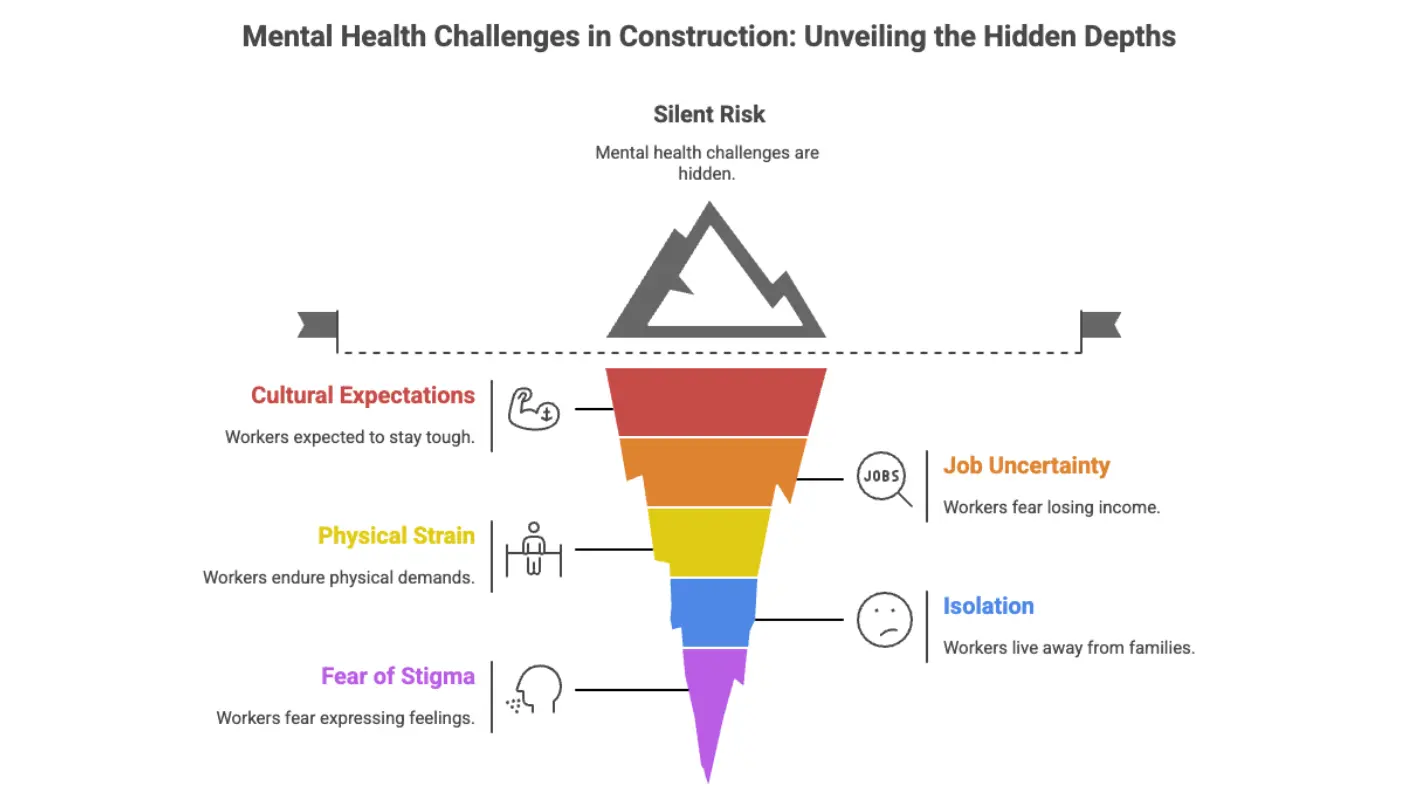
Construction workers build our world, yet many are struggling beneath the surface. They face challenges that most people never notice.
The industry often celebrates toughness. Workers hear phrases like “man up” or “keep going” This creates silence. When someone struggles, they hide it. They fear others will think they are weak. This silence puts mental health at risk.
Job uncertainty adds pressure. Work depends on new projects. When projects end, income stops. Workers feel they must accept long hours. Taking breaks feel risky. Asking for help feels even riskier.
Physical pain is another hidden weight. Construction work leads to injuries and soreness. Pain affects sleep and mood. When the body hurts every day, the mind follows.
Isolation also plays a big part. Many workers travel far for jobs. They stay away from family and friends. They miss their support. They feel alone even when the site is busy.
Also Read: 30-Day Mental Wellness Challenge: Simple Habits For A Calmer, Happier You
All these factors are combined. Culture. Instability. Pain. Distance. Together, they create a high-risk environment for mental health struggles.
When employers understand these pressures, they can act. A supportive environment saves lives and keeps the workforce stronger and safer.
Key Statistics on Mental Health & Suicide in the Construction Industry
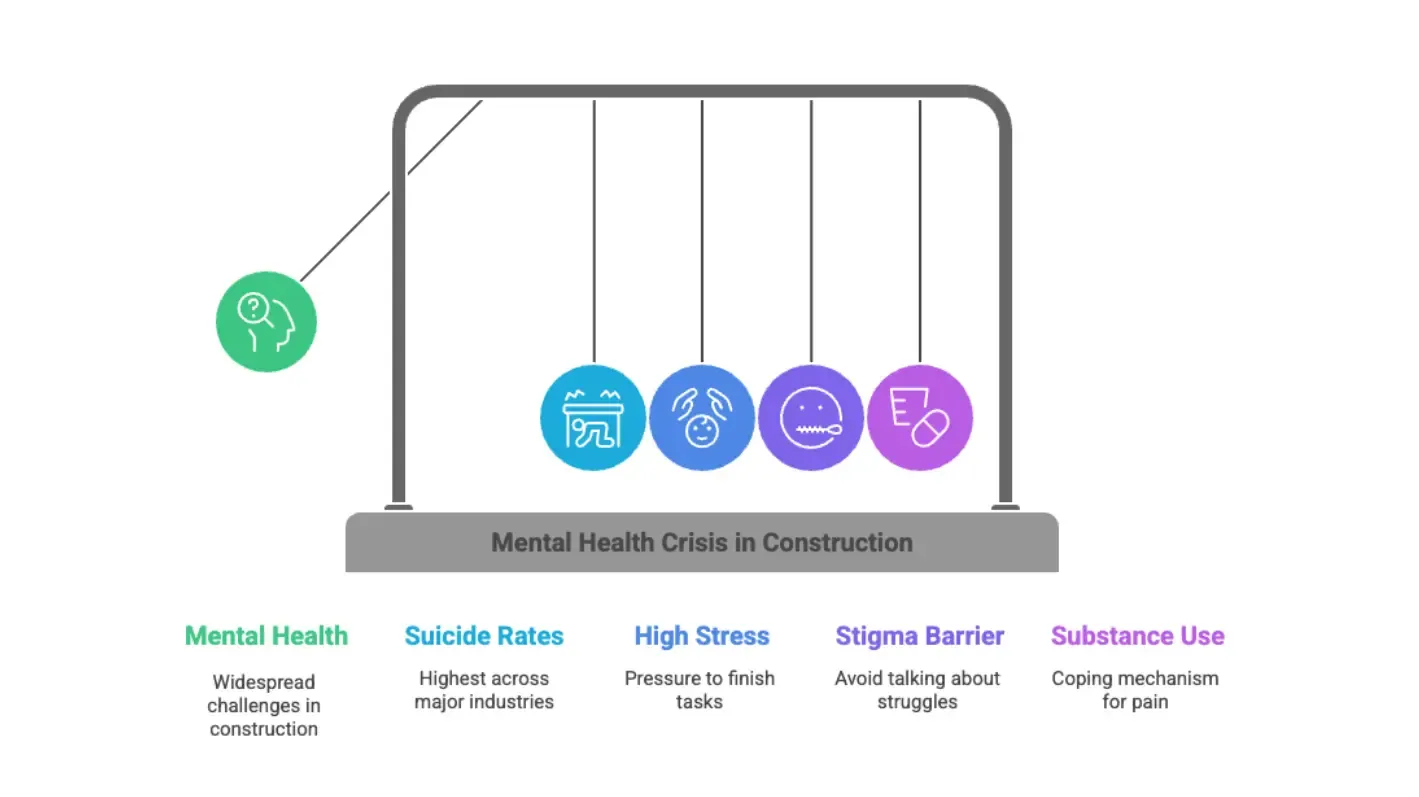
Mental health challenges are not uncommon in construction. They are widespread. The numbers highlight how serious the situation has become.
1. Suicide rates in construction are among the highest across major industries. This shows a deep mental-health crisis that often goes unnoticed.
2. Many construction workers report high work-related stress. Many feel pressure to finish tasks faster, even when they feel exhausted.
3. Many workers avoid talking about their struggles. Stigma is the most significant barrier. They fear being judged or losing their job if they speak up.
4. Substance use is often used as a coping mechanism. Alcohol or drugs become an escape from physical pain and emotional stress.
5. Chronic pain increases mental strain. When the body hurts every day, it becomes challenging to stay positive and focused.
6. Job insecurity adds financial stress. Work can stop at any time when a project ends. This uncertainty impacts mood and sleep.
7. Fatigue and long shifts are normal. But they also increase the risk of burnout, irritability, and accidents.
8. Workers living away from home feel more isolated. They lose the emotional support they need during tough times.
These numbers do not reflect workers’ reality alone. They also reflect employers’ responsibility. When leaders understand the scale of this issue, they can take steps that protect both their people and their business. Support is not just helpful. It is necessary.
What Drives Poor Mental Health on Construction Sites
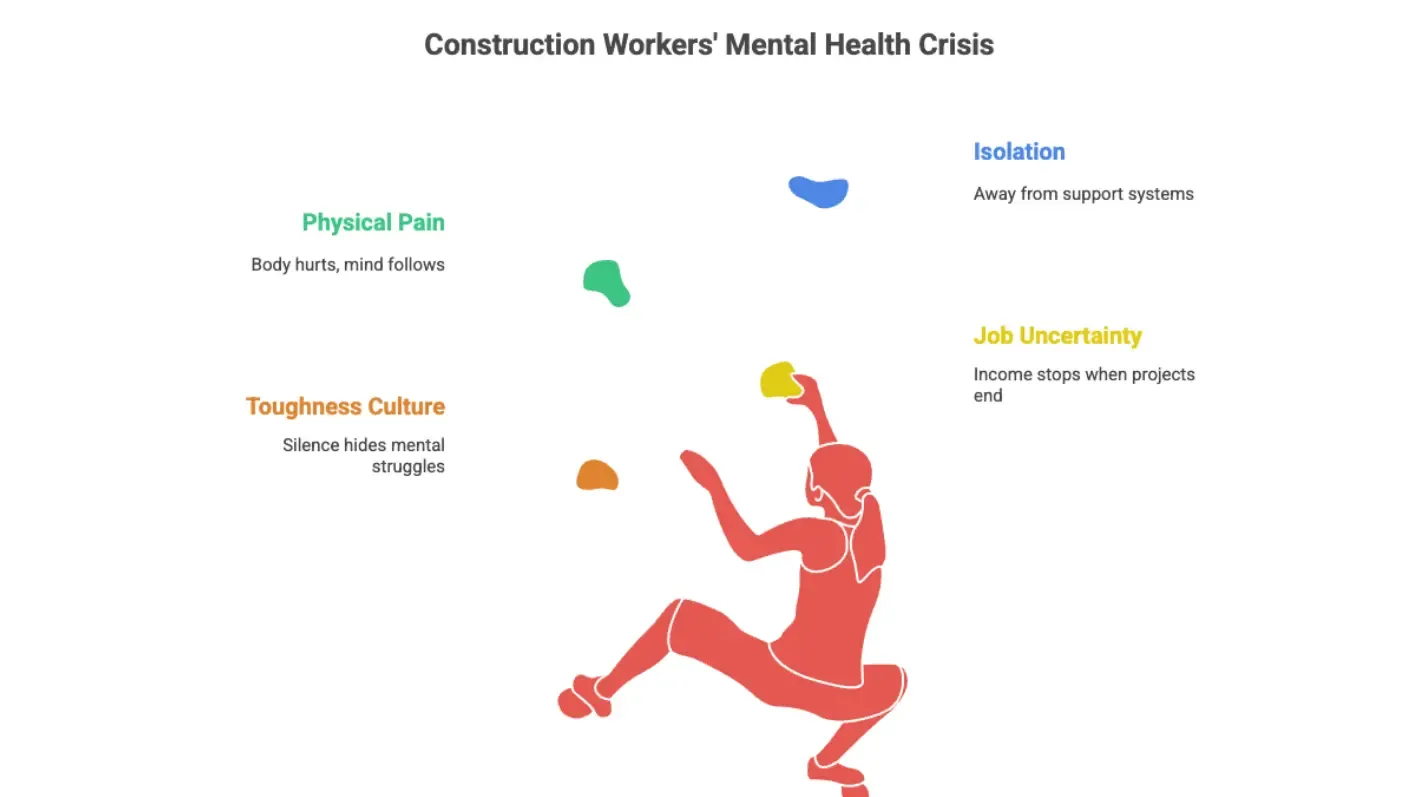
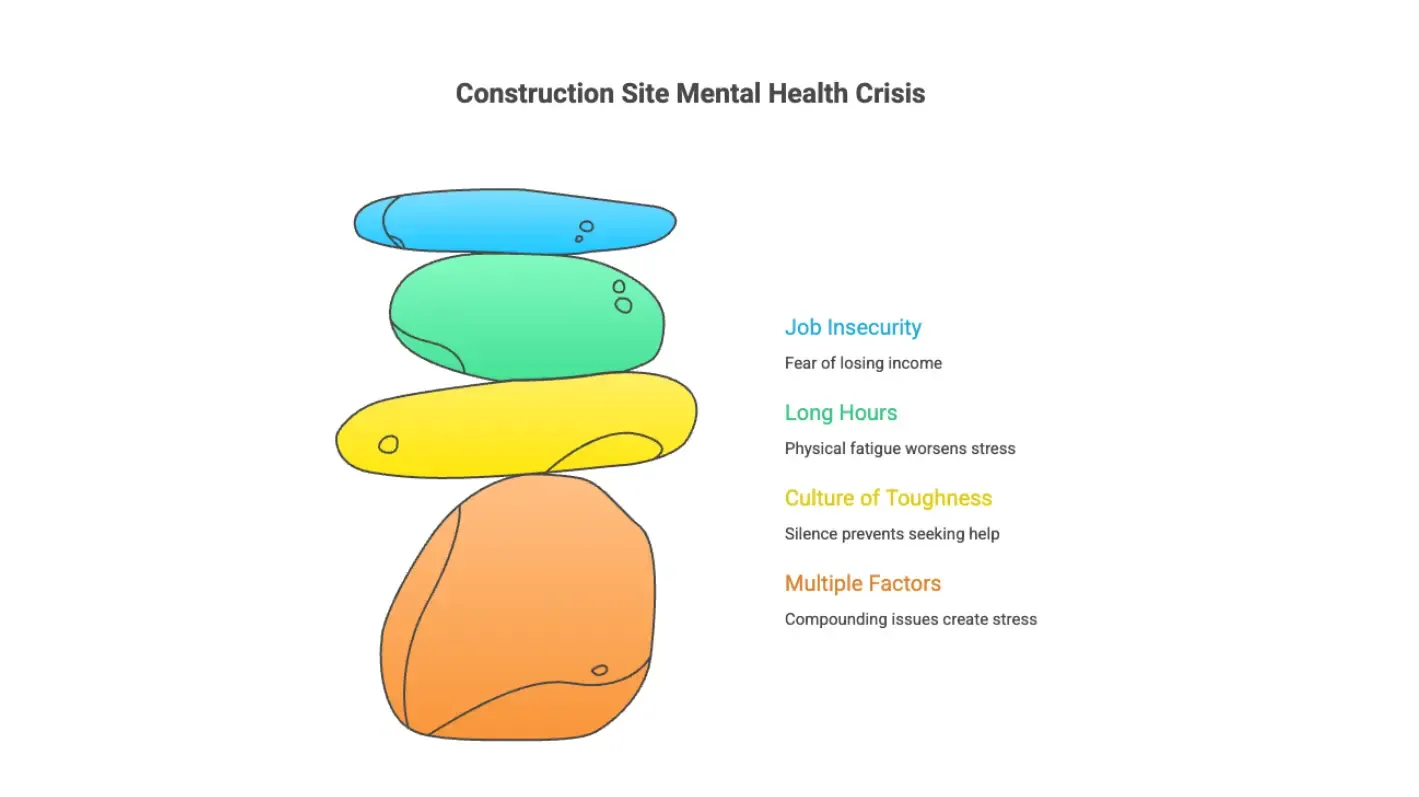
Mental health struggles in construction do not stem from a single cause; they arise from multiple, compounding factors. When these factors combine, workers feel overwhelmed and disconnected. Here are the most common factors employers need to be aware of:
Culture of toughness
Construction sites often value strength above everything. Workers hear messages like “stay strong” or “push through”. Talking about feelings looks weak. This mindset stops workers from seeking help. Over time, silence becomes dangerous.
Long hours and physical fatigue
The work demands strength and stamina. Workers handle heavy tools and harsh weather. Long shifts drain energy. Fatigue makes stress worse. When the body is constantly tired, the mind struggles to cope.
Job and income insecurity
Work depends on project availability. When one ends, earnings stop. This creates constant fear for the future. Workers feel pressure to show up even when they are not okay. They worry that admitting stress could cost them their job.
Isolation from family and support
Many workers live far from home. They miss important family moments. They lose emotional support. Even when surrounded by colleagues, they can feel alone. Loneliness increases the risk of depression and anxiety.
Substance abuse as a coping mechanism
Pain and stress often lead to unhealthy coping habits. Alcohol or drugs feel like a quick escape. But these behaviours increase the risk of accidents and long-term mental health issues. Employers can look for early signs and offer support.
Stigma and lack of awareness
More training exists for safety helmets and machinery than for mental health. Workers may not know how to spot emotional strain. Supervisors may not know how to respond.
Research, such as Yale’s Science of Well-Being course, highlights that people often misunderstand what truly improves happiness and resilience. Knowledge is powerful. Awareness can change workplace culture.
High-risk environment
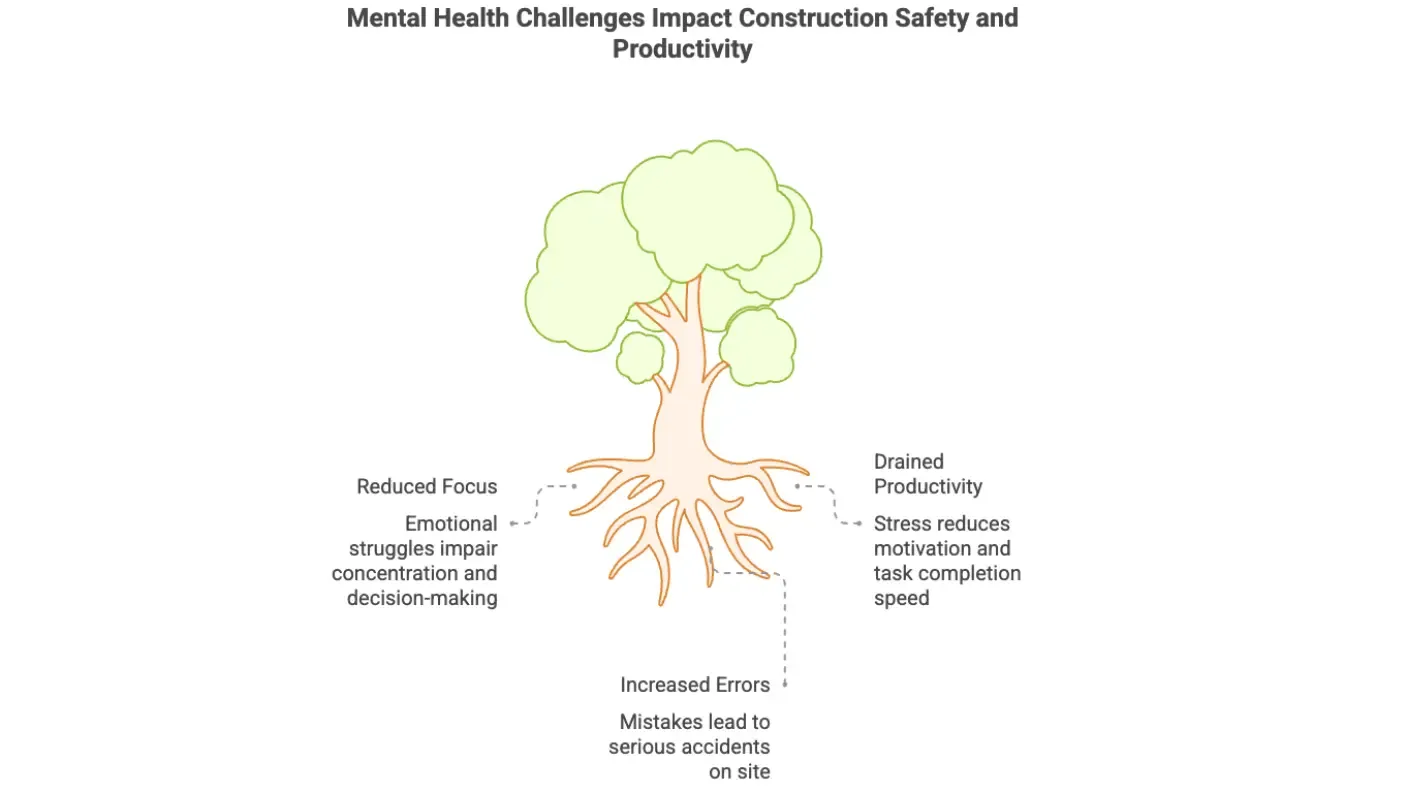
Construction sites involve heights, heavy materials, and fast decision-making. Stress distracts workers. A distracted worker is more likely to make a mistake. One moment of stress can become a serious accident.
All these pressures build up. Mental health challenges are not personal failures. They are workplace risks that need workplace solutions. When employers recognize the roots of the problem, they can take meaningful action that protects both people and performance.
How Mental-Health Challenges Affect Safety, Productivity, and Retention
Mental health does not stay inside a worker’s mind. It shows up in their actions, energy, and decision-making. When someone struggles emotionally, their focus drops. They make mistakes more easily. On a construction site, one small mistake can lead to a serious accident.
Stress also drains productivity. A worker may take longer to finish simple tasks. They may lose motivation or avoid responsibilities they once handled well. The work slows down. Deadlines start slipping. Supervisors feel pressure too.
Absenteeism is another impact. Workers under stress often take unplanned breaks. Some leave the job entirely. Replacing skilled workers is expensive. Hiring and training new workers takes time. The work quality may drop until the new team members learn the standards.
There is also presenteeism—when workers show up despite feeling unwell. They stay quiet about their struggles. They are physically present but mentally drained. This increases the chances of errors and slows progress on the site.
Emotional stress can spread through teams. Conflicts increase when people feel overwhelmed. Team communication drops. Trust weakens. Morale goes down. Projects feel heavier to manage.
Numerous studies show that investing in mental health saves employers money in the long run. Better well-being improves performance. Workers feel valued when employers care. A supported workforce stays longer, works safer, and delivers better results.
Mental health is not a soft issue. It is a business issue. A strong support system protects both people and profit.
10 Concrete Employer-Led Strategies to Improve Mental Well-being of Construction Workers
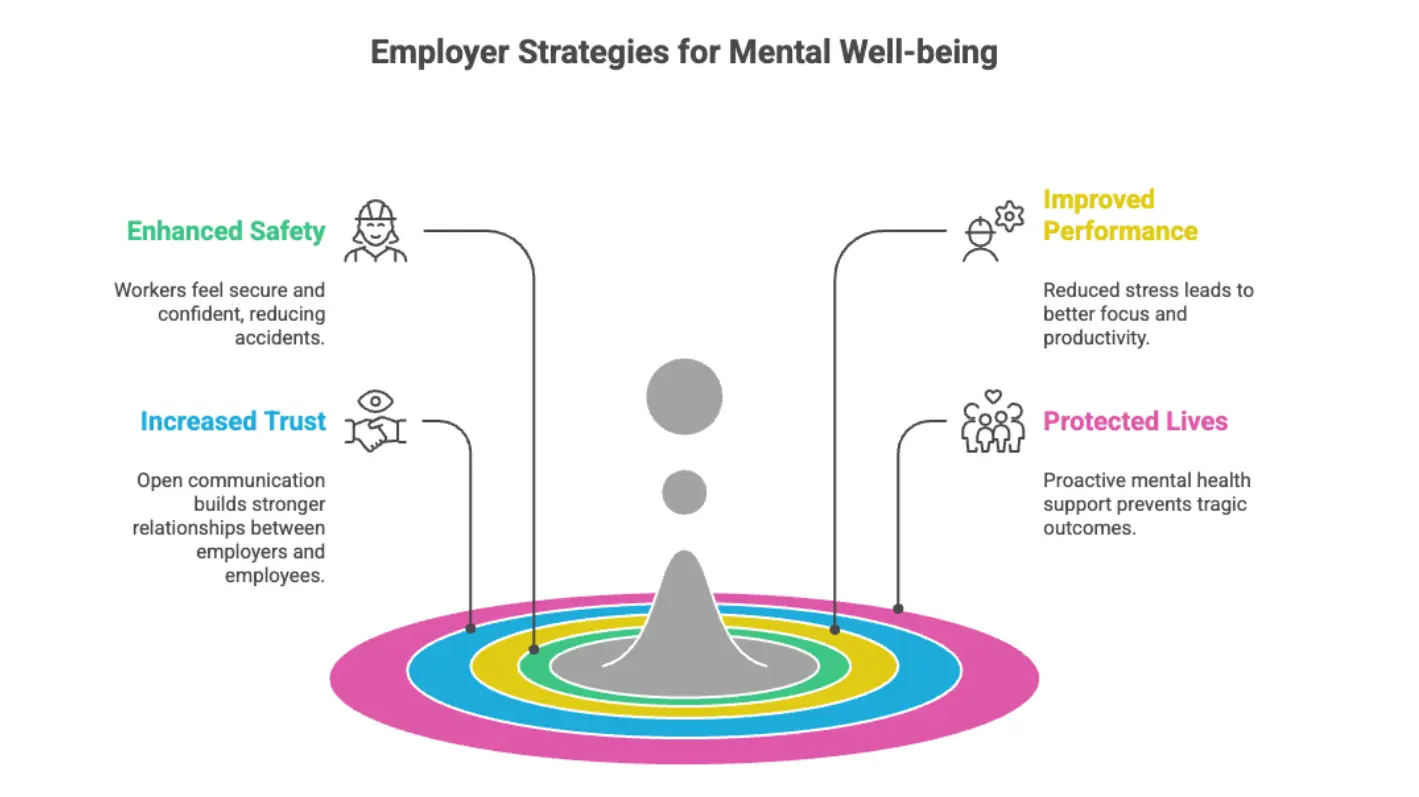
Employers hold the power to make a real difference. When leaders take action, workers feel safer and more confident. These steps can improve performance, build trust, and protect lives on every site.
1. Train supervisors to recognize early signs
Supervisors interact with workers daily and are often the first to notice changes in behaviour, mood, or performance. Simple training helps them start supportive conversations early. Early detection prevents bigger problems later.
Also Read: 12 Ways You Can Support Your Team's Mental Health as a Manager
2. Start regular toolbox talks on mental health
Include mental well-being in safety meetings. Keep the message simple and practical. Discuss stress, fatigue, and emotional support alongside any other safety topics. Normalizing these discussions reduces stigma.
3. Provide easy access to Employee Assistance Programs
Make EAP services visible and straightforward to use. Many employees hesitate because they do not know how it works. A timely reminder can encourage someone to reach out to a professional.
4. Promote a supportive work culture
Appreciate honesty and openness. Encourage workers to take breaks. Recognize good work. A positive environment improves confidence. When employees feel respected, they also feel more comfortable asking for help.
5. Manage working hours and rest periods wisely
Avoid long continuous shifts whenever possible. Provide enough time for rest. Fatigue harms emotional and physical health. A better schedule keeps workers on site fresh and alert.
6. Reduce isolation for remote workers
Offer ways for workers to stay in touch with family, such as regular phone breaks or technology support. Plan group activities on site. A sense of connection helps fight loneliness and boost morale.
7. Provide confidential mental-health support
Create safe spaces where workers can share concerns without fear. Confidential helplines or counsellors build trust. When privacy is guaranteed, workers are more likely to reach out.
8. Encourage healthy coping habits
Support fitness breaks, stretching exercises, and tobacco-free zones. Promote mental wellness apps that offer guidance on relaxation techniques or mindfulness. Healthier coping habits reduce the urge for alcohol or substances.
9. Offer financial guidance and job stability support
Provide simple financial education or access to resources that help workers plan better. Better financial confidence lowers stress. When workers feel stable, their mental health improves, too.
10. Lead by example

Managers should model healthy behaviour. Take breaks. Talk openly about stress. Show that asking for help is a strength. Workers trust leaders who walk the talk.
With these steps, employers can create a culture where workers feel valued and protected. Action does not need to be complex. Small efforts can save lives and improve every aspect of the worksite.
Taking Action—How Your Firm Can Get Started Today
Improving mental health on construction sites does not need a big announcement. It starts with one decision: the decision to care.
Look around your site. Your workers lift heavy loads. They work in risky spaces. They stay far from home. They do everything to keep the project moving. They deserve a workplace where their emotional struggles are noticed, not ignored.
Start small. Introduce simple conversations. Share support resources. Encourage leaders to listen. Every action counts. When workers feel valued, safety improves. Productivity rises. Teams collaborate better. Most importantly, lives become healthier and happier.
Ready to elevate your employees' mental wellbeing and overall productivity?
You have the power to build more than structures. You can build trust. You can create hope. You can create a workplace where every worker feels supported.
If you are looking for a practical and accessible starting point, tools like Vantage Fit can help. It brings mental well-being into daily routines through activities, challenges, mindfulness tools, and progress tracking. It gives workers the confidence to take charge of their health while employers get insights to support better outcomes.
Together, we can protect someone’s future. The right time to start is now.
Frequently Asked Questions
What are some mental health games and activities?
Simple wellness games can make workers feel more connected and relaxed. Try short breathing sessions, gratitude circles, quick stretching challenges, team walks, or positive habit tracking. These activities reduce stress and help workers take a break from heavy tasks. We also share lots of mental wellness game ideas you can explore.
What are the best mental wellness apps?
Apps that support mood tracking, relaxation, and healthy habits work best. Vantage Fit gives workers access to mindfulness tools, step challenges, and daily activity tracking. These features help workers take care of their mental health wherever they are. Managers can also view overall wellness trends to support employees better.
What are the signs of poor mental health on a construction site?
Common signs include sudden behaviour changes, loss of focus, withdrawal from coworkers, irritability, persistent fatigue, or declining productivity.
How can contractors integrate mental health into safety programs?
Add short mental wellness reminders toolbox talks. Train supervisors to recognize and respond to emotional distress. Encourage breaks and open conversations. When workers feel safe to communicate, both mental health and on-site safety improve. A supportive culture prevents accidents and builds trust.
What if workers are reluctant to use EAP or ask for help?
Fear of judgment stops workers from speaking up. Assure confidentiality and make support easy to access. Leaders can share their own experiences to normalize help-seeking. Offer multiple options, such as helplines, wellness apps, and peer support. Small encouragement can help workers take the first step.