












The Most Popular Vantage Fit Wellness Challenges Employees Love

At Vantage Fit, we've powered thousands of workplace wellness challenges across industries, company sizes, and regions. And here's what the data shows: the right wellness challenges don't just engage the already-active employees—they deliver an average participation rate of 65% across diverse workforces. From desk-workers to frontline teams, and from remote employees to those working in extreme climates, and everyone in between.
That’s the difference between a wellness initiative people ignore and one that becomes part of culture.
These aren't rigid fitness programs built for endurance athletes. They're flexible, inclusive activities built to meet employees where they are, whether they're tracking steps, logging meditation minutes, building sleep habits, or participating in team challenges that turn daily wellness into shared experiences.
What makes these challenges successful isn't just gamification or leaderboards. It's the ability to customize them for your specific workforce: employees with different needs and abilities, those working across time zones, teams working in different climates and conditions, and people with diverse wellness goals. From collaborative team journeys that build camaraderie to personal streak challenges that reward consistency, the data is clear.
When challenges are adaptable, meaningful, and designed with real employee needs in mind, participation follows naturally.
This blog shares the six wellness challenge formats that consistently drive the highest engagement based on real participation data and employee feedback.
Ready To See These Challenges In Action?
The Wellness Challenge Trap Most HR Teams Fall Into (and How Vantage Fit Wellness Challenges Are Different)
One of the most common queries that we hear from HR leaders is how traditional wellness programs look good on paper but fail in practice. They launch a step challenge with enthusiasm, send the announcement email, but later watch participation drop sharply within the first week.
Sound familiar? Here’s what typically goes wrong:
If you take a closer look, only 15 –20% of employees join the challenges (those who already exercise regularly). Remote and hybrid workers opt out because challenges feel designed for office-based teams. Again, employees with disabilities may be unintentionally excluded.
Active participation often drops by 60% after week one due to limited variety and weak team connection. And there's little usable data on what actually moved the needle.
The result? Wellness becomes another checkbox program that leadership questions during budget reviews, and employees ignore.
However, Vantage Fit takes a different approach. Our challenges are designed for diverse workforces, not just fitness enthusiasts. With flexible metrics like active minutes, meditation tracking, and manual activity logging, everyone can participate meaningfully. This works for on-site and remote employees, and for people with a range of mobility needs like those who use wheelchairs.
The flexibility of challenge formats (from team journeys to streak rewards to quiz challenges) keeps engagement high beyond week one. Built-in analytics give you the participation data and employee feedback you need to prove ROI.
Why Wellness Challenges Engage Employees (and What Makes Them Work)
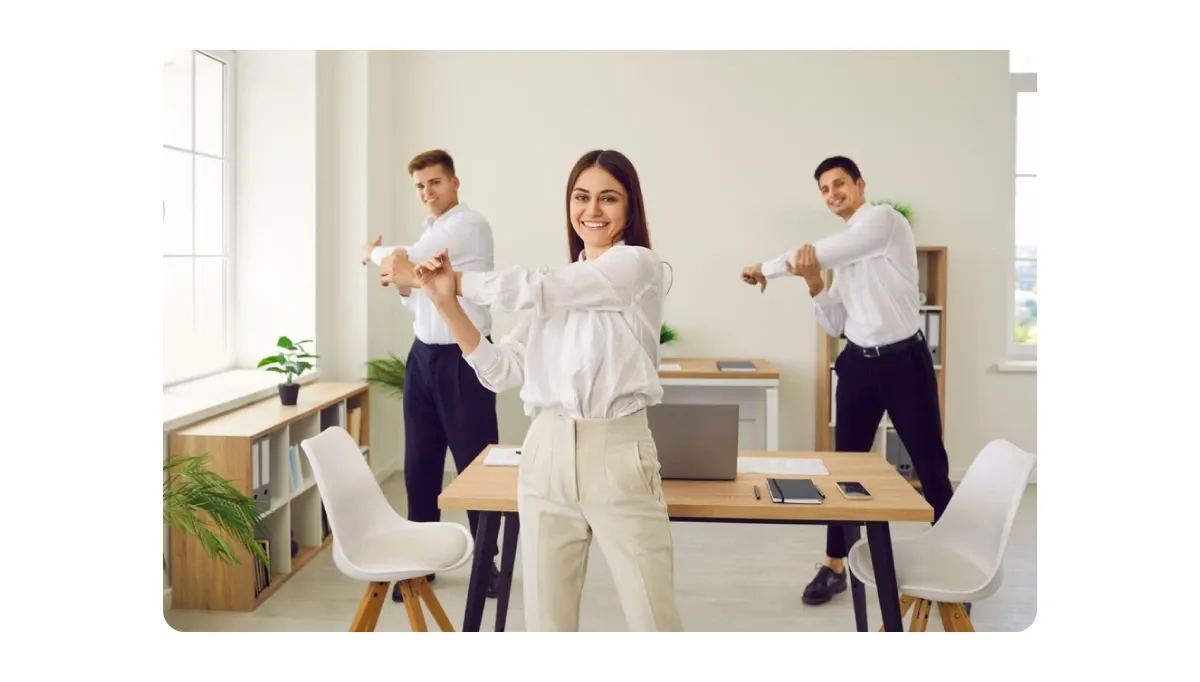
Wellness challenges work because they make healthy habits social, visible, and rewarding. Unlike individual health goals that can feel isolating or overwhelming, challenges create a shared experience. They tap into core human drivers like belonging, progress, and recognition, not complex health metrics or one-size-fits-all fitness standards. When employees see their efforts contributing to a team goal, or when a colleague celebrates hitting a consistency milestone, wellness stops being a solitary task and becomes part of the team's daily rhythm.
What makes certain challenges more engaging than others comes down to a few core principles. Flexibility is the key. Employees need options that fit their abilities, schedules, and locations. A step challenge works for some, but employees in wheelchairs, those recovering from injuries, or teams in extreme climates need alternatives like active minutes, mindful minutes, or manual activity logging.
Inclusivity ensures everyone can participate meaningfully, regardless of fitness level or physical ability. Recognition matters because people stay engaged when their effort is noticed —through streak leagues, milestone badges, or team achievements.
Customization matters, too as it allows HR teams to design challenges that reflect their company culture and employee demographics, from mixing movement and mindfulness metrics to creating geography-specific activities.
When challenges are adaptable, inclusive, and aligned with how employees live and work, they naturally build participation and morale across teams.
They become part of your culture rather than another one-size-fits-all program. With that foundation, let's explore the wellness challenges that employees have enjoyed the most on Vantage Fit.
The Top 6 Most Popular Vantage Fit Wellness Challenges
1. Custom Challenges
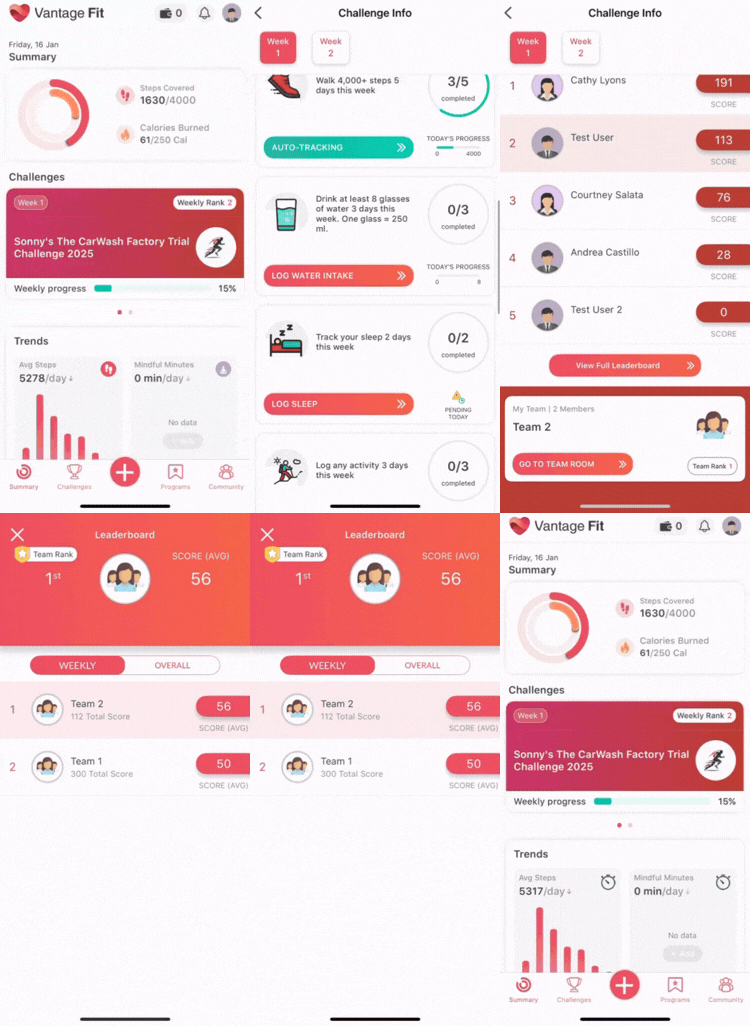
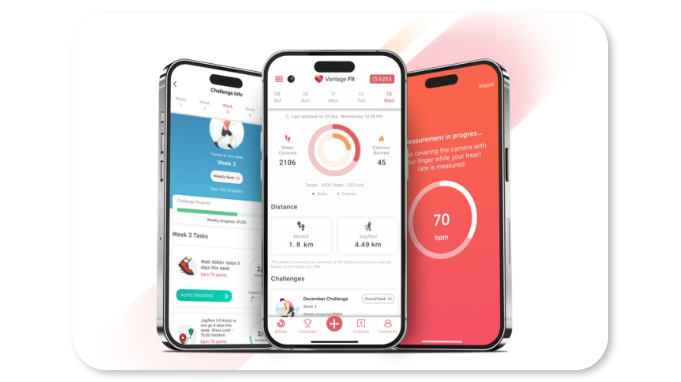
Custom Challenges are the most popular format on Vantage Fit because they give HR teams complete control to design wellness programs that fit their unique workforce. Unlike pre-built challenges that follow a single template, custom challenges let you mix and match wellness metrics such as steps, meditation minutes, water intake, sleep, heart-rate tracking, meal logging, squats, or even quick 7-minute workouts.
You can create a holistic wellness experience that addresses physical activity, nutrition, mindfulness, and recovery all in one challenge. This flexibility means every employee can find ways to participate that align with their abilities, interests, and daily routines.
Why This Challenge Drives High Participation
- Complete Customization
HR teams can select which metrics matter most for their organization. A tech company might emphasize mindfulness, sleep, and movement. At the same time, a healthcare organization might focus on steps, nutrition, and mood tracking. You control the duration, point values, and which activities count, making each challenge truly reflective of your workplace wellness priorities.
- Inclusive for All Abilities
By offering diverse metrics beyond just steps, custom challenges ensure everyone can participate. Employees with mobility limitations or especially abled team members can switch to a wheelchair, use manual entry, or convert alternative exercises into active minutes.
Those in extreme climates can log indoor activities. It removes barriers and creates genuine inclusion rather than just accommodation.
- Drives Holistic Wellbeing
When challenges go beyond movement to include nutrition, sleep, mindfulness, and mood tracking, employees develop a more complete picture of their health. They start connecting how their sleep affects their energy, or how hydration impacts their focus. Custom challenges create awareness across multiple wellness dimensions, leading to more sustainable behavior change.
IBS Software ran three consecutive weekly task challenges. Initially, 504 employees enrolled on average, and an impressive 82.6% remained actively engaged throughout the challenges, with only a 17.4% drop-off rate, compared to the typical 60% seen in traditional wellness programs.
2. Journey Challenges (Team and Individual)
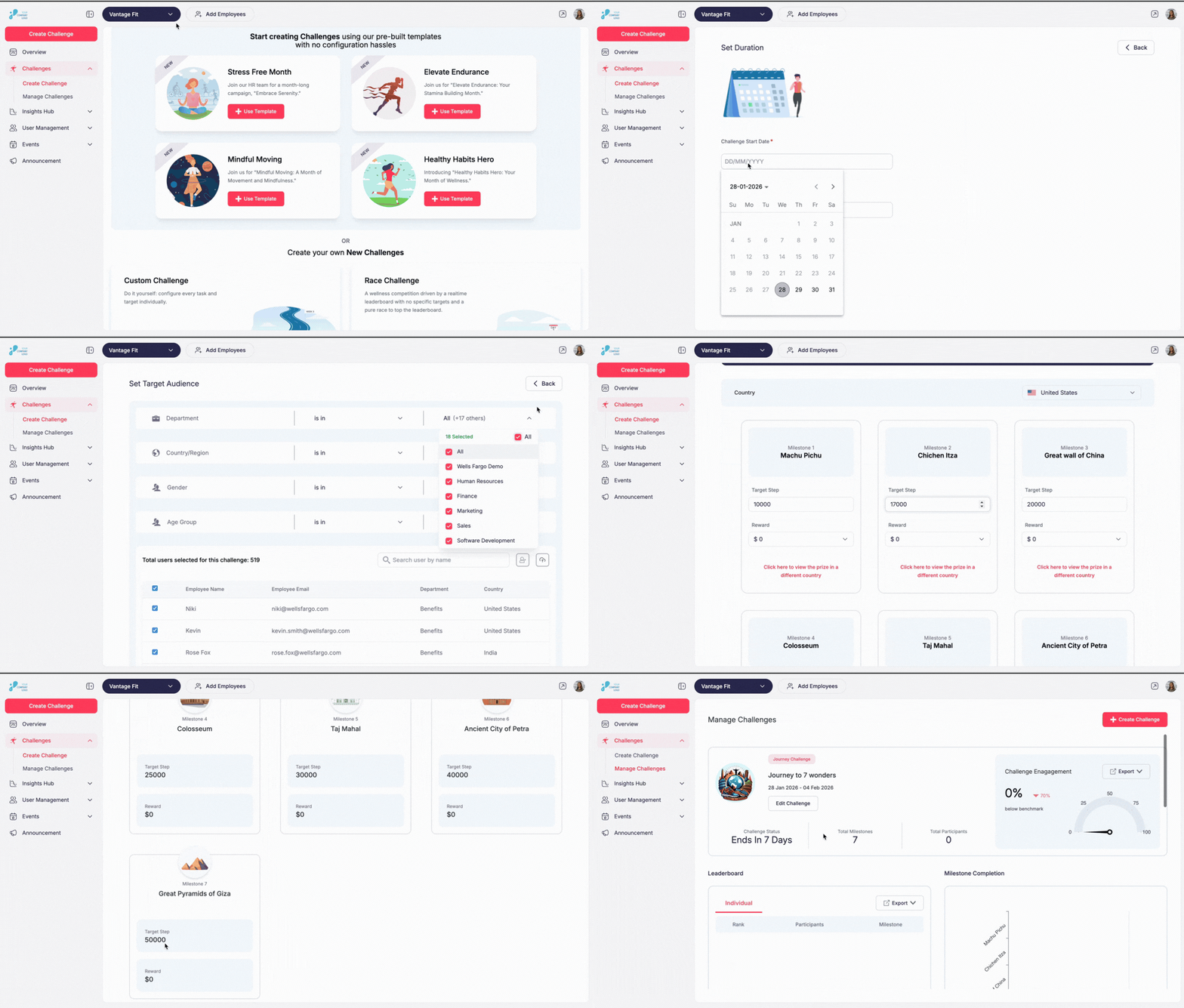
Journey Challenges transform step tracking into a shared adventure. Teams or individuals work toward a cumulative step goal that represents a virtual journey, like walking the distance from New York to San Francisco or reaching the summit of Mount Everest. As employees log their steps, they watch their progress along the route, unlocking milestones and celebrating collective achievement.
Why Teams Love Journey Challenges
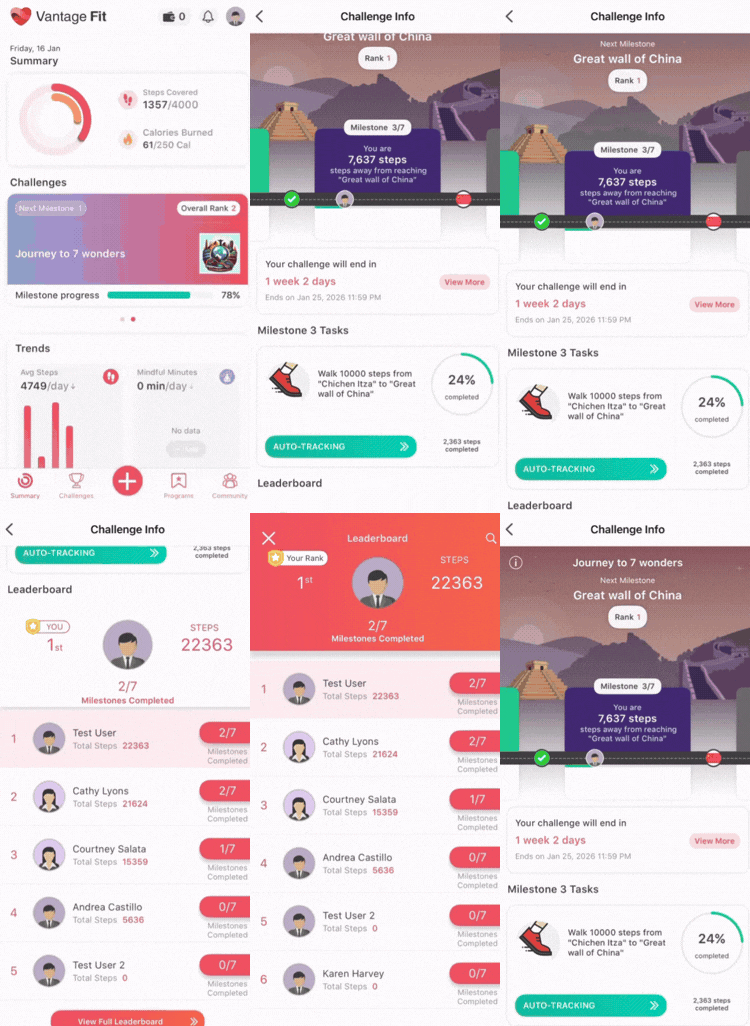
Available in both team and individual formats, Journey Challenges turn daily walking into a narrative experience that keeps motivation high from start to finish.
- Built for Team Spirit and Accountability
When configured as team journeys, every member's steps contribute to shared progress. It creates natural accountability and encouragement. Colleagues check in during slow periods, motivate each other to stay active, and celebrate together when milestones are reached. Individual walking becomes a collective achievement, strengthening workplace relationships in the process.
- Meaningful Progress That Stays Visible
Visual journey maps show exactly where teams stand on their route, making progress tangible and easy to understand. Instead of abstract numbers, employees see themselves crossing state lines or reaching elevation markers. This narrative framing keeps engagement high throughout the challenge, even during the middle weeks when motivation typically dips.
- Flexible for Remote and Solo Participants
Individual journey formats work perfectly for remote teams or employees who prefer to focus on personal goals. They get the same motivating narrative and milestone system without needing team coordination. HR can run both formats simultaneously, giving employees a choice between collaborative and solo participation based on their work style and preferences.
3. Race Challenges (Team and Individual)
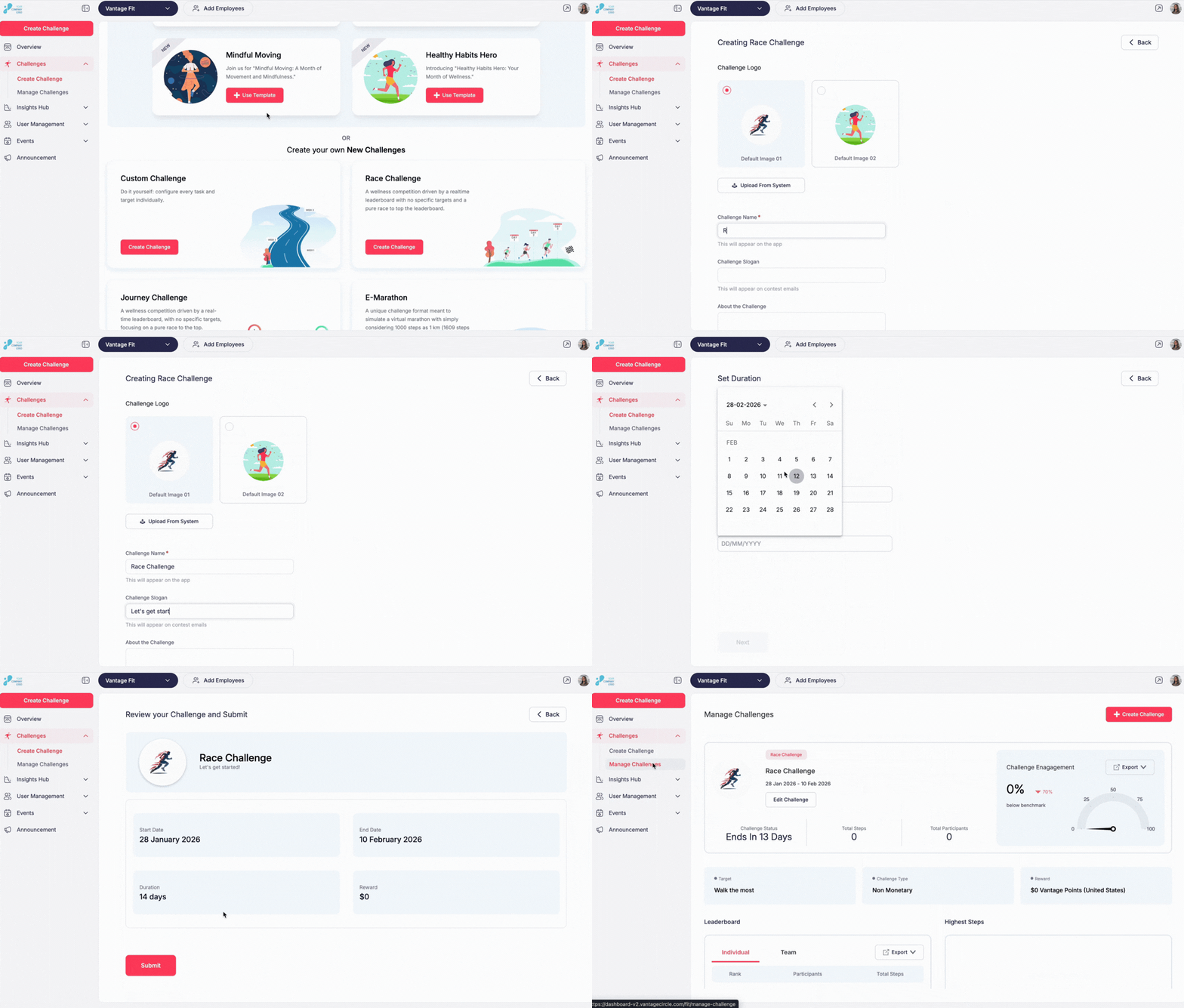
Race Challenges add a competitive edge to step tracking by matching teams or individuals in friendly competition to reach a finish line first. Unlike journey challenges that emphasize collective progress toward a set goal, races create friendly competition where speed and consistency determine the winner.
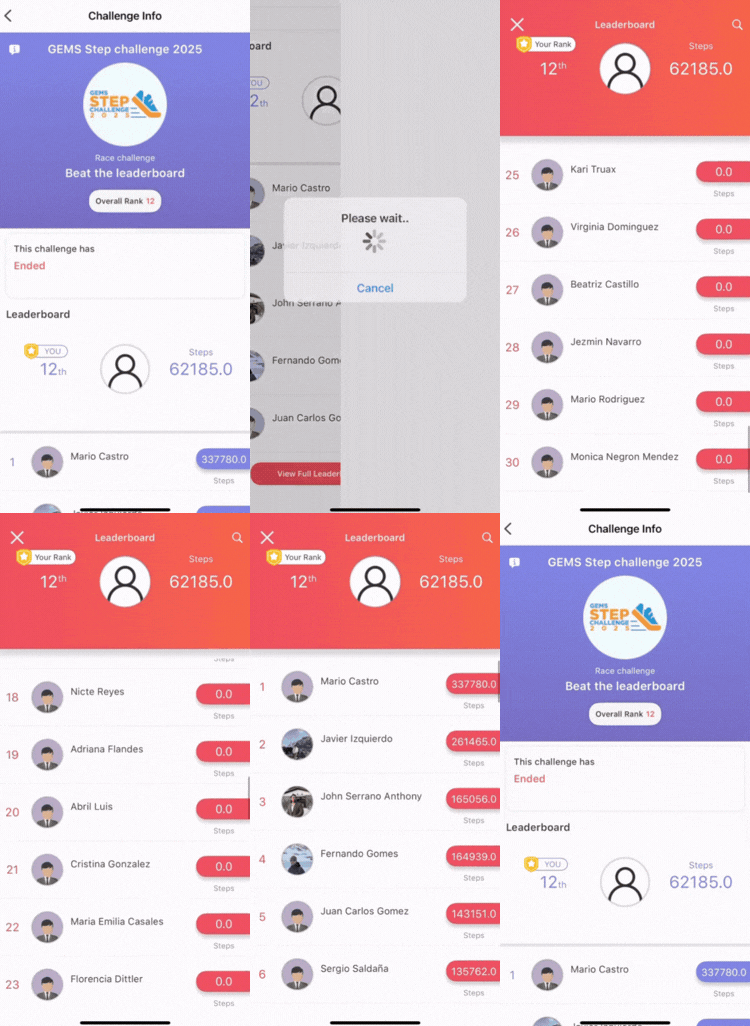
Teams strategize, encourage higher daily step counts, and rally together during the final push. The real-time leaderboard updates keep energy high, and the competitive format tends to drive some of the highest engagement rates we see across all challenge types.
Why Races Drive Consistent Engagement
- Competition That Builds Camaraderie
The race format taps into natural competitive spirit without becoming overly intense. Teams celebrate wins together and push each other to stay active. The visible leaderboard creates just enough pressure to keep motivation high. At the same time, the team structure ensures no one feels isolated in their efforts. It's competition that builds camaraderie rather than dividing participants.
- Instant Feedback and Momentum
Real-time updates show exactly where teams stand, creating immediate feedback loops that encourage sustained effort. When employees see their team move up the leaderboard after a strong walking day, it reinforces positive behavior and builds momentum. This instant gratification keeps people checking in and staying engaged throughout the race.
- Adaptable to Company Culture
HR teams can adjust race parameters to match their workplace environment. Set shorter races for quick bursts of activity or longer ones for sustained engagement. Configure team sizes to match departments or create cross-functional groups. The format works equally well for highly competitive cultures and those that prefer lighthearted, friendly challenges.
Dhan (Moneylicious Securities) ran three consecutive monthly race challenges. Across all three challenges, an average of 281 employees enrolled, and a remarkable 96.89% of enrolled employees stayed actively engaged, with their second race challenge achieving a peak participation rate of 99.62%.
4. Streak Challenges: Reward Consistency Over Intensity
Streak Challenges reward consistency over intensity by tracking how many consecutive days employees meet a wellness goal. Whether it's hitting a daily step target, logging meditation minutes, or tracking water intake, the challenge celebrates showing up every single day.
This format shifts the focus from competition to personal discipline, making it ideal for building long-term healthy habits. Employees who may not top traditional leaderboards can excel in streak challenges (leagues) by simply maintaining consistency, which often proves more valuable for sustained behavior change.
Why Streaks Build Lasting Habits
- Rewards Discipline Over Performance
Unlike challenges that favor high performers, streaks democratize success. An employee who walks 5,000 steps every day for 30 days straight achieves the same streak as someone who walks 15,000 steps; consistency is what matters. This levels the playing field and makes the challenge accessible to everyone regardless of fitness level or available time.
- Builds Sustainable Habits
The daily check-in required to maintain a streak creates routine and accountability. Over time, the behavior becomes automatic. Employees report that streak challenges help them internalize wellness activities as non-negotiable parts of their day, leading to habit formation that continues long after the challenge ends.
- Positive Reinforcement Loop
Watching a streak number climb day after day provides powerful psychological reinforcement. The longer the streak, the more motivated employees become to maintain it. This creates a positive feedback loop where past success drives future effort, making streaks one of the most effective formats for long-term engagement.
Turn your steps into an adventure.
5. Virtual Marathon
The Virtual Marathon Challenge sets an ambitious collective or individual step goal equivalent to a marathon distance (26.2 miles) or more. It encourages employees to complete it within a set timeframe. Unlike traditional marathons that require running the entire distance at once, virtual marathons let participants accumulate steps over days or weeks through their regular activities.
It's the achievement of a marathon without the barrier of intensive training or time commitment, making the accomplishment accessible to a much wider range of employees.
Why Virtual Marathons Resonate
- Achievable Yet Aspirational
The marathon distance feels significant and but impressive spreading it across multiple days makes it realistic for most employees. Someone averaging 7,000 steps per day will naturally complete a marathon distance in about a week. This balance between challenge and accessibility motivates participation while still delivering a sense of real accomplishment upon completion.
- Clear Milestone and Endpoint
The defined finish line creates clarity and urgency. Employees know exactly what they're working toward and can track their progress toward a concrete goal. Unlike open-ended challenges, the virtual marathon has a clear beginning, middle, and end, making it easier to maintain focus and momentum throughout.
- Celebrates Personal Achievement
Completing a virtual marathon gives employees bragging rights and a genuine sense of accomplishment. It's a milestone they can share with family and friends and be proud of, regardless of how they compare to others. This personal victory creates positive associations with wellness activities and builds confidence for future challenges.
Compare and Connect ran a 31-day virtual marathon challenge. Initially, 74 employees enrolled, and 93.24% remained actively engaged throughout the challenge, completing their virtual marathon distance over the month-long period.
6. Content Library Quiz Challenges
Content Library Quiz Challenges combine education with engagement by asking employees to read wellness articles from Vantage Fit's curated content library and then complete short quizzes to test their knowledge. Topics range from nutrition and exercise science to stress management and sleep hygiene.
Unlike physical challenges, these focus on building financial, mental, and physical health literacy (and, where relevant, financial wellbeing awareness). Employees learn evidence-based wellness information while earning points and recognition, making it ideal for complementing movement-based challenges or reaching employees who prefer cognitive over physical activities.
Why Quiz Challenges Create Inclusive Participation
- Removes All Physical Barriers
Quiz challenges eliminate physical participation barriers. Employees with mobility limitations, those recovering from injuries, or anyone preferring seated activities can participate fully. This format ensures wellness programs genuinely include all employees, not just those who can walk, run, or exercise intensively.
- Builds Knowledge That Lasts
Reading curated content and engaging with quizzes helps employees make more informed health decisions. They learn why certain habits matter, how to improve wellbeing, and what changes might benefit them most. The knowledge gained influences behavior and decisions long after the quiz is completed.
- Minimal Time Investment
Completing an article and quiz takes just 3 –5 minutes, making it easy to fit into busy workdays. Employees participate during breaks, commutes, or spare moments between meetings. This low barrier to entry encourages consistent engagement without creating scheduling pressure or requiring dedicated workout time.
Which Challenge Format Fits Your Team?
| Challenge Type | Best For | Avg. Participation | Setup Complexity |
|---|---|---|---|
| Custom Challenges | Diverse teams, holistic wellness | 70.25% | Medium |
| Journey Challenges | Team bonding, long-term engagement | 70.16% | Low |
| Race Challenges | Competitive cultures, quick bursts | 69.99% | Low |
| Streak Challenges | Habit building, inclusive participation | 83.6% | Low |
| Virtual Marathon | Goal-oriented employees, milestones | 59.9% | Low |
| Quiz Challenges | All abilities, education focus | 78.2% | Very Low |
How to Choose for Each Challenge
Not sure which challenge to start with? Here's a simple step-by-step guide:
-
If your priority is maximum inclusivity and you have employees with diverse abilities, start with Custom Challenges. The multi-metric approach ensures everyone finds participation options that work for them.
-
If you want to strengthen team bonds and workplace culture, launch Journey Challenges in a team format. The collaborative progress creates natural opportunities for connection and support.
-
If your culture thrives on friendly competition, run Race Challenges between departments or offices. The competitive energy drives high daily engagement.
-
If your goal is sustainable habit formation, then implement Streak Challenges. They reward consistency and build routines that last beyond the challenge duration.
-
If employees want personal milestones they can celebrate, offer Virtual Marathons. The concrete achievement creates pride and positive associations with well-being.
Most successful wellness programs run multiple challenge types throughout the year. Start with one format, gather feedback, then introduce variety to maintain engagement and reach different employee segments.
Conclusion
The most popular wellness challenges on Vantage Fit share a common foundation: they're designed with real employee diversity in mind. Whether you're creating custom challenges that blend multiple wellness metrics, launching team journeys that build camaraderie, rewarding consistency through streaks, or building health literacy through quiz challenges, success comes from flexibility and inclusion.
What separates effective wellness programs from checkbox initiatives is the ability to meet employees where they are —with options that respect differing abilities, schedules, locations, and goals.
Vantage Fit's challenge framework, with features such as active-minute tracking, manual activity logging, geography-specific customization, and diverse metric options, ensures that participation isn't limited to the already active or motivated. It creates genuine opportunities for everyone to engage meaningfully.
If you're ready to build a wellness program that reflects your diverse workforce, these challenges provide the proven frameworks to make it happen.