











How to Successfully Run a Wellness Bingo Challenge: The Complete Implementation Playbook

Everyone's played bingo at some point. You sit with a card, numbers get called, you cross them off. First to get a line wins. Simple game, familiar format, surprisingly addictive.
This version is different. It's bingo with a healthy twist.
Instead of numbers, your card has wellness activities. So why does this work so well?
Well, your brain is wired for pattern recognition- a survival mechanism built into human behavior. When you scan a bingo card looking for matches, something shifts cognitively. You're engaged. Stimulated. The visual attention feels rewarding, not like work. That's the difference between bingo and a checklist. One feels like a game. The other feels like a chore.
And in an age where sedentary habits pile up, what if bingo serves a purpose? What if the familiar format, the pattern-seeking, the small wins each day make consistency possible for once?
This blog breaks down exactly how wellness games such as a bingo works, why it sticks, and how to implement it in your organization. We've built three expert-designed, fully editable bingo templates for you. Free. Ready to customize. We've also included a complete guide on running a bingo challenge from start to finish.
Get 7 unique Wellness Bingo printable cards ranging from Physical Wellness to Self-Care. It has 25 activities each, game instructions and expert implementation tips.
Now, let's jump to the basics and try to learn-
What is Wellness Bingo?
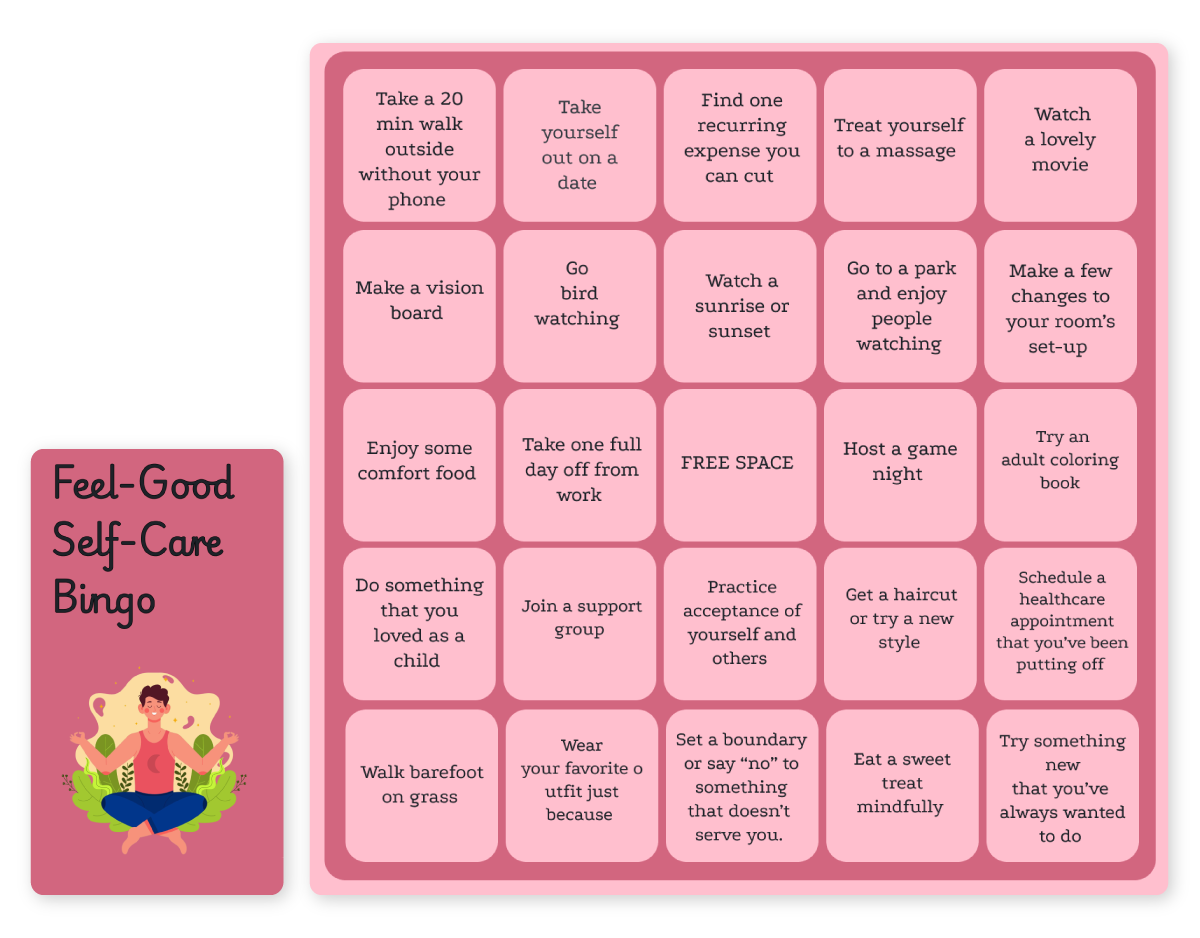
Wellness Bingo is a structured, game-based wellness challenge with a defined timeframe that uses traditional bingo card format (5×5 grid) to track real health actions instead of numbers. It operates in two formats—individual and team—each card containing various wellness activities.
Players complete activities (e.g., a 20-minute walk, a 5-minute meditation, hydration goals, or a healthy meal) and mark them off; a completed row, column, diagonal, or full card constitutes a win.
The approach blends habit formation with social accountability. The one-month timeframe is chosen because behavioral science shows that habits begin forming within weeks, while full automaticity often takes closer to 60–70 days (Lally et al., 2009). Thirty days creates a high-motivation entry window without overwhelming participants.
Variations include theming (mental health month, self-care week, mindfulness), and formats (individual vs. team) to accommodate remote, hybrid, or in-person settings. The primary goal is to foster consistent, doable health behaviors through small, observable wins, turning wellness into a tangible, repeatable routine rather than abstract advice.
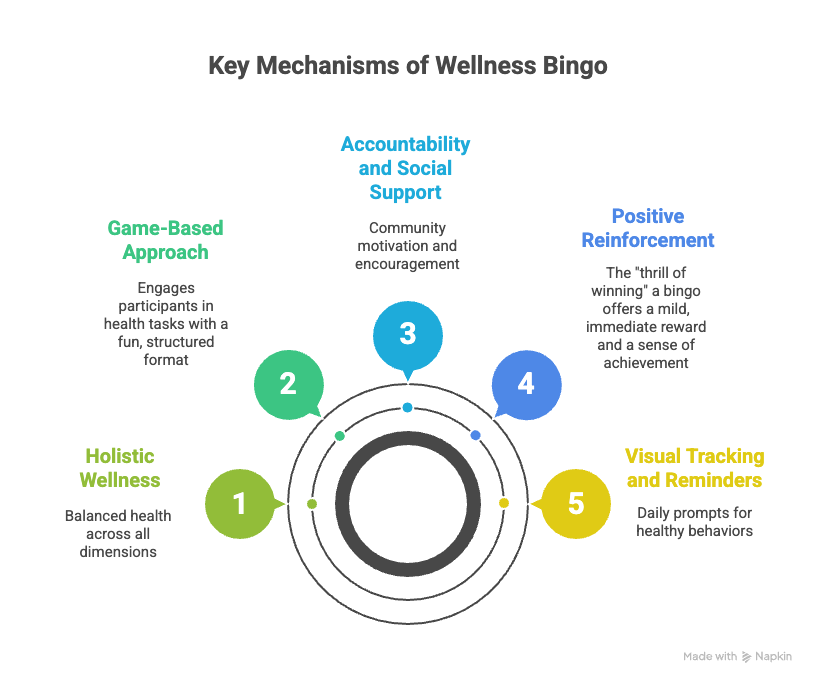
Why is it so effective?
- Instant feedback is more impactful than we often realize. Each marked square provides a quick sense of accomplishment, offering a continuous feeling of progress.
- Whether it’s done individually or in teams, knowing others are involved turns wellness into a shared effort. In team formats, social approval and collective action also serve as strong motivators.
How to Successfully Run a Wellness Bingo Challenge
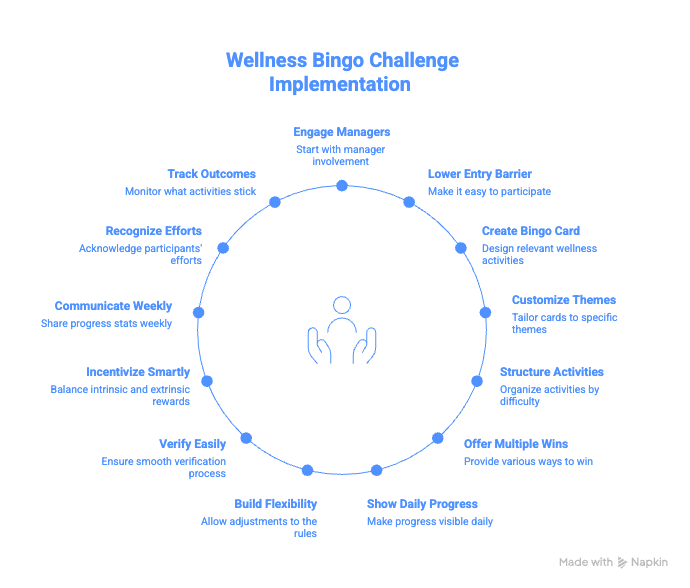
At its core, a workplace wellness bingo is straightforward. But beneath that simplicity lies a genuine behavioral design that makes people change.
Here's how it functions across the critical implementation phases:
1.Start with the People who Matter Most: Your Managers

A wellness challenge loses credibility when managers treat it as a performative initiative rather than an active priority. They're the ones who shape team culture, who decide whether Wednesday morning is "we take a walk" or "we pretend this didn't happen." They control psychological permission.
So, before you launch bingo, sit down with your team leads. Explain that their participation matters more than enforcement.
When a team lead meditates or takes a walk and marks it on the shared card, their team follows naturally.
2. Keep the Barrier to Entry Extremely Low
Complexity kills adoption.
Wellness bingo card idea works because people already understand it. You email the card, you explain the rules in three sentences, you're done. No app download. No gym membership. No special equipment. The activities themselves are brief and flexible.
Someone hates meditation? Yoga counts. Someone can't walk due to injury? Gentle movement or stretching works. Building a habit requires meeting people where they actually are, not where you wish they were.
3. Create Your 5×5 Bingo Card with Relevant Wellness Activities
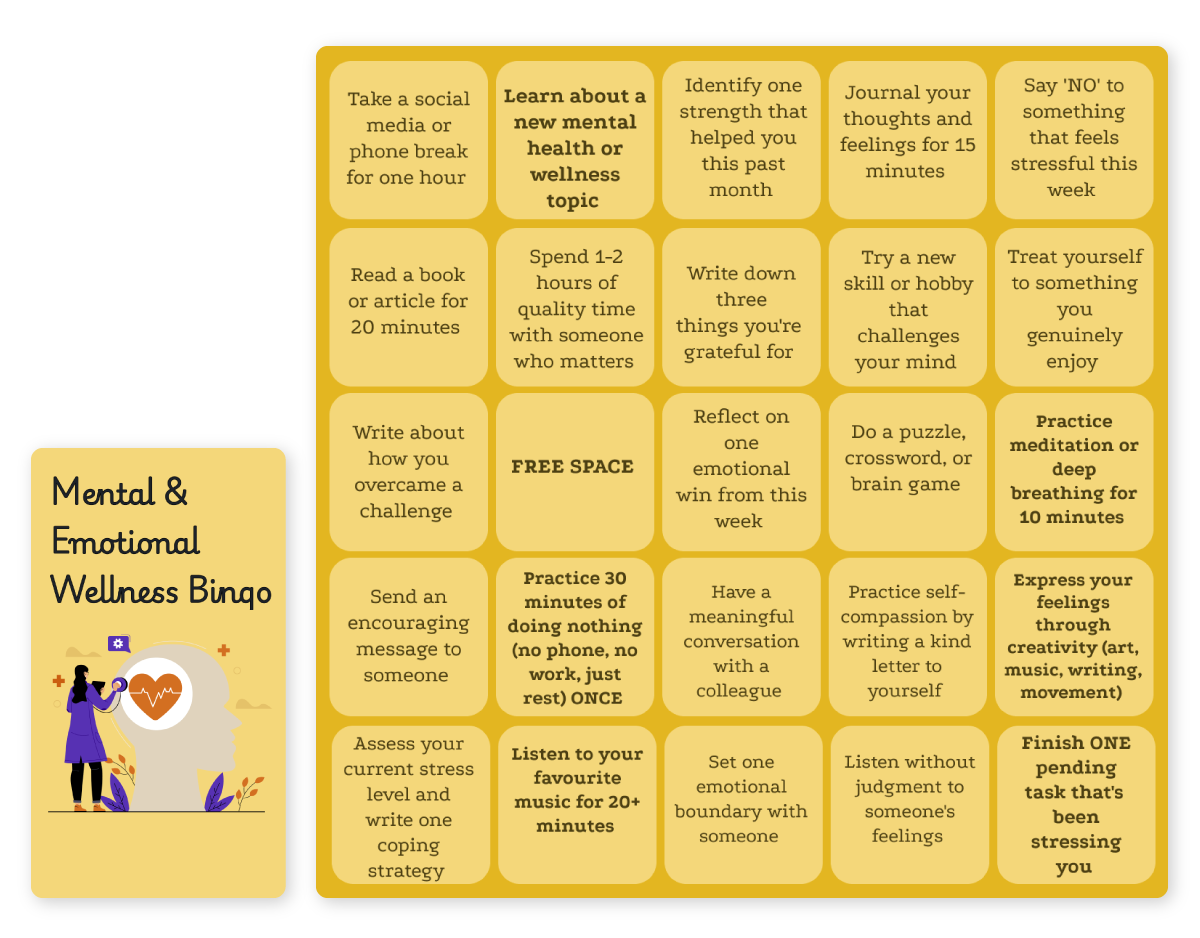
The card forms the physical centerpiece of engagement.
A traditional bingo grid contains 25 squares (5 rows × 5 columns), each populated with a specific wellness activity. Activities might include:
- taking a 20-minute walk,
- meditating for 5 minutes,
- drinking 8 glasses of water daily,
- stretching,
- eating vegetables,
- journaling, or
- unplugging from screens for an hour.
Variety makes a health and wellness bingo indispensable. Mixing physical, mental, and social wellness keeps the card from feeling narrow or repetitive.
Centering the middle square as a "free" space serves as a psychological function. It immediately delivers a win, triggering initial momentum and signaling that the challenge is approachable, not punitive.
4. Customize Cards by Theme
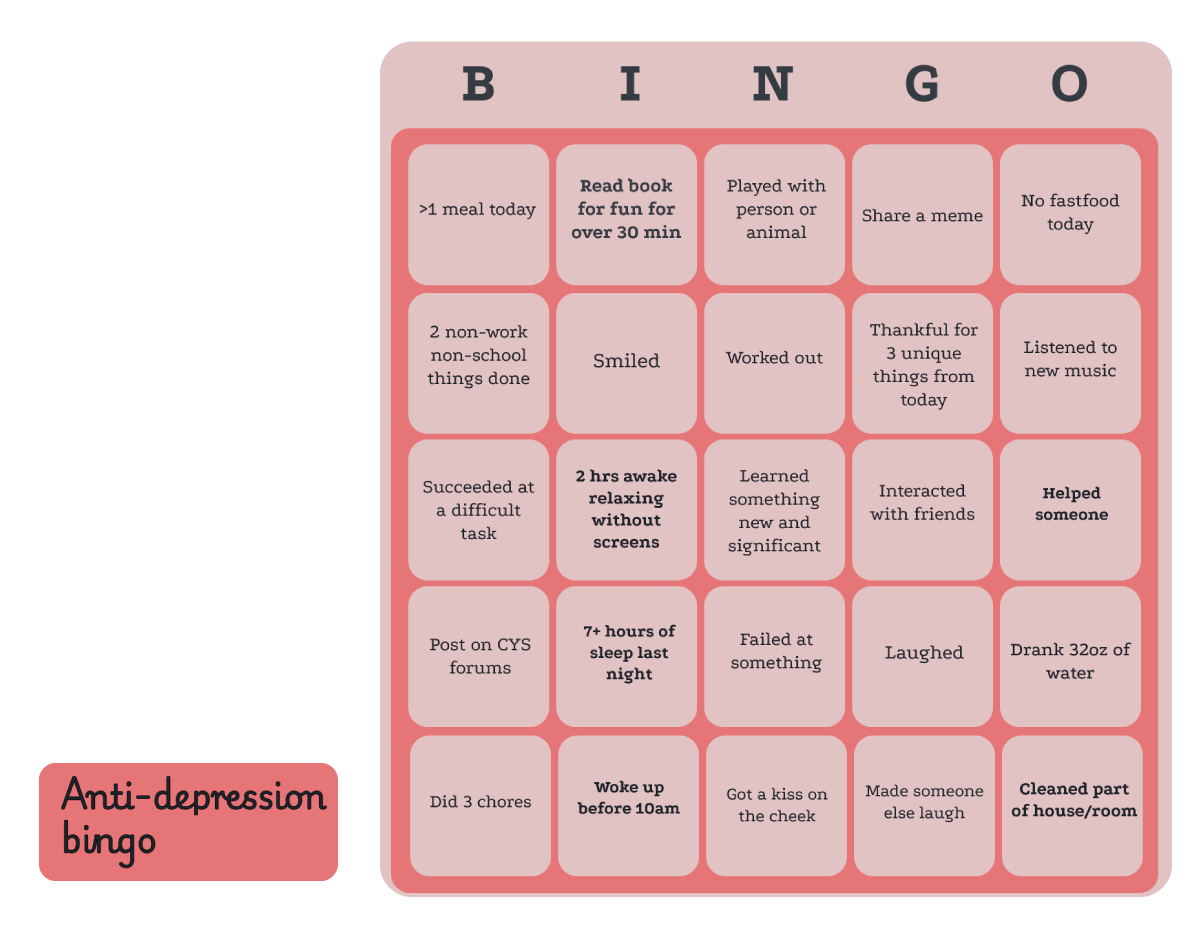
Theming transforms a generic bingo into an expression of employee health priorities. For instance, during winters, you can customize wellness bingo that combats seasonal affective disorder (SAD).
Here’s an anti-depression bingo card created using Bingo Baker:
There’s also a practical side to this. To back this up, there’s a case study:
Siemens’ Power Generation Services division had been struggling to get people to take safety protocols seriously. Instead of pushing the same reminders, the team rolled out a gamified app called Safety Bingo.
Through it, employees earned points for completing safety activities, brushing up on procedures, and joining training sessions. As a result, participation in safety drills climbed by more than 40%, and a stronger sense of ownership around safety began to take hold.
5. Structure Activities by Difficulty Progression
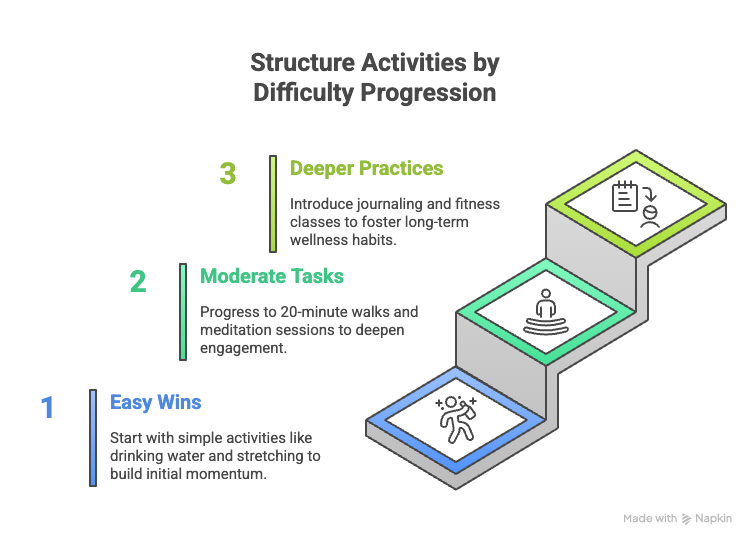
Most wellness programs treat every activity as equally doable. That’s where engagement often breaks down. Effective bingo builds confidence through stepping stones.
Week one activities are the easy wins: drink water, stretch, take a break. These create momentum because they're genuinely achievable.
Week two escalates to moderate tasks: 20-minute walks, meditation sessions, cooking something healthy. By now, your brain has already experienced success. It's ready for slightly harder commitments.
Weeks three and four introduce deeper practices: journaling, fitness classes, meaningful conversations.
The pattern works because each win builds psychological capital for the next challenge. Humans need this. We don't jump into cold water. We wade in gradually.
6. Create Multiple Ways to Win

Design layered victories such as:
- The first person to complete any line gets announced as an early winner.
- The person with the most activities completed over 30 days gets recognized.
- People who showed up for 80% or more days get acknowledged.
Different employees win in different ways. The quiet employee who never misses a meditation session wins through consistency. The competitive employee wins through speed. Both feel valued.
7. Make Progress Visible Every Single Day
Brains crave feedback. Constant, immediate feedback. That's the neurological engine running beneath habit formation. Without it, motivation evaporates around week two.
For physical workplaces, use a whiteboard where people mark their squares publicly. For remote teams, post daily updates on Slack. Each marked square should trigger a small feeling of progress.
For individual formats, keep optional self-reporting (For instance, "I meditated today").
8. Build Flexibility into the Rules
Employees who can't complete a card activity exactly as written often drop out entirely. Allow substitutions. Let people pick alternatives.
If someone's injured and can't walk, they can do gentle stretching or a chair yoga instead. If someone has social anxiety and a networking event feels impossible, they call a friend instead.
Prioritize the changed behavior (movement, connection, health) over rigid compliance. Communicate this explicitly: "We're not here to police behavior. We're here to build habits that work for you."
9. Establish Verification Without Friction
How do you know if someone actually meditated or just claims they did? The answer depends on organizational culture and trust levels.
Honor-system tracking (employees self-report) works in high-trust environments and reduces administrative overhead. Photo proof works for activities like "take a walk" but becomes burdensome for daily practices like hydration. Peer verification ("Did anyone meditate today?") adds social dimensions without creating policing dynamics.
Keep verification proportional to the activity. For low-friction activities (drinking water, stretching), trust the report. For higher-commitment activities (signing up for a fitness class), request minimal proof such as a screenshot or a brief note. The verification system itself shouldn't become a barrier.
10. Incentivize Smartly (Intrinsic + Extrinsic Balance)
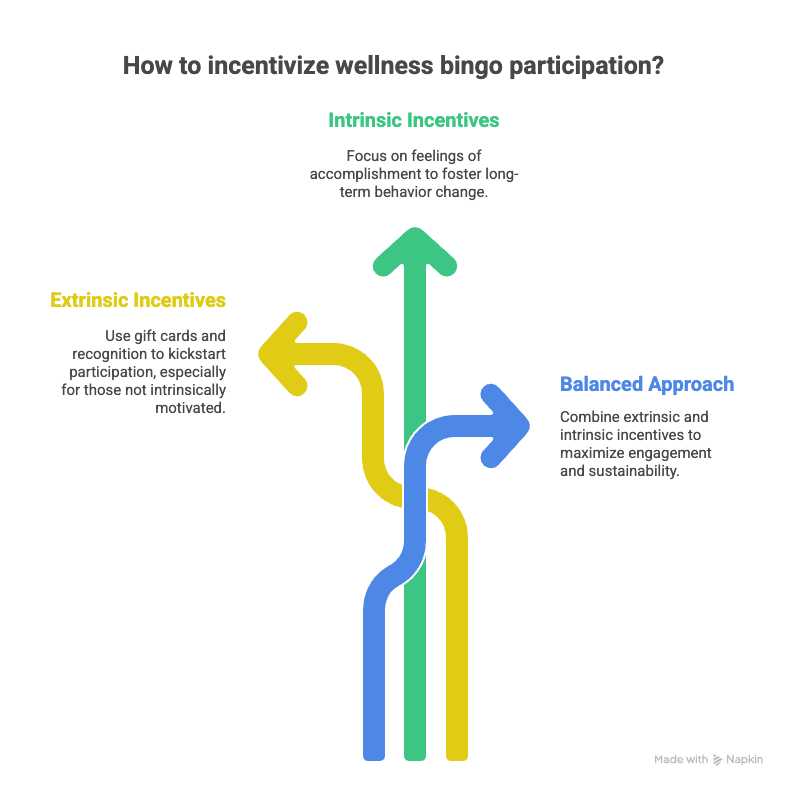
External rewards (gift cards, PTO, recognition) kickstart participation, particularly for employees who aren't intrinsically motivated to prioritize wellness. However, real stickiness comes from intrinsic rewards: the feeling of accomplishment after 30 days of consistent behavior.
The formula? Use extrinsic incentives to drive initial participation, but frame them around intrinsic benefits.
Instead of "win a gift card," try "complete bingo and earn recognition plus discover habits that genuinely improve your workday." Prizes for participation ensure employees who engage fully feel valued even if they don't finish first.
Keep incentives proportional; meaningful recognition often matters more than expensive prizes.
11. Communicate Progress Stats Weekly
Send weekly updates such as:
- Week 1: "85% of the company has started"
- Week 2: "First winners crossed the finish line."
- Week 3: "People are reporting better sleep and less afternoon energy crashes." Week 4: "Let's celebrate who crossed the line this week."
Progress updates maintain momentum and keep the challenge top-of-mind.
12. Give a good amount of thought to recognition
Make recognition multi-layered and inclusive. Celebrate the first finisher publicly. Celebrate the quietest team member who completed their card solo. Celebrate the manager who facilitated their team's participation. Celebrate the person who missed day one but returned and committed fully.
Multiple recognition pathways ensure psychological rewards reach different employee segments.
13. Track What Actually Sticks
The real test comes after bingo ends. Sixty days later, ask whether people are still meditating. Still walking. Which activities did they keep doing versus which were just "bingo activities"? This data tells you what behaviors actually became automatic in your specific culture. What genuinely shifted versus what was temporary compliance.
Sample Wellness Activities to Include in a Wellness Bingo
Below is a list of 25 activities blending physical movement, mental clarity, and meaningful connections. Each one is simple enough to fit into a workday yet impactful enough to shift how employees think about wellness:
- Take the stairs instead of the elevator
- Walk during lunch break
- Pack a healthy lunch instead of ordering out
- Get 7+ hours of sleep for three consecutive nights
- Take a social media or phone break for one hour
- Schedule a health screening or checkup
- Reflect on one emotional win from this week
- Treat yourself to something you genuinely enjoy
- Document a moment of gratitude
- Make a vision board
- Meal prep for the week ahead
- Volunteer for ONE cause you care about
- Check in on someone going through a challenge
- Take public transport for 3 days
- Go plastic-free for one entire day
- Plan a social activity that involves movement
- Try a new vegetable or fruit
- Skip one unhealthy snack this week
- Ditch paper tissues and use cloth handkerchiefs
- Find one recurring expense you can cut
- List 3 things money can't buy and reflect
- Read something for pleasure
- Do something that you loved as a child
- Do a 7-minute home workout
- Pick up litter in your neighbourhood
Ready to Try Wellness Bingo?
Now that you understand how an employee wellness bingo can help sustain a strong wellness culture, you can go ahead and give Vantage Fit a try.
With our platform, employees can record water intake, record workouts with AI-powered detection, manually log activities like yoga or meditation, and build real habits over time.
Employers can monitor which activities gain traction, monitor emerging health trends across their workforce, and gain insights into what truly drives wellness culture in their organization. When you can see the real patterns behind behavior change, you build something sustainable. Do you still have things to clarify? .
Why not reach out to our team to explore how Vantage Fit can transform your wellness strategy
FAQs
How long should a wellness bingo challenge last?
Thirty days work best for initial habit formation without creating participant fatigue. This timeframe allows new habits to begin forming without losing momentum or burning out participants.
Is wellness bingo suitable for remote teams?
Completely. Remote teams actually benefit because there's no need for shared physical space. Progress tracking happens through Slack, dashboards, or spreadsheets, and employees complete activities whenever it fits their schedule.
How many people can participate in wellness bingo?
Any number. Individual cards scale infinitely since each person tracks independently. For team formats, groups of 4–8 work well per shared card. Larger organizations simply run multiple challenges across departments.
Do we need a wellness expert to run this?
Not necessarily. It depends on your program's objectives. In most cases, wellness bingo is self-directed and requires minimal oversight from HR.


